
Kuru Fasulye
Kuru fasulye is a traditional Turkish stew of dried white beans slow-cooked with onion, tomato and pepper paste, eaten across the country with rice pilaf and pickles.
Kuru fasulye is a traditional Turkish stew of dried white beans, slow-cooked with onion, tomato and pepper paste, fat and, in many versions, pieces of meat. The name means “dry beans,” which separates it from the fresh or green bean dishes of Turkish cooking. Alongside rice pilaf, it is one of the most common everyday meals in Türkiye, eaten at home, in canteens and in the modest local restaurants known as lokanta or esnaf lokantası. It belongs to Turkish home cooking as a whole rather than to a single province, although individual families and regions each prepare it in their own way.
The Beans at the Centre of the Dish
The main ingredient is the dried white bean, sold in Türkiye simply as kuru fasulye. Several white varieties are used, and they differ in size and in how well they hold their shape. Cooks generally prefer beans that soften to a creamy interior while keeping their skin intact, because the finished stew should look glossy and whole rather than broken down. Dried beans are a pantry staple, bought by weight or in packets and then soaked and cooked at home. The bean itself is tied to Turkish kitchens in general rather than to one growing area, unlike the pistachio of Gaziantep or the hazelnut of Giresun, which belong to specific regions.
Where Kuru Fasulye Comes From
The beans used in the dish belong to the genus Phaseolus, which originated in the Americas and reached Anatolia after the Columbian exchange of the sixteenth century. Before that period, Anatolian kitchens relied on chickpeas, fava beans and lentils for their pulses. The modern dish therefore depends on an ingredient that arrived relatively late, and the exact point at which dried white beans became an everyday staple in Turkish homes is not clearly documented. What is reliable is that white bean stew became deeply embedded in Turkish cooking over the following centuries and is now treated as a basic, unpretentious part of the daily table.
Main Ingredients
Beyond the beans, the usual components are:
- onion, finely chopped and softened in fat
- tomato paste and often pepper paste, which give the stew its colour and body
- butter, sunflower oil or a mixture of both
- salt and simple spices such as black pepper, paprika or, in some versions, dried mint
- optional meat, commonly lamb or beef, and in some households pastırma, sucuk or kavurma
- fresh tomato or green pepper in regional and family variations
How It Is Traditionally Prepared
The beans are soaked in water, often overnight, then drained and simmered until tender. Soaking and long cooking are what give the dish its soft, creamy texture; rushing them leaves the beans firm and the broth thin. In a separate pan, onion is cooked gently in butter or oil until soft and slightly sweet, and tomato and pepper paste are stirred in and fried briefly so that the raw taste disappears. The beans, their cooking liquid and the paste mixture are then combined and simmered together, sometimes for a long time, until the stew thickens and the flavours merge.
Meat versions follow the same logic with one extra step: the meat is browned first, either with the onion or before it, and then cooked slowly with the beans until both are tender. Some cooks loosen the sauce with a little of the bean cooking water, while others let it reduce until it coats the beans. Quantities, seasoning and cooking time vary greatly from kitchen to kitchen, and there is no single fixed method.
Texture, Flavour and Appearance
A well-made kuru fasulye is thick rather than soupy. The beans stay whole but yield easily under a spoon, and the sauce clings to them, coloured a deep reddish brown by the paste and shining slightly with fat. The flavour is savoury and mild: the gentle sweetness of the beans, the cooked-down tomato and pepper paste, the roundness of butter and, when meat is used, a deeper, meaty note. It is not a spicy dish by default, and heat usually comes from what is served alongside rather than from the stew itself.
How It Is Served
Kuru fasulye is almost always served with rice pilaf, and the two are so closely paired that the combination is treated as a single standard meal. Pickles—turşu—are the other constant companion, adding acidity and crunch against the soft, rich beans. A summery onion salad with sumac, or simply raw onion, is common, and ayran or water is the usual drink. The stew is eaten as a main course at lunch or dinner and is especially associated with cold weather, though it appears on Turkish tables throughout the year.
Variations and Related Dishes
The best-known variations concern the meat. Etli kuru fasulye includes chunks of lamb or beef, while pastırmalı and sucuklu versions use cured meat for flavour rather than bulk. There is also a meatless style cooked with olive oil, which can be eaten warm or at room temperature as part of a spread of vegetable dishes. Households differ over whether to add fresh tomato, green pepper, a little sugar, a squeeze of lemon or a piece of bone for richness; none of these is universal.
It is worth distinguishing kuru fasulye from a few dishes it is sometimes confused with. Barbunya pilaki is made with cranberry beans cooked in olive oil with carrot and potato and is usually served cold, so it is lighter and more vegetable-like in character. Green bean dishes cooked with tomato are a separate family entirely. Sweetened baked beans, as made in some other countries, have a sugary, molasses-based flavour that kuru fasulye does not share.
Cultural Significance
Because it is inexpensive, filling and easy to make in large quantities, kuru fasulye has long been a staple of Turkish everyday eating. It is a standard offering in esnaf lokantası—the plain, long-established eating houses that serve home-style cooked food—and it appears in school and workplace canteens as reliably as it does on family tables. It is often spoken of, somewhat affectionately, as a national dish, though this is a matter of popular sentiment rather than an official title. Its status rests on familiarity: for many people in Türkiye, kuru fasulye with pilaf and pickles is the definition of an ordinary, satisfying meal.
Related content

Gaziantep
Gaziantep is a major city in southeastern Türkiye and the administrative centre of its province, widely recognised as the country's gastronomic capital and known for its citadel, bazaars and the Zeugma Mosaic Museum.

Giresun
Giresun is a Black Sea coastal city in northeastern Türkiye, known across the country for its hazelnuts and for Giresun Island, the only inhabited island in the Black Sea.
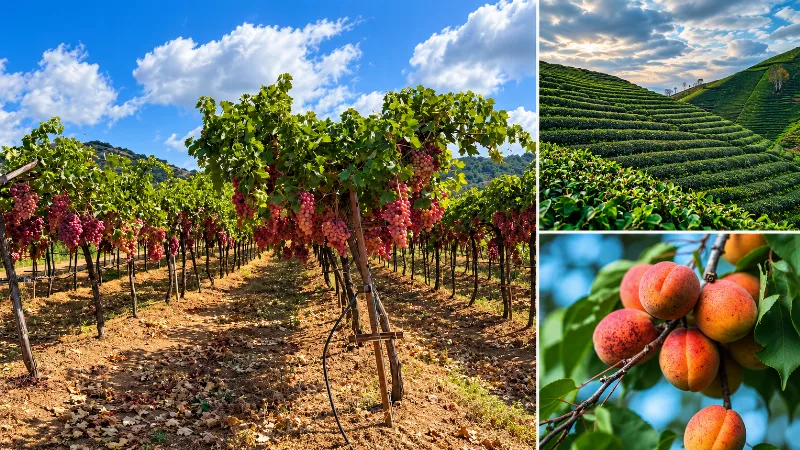
How the Landscape Shapes Food Across Turkey
From Black Sea hazelnuts to Aegean olive oil and southeastern pistachios, Turkey’s regional food is closely connected with geography and agriculture.
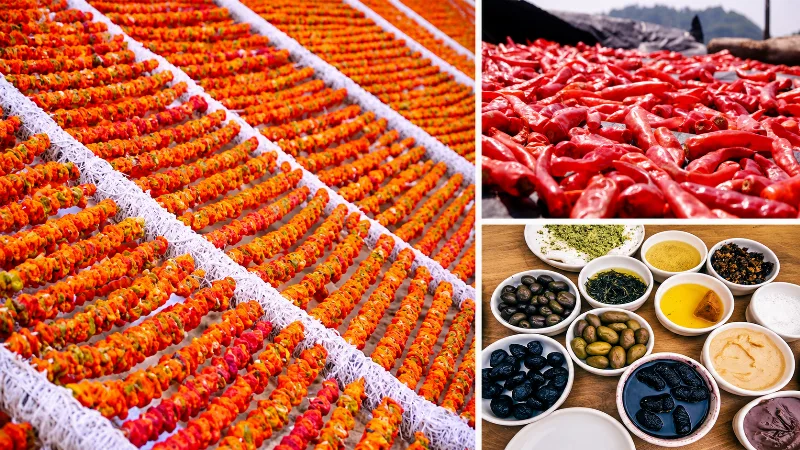
Why Turkish Food Changes from Region to Region
Climate, geography, agriculture and local history shape the ingredients, cooking methods and everyday dishes found across Türkiye. Türkiye’s cuisine is often described as a single national tradition, but food changes considerably from one region to another. Coastal climate, mountain geography, agricultural production, local history and available ingredients all influence what is cooked and how meals are prepared. A dish common on the Black Sea coast may be uncommon in southeastern Türkiye, while ingredients associated with the Aegean can play a much smaller role in the interior. These regional differences form one of the main characteristics of Turkish food culture.
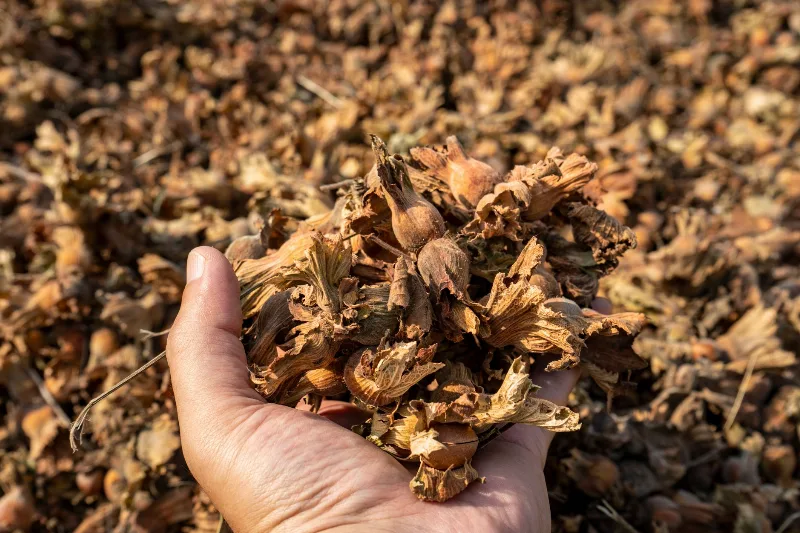
Giresun Hazelnuts
Giresun hazelnuts are the nuts of hazel trees grown on the rainy slopes of Giresun province on Türkiye's eastern Black Sea coast, valued for their rounded kernels, thin shells and high oil content.
Kümbet Plateau Traditional Festivals in Giresun
Kümbet Plateau in Giresun hosts summer highland festivals that reflect the region’s pastoral traditions, music and communal life. These gatherings offer an insight into the yayla culture of the Eastern Black Sea.