
Köyceğiz Lake and Hot Springs in Türkiye
A guide to Köyceğiz Lake in Muğla, its mineral hot springs, the Dalyan channel, İztuzu Beach and the wetland landscapes of southwestern Türkiye.
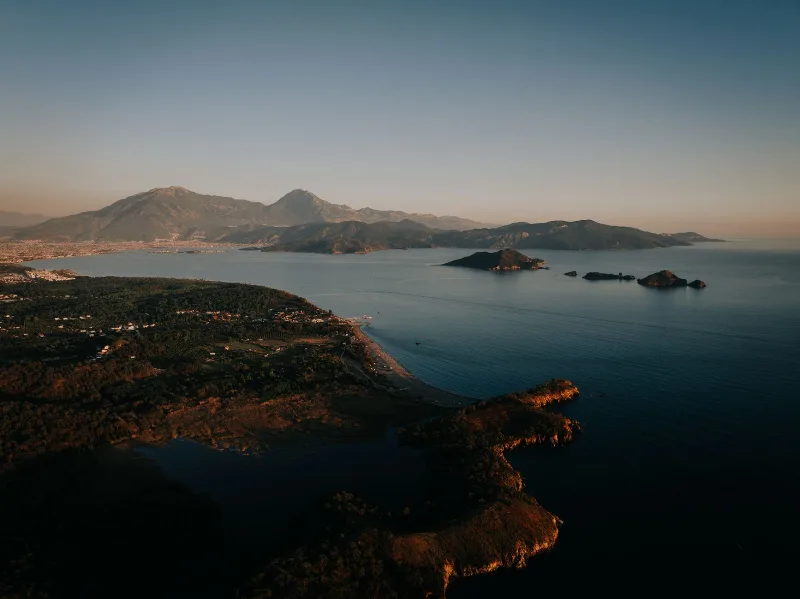
Köyceğiz Lake sits in the Muğla province of southwestern Türkiye, a broad sheet of calm water held between pine-covered hills where the Mediterranean coast meets an intricate system of wetlands, reed beds and winding channels. It is a place defined by two features that draw travellers and nature lovers alike: a landscape of remarkable variety and a group of thermal springs whose warm, mineral-rich water has been used for relaxation for generations. The lake and its surroundings form one of the more peaceful corners of the country's southwestern shore.
A Lake Between Mountains and Sea
The lake is fed by streams flowing down from the surrounding hills, including the waters of the Yuvarlakçay, and it drains to the Mediterranean through the Dalyan River. Because the outlet is narrow, the water near the sea becomes slightly brackish, while the inner lake remains fresh. The shoreline is a mix of sandy banks, shallow marshes, olive and citrus groves and small villages such as Köyceğiz, Toparlar and Hamitköy. Hills of Turkish pine rise behind the water.
Thermal Springs on the Eastern Shore
On the eastern side of the lake, near the settlement of Sultaniye, warm water rises from the ground and flows toward the shore. The springs are known as Sultaniye Kaplıcası, and the water is rich in sulphur and other dissolved minerals. Small pools and bathing areas have formed where the thermal water meets the cooler lake, and the surrounding air carries a faint mineral scent. The setting is natural and simple, with mud, steam, reeds and open water. Visitors often alternate between the warm spring water and the lake itself, an experience that has long been part of the area's local tradition.
The Dalyan Channel and İztuzu Beach
From the southern end of the lake, the water narrows into the Dalyan River, which winds through marshland before reaching the sea. At its mouth lies İztuzu Beach, a long spit of sand separating the river delta from the open Mediterranean. The beach is a protected nesting site for loggerhead sea turtles (Caretta caretta), which come ashore in summer to lay their eggs in the sand. The channel is lined with reeds and tamarisk.
Kaunos and the Rock-Cut Tombs
Above the river channel, on the cliffs opposite Dalyan, stand the rock-cut tombs of Kaunos, carved into the limestone in the style of the wider Lycian tradition. Kaunos was an ancient city of Caria, and its ruins include a theatre, an acropolis, city walls and the remains of a harbour that has long since silted up. The tombs, with their temple-like façades, are among the most recognisable images of the region and can be seen from the water below. Carian, Lycian, Greek and Roman influences followed one another here.
Sweetgum Forests and Wetland Wildlife
The wetlands around Köyceğiz are home to the sweetgum tree (Liquidambar orientalis), a species with a limited range in the eastern Mediterranean. Its forests here are among the most extensive that remain, and their amber-coloured autumn foliage adds another colour to the landscape. The lake, marshes and delta also support a rich birdlife: herons, egrets, cormorants, kingfishers and migrating waterfowl pass through or nest in the area, and the shallow water is alive with fish and invertebrates.
Seasons and Atmosphere
The climate is typically Mediterranean, with hot, dry summers and mild, wet winters. Spring brings greenery and birdsong, while autumn offers warm water and softer light. Even in high summer, the shade of the surrounding hills keeps parts of the shore calm. Mornings are often still and misty, and evenings bring a cool breeze off the water. The pace of life here is unhurried, shaped by fishing, farming and the rhythms of the lake itself.
Köyceğiz Lake brings together several things that make southwestern Türkiye distinctive: warm mineral springs, a river that links fresh water to the sea, ancient rock-cut monuments and wetlands rich with life. It is a place where the natural and the historic sit side by side, and where visitors can experience the landscape at a gentle, natural pace.
Related content
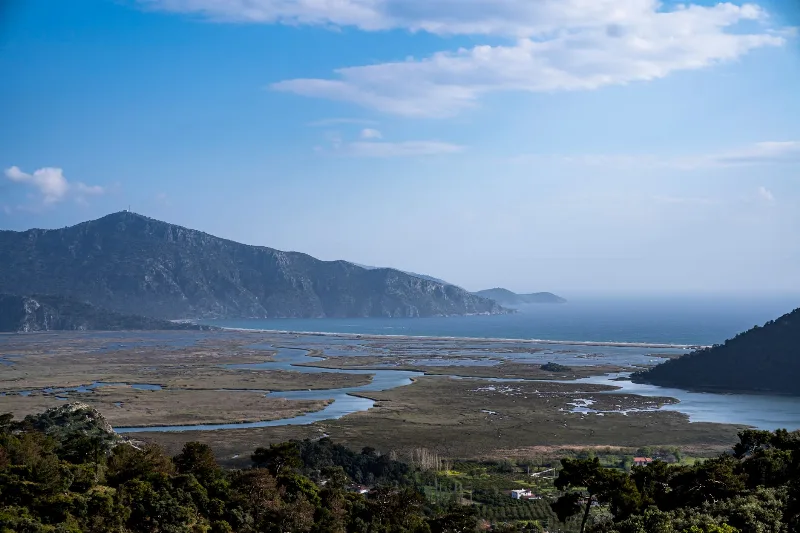
Muğla
Muğla is a captivating province in southwestern Türkiye, renowned for its stunning Aegean coastline and rich cultural heritage.
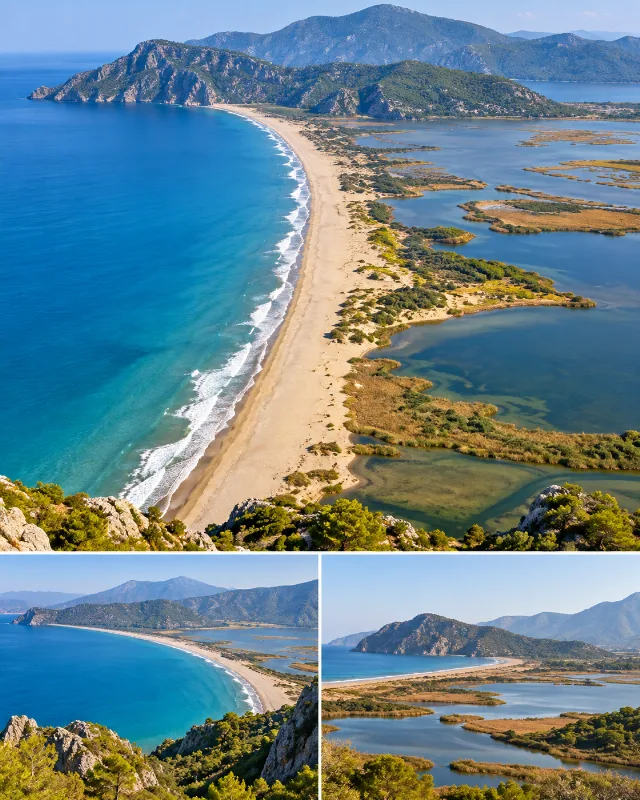
İztuzu Beach
A long sandy beach near Dalyan where the Mediterranean Sea meets the wetlands and waterways of the Köyceğiz-Dalyan system.
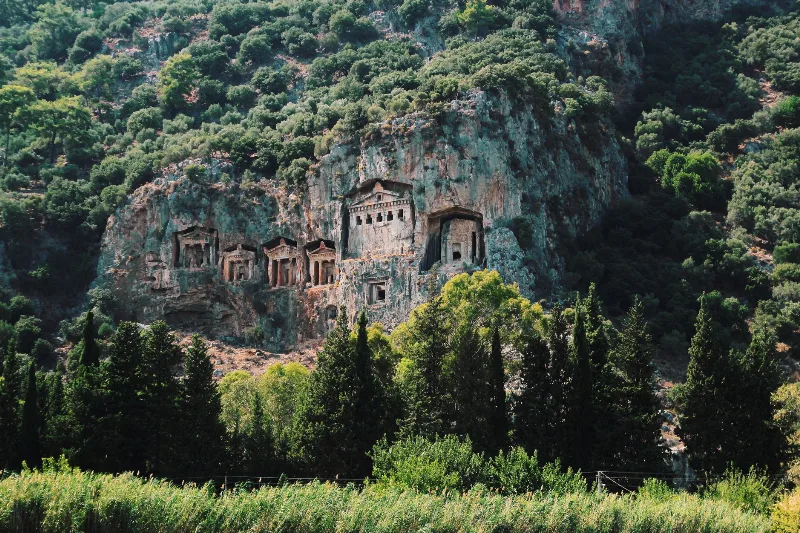
Kaunos
Kaunos is an ancient Carian city on the Dalyan River in Muğla Province, known for its temple-style rock-cut tombs and the extensive ruins of a harbour that silted up centuries ago.
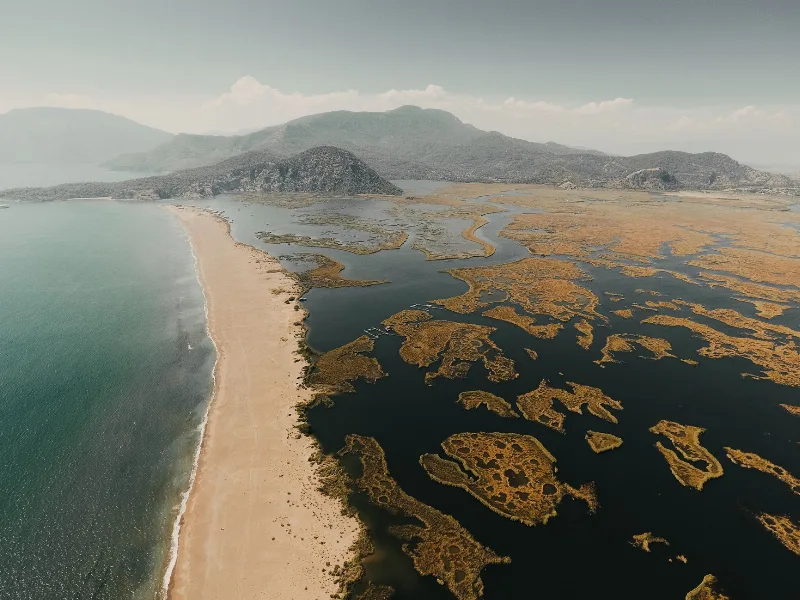
4-Day Marmaris and Dalyan Route
A four-day linear route that starts in Marmaris, crosses the Gulf of Gökova and Lake Köyceğiz, and ends around the river, rock tombs and turtle beach of Dalyan.
Dalyan Rock Tombs and River Reed Boats in Muğla
Dalyan in Muğla pairs ancient Lycian tombs carved into a cliff with a slow, reed-fringed delta where flat-bottomed boats still carry passengers between lake, river and sea.
6-Day Mediterranean Coast Route: Antalya to Marmaris
A six-day linear route along Türkiye's Mediterranean coast, linking Antalya, Olympos, Demre, Kekova, Kaş, Kalkan, Patara, Fethiye and Dalyan before finishing in Marmaris. It mixes ancient cities, long beaches and small harbour towns on a continuous westward drive.
The Lycian Rock Tombs of Dalyan
Cut into the cliffs above the Dalyan River, the rock tombs of ancient Kaunos preserve the funerary architecture of Caria and frame one of the most distinctive landscapes on Türkiye's southwestern coast.
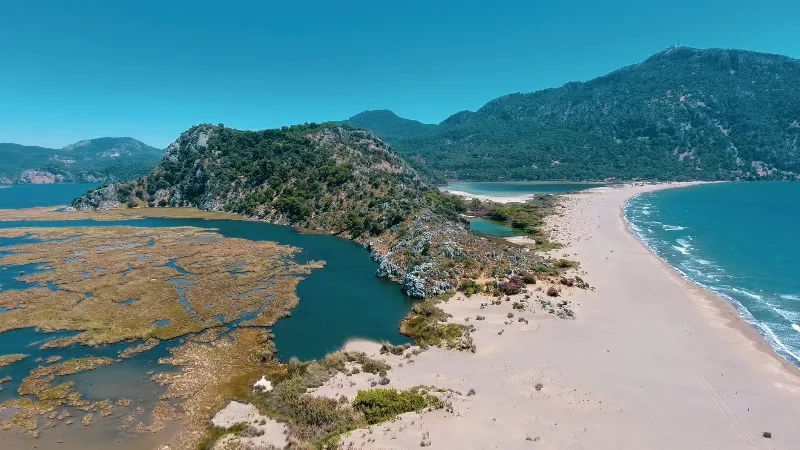
Iztuzu Beach
Iztuzu Beach, also known as Turtle Beach, is a beautiful sandy coastline near Dalyan, Türkiye, renowned for its natural beauty and as a nesting site for sea turtles.