
Gaziantep Garlic
Gaziantep garlic is the pungent, sharply aromatic garlic grown in the irrigated garden plots and fields of Gaziantep province in southeastern Türkiye. Its character comes from a hot, dry ripening season, cold winters and the fertile, well-drained soils of the province.
Gaziantep garlic is the garlic cultivated in and around Gaziantep province in southeastern Türkiye, a bulb crop of the species Allium sativum that holds a long-established place in the province's irrigated horticulture. It is known locally for a penetrating aroma and a strong, persistent pungency that survive the long cooking times typical of the region's tomato- and pepper-based dishes. The link between the product and the place is not simply a matter of name: a hot, dry summer, a genuinely cold winter and fertile, well-drained soils together allow the bulbs to size up in spring and then cure cleanly after lifting, which is what gives the garlic its concentrated flavour and its keeping quality.
Where Garlic Is Grown in Gaziantep Province
Gaziantep sits at the western edge of Southeast Anatolia, where the stony uplands of the Anatolian plateau give way to lower plains running toward the Syrian border. The province's best-known crop is the pistachio, which covers the dry slopes and older orchards, but garlic belongs to a different layer of the agricultural landscape. It is a plot crop, grown on irrigated ground close to the city and around the province's lower-lying districts, usually on small fields or in garden plots alongside vegetables, legumes and fodder crops. Much of it never travels far: green garlic pulled young is sold in local markets in spring, while cured dry bulbs move into household stores and the wholesale trade of the city.
This pattern is typical of southeastern horticulture, where irrigation is the limiting factor and every watered square metre is worked intensively. Garlic fits that logic well because it occupies the ground for only part of the year, allowing a second crop to follow, and because its value per hectare is high enough to justify the cost of water.
Why the Climate and Soil of Gaziantep Suit Garlic
Garlic is a cool-season crop with a dry-season finish, and Gaziantep's climate supplies both halves of that requirement. Winters in the province are cold enough to give the planted cloves the chilling they need to divide properly into a well-formed bulb, and spring arrives with warming days and rising soil temperatures that drive leaf growth. The critical phase comes at the end, when the plant stops producing leaves and begins to fill the bulb: Gaziantep's early summer is hot, bright and almost rainless, and this is precisely the weather garlic responds to best.
Dry heat at maturity does two things. It limits the fungal bulb rots that thrive in humid conditions, and it lets the crop dry in the field with little need for artificial curing. The result is a bulb with tight, papery outer skins, sound cloves and good storage life. Humidity during the final weeks, by contrast, is the main enemy of garlic quality in wetter parts of Türkiye.
Soil matters just as much. Garlic is a shallow-rooted plant that cannot tolerate waterlogged ground, and the province's fertile, well-drained soils — calcareous and often stony on the higher ground, deeper and finer in the irrigated basins — allow water to move through the root zone without standing. Loose, workable soil also makes harvest easier, since bulbs can be lifted without breaking. Where the land is heavier, growers typically improve it with organic matter and plant on raised beds, a common practice in the region's vegetable plots.
The Plant and Its Growing Cycle
Garlic is grown from cloves rather than seed. Each clove is a short, thickened storage leaf, planted pointed end up in autumn, which roots before the coldest weather and then pushes up its first narrow leaves as the soil warms. Through late winter and spring the plant builds a shallow root system and a fan of long, grey-green leaves that photosynthesise and feed the swelling underground structure. As the days lengthen and temperatures climb, the plant shifts from leaf production to bulbing, and the stored sugars move downward into the cloves.
Most garlic grown for bulbs either produces no flower stalk or has one removed while still curled and soft, so that the plant's energy goes into the bulb rather than into a flower head. Where a stalk is allowed to develop, it opens into a rounded head of small white or pinkish flowers and, often, tiny bulbils.
The end of the cycle is visible above ground. Lower leaves yellow and collapse while the upper leaves are still partly green, and this is the point at which growers lift the crop, usually in early summer in Gaziantep's conditions. Lifting too late leaves the bulbs splitting and the skins loose; lifting too early costs yield and keeping quality.
Curing, Storage and the Dry-Season Advantage
After lifting, Gaziantep garlic is cured rather than washed. Bulbs are laid out or stood in rows with the tops still attached, in the field or in a shaded, airy place, for a period of days to a few weeks. The dry, bright early-summer weather of the province makes this straightforward: moisture leaves the neck and outer skins, the papery layers tighten, and the bulbs become ready for long storage. The dried tops are then trimmed, or the bulbs are braided and hung in ventilated rooms, a method still used in village houses where garlic is kept for the winter.
Because of this dry finish, Gaziantep garlic stores well without refrigeration, which is one reason it has remained a household staple rather than a seasonal luxury.
Flavour, Aroma and Use in the Local Kitchen
The bulbs are firm, with cloves that hold together well when peeled, and the aroma is noticeably more assertive than that of milder, softer-necked garlics from wetter regions. Crushing or chopping the clove triggers the enzyme reaction that produces the sulphur compounds responsible for the sharp, hot note; in Gaziantep's garlic that note is strong from the outset and does not fade quickly in the pan.
In local cooking the garlic is used both raw and cooked. It is crushed into yoghurt, folded into vegetable dishes, used in the tomato and pepper sauces that underpin much of the region's home cooking, and added to stuffings and meat preparations. Green garlic, harvested before the bulb is fully formed, is eaten fresh in spring. Garlic also has a place in traditional preservation, flavouring vinegars and olive oil-based preparations.
Garlic in the Province's Agricultural Landscape
Gaziantep's reputation rests on pistachios, olives in its western districts and cereals on the plateau, but garlic belongs to the densely worked garden economy that runs alongside them. It is grown by smallholders rather than on industrial estates, often in rotation with vegetables, and it keeps a visible presence in the city's markets through both the green and the dry season. For many households it is a crop of the yard as much as of the field.
Garlic is cultivated in many parts of Türkiye, and the most widely recognised place-named garlic in the country is that of Taşköprü in Kastamonu. Gaziantep's is a regional supply tied to the irrigated horticulture of the southeast, sharing the growing conditions of neighbouring provinces along the northern edge of the Fertile Crescent rather than the humid or highland conditions of the Black Sea and eastern Anatolia.
Finding the Distinction
What separates Gaziantep garlic from similar bulbs sold elsewhere is the combination of crop and conditions: a cold winter for proper clove division, a warm spring for leaf growth, and a rainless, high-light finish that cures the bulb on the plant. Buyers looking for the regional product should expect firm bulbs with dry, papery skins, a dense clove structure and an aroma that is immediately sharp when the clove is cut.
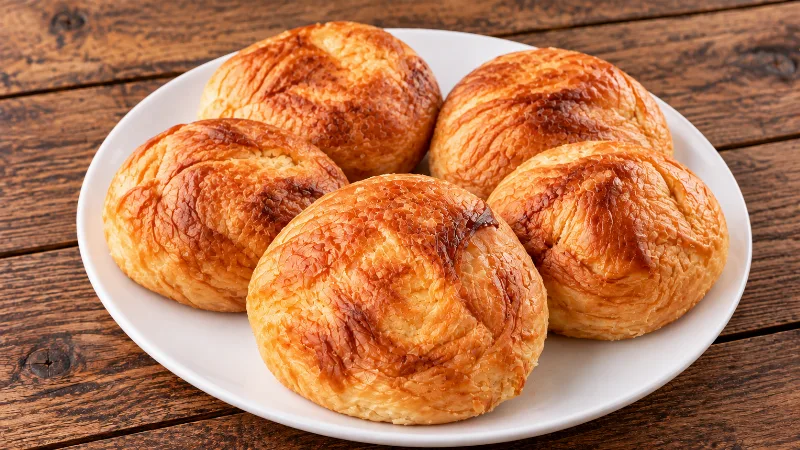
Boyoz
A flaky baked pastry closely associated with İzmir and commonly eaten as part of breakfast.
Explore →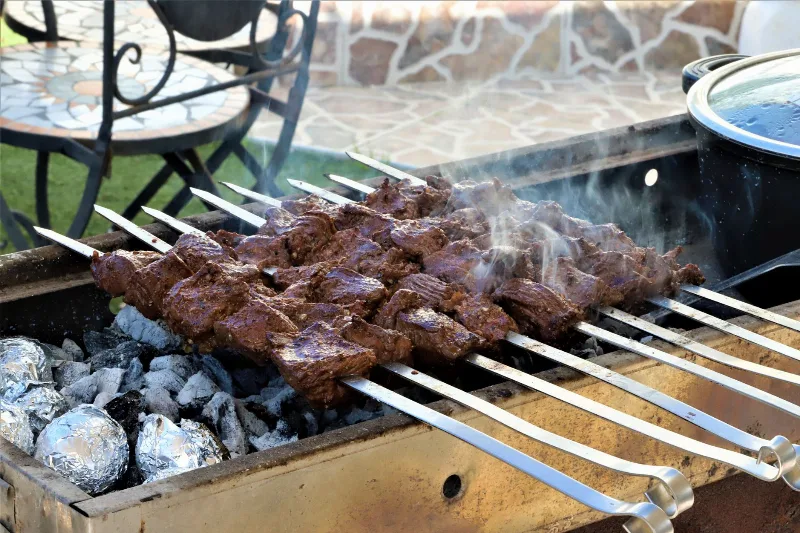
Urfa Kebabı
Urfa Kebabı is a charcoal-grilled minced lamb kebab from Şanlıurfa, seasoned without hot pepper and pressed onto long flat skewers. Its mild, juicy character places it alongside — and directly against — the spicier Adana kebabı.
Explore →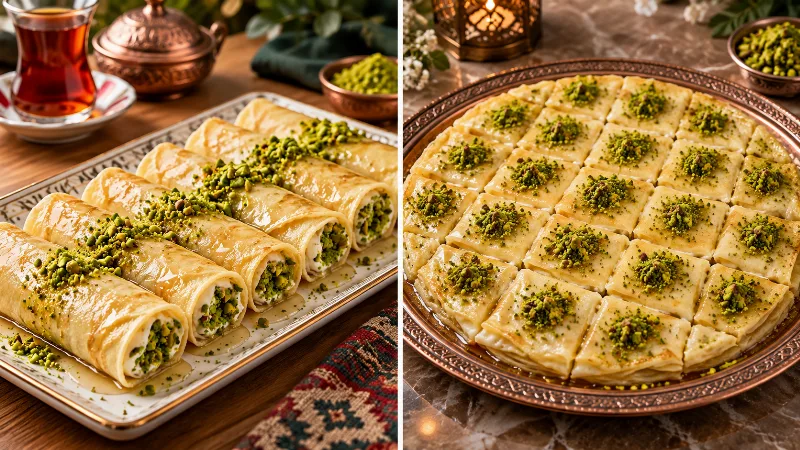
Şıllık Tatlısı
A traditional Şanlıurfa dessert made with thin pancakes, walnuts and sweet syrup.
Explore →Related content
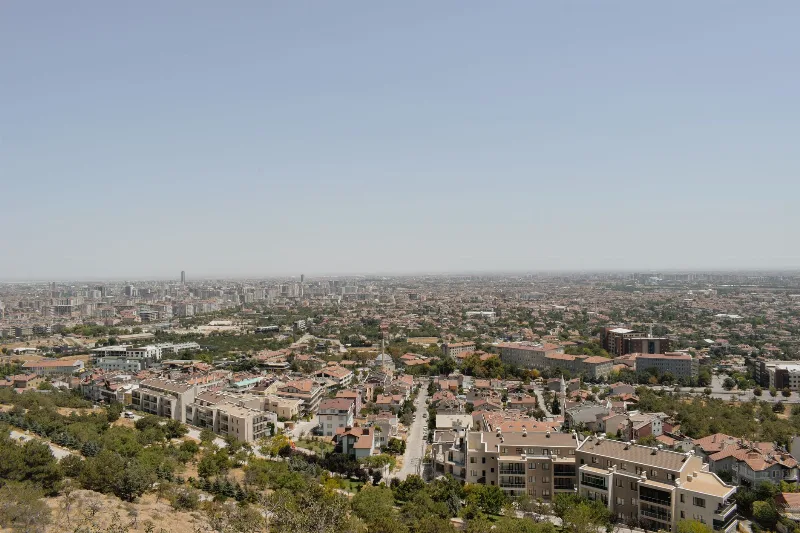
Gaziantep
Gaziantep is a major city in southeastern Türkiye and the administrative centre of its province, widely recognised as the country's gastronomic capital and known for its citadel, bazaars and the Zeugma Mosaic Museum.
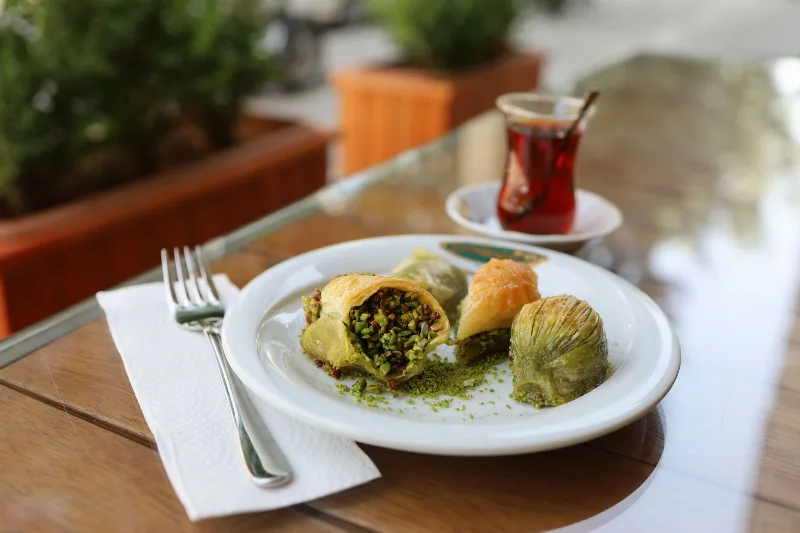
Culinary Delights of Gaziantep
Gaziantep in southeastern Türkiye is known for a regional cuisine built on pistachios, pepper paste, bulgur and slow-cooked dishes that reflect centuries of trade and local tradition.
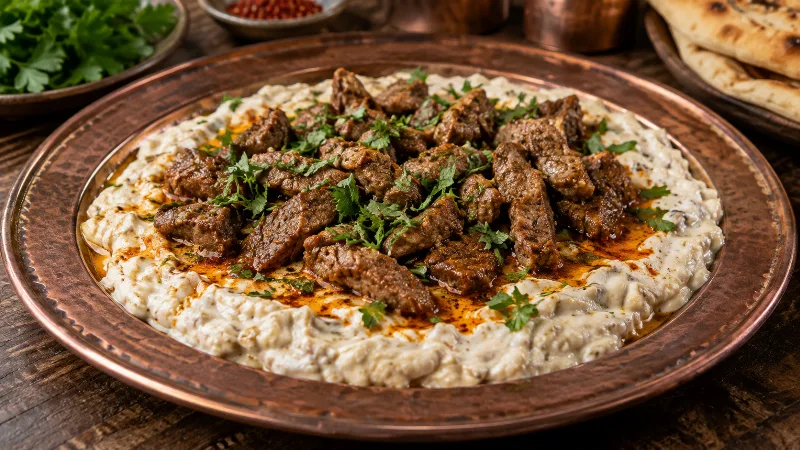
Ali Nazik
Ali Nazik is a Gaziantep specialty in which grilled lamb is served over a smoky roasted eggplant puree mixed with garlicky yogurt and finished with melted butter and red pepper flakes.
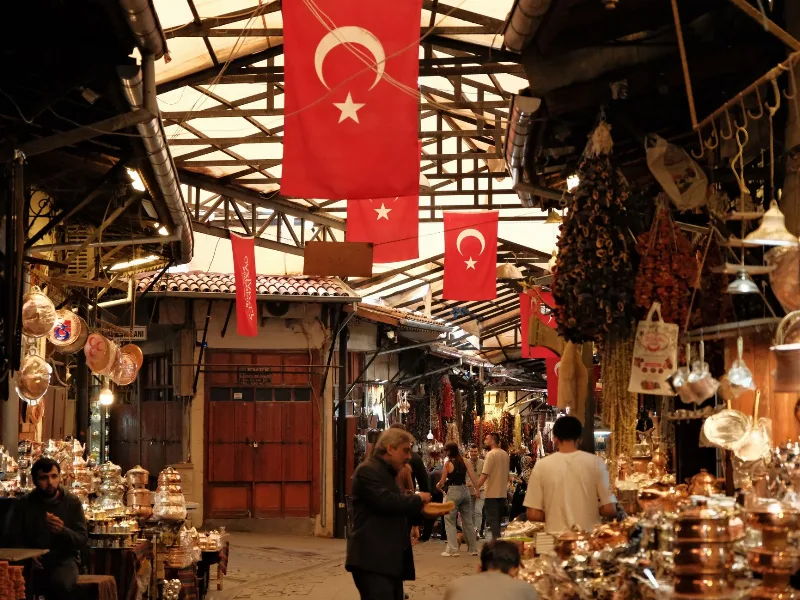
Savoring the Flavors of Gaziantep's Cuisine
Discover the rich culinary traditions of Gaziantep, a city known for its diverse and flavorful dishes that showcase the gastronomic richness of Türkiye.
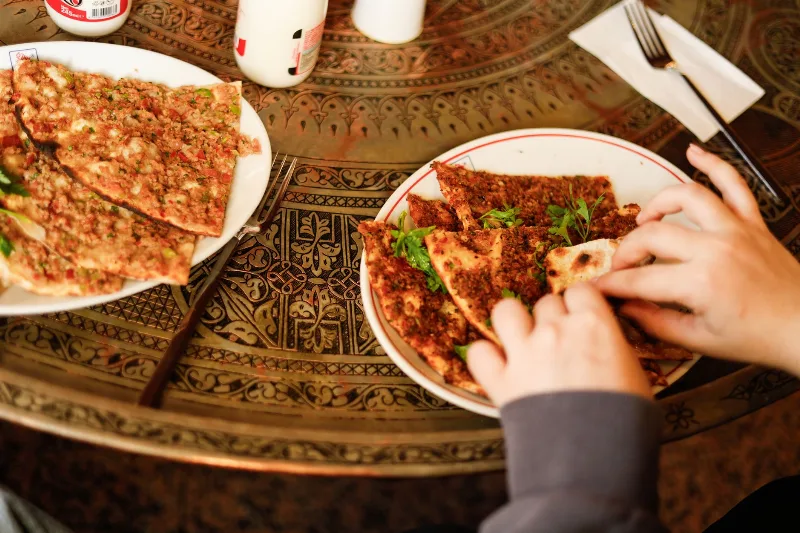
Lahmacun
Lahmacun is a thin, round flatbread spread with finely minced meat, tomato, pepper and spices, baked quickly at high heat and served with lemon and fresh parsley. It is one of Türkiye's most recognisable street and oven foods, with strong regional traditions across the southeast and beyond.
Lahmacun
Lahmacun is a paper-thin flatbread spread with a finely chopped, spiced meat topping and baked quickly at high heat. It is most closely associated with Şanlıurfa and Gaziantep, and is traditionally eaten rolled with lemon and parsley.