
Gözleme
Gözleme is a thin, hand-rolled Anatolian flatbread folded around savory fillings such as cheese, spinach, or minced meat and cooked on a sac griddle. The article covers its regional variations, cooking method, texture, and traditional serving style.
Gözleme is a savory Anatolian flatbread made from thinly rolled dough that is folded around a filling and cooked on a sac griddle. The dough is the common element; the stuffing changes with region, season, and household preference. Cheese, spinach, and minced meat are among the best-known fillings, while potato and mixed greens also appear regularly. Rather than belonging to a single city, gözleme is part of a broad Anatolian tradition of hand-rolled, griddle-cooked stuffed breads found in villages, family kitchens, and local markets across Türkiye.
What Gözleme Is and What Defines It
At its core, gözleme is a stuffed flatbread, not an oven-baked pastry. The dough is usually simple—flour, water, salt, and sometimes a little oil or a short rest—but it is rolled out very thin, so the finished bread stays flexible and cooks quickly. A filling is spread over part of the sheet, the dough is folded over it, and the edges are pressed together. The result can be half-moon shaped, rectangular, or irregular, depending on the maker and the size of the sac. The word gözleme is used for a family of related flatbreads rather than for one rigid recipe, which is why shapes and fillings vary so much.
Where Gözleme Belongs in Anatolian Food Culture
Gözleme is strongly identified with Anatolian village cooking and with the practical foodways of households that make bread from basic ingredients. It is commonly associated with breakfast, tea time, market days, and casual meals. Because it can be prepared with local cheese, greens, potatoes, or meat, it adapts easily to what is at hand. Its exact historical origin is not clearly documented, and it is more accurate to describe it as a widespread Anatolian tradition than to assign it to one province. Regional identity shows up most clearly in the filling: a cheese-focused version, a greens-heavy version, and a meat version can all be called gözleme while tasting quite different.
Fillings and Regional Variations
The most familiar fillings are white cheese (beyaz peynir) or lor with herbs; spinach or wild greens; potato with onion and pepper; and minced meat with onion. These are not strict categories, and households often combine ingredients. In some places, cheese and parsley make a simple filling; in others, spinach or chard is wilted and mixed with cheese. A meat filling is usually more substantial and may include onion, black pepper, and red pepper flakes. Potato fillings tend to be softer and milder. Seasonal greens and local cheeses can give a gözleme a distinct regional character without changing its basic form. There is no single authentic filling, and claims that one version is the original should be treated with caution.
Cooking on the Sac Griddle
The cooking surface is central to gözleme. A sac is a convex metal griddle heated over a fire or other heat source. The thin dough is placed on the hot surface and cooks quickly, developing dry patches, small bubbles, and browned spots. Because the filling is sealed inside, it heats through while the outside firms up. Some cooks work on a lightly oiled sac, while others rely on the dry heat of the griddle; the choice affects crispness but not the identity of the dish. The gözleme is turned so both sides cook evenly, then removed and kept warm under a cloth if more are being made. This griddle method is what separates gözleme from baked breads and from many layered börek-style pastries.
Texture, Flavour and Appearance
A well-made gözleme is thin enough to show the shape of its filling but strong enough to hold together when sliced. The surface is usually pale with golden-brown blisters, and the edges may be crisp. Inside, the dough remains soft and slightly chewy. The flavour follows the filling: salty and creamy with cheese, earthy with spinach or greens, savory and juicy with minced meat, and mild with potato. Spicing is usually restrained, often just salt, black pepper, and perhaps herbs or red pepper flakes. Gözleme is not a heavy, thick-crusted bread; its appeal lies in the contrast between the quick-cooked, blistered dough and the moist filling.
How Gözleme Is Served
Gözleme is normally served hot, either whole or cut into wedges or strips. It can be folded, rolled, or stacked for serving. In homes it is often accompanied by tea, and ayran is a common partner as well. A simple plate of fresh vegetables or salad may be served alongside, especially when gözleme is part of a larger meal. It fits easily into breakfast, a light lunch, or an afternoon snack. In market settings it is eaten as a hand food, while at home it may be placed on a plate and shared. The dish is at its best soon after cooking, when the dough is still crisp at the edges and the filling is hot.
Gözleme Compared with Similar Dishes
Gözleme is often confused with börek, but the two are not the same. Börek usually refers to layered or rolled pastries made with yufka and often baked or fried; gözleme is a folded flatbread cooked on a sac. Pide is an oven-baked bread, usually shaped with a raised rim and topped rather than folded. Lahmacun is a very thin dough with a minced-meat topping, baked and then rolled, not sealed around a filling. Sac böreği is a closer relative, since it is also a stuffed dough cooked on a griddle, but gözleme is generally recognized by its thin hand-rolled sheet and simple folded form. These distinctions matter because they explain the specific texture and cooking method of gözleme.
Why Gözleme Remains Distinct
Gözleme’s identity comes from the combination of hand-rolled dough, a savory filling, and direct heat from the sac. It is a food of adaptation: the dough stays the same, while the filling can reflect local produce, household taste, or the season. That flexibility helps explain its wide presence across Anatolia and its continued place in home cooking and market food. It is not a ceremonial dish with a fixed origin story, but a practical flatbread that has been shaped by the kitchens and griddles of many regions. For a reader trying to understand the dish, the key points are simple: gözleme is thin, stuffed, folded, griddle-cooked, and defined as much by its method as by any single ingredient.
Related content
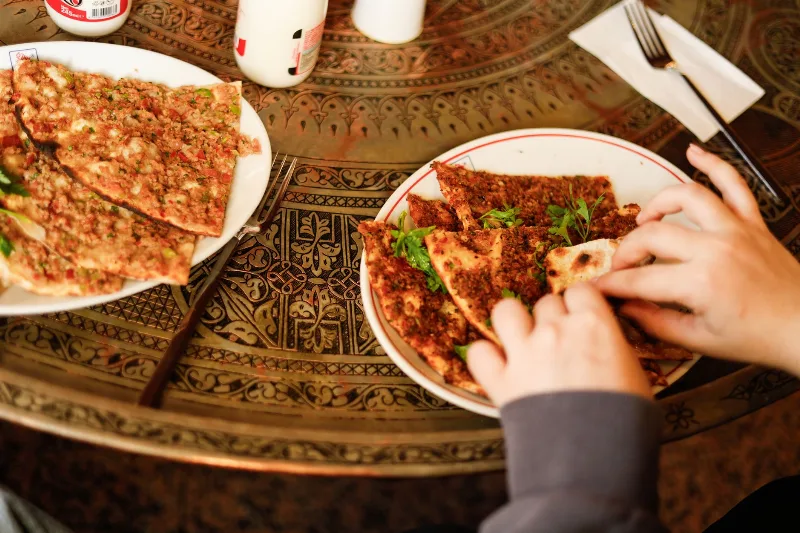
Lahmacun
Lahmacun is a thin, round flatbread spread with finely minced meat, tomato, pepper and spices, baked quickly at high heat and served with lemon and fresh parsley. It is one of Türkiye's most recognisable street and oven foods, with strong regional traditions across the southeast and beyond.
Lahmacun
Lahmacun is a paper-thin flatbread spread with a finely chopped, spiced meat topping and baked quickly at high heat. It is most closely associated with Şanlıurfa and Gaziantep, and is traditionally eaten rolled with lemon and parsley.
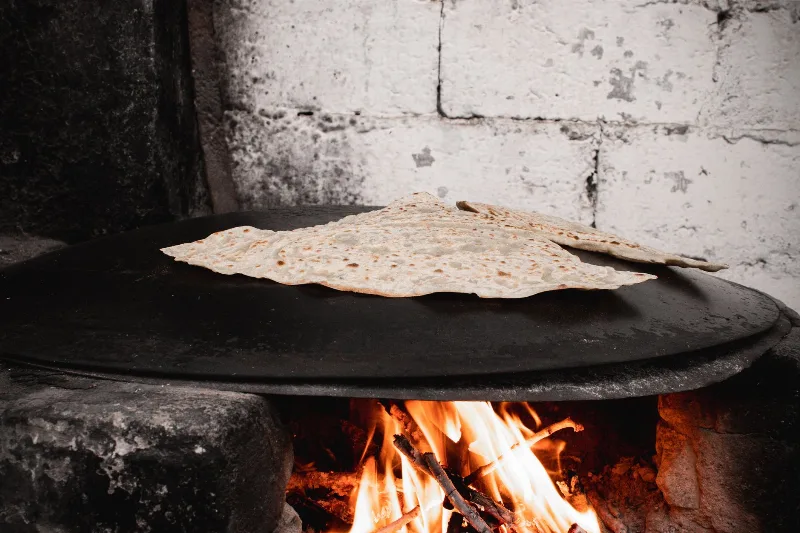
Bazlama
Bazlama is a soft, thick Turkish flatbread made from a leavened dough and cooked on a hot griddle. It is a staple of village baking across Anatolia, eaten warm with butter or used to wrap other foods.
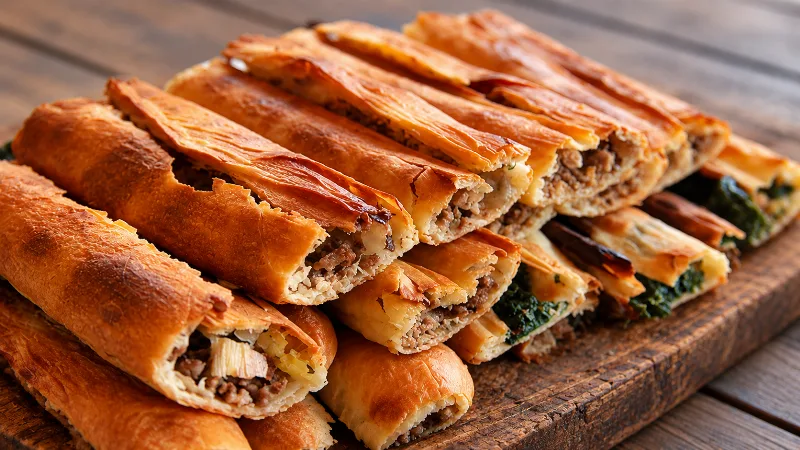
Bafra Pidesi
Bafra Pidesi is a soft, boat-shaped Turkish pide from the Bafra district of Samsun on the Black Sea coast, filled with ground meat, cheese or vegetables and baked quickly in a very hot oven.
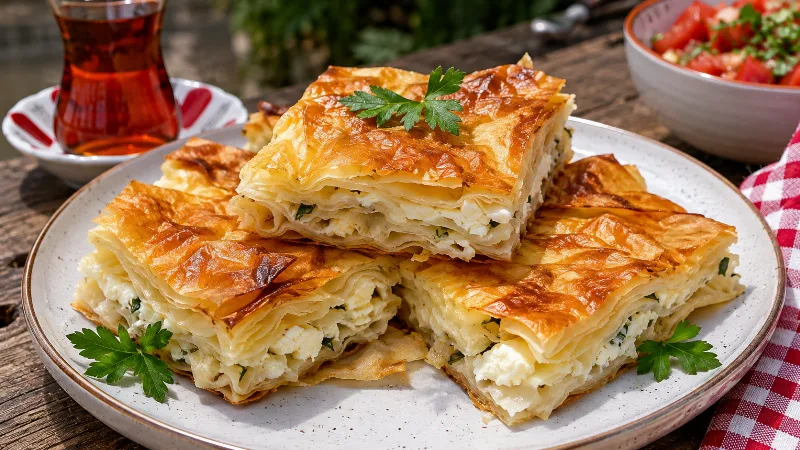
Su Böreği
Su Böreği is a layered Turkish savory pastry made by briefly boiling thin yufka sheets, then baking them with cheese and parsley. Its soft interior and golden top distinguish it within the wider börek family.

Traditional Villages of Türkiye
Türkiye's traditional villages blend stone houses, timber balconies and seasonal customs into landscapes that reveal the country's rural heritage.