
Künefe
Künefe is a hot, syrup-soaked dessert made from finely shredded kadayıf pastry wrapped around a mild, stretchy cheese, most closely associated with Hatay and the city of Antakya in southern Türkiye.
Künefe is a hot dessert built from two central components: finely shredded kadayıf pastry and a mild, elastic cheese. The pastry is packed around the cheese in a shallow pan, then cooked until the strands crisp and turn deep golden while the cheese inside softens into a molten, stretchy layer. Sweet syrup is poured over the dessert, usually right at the end of cooking or just before it is served. Künefe is most strongly associated with Hatay, the province in southern Türkiye whose capital is Antakya, and it belongs to a wider family of syrup-based desserts found across the eastern Mediterranean and the Levant.
What Künefe Is Made Of
The pastry used for künefe is a shredded form of kadayıf, often called tel kadayıf or "wire kadayıf." It is made from a thin dough that is stretched, drawn into very fine threads, and then dried so the strands stay separate. When packed into a pan, those threads form a light, airy layer rather than a solid sheet. The texture of the dry strands is what allows them to crisp on the outside while staying soft where they meet the cheese.
The cheese is the other defining element. Traditionally it is a fresh, unsalted cheese with a pronounced stretch, sometimes described as künefe peyniri or associated with a string-like cheese such as dil peyniri. Because it is not salted, it does not fight the syrup; instead it melts into a soft, faintly milky filling that pulls into long strands when the dessert is cut. Butter or clarified butter is used to help the pastry brown and to carry flavour, and sweet syrup — typically sugar cooked with water and sometimes a little lemon — is poured over the finished dessert. Ground pistachio is a common topping, and some servings add a spoonful of clotted cream alongside the cheese.
Where Künefe Comes From
Künefe is identified above all with Hatay and its central city, Antakya. The dessert is also strongly established in Gaziantep and other parts of southeastern Türkiye, where it appears on menus and in dedicated künefe shops. Its deeper roots lie in a broader Levantine tradition of cheese-and-pastry desserts known by related names such as kunafa or knafeh, which are found in Lebanon, Syria, Palestine, Jordan and Egypt in various forms.
Because this dessert family is shared across several countries and has developed over a long period, its precise origin is not reliably fixed to a single place or date. What can be said with confidence is that the shredded-pastry, cheese-filled, syrup-soaked form is the version that took root in Hatay and the surrounding region, and that Hatay is the area most closely tied to it within Türkiye. It is worth distinguishing the dessert itself from its raw ingredients: the kadayıf, the cheese and the pistachio all have their own production traditions, while künefe refers specifically to the finished cooked dish.
How It Is Traditionally Prepared
Künefe is traditionally made in a shallow round pan, often a copper one, which conducts heat evenly and gives the pastry a uniform colour. The kadayıf is worked with butter so that the strands are coated and slightly compacted. A first layer of pastry is pressed into the pan, the cheese is spread over it, and a second layer of pastry is packed on top to enclose the filling completely. The pan is then placed over heat, either on a stove or over a flame, and cooked until the underside is crisp and golden.
The dessert is turned so that the second side browns as well, which leaves the cheese fully melted inside while both surfaces of the pastry become crisp. Syrup is added near the end or after cooking, so that it soaks into the warm pastry without making it soggy. The cooked künefe is then portioned and topped, most commonly with ground pistachio. This is a stovetop dessert rather than an oven-baked one in most traditional preparations, although oven versions exist.
Texture and Flavour
The appeal of künefe lies in contrast. The outer pastry is crisp and slightly brittle where it has browned, with a faintly toasted, buttery flavour. Beneath it, the cheese is soft, warm and elastic, mild and milky rather than sharp. The syrup brings sweetness that soaks into the strands at the edges and centre, and the pistachio adds a dry, nutty crunch on top. Eaten hot, the combination is rich and unctuous; the dessert is not designed to be eaten cool, and it firms up as it sits.
How It Is Served
Künefe is served hot and immediately, usually cut into portions straight from the pan or transferred to a plate while still warm. Ground pistachio is the standard garnish, and in some traditions a spoonful of kaymak, a thick clotted cream, is served on the side or on top to balance the syrup. Because it is very sweet and rich, künefe is often accompanied by a glass of Turkish tea or cold water rather than another dessert. It is commonly eaten as a finish to a meal or as a treat in its own right, and in Hatay it is closely tied to gatherings, celebrations and everyday occasions alike.
Regional Variations and Related Desserts
Künefe should not be confused with other kadayıf-based desserts. Kadayıf dolması, for instance, wraps a nut filling such as walnut inside kadayıf strands and is a different preparation. Plain kadayıf desserts may use nuts rather than cheese, and their texture and balance are quite distinct from the molten, cheesy centre of künefe.
Variations exist between regions and between individual makers. The type and stretch of the cheese can differ, some versions lean more heavily on pistachio, and some add kaymak. Sweetness levels vary, as does the degree to which the pastry is crisped. It is fair to say there is no single rigid formula; rather, there is a shared approach in which shredded kadayıf, melting cheese and syrup meet in a hot, freshly cooked dessert.
Künefe and the Identity of Hatay
Within Türkiye, künefe functions almost as a signature of Hatay. The province's culinary identity draws on a long history of mixed influences, and künefe sits at the centre of its dessert tradition, alongside other regional specialties. For many people, the name künefe immediately calls to mind Antakya and the southeast, and the dessert travels with that association wherever it is made. Understanding künefe means understanding a simple but demanding idea: crisp shredded pastry, a mild cheese that melts and stretches, and syrup applied at the right moment — a dessert defined by heat, texture and the balance between sweet and milky.
Related content

Gaziantep
Gaziantep is a major city in southeastern Türkiye and the administrative centre of its province, widely recognised as the country's gastronomic capital and known for its citadel, bazaars and the Zeugma Mosaic Museum.
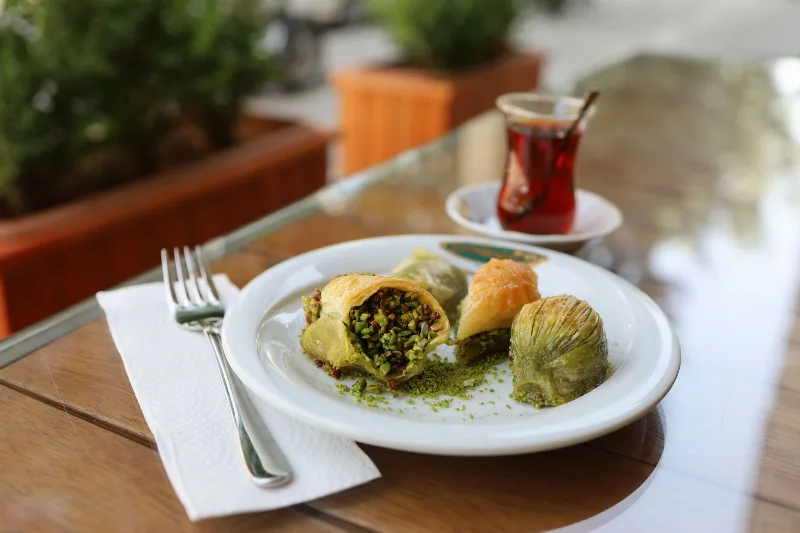
Culinary Delights of Gaziantep
Gaziantep in southeastern Türkiye is known for a regional cuisine built on pistachios, pepper paste, bulgur and slow-cooked dishes that reflect centuries of trade and local tradition.
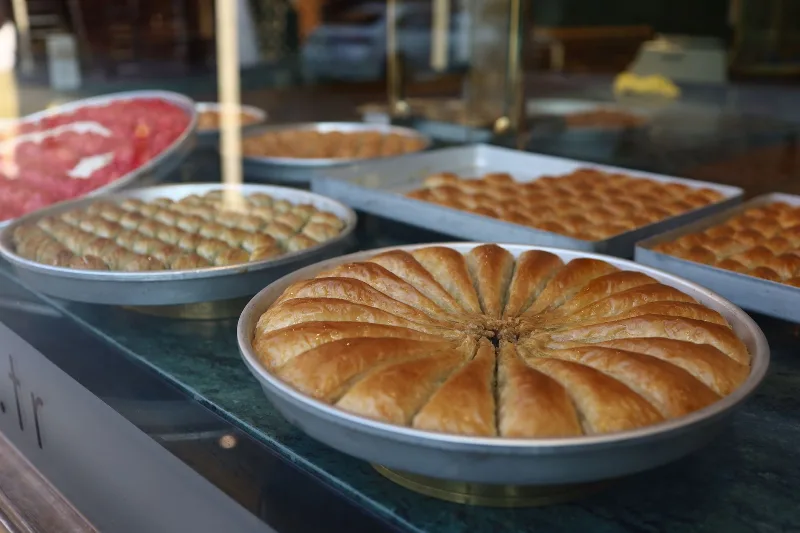
Baklava
Baklava is a traditional Turkish dessert made of layered phyllo dough, filled with nuts and sweetened with syrup. Strongly associated with Gaziantep, it is a staple of celebrations and a symbol of Turkish hospitality.
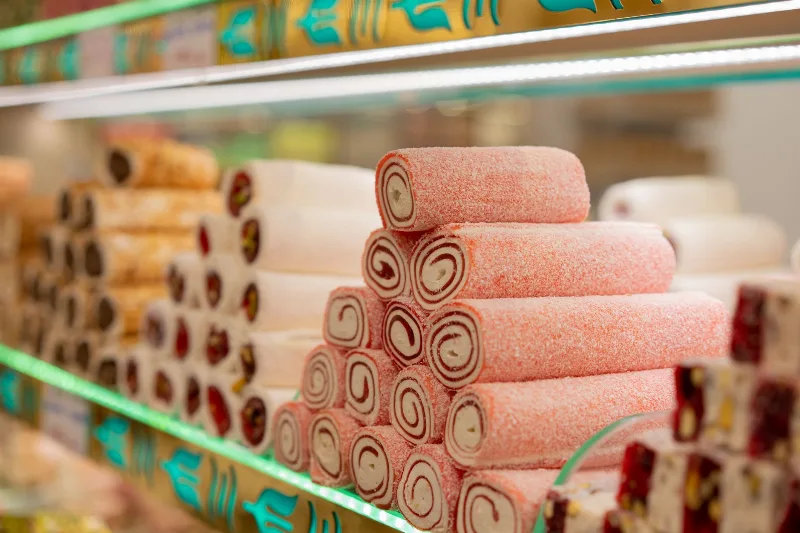
Turkish Delight and Sweets
Turkish delight sits at the heart of a layered confectionery culture that runs from Ottoman court kitchens to family tables across Türkiye. The sweets range from chewy lokum and syrup-soaked pastries to milk puddings and sesame helva.
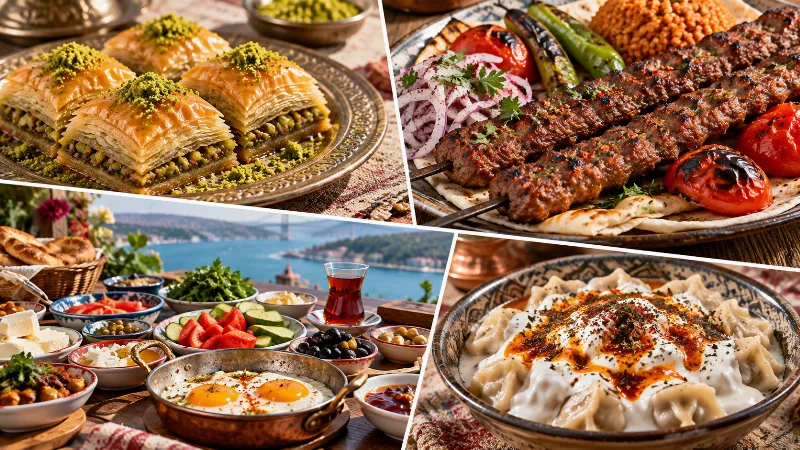
Food
Regional dishes, desserts, local ingredients and culinary traditions across Türkiye.
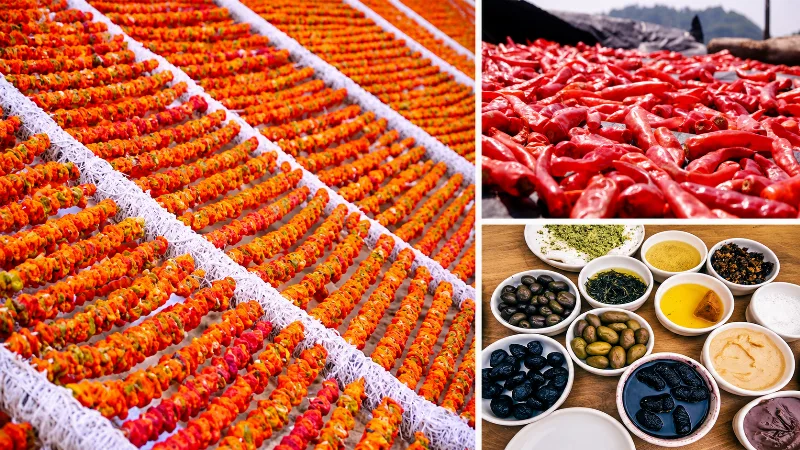
Why Turkish Food Changes from Region to Region
Climate, geography, agriculture and local history shape the ingredients, cooking methods and everyday dishes found across Türkiye. Türkiye’s cuisine is often described as a single national tradition, but food changes considerably from one region to another. Coastal climate, mountain geography, agricultural production, local history and available ingredients all influence what is cooked and how meals are prepared. A dish common on the Black Sea coast may be uncommon in southeastern Türkiye, while ingredients associated with the Aegean can play a much smaller role in the interior. These regional differences form one of the main characteristics of Turkish food culture.