
Baklava
Baklava is a traditional Turkish dessert made of layered phyllo dough, filled with nuts and sweetened with syrup. Strongly associated with Gaziantep, it is a staple of celebrations and a symbol of Turkish hospitality.
Baklava is a rich, sweet pastry composed of many paper-thin layers of phyllo dough, filled with finely chopped nuts and bound together with a sugar-based syrup. It is a hallmark of Turkish cuisine, with its most renowned form coming from the southeastern city of Gaziantep. While similar pastries are made across the Middle East, the Balkans, and the Caucasus, the Turkish interpretation is noted for its delicate, crisp layers, generous use of butter, and the quality of its syrup.
Origins and Regional Identity
The exact origins of baklava are a subject of debate among food historians. Some trace its roots to Central Asian layered breads, while others point to the Ottoman palace kitchens, where the dessert was refined and popularized. What is clear is that by the 15th century, baklava was being prepared in the imperial kitchens of Istanbul. Over time, it spread throughout the Ottoman Empire, with each region developing its own style.
Gaziantep, known historically as Antep, emerged as a particularly important center for baklava. The city's proximity to pistachio orchards and its tradition of skilled pastry-making contributed to its reputation. Today, Gaziantep baklava is distinguished by its use of locally grown pistachios, its exceptionally thin phyllo layers, and a meticulous preparation process. In recognition of its unique character, the baklava of Gaziantep has been granted a protected geographical indication in Turkey.
Ingredients and Preparation
The core ingredients of baklava are simple: flour, water, and a pinch of salt for the phyllo dough; clarified butter for brushing; nuts such as pistachios or walnuts for the filling; and sugar, water, and sometimes lemon juice for the syrup. The quality of these ingredients, especially the nuts and the butter, significantly influences the final product.
Making baklava is a labor-intensive process. The phyllo dough is stretched until it is nearly transparent, then cut into sheets. Dozens of these sheets are layered in a large tray, each brushed with clarified butter. A layer of finely chopped nuts is spread in the middle, and more buttered sheets are placed on top. The assembled pastry is cut into diamonds, squares, or rolls before baking. After baking to a golden brown, a hot syrup is poured over the pastry, which absorbs the liquid and becomes glossy and sweet. The timing of the syrup application—whether hot syrup over hot baklava or cool syrup over hot baklava—varies by tradition and affects the texture.
Texture, Flavor, and Appearance
A well-made piece of baklava offers a contrast of textures: the top layers are crisp and flaky, while the syrup-soaked bottom layers are softer and moist. The nuts provide a tender crunch, and the clarified butter adds a rich, savory note. The flavor is sweet and nutty, with a subtle tartness from the lemon in the syrup. Visually, baklava is golden brown and glistening, often garnished with crushed pistachios scattered over the top. When cut, the layers are visible, showcasing the craftsmanship.
Regional Variations
Within Turkey, baklava varies by region and household. In Gaziantep, pistachios are the preferred filling, and the baklava is known for its thin, delicate layers and rich, buttery flavor. In other parts of Anatolia, walnuts are more common, and the pastry may be slightly thicker. Rolled baklava, known as burma baklava, is a popular variation where the phyllo is rolled around the nut filling. Some regional versions use honey instead of sugar syrup, or add milk to the syrup, creating a creamier texture.
Outside Turkey, similar desserts are found in Greek, Arabic, and Armenian cuisines, often with different names and slight variations in ingredients. Greek baklava, for example, frequently uses walnuts and honey, while Middle Eastern versions may include a mix of nuts and a rosewater or orange blossom syrup. The Turkish style is generally characterized by its use of clarified butter and a clear sugar syrup.
Serving and Occasions
Baklava is traditionally served on special occasions and celebrations. It is a staple during Ramadan and Eid, at weddings, and during family gatherings. It is often offered to guests as a gesture of hospitality. In Gaziantep and other parts of Turkey, baklava is sometimes served with kaymak, a thick clotted cream, which balances the sweetness. A cup of Turkish tea or coffee usually accompanies it. While it is a dessert, it can also be enjoyed as a sweet treat with afternoon tea.
Cultural Significance
Baklava holds a significant place in Turkish culture. It symbolizes generosity and celebration, and the art of making it is passed down through generations. In Gaziantep, baklava-making is a respected profession, and the city takes great pride in its pastry heritage. The dessert is also a popular gift, often presented in ornate boxes during holidays and special events. Its presence at the table signals a festive occasion.
Differences from Similar Dishes
Baklava is often confused with other syrup-soaked pastries, but it has distinct characteristics. Kadayıf, for instance, is made from shredded phyllo rather than layered sheets, giving it a different texture. Künefe is a cheese-filled dessert made with kadayıf and soaked in syrup. Greek baklava is similar but may use different nuts and syrups. The defining feature of Turkish baklava is its many layers of thin phyllo, the butter, and the specific balance of nuts and syrup. Each element contributes to its unique identity.
Related content
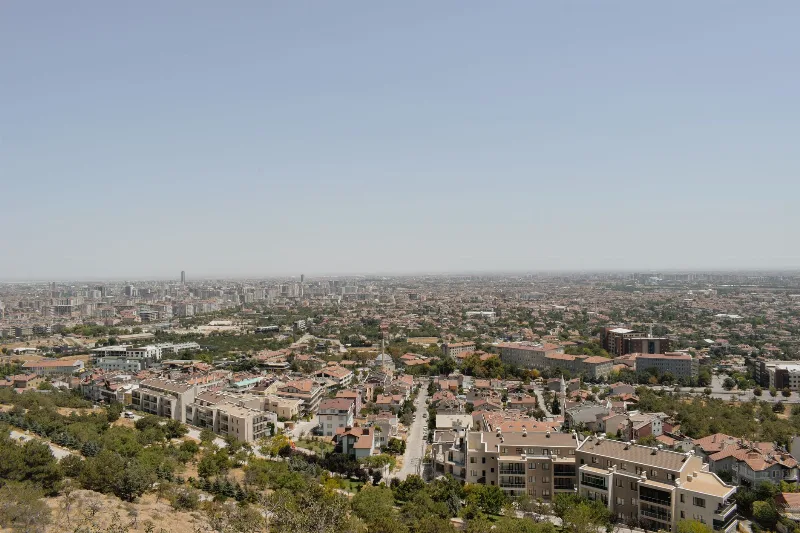
Gaziantep
Gaziantep is a major city in southeastern Türkiye and the administrative centre of its province, widely recognised as the country's gastronomic capital and known for its citadel, bazaars and the Zeugma Mosaic Museum.
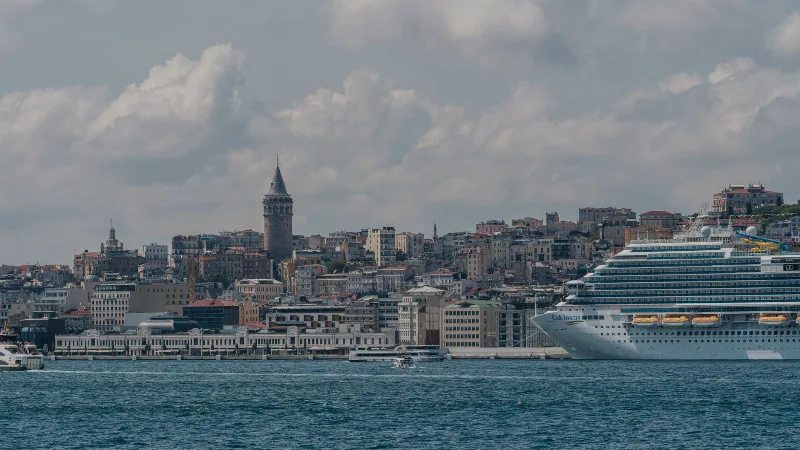
Istanbul
Istanbul is Türkiye's largest city and the country's only metropolis that spans two continents, divided by the Bosphorus strait into a European and an Asian half. Its long run as an imperial capital left a historic core of palaces, mosques and bazaars that still shapes the city's identity.
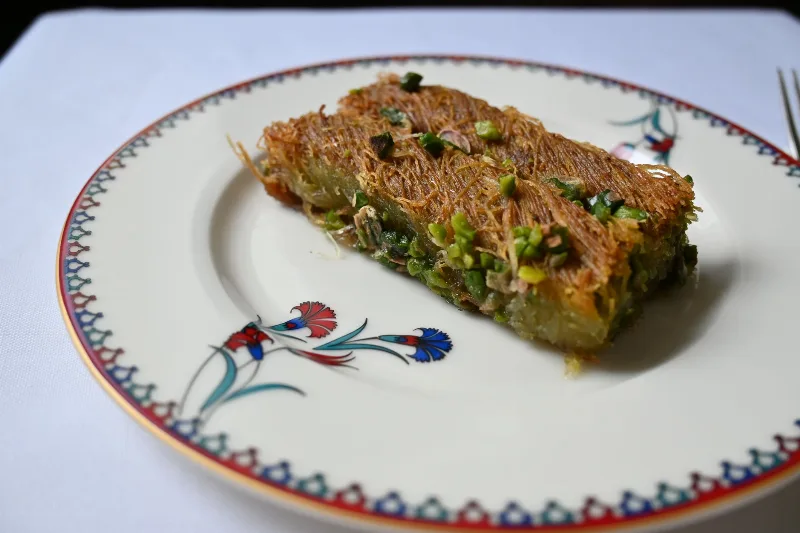
Künefe
Künefe is a hot, syrup-soaked dessert made from finely shredded kadayıf pastry wrapped around a mild, stretchy cheese, most closely associated with Hatay and the city of Antakya in southern Türkiye.
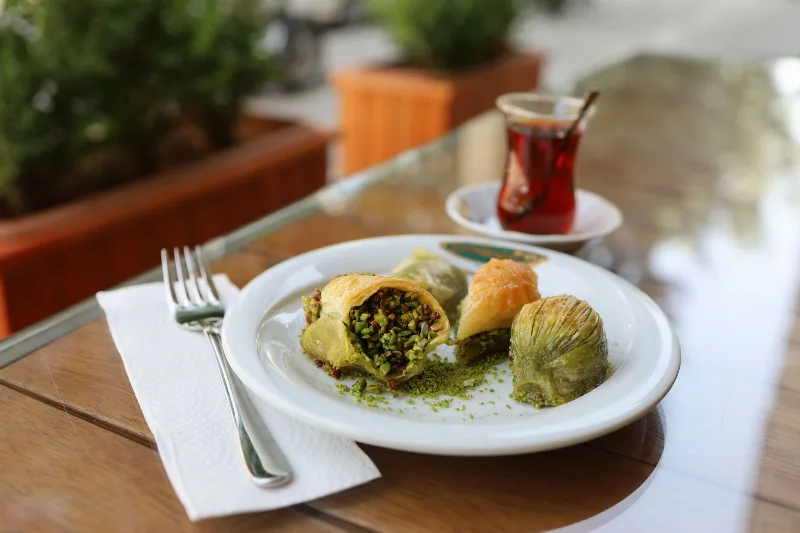
Culinary Delights of Gaziantep
Gaziantep in southeastern Türkiye is known for a regional cuisine built on pistachios, pepper paste, bulgur and slow-cooked dishes that reflect centuries of trade and local tradition.
Turkish Delight and Sweets
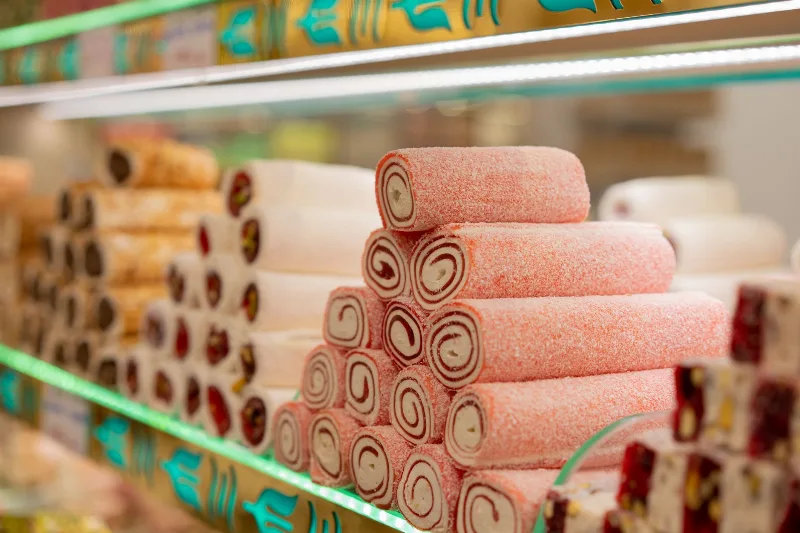
Turkish delight sits at the heart of a layered confectionery culture that runs from Ottoman court kitchens to family tables across Türkiye. The sweets range from chewy lokum and syrup-soaked pastries to milk puddings and sesame helva.
Food
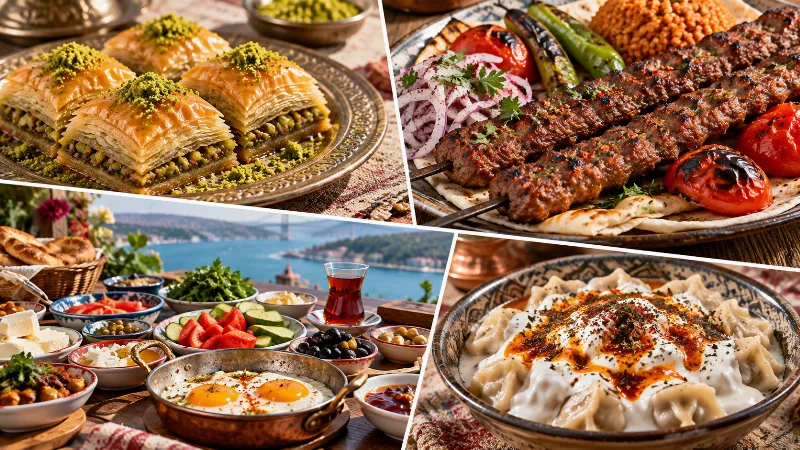
Regional dishes, desserts, local ingredients and culinary traditions across Türkiye.