
Istanbul
Istanbul is Türkiye's largest city and the country's only metropolis that spans two continents, divided by the Bosphorus strait into a European and an Asian half. Its long run as an imperial capital left a historic core of palaces, mosques and bazaars that still shapes the city's identity.
Istanbul is the largest city in Türkiye and one of the few major metropolises in the world that occupies two continents at once. It spreads across both the European and the Asian shores of the Bosphorus, the strait that links the Black Sea with the Sea of Marmara and, through the Dardanelles, with the Mediterranean. Administratively it is a metropolitan municipality and the seat of Istanbul Province, and for many centuries it served as the capital of the Roman, Byzantine and Ottoman Empires.
Where Istanbul Stands
The city is built around water rather than beside it. The Bosphorus cuts the urban area into a European side and an Asian side, and the Golden Horn, a sheltered inlet, further divides the European half into the historic peninsula to the south and the Beyoğlu, Beşiktaş and Şişli districts to the north. To the south the city meets the Sea of Marmara, to the north the Black Sea coast of the province. Bridges and an undersea rail link connect the two continents, and commuter ferries crisscross the strait as part of everyday transport rather than as a sightseeing novelty.
The province extends well beyond the built-up core, reaching west into the Thracian plains and east into wooded hills and coastal settlements on the Asian side. This means the municipality covers both dense inner-city quarters and semi-rural outskirts within the same administrative boundary.
Water as the City's Structure
The Bosphorus is not a backdrop but a working channel. Shipping traffic moves through it continuously, and its shoreline is lined with waterfront mansions, small harbours, quays and fishing spots. The Sea of Marmara shore on the European side faces the Princes' Islands, an island district of the city that is reached by boat and where motor vehicles are largely absent. Inland, several streams and valleys break up the built fabric, and the higher ground offers wide views over the strait.
Layers of History
Few cities carry their past so visibly. The historic peninsula holds the remains of the Hippodrome, the colonnaded streets of the Byzantine city and the land walls that once enclosed it. Hagia Sophia, first a Byzantine cathedral and later a mosque, stands close to the Sultan Ahmed Mosque and the Topkapı Palace complex, the Ottoman court for centuries. The Grand Bazaar and the surrounding covered markets preserve the commercial logic of an imperial capital, while the Galata Tower across the Golden Horn marks the Genoese quarter that grew alongside the Byzantine city.
Later layers matter too: nineteenth-century apartment blocks in Beyoğlu, waterfront palaces along the Bosphorus, and the apartment districts that absorbed the city's rapid growth in the twentieth century. Each period added its own scale and material, from stone and brick to concrete and glass.
The Historic Peninsula
This is the administrative and monumental heart, containing the major monuments as well as residential quarters such as Fatih and the shoreline neighbourhoods of Eminönü and Kumkapı. Much of it is walkable, though the terrain rises and falls noticeably between the sea and the ridge. Historic places in this area carry their own detailed coverage elsewhere in the city's content, so here they are best understood as parts of a single dense urban fabric.
Beyoğlu, Galata and the Northern European Side
Across the Golden Horn, Beyoğlu and its central avenue form the commercial and cultural counterweight to the historic peninsula, with embassies, churches, passages and long-established shops. Along the Bosphorus to the north, Beşiktaş, Ortaköy and further waterfront districts combine residential streets with public squares and parks. This side of the city is also where much of the modern skyline has developed in business districts such as Levent and Maslak.
The Asian Side
East of the strait, Üsküdar preserves an older, quieter character with mosques and hillside streets facing the water, while Kadıköy has developed into a busy centre of markets, bookshops and evening life. Further north, Bosphorus villages such as Çengelköy, Kanlıca and Beykoz retain a more relaxed waterfront feel, backed by wooded slopes. The Asian side often surprises visitors with its scale: it contains large residential districts, universities and extensive green areas.
Climate and When to Visit
Istanbul has a transitional climate, with hot and humid summers, cool and often wet winters, and a marked spring and autumn. Rain is possible throughout the year and can be heavy in winter. Spring and autumn are generally the most comfortable periods for walking, when temperatures are moderate and daylight is long. Summer brings the busiest conditions and the highest humidity, while winter can bring cold winds from the Black Sea.
Reaching the City and Getting Around
Istanbul is served by two international airports, one on the European side and one on the Asian side, and it is connected by road and rail to the rest of Türkiye. Within the city, metro lines, trams, buses, ferries and the rail tunnel under the Bosphorus form the main network, and the ferries in particular double as a way of seeing the strait from the water. Traffic is heavy throughout the year, so travel times can vary greatly.
Istanbul in Its Region
The city anchors the Marmara region, sitting between Thrace to the west, the Marmara coast and Bursa to the south, and the Black Sea coast to the north. It works as a hub for exploring that wider area, with easy connections toward historic towns in Thrace, the Marmara islands and the Aegean and Anatolian interiors beyond. Its food culture reflects this position, drawing on Ottoman palace cooking, Aegean and Anatolian traditions alongside the seafood and street food typical of a port city.
Understanding Istanbul as a water-shaped, multi-centred metropolis rather than a single historic core explains most of what visitors encounter here: long distances, distinct local characters on each shore, and a continuous overlap of imperial monuments with ordinary city life.
Discover Food in Türkiye
All food →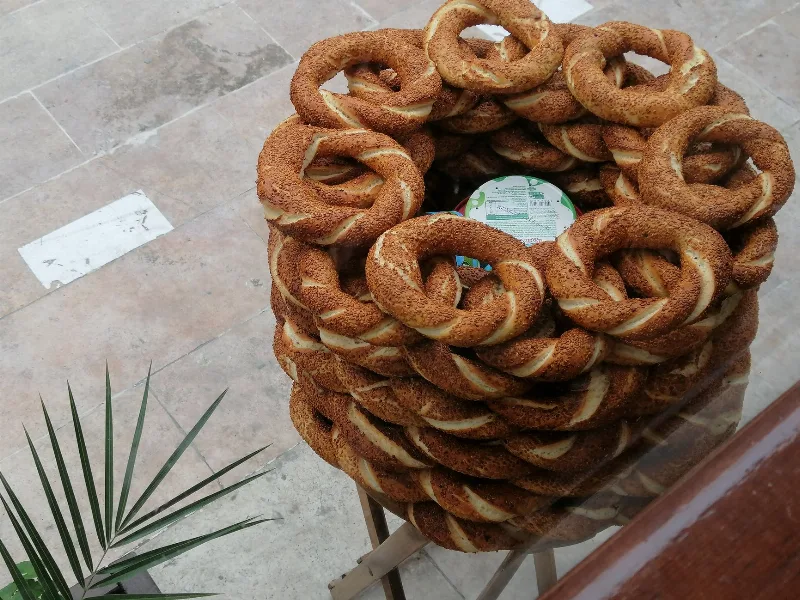
Simit
Simit is a ring-shaped Turkish bread covered in sesame seeds, strongly associated with Istanbul and sold as everyday street food. It is eaten fresh, most often with tea, and has a crisp crust around a chewy crumb.
Explore →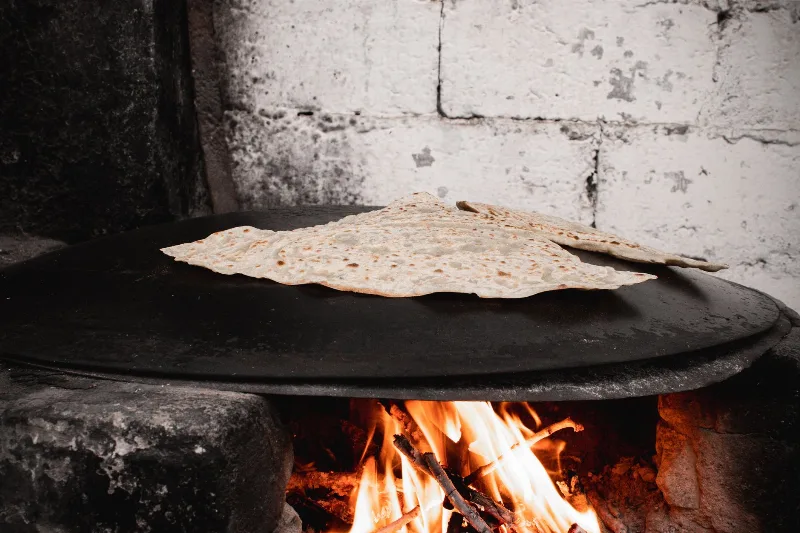
Bazlama
Bazlama is a soft, thick Turkish flatbread made from a leavened dough and cooked on a hot griddle. It is a staple of village baking across Anatolia, eaten warm with butter or used to wrap other foods.
Explore →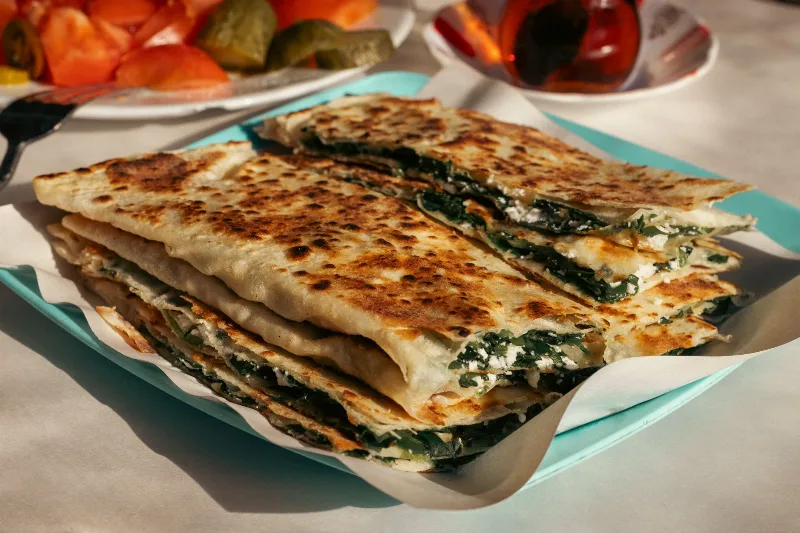
Gözleme
Gözleme is a thin, hand-rolled Anatolian flatbread folded around savory fillings such as cheese, spinach, or minced meat and cooked on a sac griddle. The article covers its regional variations, cooking method, texture, and traditional serving style.
Explore →Related content
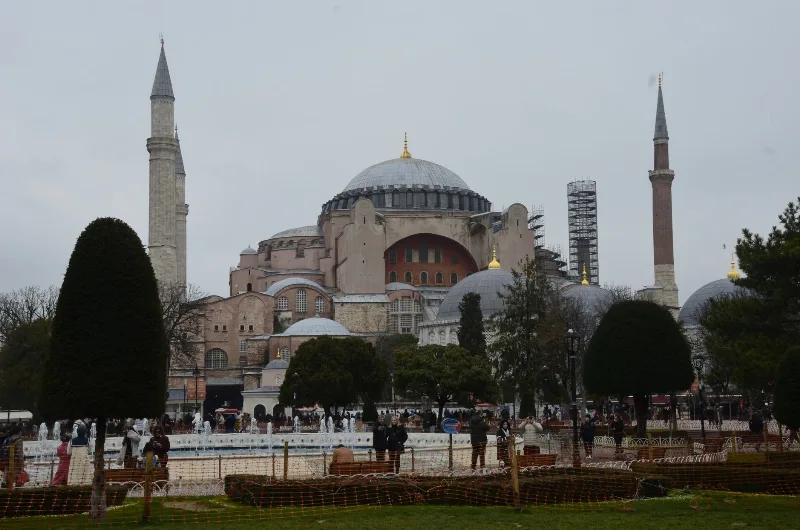
Hagia Sophia
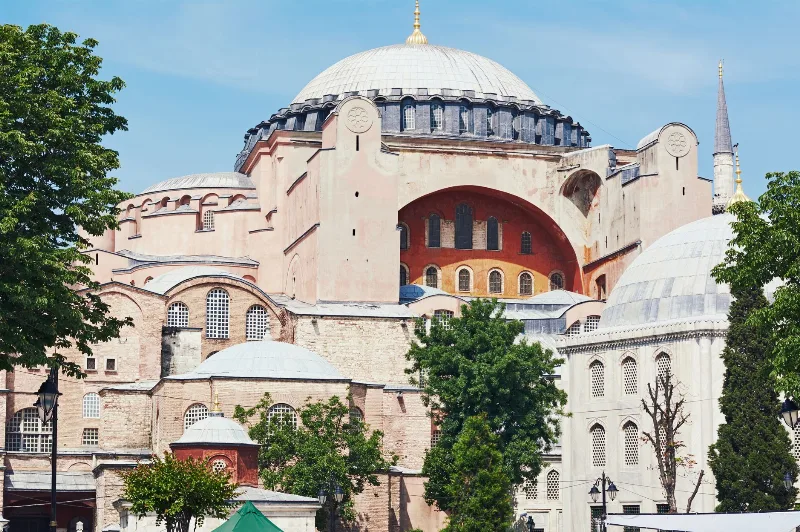
Hagia Sophia in Istanbul is a monumental religious building begun under the Byzantine emperor Justinian I in 537 CE, later converted into an Ottoman mosque and today serving again as a mosque and UNESCO-listed monument.
Topkapı Palace
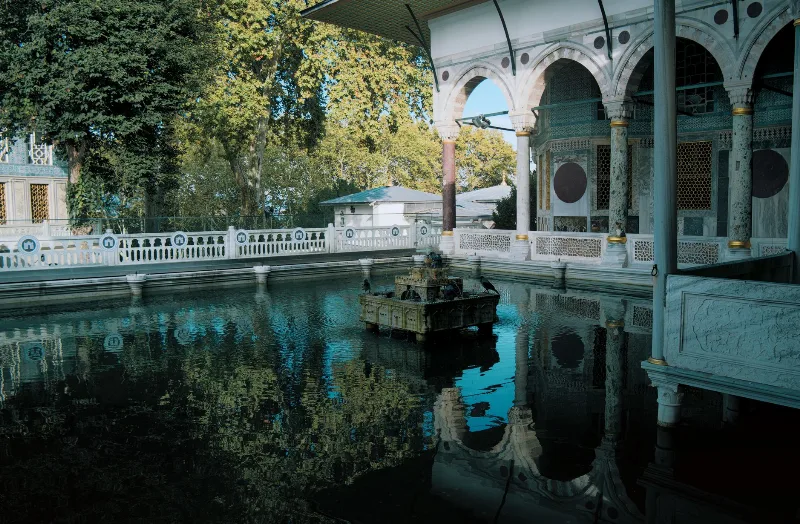
Topkapı Palace on Istanbul's Seraglio Point served as the residence and administrative heart of the Ottoman sultans for nearly four centuries, and today it is a museum displaying its courtyards, opulent interiors and the imperial collections of the Sacred Relics.
Bursa
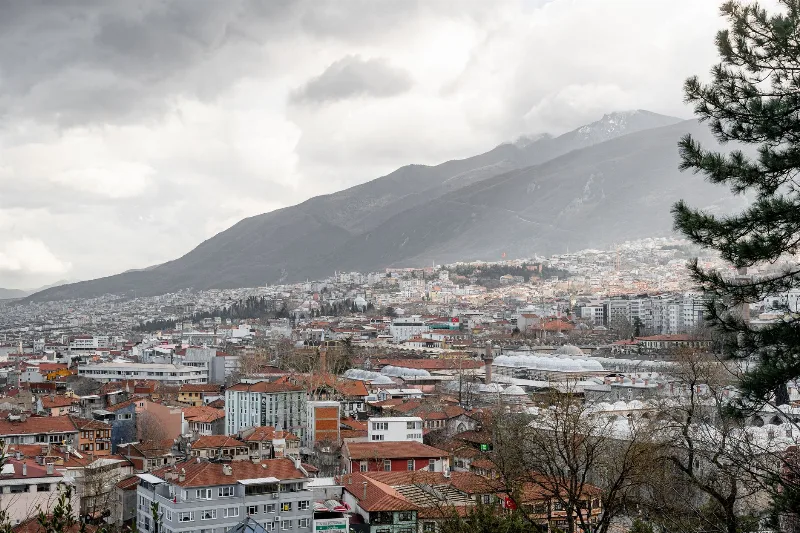
Bursa is a major metropolitan city in northwestern Türkiye and the first great capital of the Ottoman Empire, known for its silk heritage, thermal springs and the mountain of Uludağ rising directly behind it.
1-Day Istanbul Historic Peninsula Route
Explore Istanbul's Historic Peninsula in one day on foot, visiting Hagia Sophia, the Blue Mosque, Topkapı Palace, and the Grand Bazaar. This compact walking route covers the highlights of Sultanahmet with a logical, easy-to-follow order.
Blue Mosque
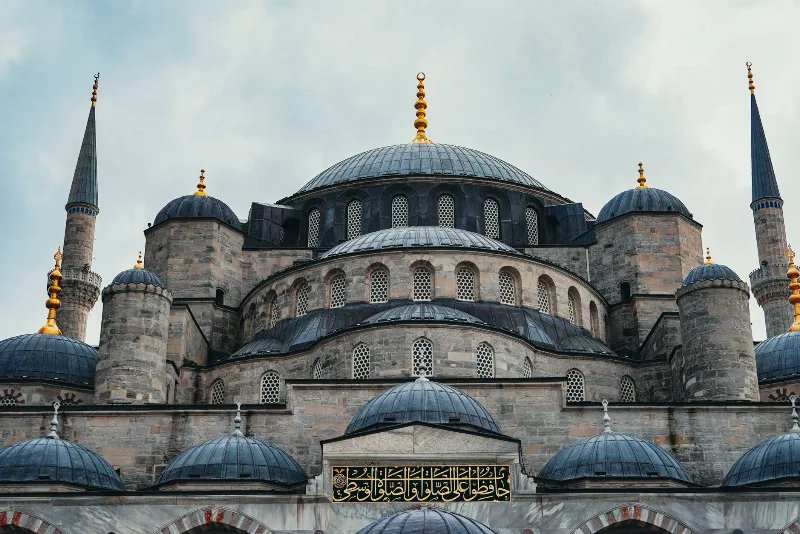
The Blue Mosque, known formally as the Sultan Ahmed Mosque, is an early 17th-century Ottoman mosque in Istanbul famous for its hand-painted blue Iznik tiles and six minarets.
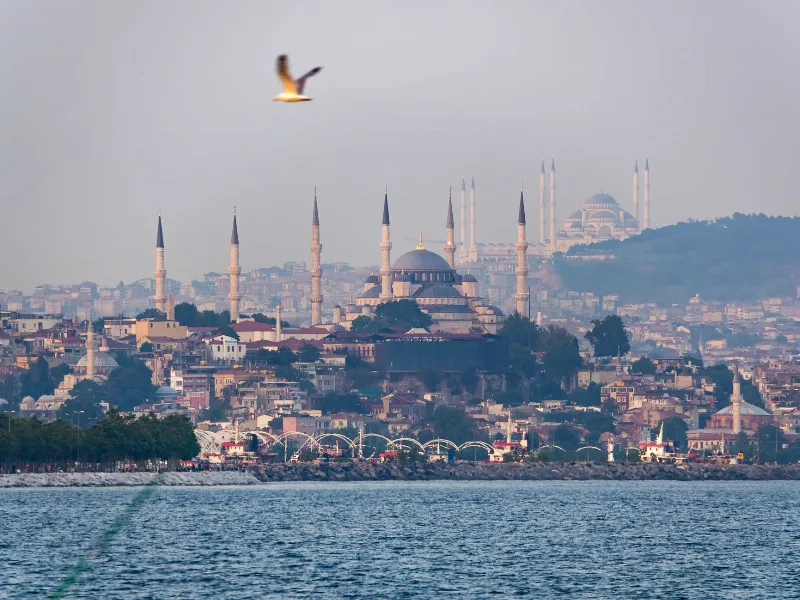
Istanbul's Historic Sultanahmet
Sultanahmet is Istanbul's historic core, a walkable peninsula of Byzantine and Ottoman monuments facing the Bosphorus and the Sea of Marmara.