
Topkapı Palace
Topkapı Palace on Istanbul's Seraglio Point served as the residence and administrative heart of the Ottoman sultans for nearly four centuries, and today it is a museum displaying its courtyards, opulent interiors and the imperial collections of the Sacred Relics.
Topkapı Palace is the former imperial residence and administrative centre of the Ottoman sultans, located on the Seraglio Point (Sarayburnu) in Istanbul, on the promontory where the Bosphorus, the Golden Horn and the Sea of Marmara meet. Built from the mid-fifteenth century onward in the decades following the Ottoman conquest of Constantinople in 1453, it remained the principal seat of the sultan and his government for roughly 380 years. In the twentieth century it was converted into a museum, and its courtyards, pavilions, treasury and the collection of Sacred Relics make it one of the most substantial surviving ensembles of Ottoman architecture.
Location and Setting
The palace occupies the tip of the historic peninsula, a position chosen for control and defence rather than seclusion. From its terraces and outer walls the water is visible on several sides: the Sea of Marmara and the Bosphorus to the south and east, the Golden Horn to the north, and the busy harbour beyond. This geography shaped the layout, since the complex had to accommodate a growing court inside a defined walled precinct while framing wide views across the imperial capital. The surrounding district, the old city of Constantinople, contains many of Istanbul's principal Byzantine and Ottoman monuments, and the palace sits within the same historic area.
From the Conqueror's New Palace to Topkapı
Construction began under Sultan Mehmed II, who ordered a new palace to be built here after taking the city. The core of the complex was in use by the second half of the fifteenth century, and later sultans extended and remodelled it according to their needs and tastes. The name used over the centuries was simply the New Palace, or later the Topkapı, meaning cannon gate, after a nearby coastal gate. For generations the site functioned simultaneously as private household, government office, military command and ceremonial stage. The court's move to a new palace on the Bosphorus in the mid-nineteenth century marked the end of its role as the sultan's official residence, and after the establishment of the Turkish Republic the complex was opened as a museum in 1924.
The Courtyard Structure
The palace is organised as a sequence of courtyards that become progressively more private, a scheme that reflects the structure of the Ottoman court itself. The first courtyard, entered through a monumental gate, was the outermost zone open to the public and included the church of Hagia Irene and the great fountain of Ahmed III. A second gate, the Gate of Salutation, led into the courtyard of government, where the imperial council met and where the Tower of Justice stood as a symbol of the sultan's oversight. The third courtyard was the sultan's own domain, containing the audience chamber, the treasury and the pavilions reserved for the ruler and his household. The fourth courtyard consists of gardens and terraced kiosks overlooking the water.
Hall of the Imperial Council and Tower of Justice
In the second courtyard the council chamber preserves the setting in which the empire's highest officials deliberated. The adjoining tower dominated the courtyard and communicated the authority of the palace over the state apparatus gathered below it. The same courtyard was flanked by the palace kitchens, whose long rows of chimneys are among the most recognisable elements of the complex; the kitchens now house a large collection of porcelain, including wares imported from China that testify to the reach of Ottoman trade.
The Harem
The Harem occupies a distinct section of the palace, entered separately from the state rooms, and grew in stages from the sixteenth century through the seventeenth. It comprised the apartments of the sultan, the quarters of the women of the imperial household and administrative spaces associated with the eunuchs. The Valide Sultan, the sultan's mother, held rooms of considerable importance within the complex. Decoration in the Harem ranges from early tiled surfaces to later painted interiors, and the succession of small rooms, passages and courtyards gives a concrete sense of how circulation and privacy were arranged within the imperial family's living zone.
The Treasury and the Sacred Relics
Among the palace's best-known contents are the imperial treasury, held in the pavilions of the third courtyard, and the collection of Sacred Relics. The relics entered the palace chiefly after the Ottoman conquest of Egypt in 1517 under Selim I, and the objects associated with the Prophet Muhammad, including the mantle kept in a dedicated chamber, were thereafter preserved with special care. Access to the relic chamber was restricted, and the room retains the character of a space intended for veneration rather than display.
Marks of the Ottoman Treasury
The treasury rooms show the wealth of the court through metalwork, ceremonial objects and jewellery, forming a record of craftsmanship and patronage centered on the imperial household. These collections remain central to what visitors expect to see at the site, and they are inseparable from the history of the building that housed them.
Architecture and Decoration
The architecture is recognisably Ottoman but not uniform, since each generation added pavilions and rooms in its own manner. Low, broad structures with wide eaves and colonnaded fronts give way to richly tiled interiors, and the kiosks of the fourth courtyard, built in the seventeenth century during the reign of Murad IV to commemorate military campaigns, show the integration of garden and building. Iznik tiles, carved stone, painted ceilings and gilded surfaces appear throughout, presenting a layered record of changing imperial taste rather than a single fixed style.
What Survives and What Visitors Can See
Much of the palace's fabric remains, and visitors pass through the same sequence of gates and courtyards that structured court life. The outer gardens, the council hall, the audience chamber, the library, the treasury pavilions, the terraces and the Harem can all be examined in person, and the collections of porcelain, arms, textiles and relics are displayed in historic rooms rather than purpose-built galleries. This means the visitor encounters objects and architecture together, understanding how a space such as the relic chamber or the audience room was used alongside what it contained.
Historical Change Through the Centuries
The palace was not built in a single campaign. Its fifteenth-century core was expanded in the sixteenth and seventeenth centuries as the court grew, and additions continued into the nineteenth. The shift of the sultan's residence to a new riverside palace changed the site's function, and its later conversion into a museum redefined it as a place of public access and conservation. Each of these phases left its own traces in the form of new pavilions, altered rooms and redecoration.
Visiting Context and Nearby Historic Places
The palace lies within the historic core of Istanbul, an area inscribed on the UNESCO World Heritage List in 1985 as the Historic Areas of Istanbul, and it is easily reached from the surrounding old-city districts on foot or by public transport. The terrain includes slopes, staircases and long courtyard walks, so comfortable footwear is useful. Weather in spring and autumn is generally mild, while summer can be hot and crowded. Nearby, still within the same historic setting, stand other major monuments of the Byzantine and Ottoman periods, including the great domed mosque complexes and the remains of the Hippodrome, all of which belong to the same urban landscape as the palace itself.
Routes
All routes →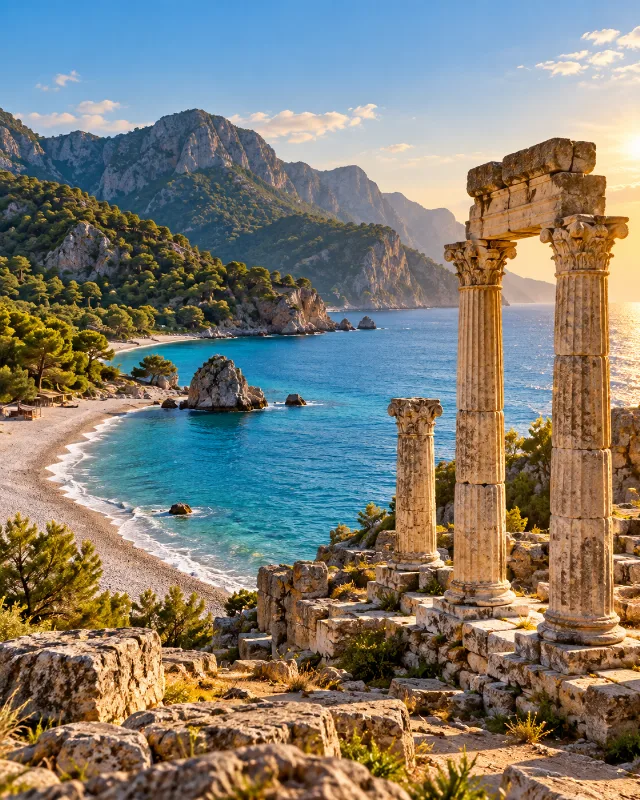
3-Day Antalya Ancient Coast Route
A three-day route combining Antalya’s old city with Perge, Aspendos, Side, Olympos and the Mediterranean landscapes around Çıralı.
Explore →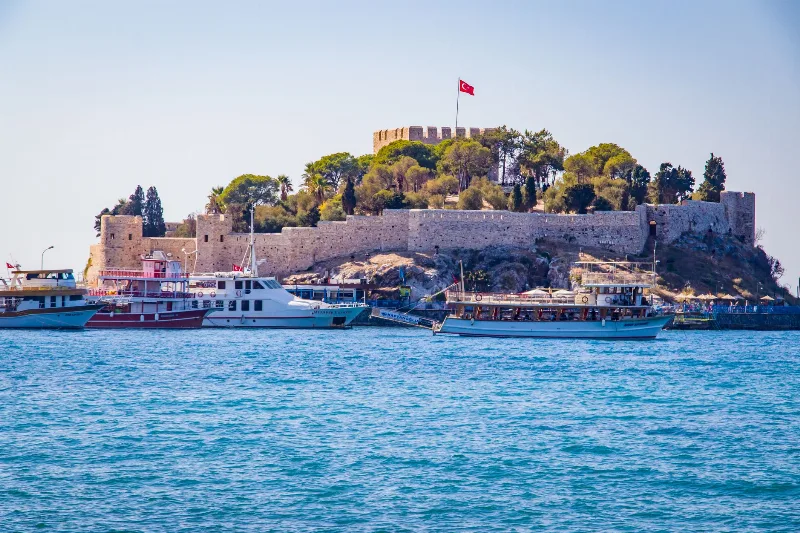
3-Day İzmir and Çeşme Route
A three-day Aegean journey from central İzmir to the Çeşme Peninsula, pairing a historic bazaar and waterfront with a castle, coastal bays, and the stone houses of Alaçatı.
Explore →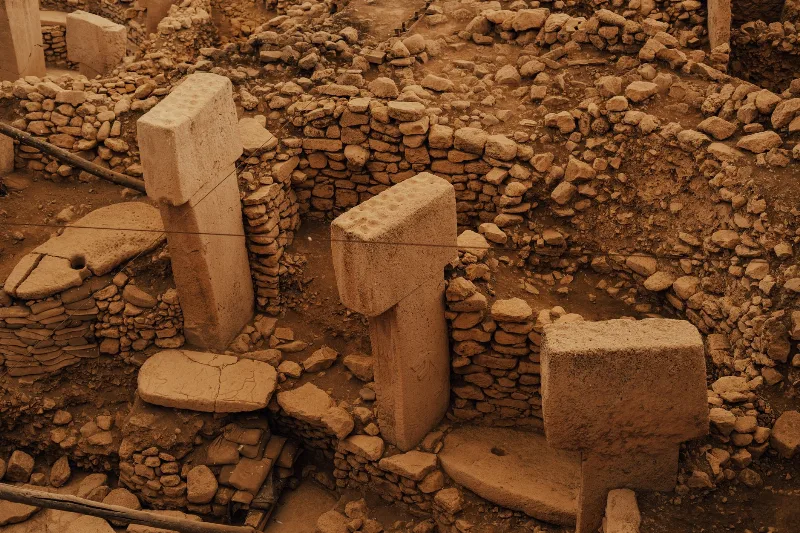
2-Day Şanlıurfa and Göbeklitepe Route
A two-day route through Şanlıurfa's sacred historic quarter, the world's oldest known temple at Göbeklitepe and the beehive houses of the Harran plain, starting and finishing in Şanlıurfa city.
Explore →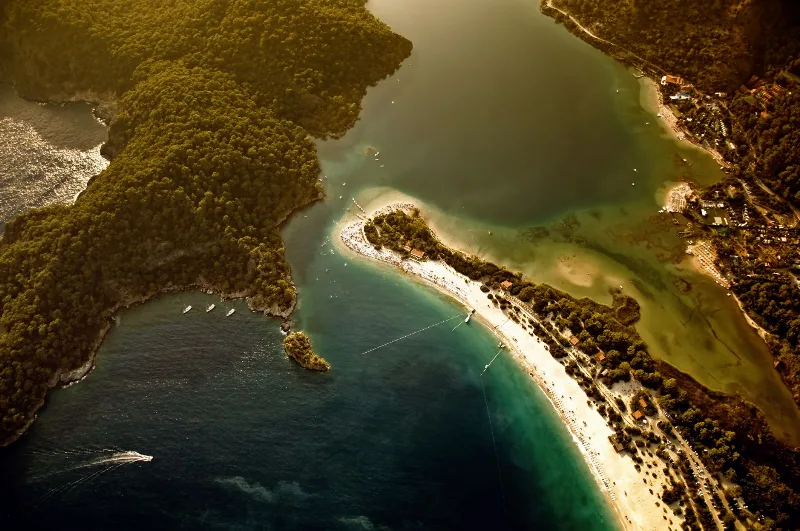
4-Day Lycian Coast Route
A four-day route along Turkey's Lycian coast, driving from Fethiye and Ölüdeniz through Kalkan, Kaş, Kekova, Demre and Olympos to finish in Antalya.
Explore →Related content
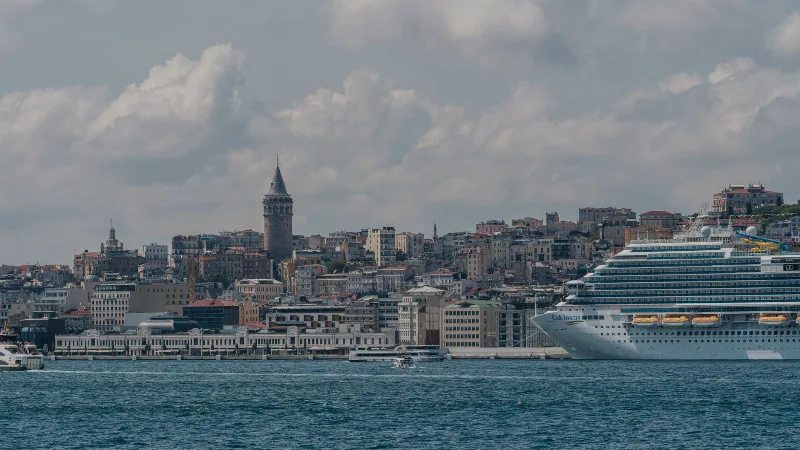
Istanbul
Istanbul is Türkiye's largest city and the country's only metropolis that spans two continents, divided by the Bosphorus strait into a European and an Asian half. Its long run as an imperial capital left a historic core of palaces, mosques and bazaars that still shapes the city's identity.
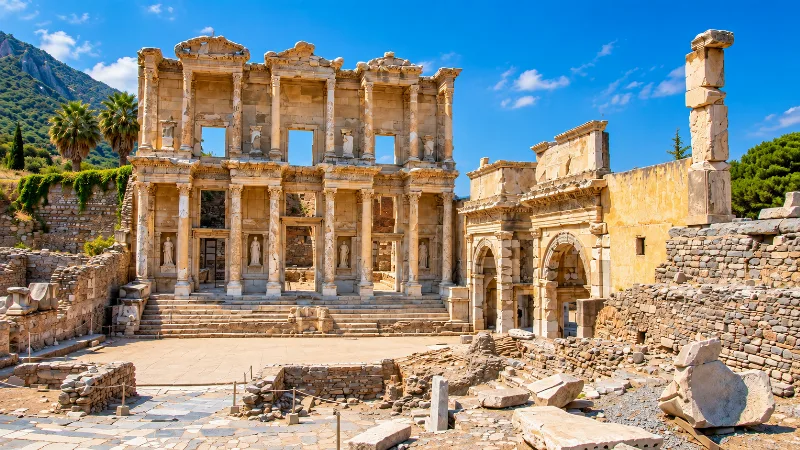
Historic Places
Ancient cities, monuments, castles and archaeological sites across Türkiye.
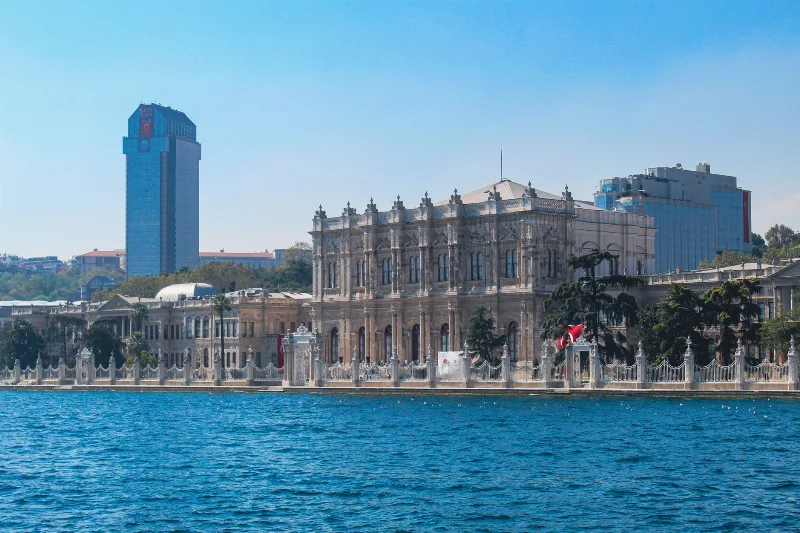
Dolmabahçe Palace
Dolmabahçe Palace is the 19th-century Ottoman palace on the European shore of the Bosphorus in Istanbul, built under Sultan Abdülmecid I as the empire's main administrative centre. It was the sultans' residence in the empire's final decades and the place where Mustafa Kemal Atatürk died in 1938.
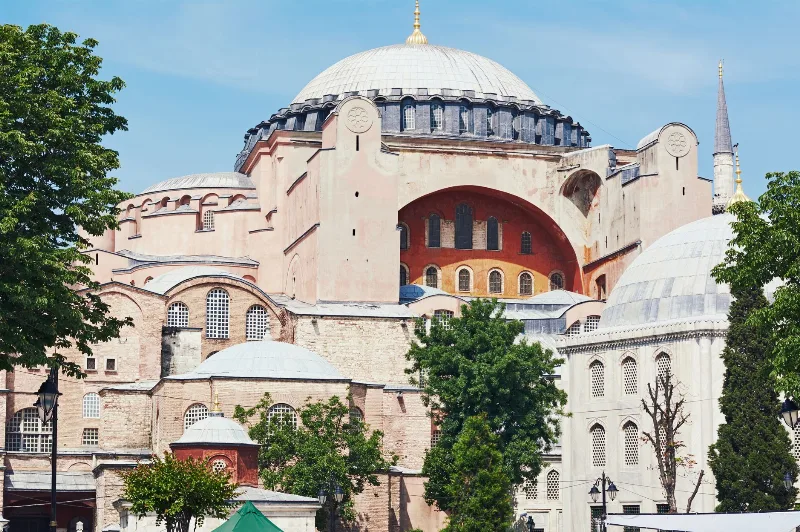
1-Day Istanbul Historic Peninsula Route
Explore Istanbul's Historic Peninsula in one day on foot, visiting Hagia Sophia, the Blue Mosque, Topkapı Palace, and the Grand Bazaar. This compact walking route covers the highlights of Sultanahmet with a logical, easy-to-follow order.
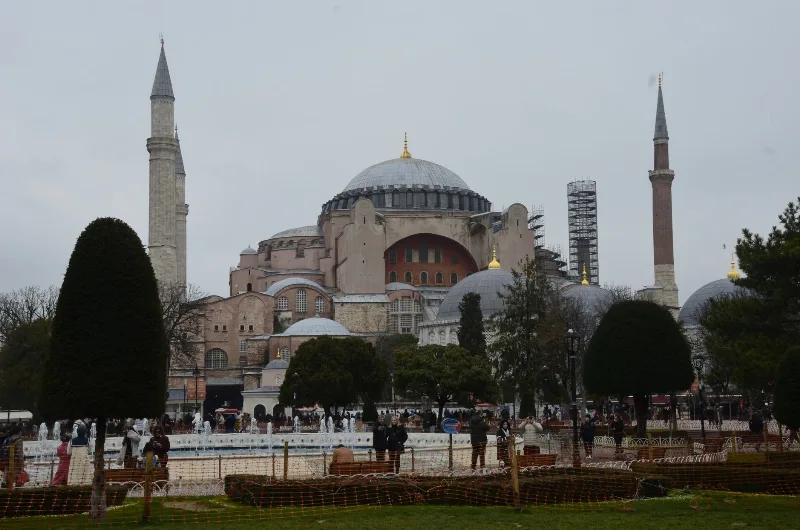
Hagia Sophia
Hagia Sophia in Istanbul is a monumental religious building begun under the Byzantine emperor Justinian I in 537 CE, later converted into an Ottoman mosque and today serving again as a mosque and UNESCO-listed monument.
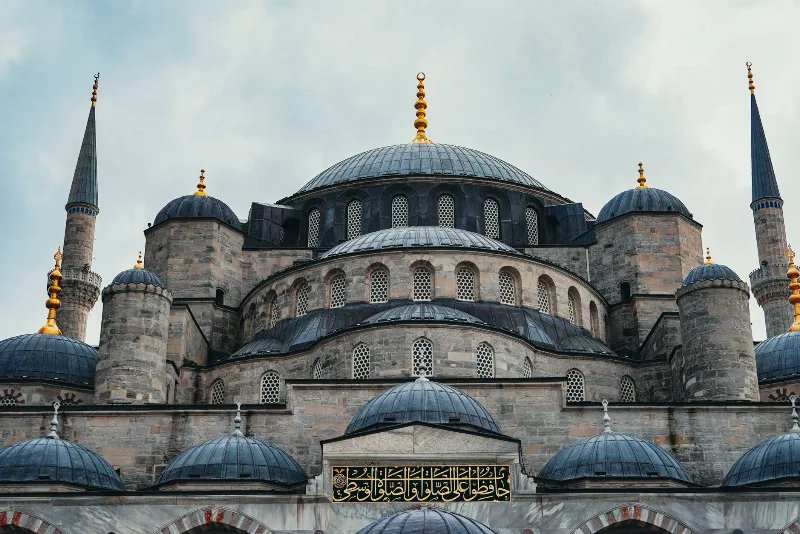
Blue Mosque
The Blue Mosque, known formally as the Sultan Ahmed Mosque, is an early 17th-century Ottoman mosque in Istanbul famous for its hand-painted blue Iznik tiles and six minarets.