
4-Day Lycian Coast Route
A four-day route along Turkey's Lycian coast, driving from Fethiye and Ölüdeniz through Kalkan, Kaş, Kekova, Demre and Olympos to finish in Antalya.
This route follows the Lycian coast from Fethiye in the west to Antalya in the east, covering Ölüdeniz, Kalkan, Kaş, Kekova, Demre and the ancient sites of Myra and Olympos over four days. It is a linear coastal journey rather than a loop, and it works best for travellers with their own vehicle, since the sequence of stops spreads along a single stretch of shoreline that public transport links only piece by piece.
The character of the trip is mixed: a working harbour town at the start, sheltered bays and a lagoon in the middle, then increasingly archaeological landscapes as the route moves east. Much of the driving follows the coast, with inland climbs where the mountains meet the sea. Short walks are possible at several points, including easy stretches of the Lycian Way, the long-distance path that threads through the same landscape.
Day 1: Fethiye and Ölüdeniz
The route begins in Fethiye, a harbour town built around a natural bay, where the Lycian rock tombs cut into the cliff above the centre give an immediate sense of the region's deep history. Spend the early part of the day in the town itself, then head south along the coast toward Ölüdeniz.
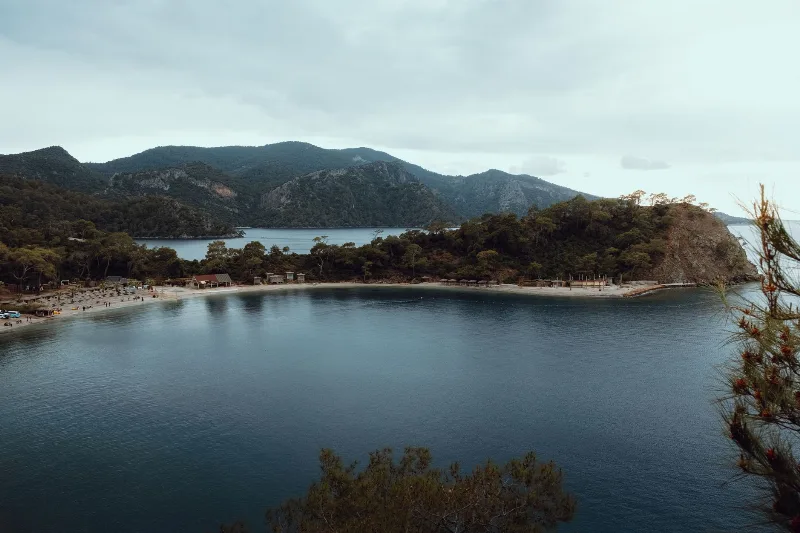
Ölüdeniz is the most photographed point of the route, a calm lagoon separated from the open sea by a narrow spit of sand, with the long curve of Belcekız beach beside it. The setting belongs to the Beaches & Bays theme, and the surrounding slopes are part of the Lycian Way. A short walk on the marked path above the lagoon, heading toward the villages higher up the hillside, gives a view back over the water without demanding a full day of hiking. Fethiye and Ölüdeniz are close enough to treat as one base for the first night, which keeps the following morning's drive short.
Day 2: Kalkan and Kaş
From Ölüdeniz the route continues east along the coast, passing the broad sands of Patara and the Lycian ruins of Xanthos, two stops that sit naturally on the way and can be visited in the same morning. Patara combines a long beach with a substantial archaeological site behind it, while Xanthos is one of the most important Lycian cities, with its own monuments and setting above the river plain.
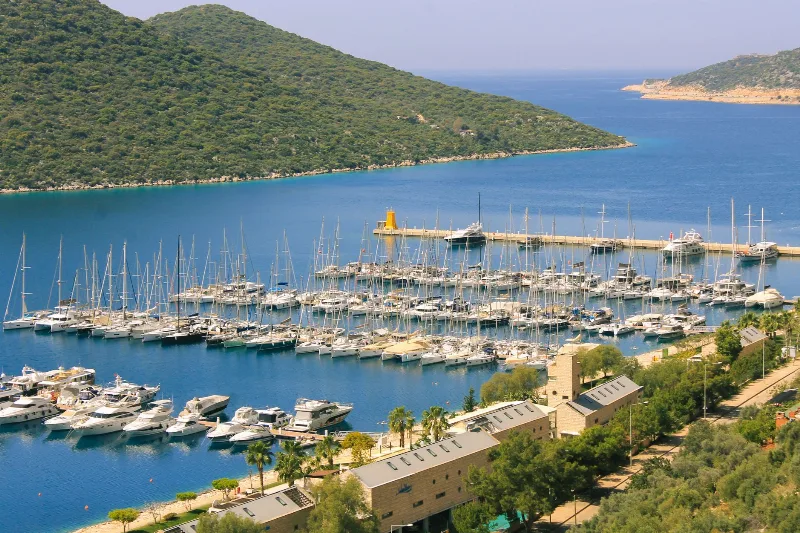
Kalkan follows, a small harbour town of whitewashed houses stepping up a steep hillside above a sheltered bay. It is a good place for a mid-route pause before the coastal road climbs and drops again toward Kaş. Kaş is larger and livelier, with a compact centre, a small pebble beach and a Hellenistic theatre on the peninsula just outside town. Both settlements are typical of the Villages & Small Towns character of this coast: former fishing communities that now live partly from visitors, with markets selling local olive oil, honey and citrus produce from the surrounding hills.
Day 3: Kekova, Demre and Myra
The third day moves into the most distinctive stretch of the route. East of Kaş, the coast breaks into a maze of small islands and half-submerged ruins around Kekova. From the village of Üçağız, local boats cross the sheltered water to show the sunken remains along the shoreline and the castle on the island of Kaleköy above the ancient site of Simena. The water here is unusually clear, and the combination of ruins, rock and sea makes this one of the Remarkable Places of the Lycian coast.
Back on the main road, Demre follows. Its rock-cut tombs belong to Myra, one of the great cities of Lycia, set behind the modern town in a cliff face carved with funeral chambers. Nearby stands the church associated with St Nicholas, and the ruins of Andriake lie at the old harbour. From Demre the route continues east through Finike and Kumluca, turning inland slightly toward the wooded slopes around Olympos and Adrasan, where the third night is best spent.
Day 4: Olympos, Çıralı and Antalya
Olympos is a ruined city in a narrow valley that opens onto the sea, reached on foot along a stream bed lined with trees and crumbling walls. It is one of the most atmospheric archaeological sites on the coast, and the adjacent beach at Çıralı is a long, quiet stretch of sand. A short climb above the valley leads to Yanartaş, where small flames rise permanently from the rock, a natural phenomenon that ancient writers linked to the myth of the Chimaera.
From Olympos the route heads north along the coast through Kemer, where the mountains fall directly into the sea, and on to Antalya. The final hours belong to the city itself: the old quarter of Kaleiçi, the Roman harbour below it, Hadrian's Gate, and the Antalya Museum, which holds one of the finest collections of regional archaeological finds in the country. Ending here closes the route in a large city, with the option of continuing inland or returning west by road.
Driving, Terrain and Season
This is a driving route with optional walking. The coastal road is the backbone of the journey, but the days are full, and the eastern half in particular mixes long stretches of driving with site visits. Travellers who prefer not to drive can cover parts of the route by local buses between the main towns, though the smaller stops around Kekova and Olympos are easier to reach with a vehicle.
Spring and autumn are the most comfortable seasons, when the coast is warm without being exhausting and the archaeological sites are pleasant to explore on foot. Summer is hot and busy along the water, and the walking sections of the Lycian Way become demanding in the middle of the day. Winter is mild on the coast but can be wet, and mountain roads inland may be affected by snow at higher elevations. The route is linear, running west to east, and it can be shortened by skipping the inland detours or extended by adding days in Kaş or Antalya.
Remarkable Places
See all places →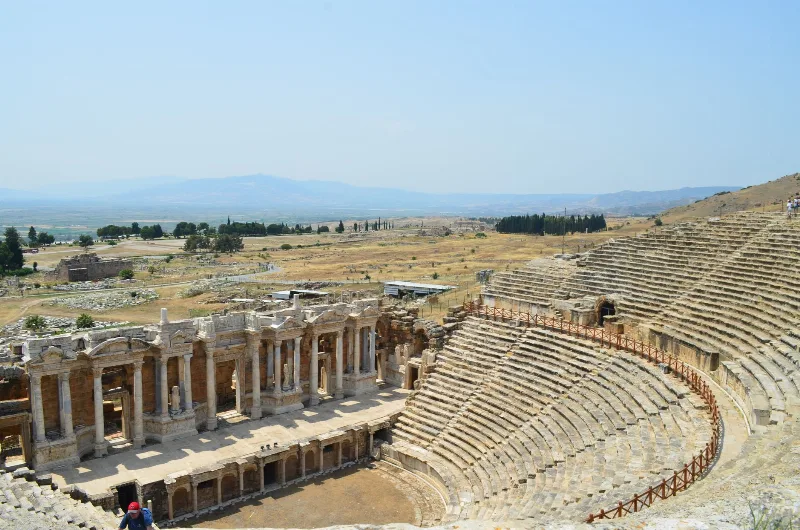
Letoon
Letoon is a Lycian sanctuary near Xanthos in Muğla Province, dedicated to Leto, Artemis and Apollo. Its three temples, theatre and trilingual inscription make it one of southwestern Turkey’s most significant archaeological sites.
Explore →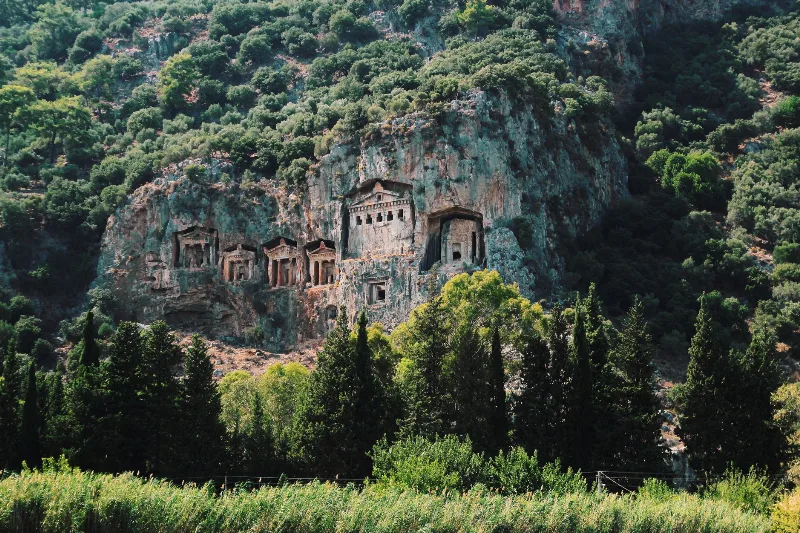
Kaunos
Kaunos is an ancient Carian city on the Dalyan River in Muğla Province, known for its temple-style rock-cut tombs and the extensive ruins of a harbour that silted up centuries ago.
Explore →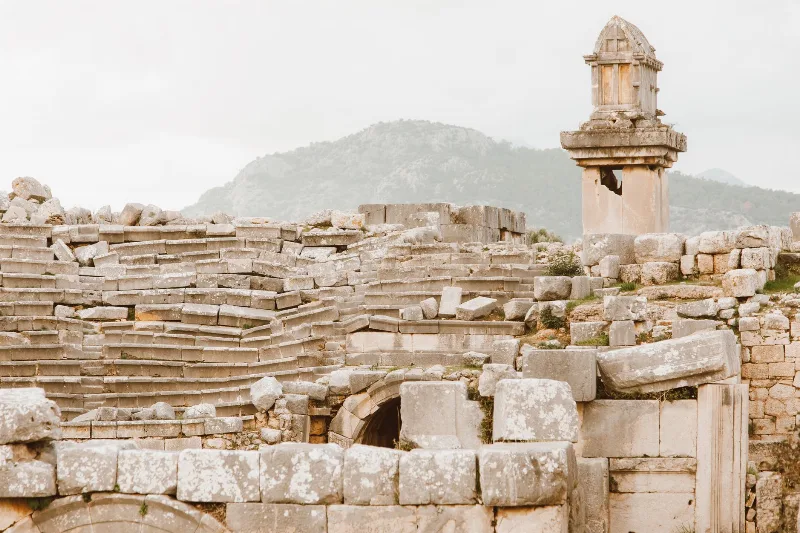
Xanthos
Xanthos is an ancient Lycian city in Antalya Province and a UNESCO World Heritage Site, known for its Lycian tombs, Roman theatre and role as a leading city of Lycia.
Explore →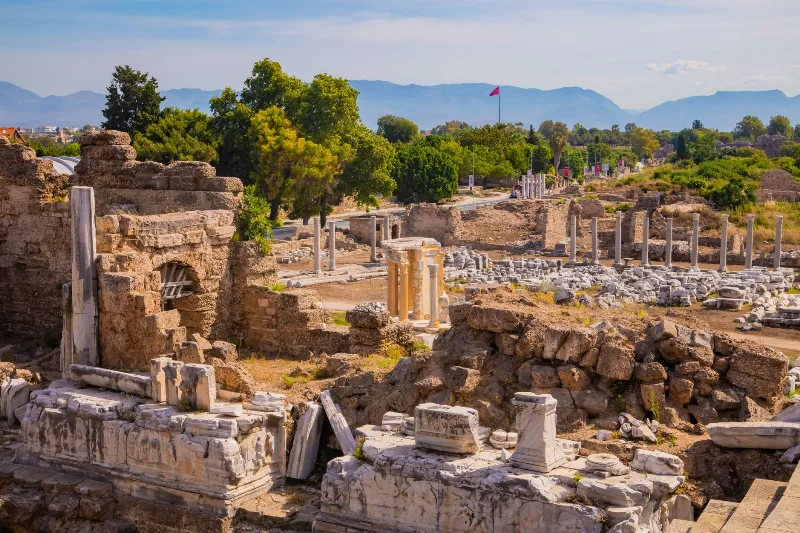
Phaselis
Phaselis is a Rhodian-founded port city on the eastern Lycian coast, where paved streets, agoras, baths and a small theatre stand among pines between three sheltered bays.
Explore →Related content
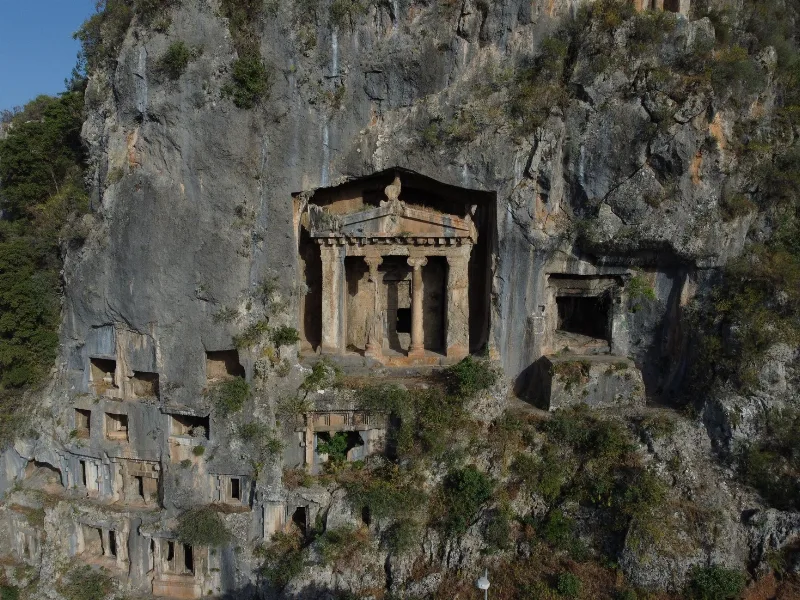
Fethiye
Fethiye is a captivating coastal town known for its stunning blue lagoon, thrilling paragliding experiences, and ancient rock tombs.
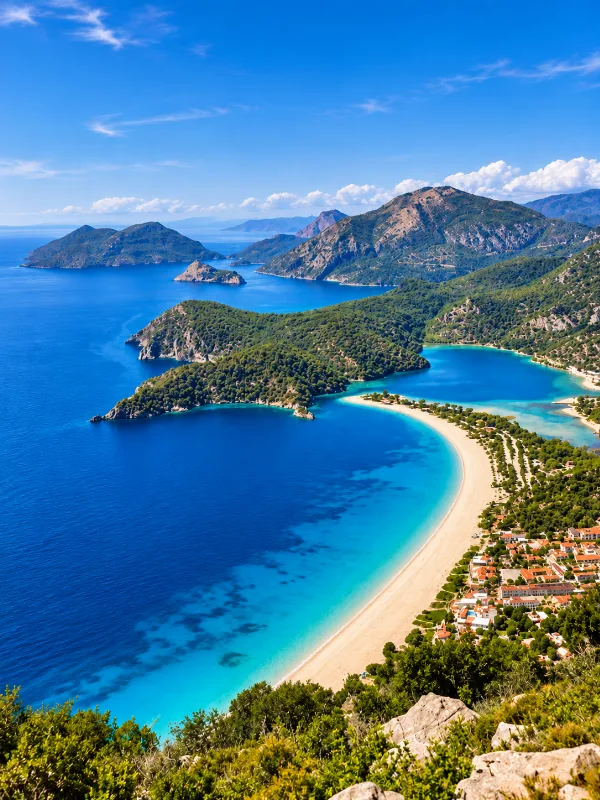
Ölüdeniz
A coastal area near Fethiye in southwestern Türkiye, known for its sheltered lagoon, turquoise water, surrounding mountains, beaches and Mediterranean landscape.
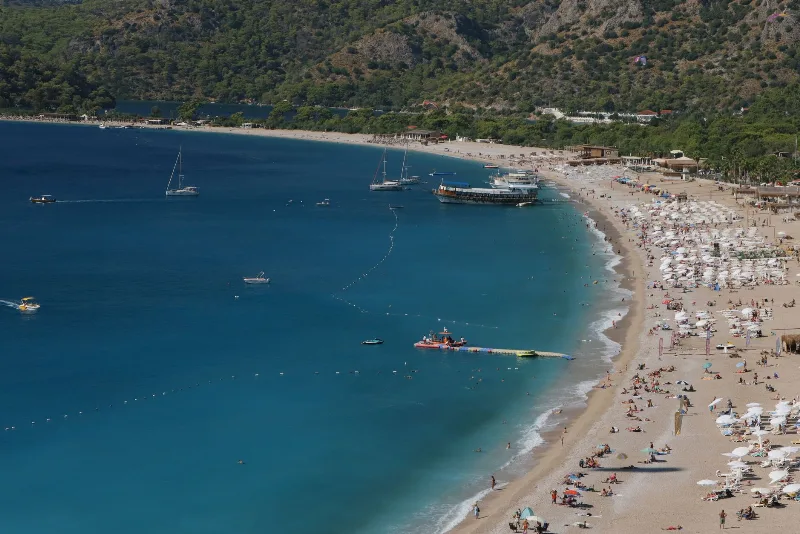
Ölüdeniz
Ölüdeniz, Türkiye'nin Fethiye ilçesine yakın bir konumda bulunan, sakin turkuaz suları ve yamaç paraşütü imkanları ile ünlü bir lagün ve plajdır.
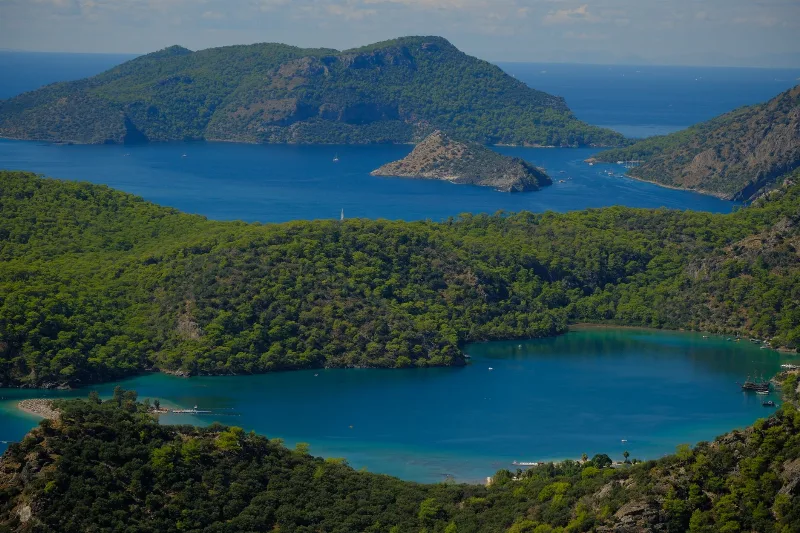
3-Day Fethiye and Ölüdeniz Route
A three-day loop based in Fethiye that combines the Lycian rock tombs and old harbour quarter with the Blue Lagoon at Ölüdeniz, the abandoned village of Kayaköy and the inland gorge at Saklıkent.
5-Day Fethiye to Kaş Lycian Coast Route
A five-day linear route along the Lycian coast from Fethiye to Kaş, linking Ölüdeniz, Kabak, the Xanthos valley, Patara and Kalkan by road and on foot.
Fethiye's Scenic Beauty
Fethiye blends turquoise Mediterranean bays with pine-covered mountains and Lycian history. Its lagoons, coves and gorges make the southwestern coast of Türkiye a rewarding place to explore.