
Dolmabahçe Palace
Dolmabahçe Palace is the 19th-century Ottoman palace on the European shore of the Bosphorus in Istanbul, built under Sultan Abdülmecid I as the empire's main administrative centre. It was the sultans' residence in the empire's final decades and the place where Mustafa Kemal Atatürk died in 1938.
Dolmabahçe Palace is a 19th-century Ottoman palace on the European shore of the Bosphorus in Istanbul, within the Beşiktaş district. Built between 1843 and 1856 for Sultan Abdülmecid I, it replaced Topkapı Palace as the main residence and administrative centre of the Ottoman sultans. The palace is significant both as a monument of late Ottoman imperial architecture, blending European and Ottoman design, and as the place where Mustafa Kemal Atatürk died on 10 November 1938.
The site before the palace
The area now occupied by the palace was originally a bay of the Bosphorus where Ottoman naval vessels moored. Over time the inlet was gradually filled, and the name Dolmabahçe means roughly "filled garden," referring to this reclaimed ground. By the 17th century the wider shoreline had become an imperial area with gardens and small pavilions used by the court, and the gradual infilling created a broad flat terrace between the water and the hills behind it.
Construction and the move from Topkapı
Sultan Abdülmecid I commissioned the palace in the 1840s and it was completed in 1856. The chief architect was Garabet Balyan, working with other members of the Balyan family of Armenian architects, who were responsible for several major Ottoman buildings of the period. The court moved into Dolmabahçe in 1856, and Topkapı Palace, which had served as the imperial seat for centuries, was largely left as a ceremonial and historical site rather than the working heart of government.
Architecture and design
The palace is an example of the Ottoman interpretation of European styles of the 19th century, drawing on Baroque, Rococo, Neoclassical and Ottoman elements. It is built of stone on the exterior with a lighter, more ornate interior. The building sits directly along the Bosphorus, and its waterfront facade is one of its most recognisable features. On the landward side, monumental gateways open toward the city.
The palace is organised into three principal functional areas. The Mabeyn-i Hümâyûn (the state or men's section) contained the rooms used for official business and receptions. The Muayede Salonu is the great ceremonial hall. The Harem-i Hümâyûn was the private and family section, reserved for the sultan's household. This division reflects the traditional Ottoman separation of state and domestic life, expressed here in a European-inspired architectural language.
The Ceremonial Hall
The Muayede Salonu, or Ceremonial Hall, is the largest single space in the palace and is covered by a large dome. It was used for important state occasions, including receptions connected with religious holidays, when the sultan would receive officials and guests. The hall is decorated with columns, marble and gilded ornament, and it contains an exceptionally large crystal chandelier. This chandelier is frequently described as being of Bohemian crystal and as weighing several tons; it has also been reported as a gift from Queen Victoria, though such attributions should be treated as tradition rather than certain fact.
Interiors and the Crystal Staircase
The interior is notable for its scale and its extensive decoration. Among the best-known features is the Crystal Staircase, whose balustrade is made of crystal elements, a striking example of the palace's taste for luxurious materials. Ceilings are decorated with gilded plasterwork, and the rooms are furnished with pieces that reflect both Ottoman and European conventions of the period. Large Hereke carpets, woven for the palace, are among the furnishings associated with its interior.
The palace collections include paintings, and among the artists represented is the Russian painter Ivan Aivazovsky, whose Bosphorus and sea views were commissioned for the court in the 19th century. The display of paintings is part of what distinguishes Dolmabahçe from earlier Ottoman palaces, where wall decoration followed different traditions.
Atatürk and the republic era
After the Ottoman Empire ended and the Republic of Türkiye was founded, Dolmabahçe was used by Mustafa Kemal Atatürk as a residence during his stays in Istanbul. He died in the palace on 10 November 1938. The room in which he died is preserved and is one of the most visited parts of the building; the clock in the room is kept set to the time of his death. This association gives the palace a second layer of historical meaning, linking the late Ottoman period with the early Turkish republic.
The grounds, gates and clock tower
The palace stands within a large walled complex that includes gardens along the Bosphorus. Two main monumental gates face the city on the land side, and the waterfront includes a marine entrance used in the imperial period. In the outer garden stands the Dolmabahçe Clock Tower, built between 1890 and 1895 under Sultan Abdülhamid II, with the architect Sarkis Balyan associated with its design. The tower is in a neo-Baroque style that echoes the palace itself. Nearby, on the same shoreline, is the Dolmabahçe Mosque, also known as the Bezm-i Alem Valide Sultan Mosque, built in the mid-19th century.
What visitors can see today
Dolmabahçe functions as a museum, and visits are organised through the state rooms, the ceremonial hall and parts of the Harem, depending on the route in use at the time. Visitors can expect to see the grand entrance halls, the decorated state apartments, the Ceremonial Hall with its dome and large chandelier, and the preserved room associated with Atatürk. Because the palace was a working residence and seat of government, the surviving furniture, textiles, lighting and decoration provide a detailed picture of how the late Ottoman court lived and received guests.
Access to the Harem may require a separate ticket or a guided route, and photography rules can vary between sections. These arrangements can change, so it is sensible to check current details before travelling.
Where it is and how to reach it
The palace is on the European side of the Bosphorus in Beşiktaş, close to the Kabataş waterfront and within reach of the central districts around Taksim and Beşiktaş. The surrounding area is well served by public transport, including tram and bus connections and ferries along the Bosphorus, and the flat waterfront setting makes the approach relatively straightforward. The palace garden and the landward gates face inland, while the water side opens directly onto the strait.
When to visit and practical context
The palace is an indoor site, so it can be visited across the year, though the busiest periods tend to be the warmer months and public holidays. Mornings generally see fewer visitors. The route through the building involves walking and standing for a substantial period, with stairs in some sections, so comfortable shoes are useful. As opening arrangements and ticketing can change, visitors should confirm current information before their visit.
Nearby historic and geographical context
Dolmabahçe sits in an area of Istanbul with several related places of interest. The Bosphorus itself, dividing Europe and Asia, defines the setting and can be seen from the palace waterfront. In the immediate surroundings are the Dolmabahçe Mosque and the clock tower. Along the same shore, other Ottoman and later monuments, as well as the busy districts of Beşiktaş and Kabataş, lie within walking distance, making the palace a natural starting point for exploring the Bosphorus shoreline of the city.
Routes
All routes →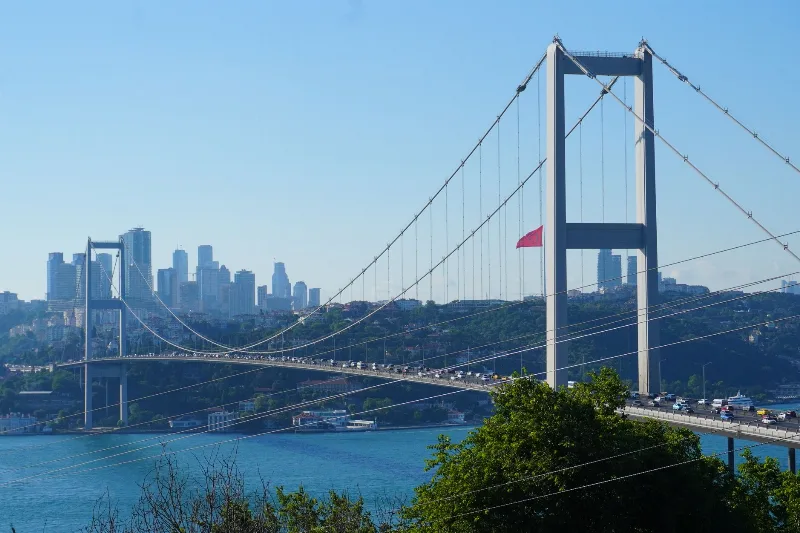
3-Day Istanbul to Bursa Route
Explore the first Ottoman capital on a three-day route from Istanbul to Bursa, combining historic city sites, the mountain landscapes of Uludağ, and the preserved village of Cumalıkızık.
Explore →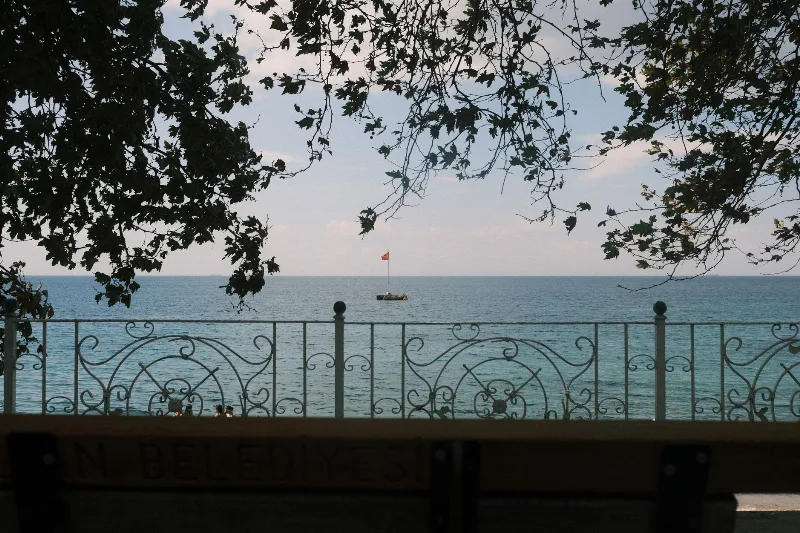
4-Day Marmara Sea Route
A four-day loop around the Sea of Marmara that starts in Istanbul, crosses to Yalova, travels inland to Bursa and finishes among the ruins of Troy and the memorials of the Gallipoli peninsula. The itinerary is built around short, logical daily drives rather than long transfers.
Explore →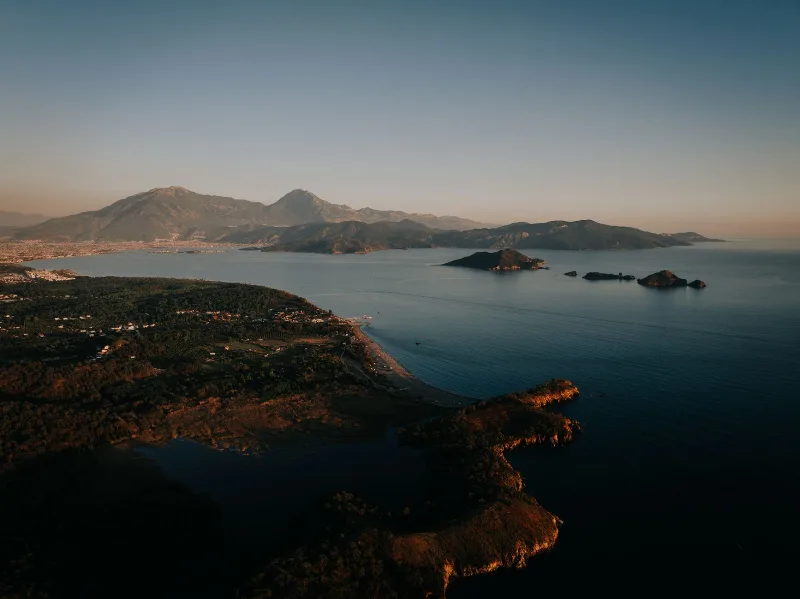
6-Day Mediterranean Coast Route: Antalya to Marmaris
A six-day linear route along Türkiye's Mediterranean coast, linking Antalya, Olympos, Demre, Kekova, Kaş, Kalkan, Patara, Fethiye and Dalyan before finishing in Marmaris. It mixes ancient cities, long beaches and small harbour towns on a continuous westward drive.
Explore →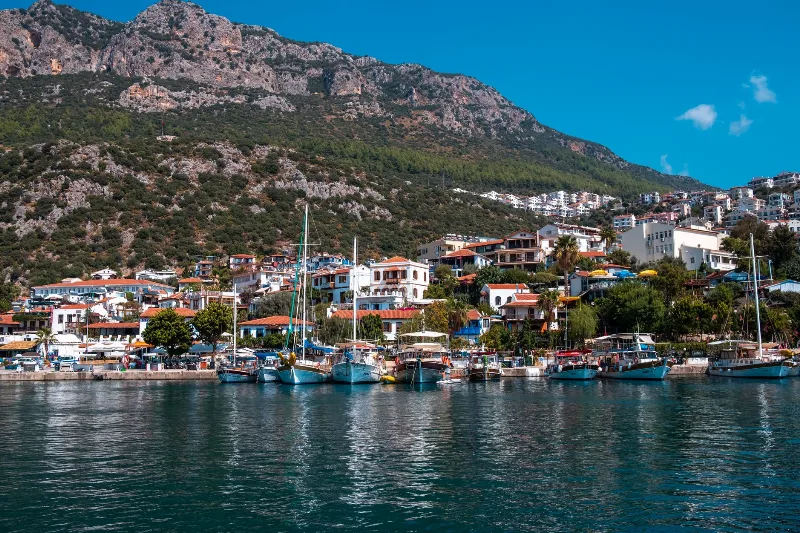
5-Day Antalya to Fethiye Coastal Route
A five-day driving itinerary along Turkey's Mediterranean shore, linking Antalya, Phaselis, Olympos, Demre, Kekova, Kaş, Kalkan, Patara and Fethiye. The route is linear, coastal for most of its length, with short inland detours to Lycian ruins.
Explore →Related content
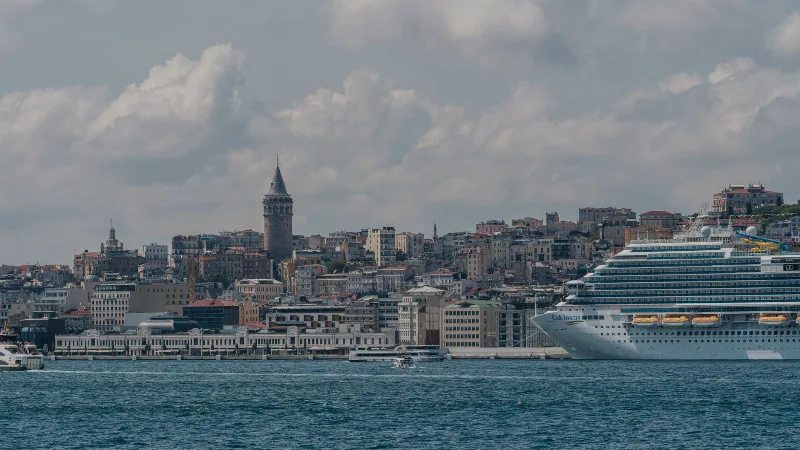
Istanbul
Istanbul is Türkiye's largest city and the country's only metropolis that spans two continents, divided by the Bosphorus strait into a European and an Asian half. Its long run as an imperial capital left a historic core of palaces, mosques and bazaars that still shapes the city's identity.
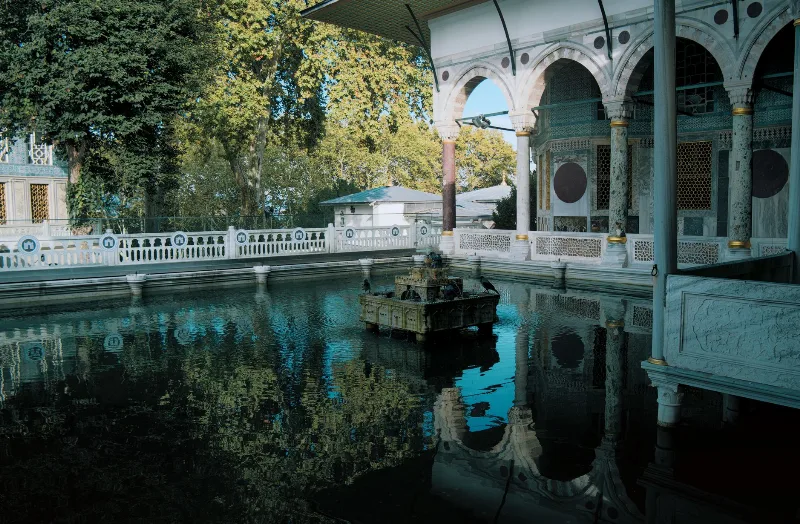
Topkapı Palace
Topkapı Palace on Istanbul's Seraglio Point served as the residence and administrative heart of the Ottoman sultans for nearly four centuries, and today it is a museum displaying its courtyards, opulent interiors and the imperial collections of the Sacred Relics.
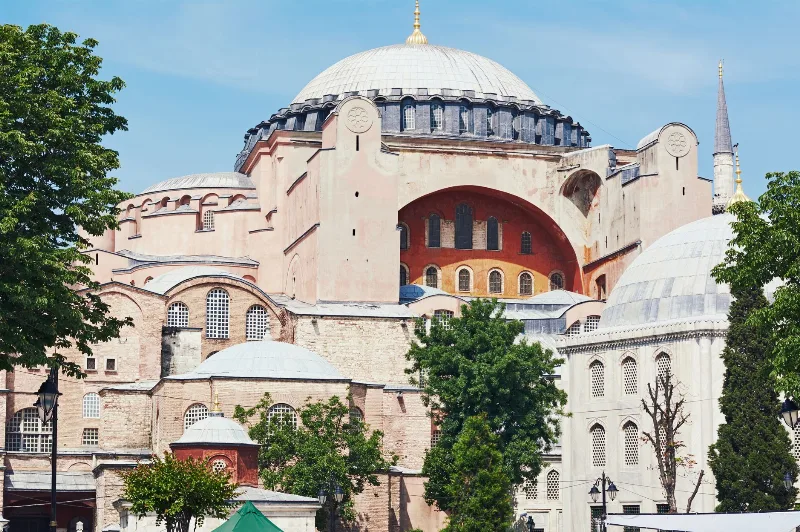
1-Day Istanbul Historic Peninsula Route
Explore Istanbul's Historic Peninsula in one day on foot, visiting Hagia Sophia, the Blue Mosque, Topkapı Palace, and the Grand Bazaar. This compact walking route covers the highlights of Sultanahmet with a logical, easy-to-follow order.
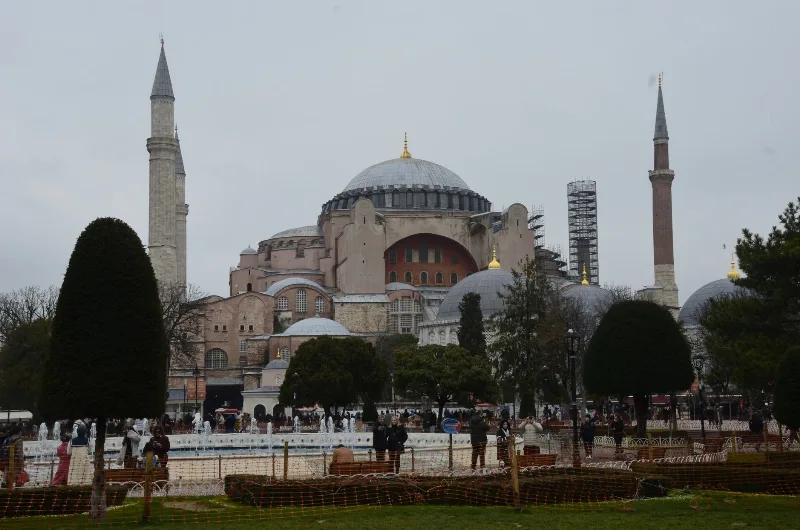
Hagia Sophia
Hagia Sophia in Istanbul is a monumental religious building begun under the Byzantine emperor Justinian I in 537 CE, later converted into an Ottoman mosque and today serving again as a mosque and UNESCO-listed monument.
Istanbul's Historic Sultanahmet
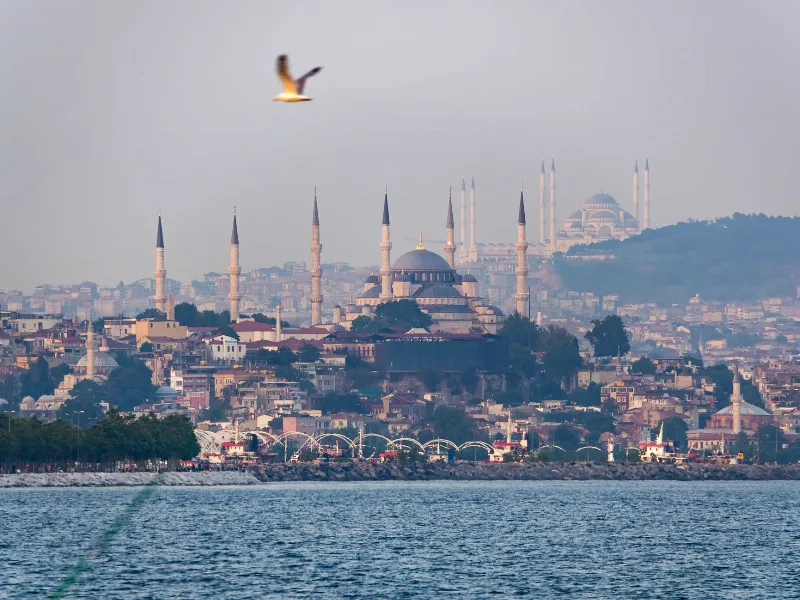
Sultanahmet is Istanbul's historic core, a walkable peninsula of Byzantine and Ottoman monuments facing the Bosphorus and the Sea of Marmara.
Blue Mosque
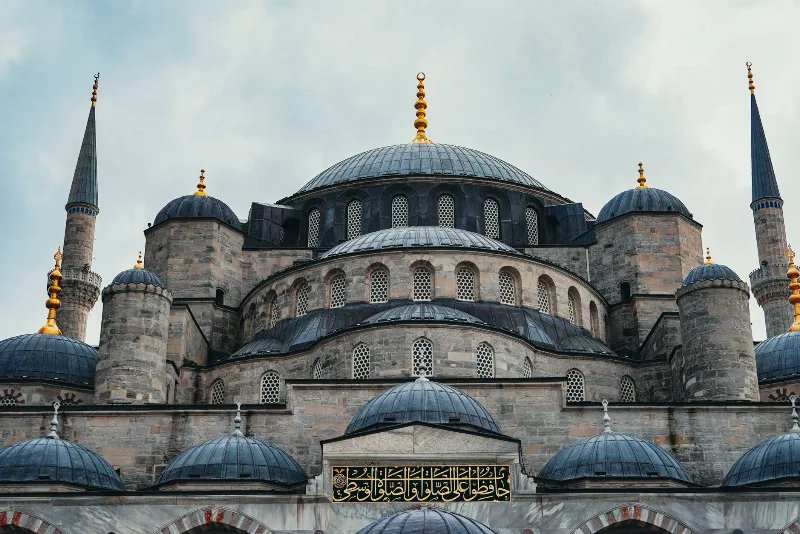
The Blue Mosque, known formally as the Sultan Ahmed Mosque, is an early 17th-century Ottoman mosque in Istanbul famous for its hand-painted blue Iznik tiles and six minarets.