
2-Day Şanlıurfa and Göbeklitepe Route
A two-day route through Şanlıurfa's sacred historic quarter, the world's oldest known temple at Göbeklitepe and the beehive houses of the Harran plain, starting and finishing in Şanlıurfa city.
This two-day route runs through the Şanlıurfa plateau in southeastern Türkiye and is built around a single base: the city of Şanlıurfa. It begins in the historic quarter around Balıklıgöl, continues to the Neolithic temple site of Göbeklitepe on the second morning, crosses the flat Harran plain in the afternoon and returns to the city. The journey is compact and circular rather than linear, which means you sleep in the same place both nights and travel outward each day. A car is the most practical way to link the city centre with the outlying archaeological sites, although the first day is almost entirely on foot.
Day 1: Şanlıurfa Historic Centre and Balıklıgöl
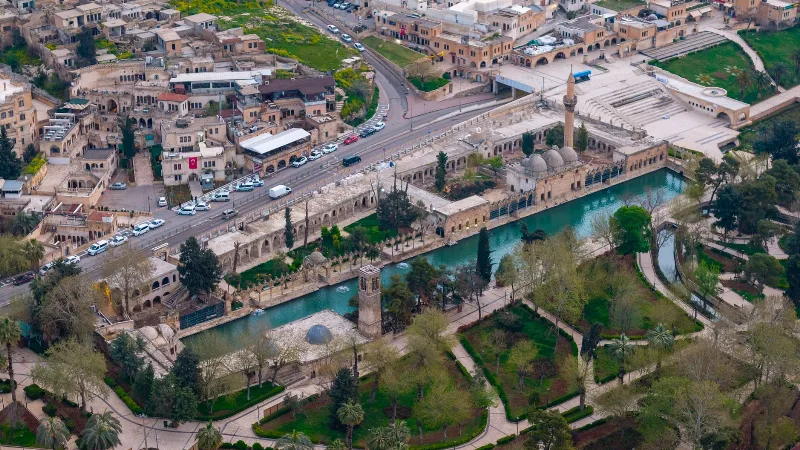
The first day stays inside Şanlıurfa and needs no vehicle at all. Start in the morning at Balıklıgöl, the sacred pool complex set in a hollow below the castle hill. The pools, the carp that live in them, the Halilürrahman Mosque beside the water and the nearby cave associated with the Prophet Abraham form one continuous sacred site, and travellers usually move through it slowly rather than as a single stop. The atmosphere is quiet in the early hours and the light on the stone arcades is best before the heat builds.
From the pool complex, climb the short distance to Şanlıurfa Castle on the ridge above. The citadel walls frame a wide view over the rooftops of the old town, and the two tall columns standing on the hill are one of the city's most recognisable silhouettes. This is the natural hinge between the religious quarter below and the commercial streets on the other side.
Descend into the covered bazaar district for the middle of the day. The old bazaar is a dense network of vaulted passages, hans and workshops rather than a single market hall, and it is where the city's craft and trade character is easiest to read. Gümrük Hanı and the surrounding courtyards, the coppersmiths' lanes and the stalls selling local produce all sit within a few minutes of each other. Because everything on this day lies inside the same historic core, the walking order barely matters — the sequence from pool to castle to bazaar simply follows the slope of the land.
Finish the afternoon at the Şanlıurfa Archaeology Museum, which holds the region's finds, including material from Göbeklitepe itself and the mosaics from the Haleplibahçe area. Visiting it before the temple site gives useful context for the following morning. In the evening, the restored historic streets around the old quarter are worth a slow walk. Şanlıurfa's regional produce — isot pepper, pistachios and the local cuisine built around them — is part of the character of these streets, though the day remains a historic rather than a food itinerary.
Day 2: Göbeklitepe and the Harran Plain
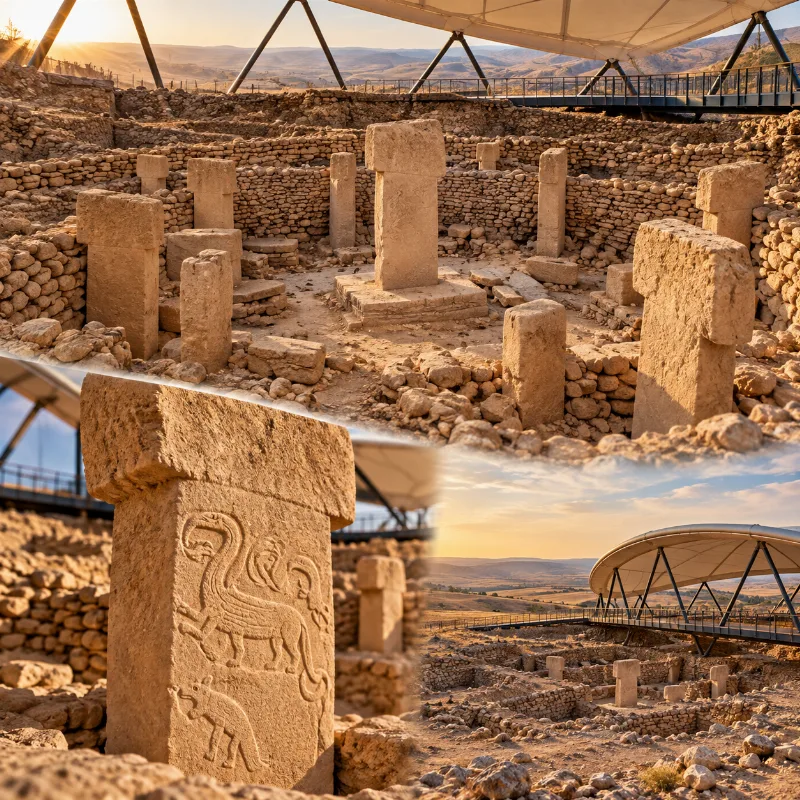
The second day begins early, because both stops lie outside the city and the plain becomes very hot by midday. Leave Şanlıurfa heading northeast toward Göbeklitepe, the Neolithic sanctuary on a limestone ridge above the surrounding farmland. This is the oldest known temple complex of its kind, made up of circular enclosures and massive T-shaped pillars carved with animal reliefs. Visitors follow defined walkways between the excavated and covered structures, so the visit involves moderate walking in the open rather than a long hike.
After Göbeklitepe, retrace the road toward the city and then continue south onto the Harran plain. The landscape changes noticeably here: the rocky plateau gives way to flat, dry farmland stretching toward the Syrian border. The destination is the old settlement of Harran, known for its cluster of conical mud-brick beehive houses, its ruined citadel mound and the remains associated with its historic role as a centre of learning. The beehive houses are the most distinctive sight, and the contrast with the stone architecture of Şanlıurfa earlier in the route is the point of including this stop.
Return to Şanlıurfa in the late afternoon. The order works geographically because Göbeklitepe sits on the northeastern side of the city and Harran on the southern plain, so the day forms a loop out of and back into the same base rather than a one-way transfer.
Route Practicalities
Spring and autumn are the most comfortable seasons for this route. Summers on the Şanlıurfa plateau and the Harran plain are extremely hot, and the archaeological sites offer little shade, so early starts matter. Winter is mild compared with the highlands further north but can bring rain and cold wind on the open sites.
The route is best done by car, with Day 1 on foot and Day 2 requiring driving between the city, Göbeklitepe and Harran. It is a short, contained journey rather than a long-distance road trip, and travellers should expect two full but not exhausting days. The terrain shifts from an urban historic core to a limestone ridge and then to flat agricultural plain, which is what gives the two days their variety.
For deeper background on the individual stops, the city itself belongs with the Cities & Districts and Historic Places sections of TürkiyeKart, the temple site with Remarkable Places, the beehive settlement and the surrounding plain with Villages & Small Towns and Nature, and the local pepper and pistachio culture with Regional Produce.
Remarkable Places
See all places →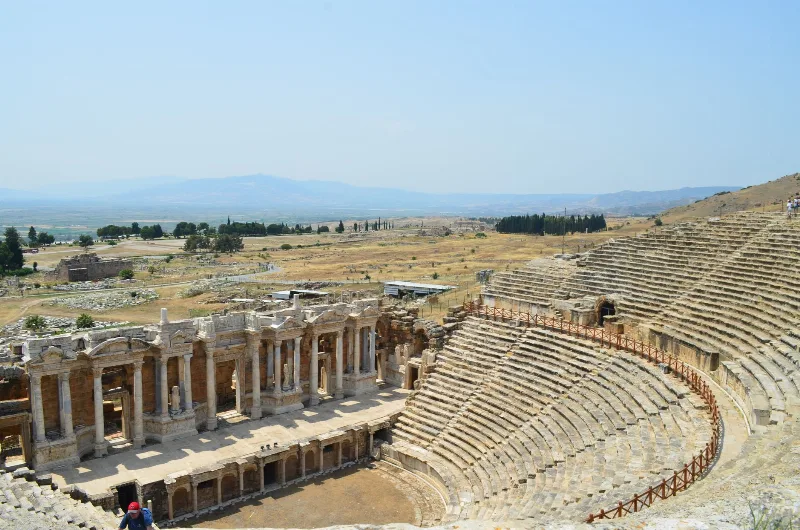
Letoon
Letoon is a Lycian sanctuary near Xanthos in Muğla Province, dedicated to Leto, Artemis and Apollo. Its three temples, theatre and trilingual inscription make it one of southwestern Turkey’s most significant archaeological sites.
Explore →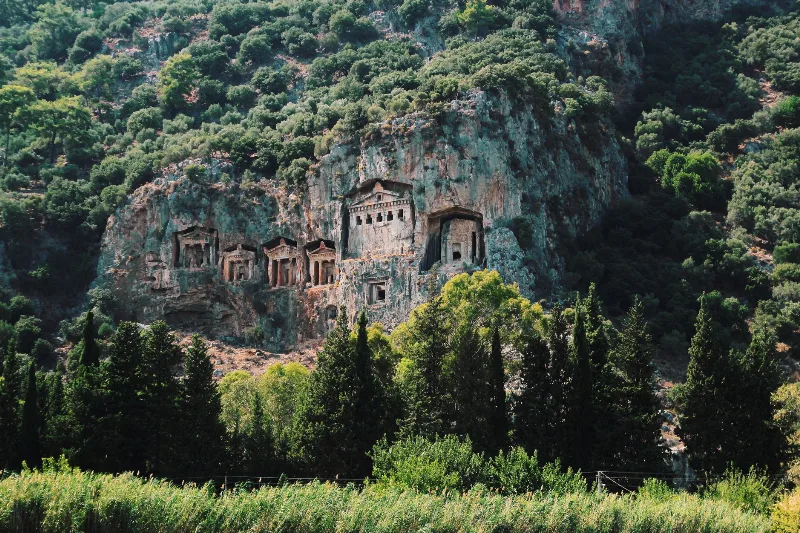
Kaunos
Kaunos is an ancient Carian city on the Dalyan River in Muğla Province, known for its temple-style rock-cut tombs and the extensive ruins of a harbour that silted up centuries ago.
Explore →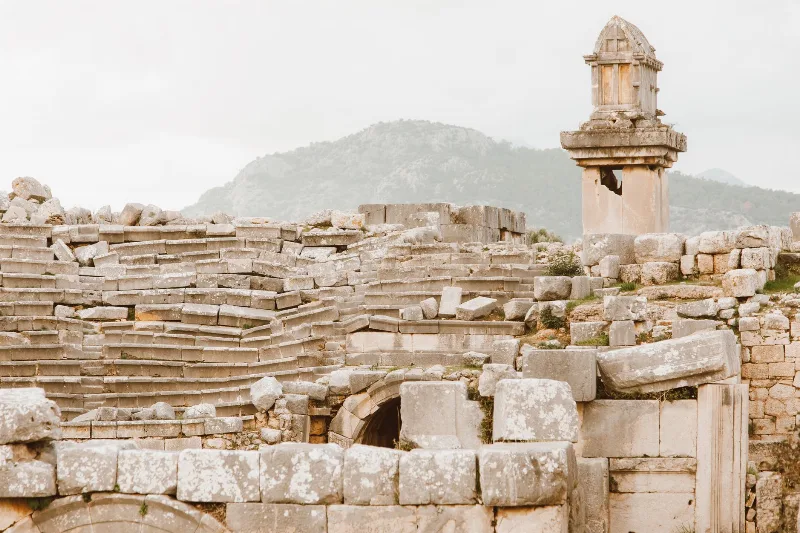
Xanthos
Xanthos is an ancient Lycian city in Antalya Province and a UNESCO World Heritage Site, known for its Lycian tombs, Roman theatre and role as a leading city of Lycia.
Explore →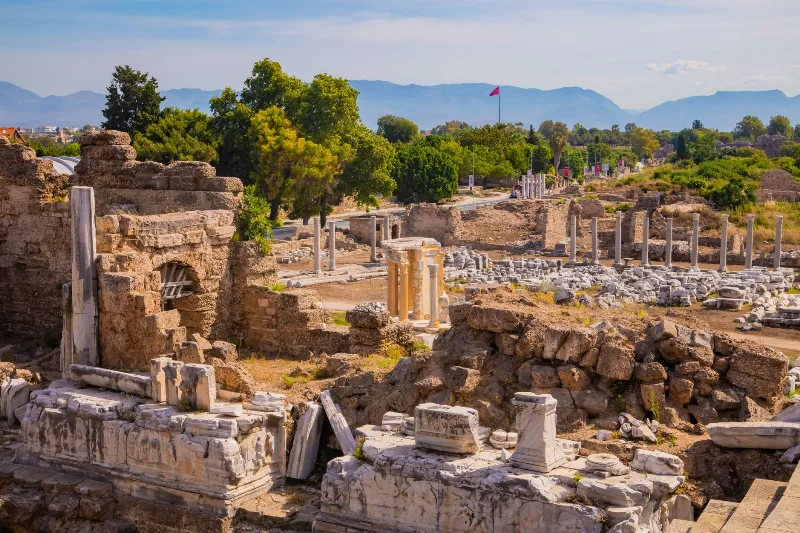
Phaselis
Phaselis is a Rhodian-founded port city on the eastern Lycian coast, where paved streets, agoras, baths and a small theatre stand among pines between three sheltered bays.
Explore →Related content
Şanlıurfa
Şanlıurfa, commonly called Urfa, is a large city in southeastern Türkiye and the capital of its province. It is known both as a place tied to the tradition of the Prophet Abraham and as the gateway to Göbekli Tepe, one of the oldest monumental sites ever found.
Göbeklitepe
A major Neolithic archaeological site near Şanlıurfa, known for its monumental stone enclosures and carved T-shaped pillars.
Historic Places
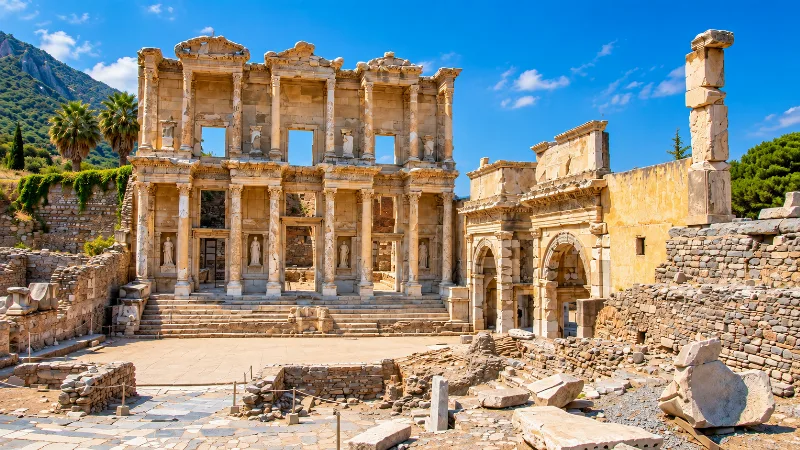
Ancient cities, monuments, castles and archaeological sites across Türkiye.
4-Day Southeastern Anatolia Route: Gaziantep to Mardin via Şanlıurfa
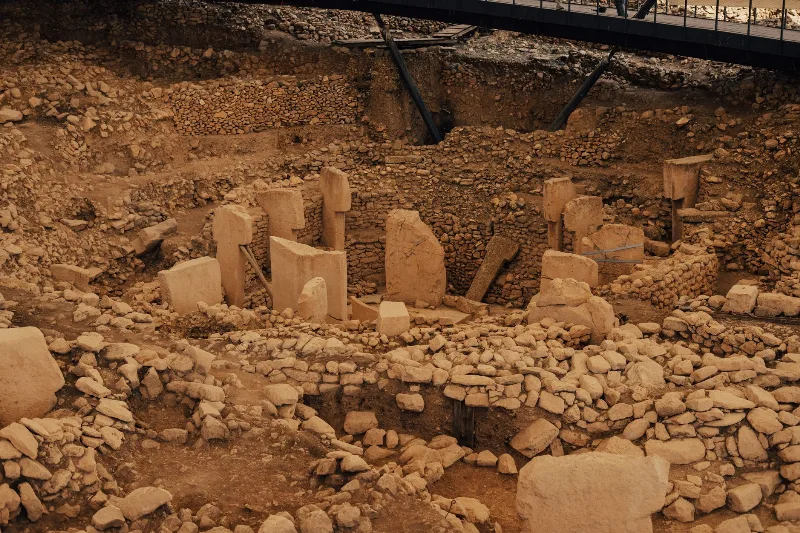
A four-day linear route across Southeastern Anatolia, linking the historic cities of Gaziantep, Şanlıurfa and Mardin by road, with the Neolithic site of Göbeklitepe and the ancient settlement of Harran fitted into the middle of the journey.
5-Day Tigris and Euphrates Route
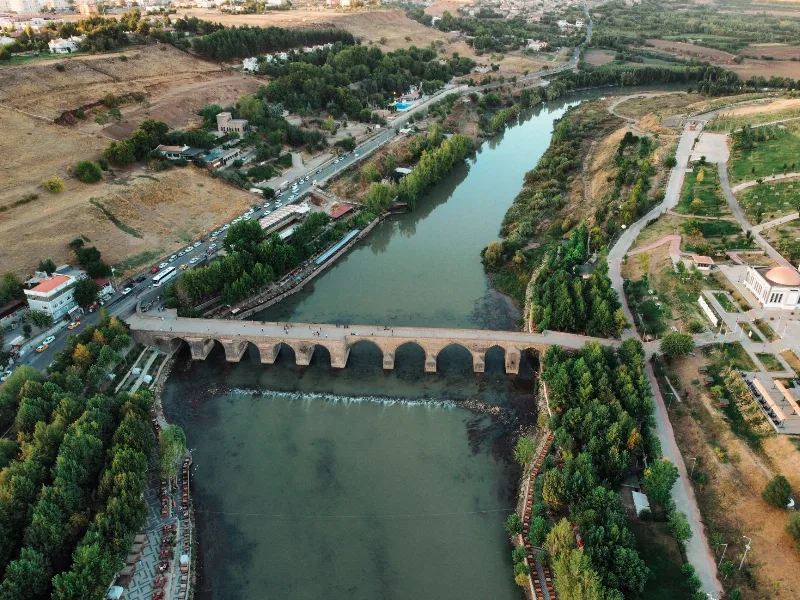
A five-day, east-to-west journey across Southeastern Anatolia from Diyarbakır to Gaziantep, following the Tigris and Euphrates through Mardin, Şanlıurfa, Göbeklitepe and Harran.
Southeastern Anatolia Region
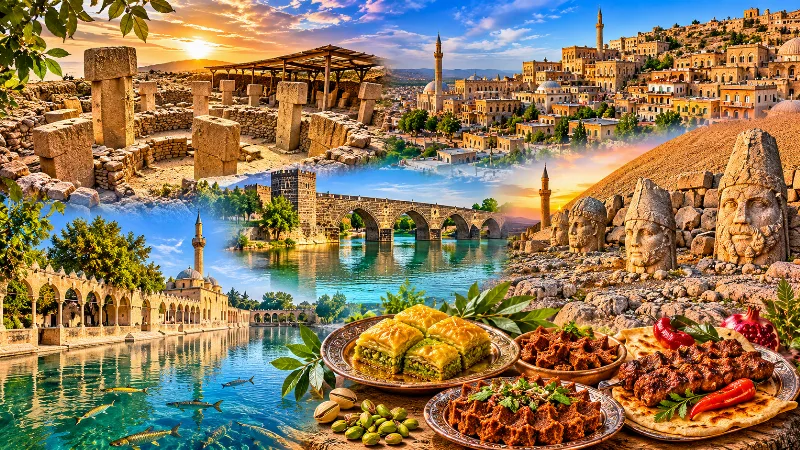
Southeastern Anatolia is known for its ancient cities, extraordinary archaeological heritage, traditional stone architecture and rich culinary culture. From the historic streets of Mardin to the monumental landscapes of Şanlıurfa and the Euphrates River, the region reflects thousands of years of civilization.