
Ulubey Canyon and Rock Settlements in Uşak
Ulubey Canyon is a deep gorge cut through the countryside of Uşak province, where generations of inhabitants carved homes, storehouses and dovecotes into its soft cliffs.
Ulubey Canyon lies in the inland Aegean region of Türkiye, in the province of Uşak, close to the small district centre of Ulubey. The gorge is one of the longest of its kind in the country, stretching across the landscape as a deep, winding incision cut by the Banaz stream, a tributary of the Büyük Menderes. Its walls rise sharply from the valley floor, in places reaching well over a hundred metres, and the cliffs hold a scattered record of human habitation in the form of rock-cut dwellings, storerooms and chapels.
A Gorge Carved by the Banaz Stream
The canyon has been shaped over a very long period by the steady flow of the Banaz, which has cut down through layers of volcanic tuff and limestone. The result is a landscape of terraced slopes, sheer rock faces and narrow side valleys that branch off from the main channel. Because the rock is relatively soft in places, water and wind have hollowed out ledges, alcoves and caves along the walls, giving the gorge a pitted, honeycombed appearance.
The main canyon runs for tens of kilometres, while the wider network of connected gorges extends further across the surrounding plateau. Spring and early summer bring a flush of green to the valley floor, where the stream passes between terraces of vines, fig trees and pomegranate orchards. In the drier months the same terraces take on the pale, dusty tones of the Anatolian interior.
Rock-Cut Dwellings in Ulubey Canyon
The most distinctive feature of Ulubey Canyon is the number of structures cut directly into its rock faces. These are not caves in the simple sense: many are carefully shaped rooms with flat floors, squared doorways and niches carved for storage. Some are single chambers used as shelters or barns, while others form clusters of several connected rooms that once served as seasonal dwellings.
Among the carved spaces are pigeon houses, known locally as güvercinlik, which were hollowed out to encourage nesting birds. The droppings were collected as fertiliser for the vineyards and orchards above the canyon, and the birds themselves were sometimes used for food. Small chapels and hermitage-like cells, thought to date from the Byzantine period, can also be found in quieter parts of the gorge, their walls occasionally marked by faint crosses.
Several of these rock settlements remained in use until the middle of the twentieth century, when families moved to villages on the plateau. Their doorways, hearths and storage pits still show how closely daily life in the canyon was adapted to the shape of the stone.
Wildlife and Natural Features
The sheltered walls of the canyon provide cover for rock pigeons, jackdaws and birds of prey, including buzzards and kestrels that nest on the higher ledges. Foxes, martens and hedgehogs are present in the scrub, while the stream and its damp margins support frogs, dragonflies and a range of waterside plants. The mix of open plateau, steep cliff and shaded valley floor creates a compact but varied habitat.
Visiting and the Surrounding Countryside
Viewing terraces near Ulubey allow visitors to look down into the gorge and follow the line of the stream far below. Walking routes along the rim and through the valley give a closer view of the carved rooms, though the terrain is uneven and the rock edges deserve care. The wider district of Uşak offers further interest, including stone bridges over the Banaz, quiet villages with traditional houses, and the remains of ancient settlements on the surrounding hills.
The canyon is a place where geology, rural life and craftsmanship meet in a single landscape, and it remains a rewarding subject for anyone interested in the quieter corners of the Anatolian interior.
Related content
Köprülü Canyon Roman Bridge and Rafting in Antalya
Köprülü Canyon brings together a Roman bridge, the rushing Köprüçay River and pine-covered cliffs in the Taurus Mountains. Rafting, ancient ruins and quiet highland villages lie within easy reach of one another.
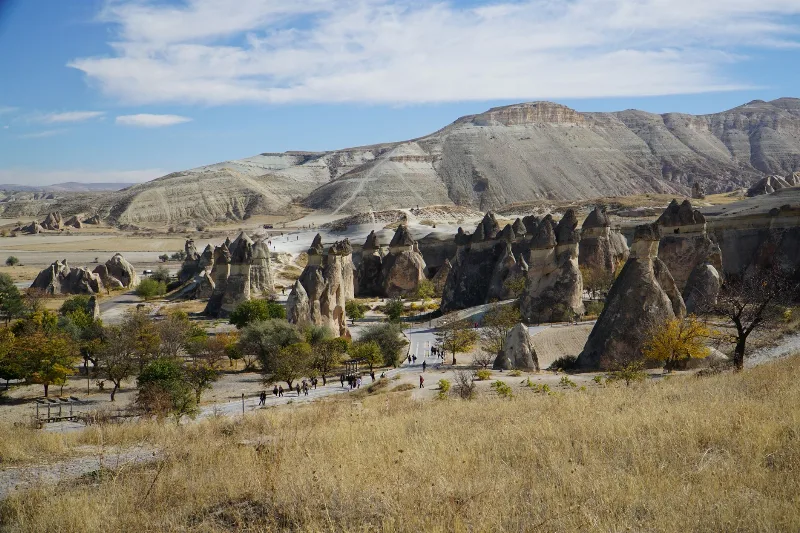
4-Day Cappadocia to Konya Route
A four-day southbound route from Cappadocia's rock-cut valleys to Konya, linking the underground cities of Derinkuyu and Kaymaklı, the Ihlara canyon, Selime Monastery and the Mevlana Museum. It is a linear, self-drive journey across the volcanic plateau of Central Anatolia into the Konya plain.
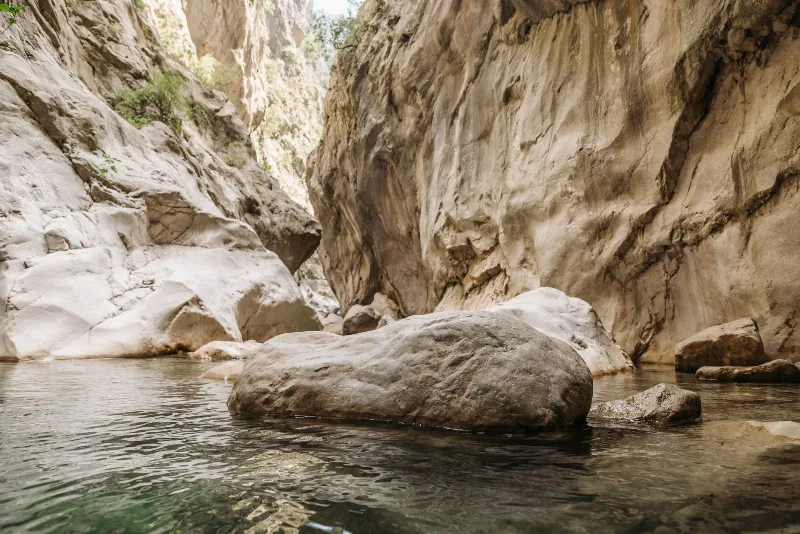
Saklıkent
Saklıkent Canyon is a dramatic gorge in Muğla Province, southwestern Turkey, known for its narrow passages and icy water. Visitors can wade through the stream and explore the surrounding national park, with the ancient city of Tlos nearby.
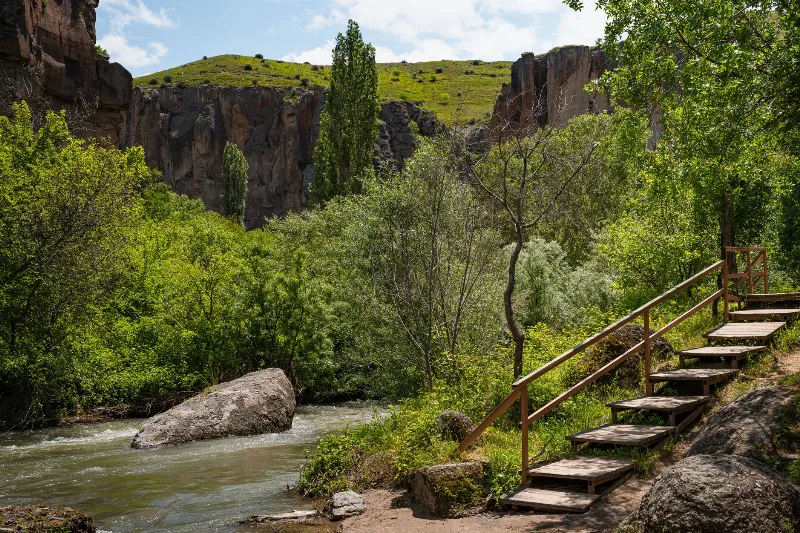
The Ihlara Valley and Its Rock-Cut Churches in Cappadocia
The Ihlara Valley in Cappadocia, Türkiye, is a green canyon carved by the Melendiz River, known for its rock-cut churches, Byzantine frescoes and peaceful walking paths.
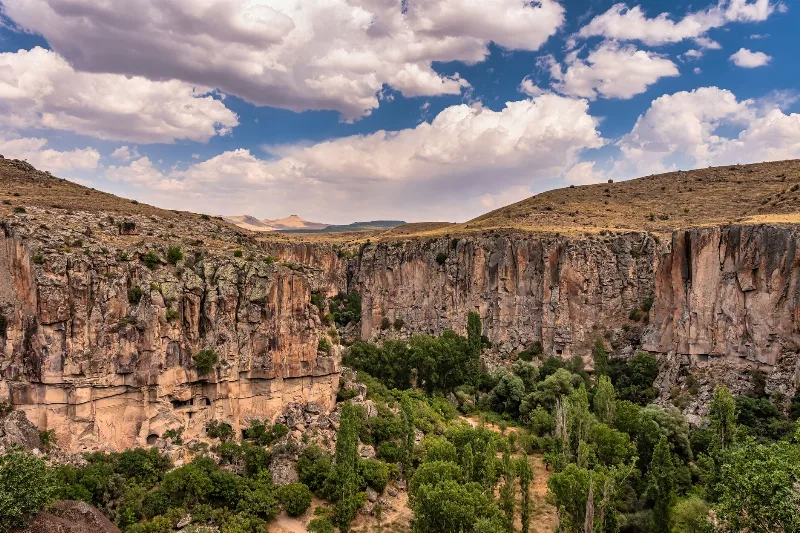
2-Day Cappadocia Underground Cities Route
A two-day route from Nevşehir through the underground cities of Kaymaklı and Derinkuyu, finishing with a walk through the Ihlara Valley and the rock-cut complex at Selime.
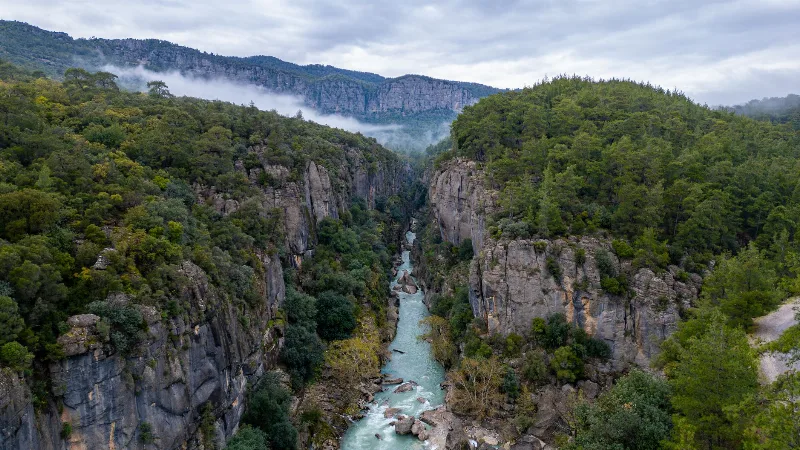
Köprülü Canyon
Köprülü Canyon is a deep river canyon in Antalya Province, carved by the Köprüçay River. It is part of a national park and is known for its steep walls, Mediterranean vegetation, and seasonal river conditions.
Kazdağı Fir Forests and Walking Trails in Balıkesir
Kazdağı rises above the Edremit Gulf in Balıkesir, its upper slopes clothed in a fir forest found nowhere else on earth. Waymarked paths lead from the foothill villages into cool, shaded woodland.
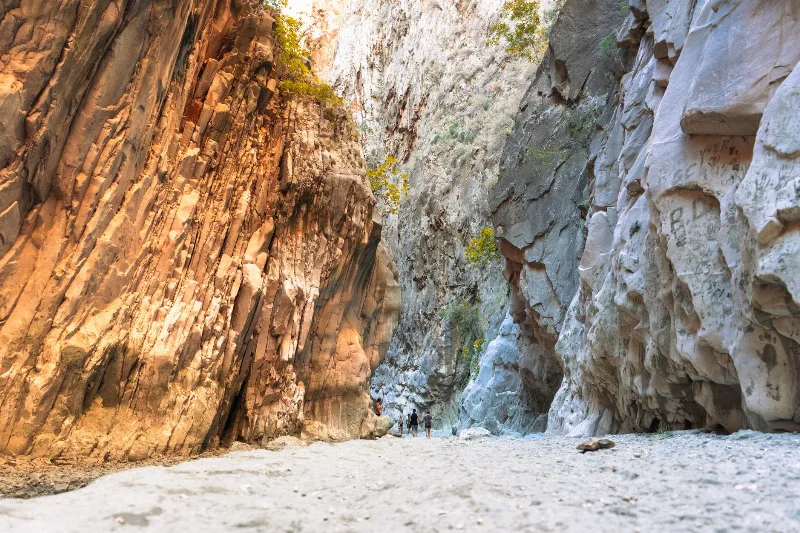
Saklıkent Canyon
Saklıkent Canyon is a deep limestone gorge in Muğla Province, southwestern Türkiye, cut by the Karaçay stream and known for its towering walls and persistently icy water. It has been protected as a national park since 1996.