
The Ancient City of Olympos and the Yanartaş Flames
STORIES FROM TÜRKİYE
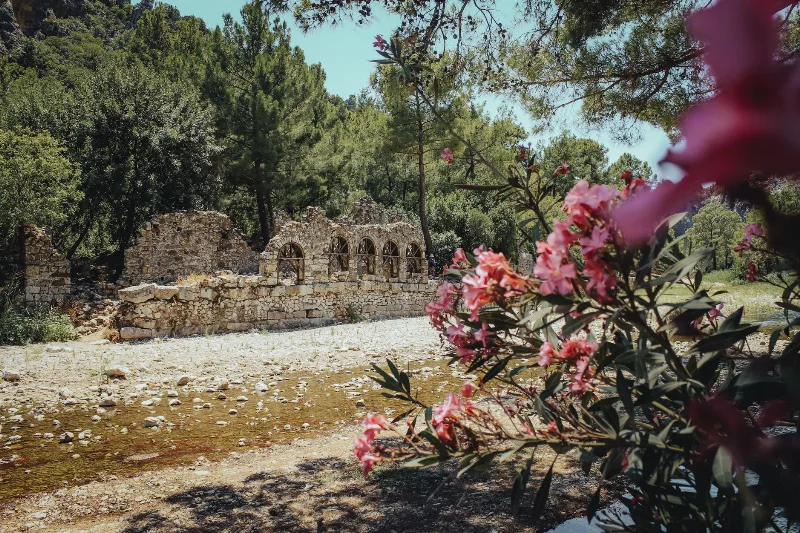
On the Mediterranean coast of Antalya Province, a shallow river slips through oleander and laurel towards a long pebble beach. Behind it rise the pine-covered slopes of the Beydağları, and somewhere in that green tangle lie the broken walls of an old Lycian harbour town. Olympos is a place where ruins, forest and sea share the same small valley.
A short distance uphill, on a bare and stony slope, flames rise straight from the ground and continue to burn day and night. Known as Yanartaş, these small fires have puzzled travellers for centuries and still draw walkers along the paths above Çıralı.
A Lycian Harbour Beneath the Beydağları
Olympos was once a coastal city of Lycia, the ancient region that covered much of the Teke Peninsula. Its position at the mouth of a river gave it a sheltered harbour and access to inland routes, and the city appears in records from the Hellenistic period onwards. It grew prosperous in Roman times, when coins were minted and public buildings were raised along the riverbanks.
The harbour eventually silted up, and the settlement lost the sea trade that had sustained it. By the later medieval period Olympos had been largely abandoned, leaving its stonework to the forest. Today the ruins sit within Olympos Beydağları National Park, where vegetation has become part of the site rather than a backdrop to it.
Exploring the Ruins of Olympos
Walking into the valley means stepping over and around cut stone. A Roman bath complex, a theatre, city walls, a temple foundation and a Byzantine basilica are scattered along the two banks of the stream, linked by shaded paths. Fig trees and myrtle grow out of the masonry, and the sound of water follows almost every corner.
The most striking feature is the necropolis. Sarcophagi stand among the trees, some still bearing carved lids and weathered inscriptions, a reminder of Lycian burial traditions found across the peninsula. Because the ruins are unenclosed in the usual sense, visitors move through them slowly, often with wet feet from river crossings.
The Eternal Flames of Yanartaş
Yanartaş, meaning burning stone, lies on the slope above Çıralı at the edge of the national park. Dozens of small flames emerge from cracks in the rocky ground, some barely a flicker and others a steady orange flame. They are fed by gas seeping naturally from the earth, and they reignite even after being extinguished.
In daylight the fires are modest and easy to miss among the stones. After dusk the mountainside changes character entirely, with points of light spread across the dark slope and no smoke or fuel to explain them. The climb from Çıralı takes roughly an hour on a rough stone path, and the site is usually quieter in the early morning.
The Chimera in Myth and Memory
The flames are linked to the myth of the Chimera, the fire-breathing creature defeated by Bellerophon with the help of the winged horse Pegasus. Homer mentions the Chimera in the Iliad, and later writers placed the encounter in Lycia. Local tradition long connected the burning hillside with the monster buried beneath it.
Geologists offer a different explanation, but the two stories sit comfortably together here. Shepherds, sailors and travellers have used the flames as a landmark for centuries, and the site has kept a reputation for something unusual long after the myth lost its hold.
A Valley of Forest, River and Sea
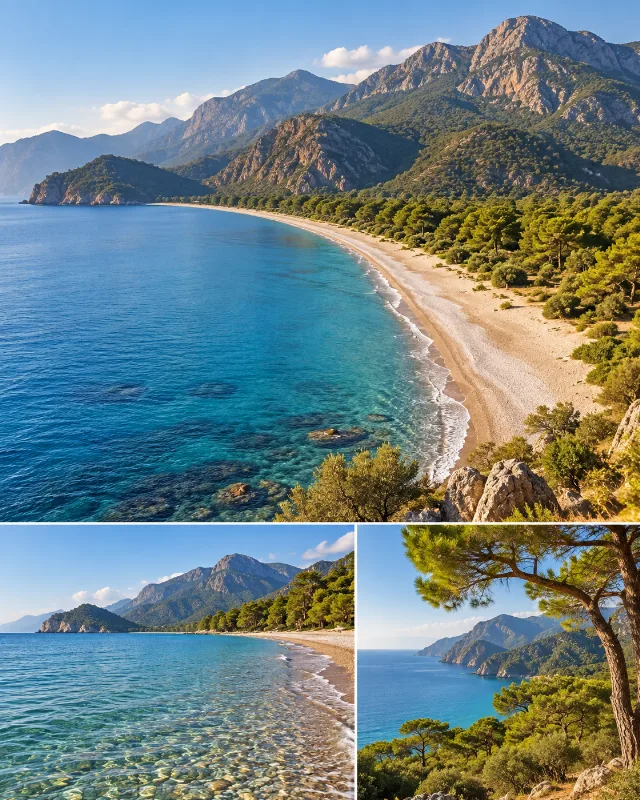
Below the ruins, Çıralı beach stretches along the coast and is known as a nesting ground for loggerhead turtles, which come ashore in summer. The village behind it remains small and agricultural, with citrus groves and greenhouse plots spread across the flat land. The Lycian Way long-distance trail passes through this section of the coast, connecting Olympos with neighbouring valleys.
Spring brings wildflowers and flowing water, summer is hot and dry, and autumn offers warm sea and softer light on the mountains. Whichever season you choose, the combination of Lycian stonework, dense forest and a fire that never goes out makes this corner of Antalya unlike anywhere else on the coast.
Historic places
Explore history →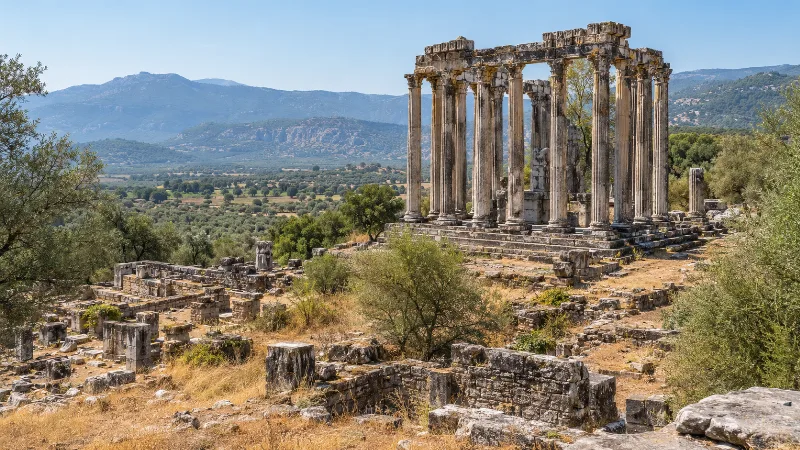
Euromos
Euromos is an ancient Carian city in Muğla Province, Türkiye, whose standing Temple of Zeus Lepsynos is among the best-preserved Roman-period temples in the country. Its theatre, agora, bath and city walls survive on a low hill above the Milas plain.
Explore →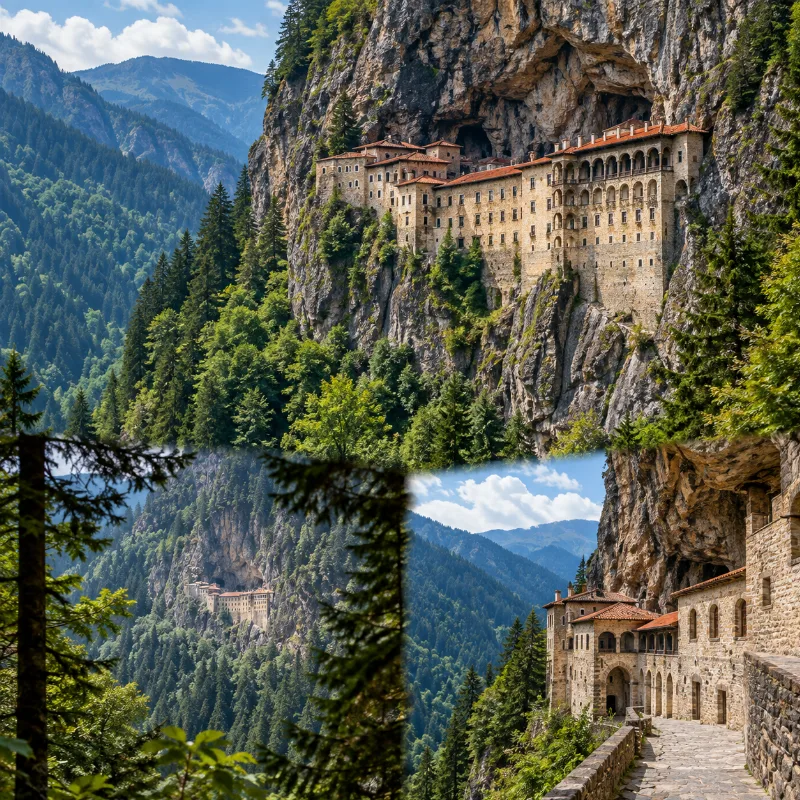
Sümela Monastery
A historic monastery built against a steep cliff in the forested mountains of Trabzon Province.
Explore →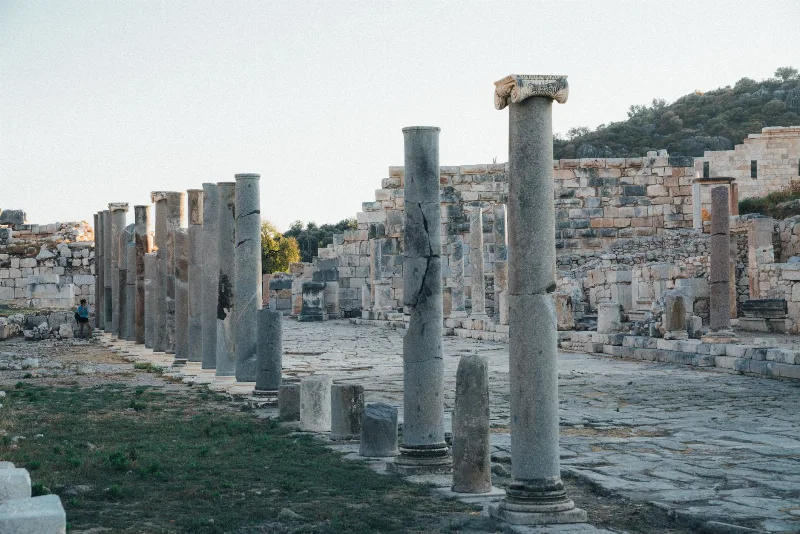
Patara
Patara is an ancient Lycian city in Antalya Province, Türkiye, that served as the meeting place of the Lycian League and preserves a Roman theatre, triumphal arch, bath complexes and an assembly hall beside a long sandy beach.
Explore →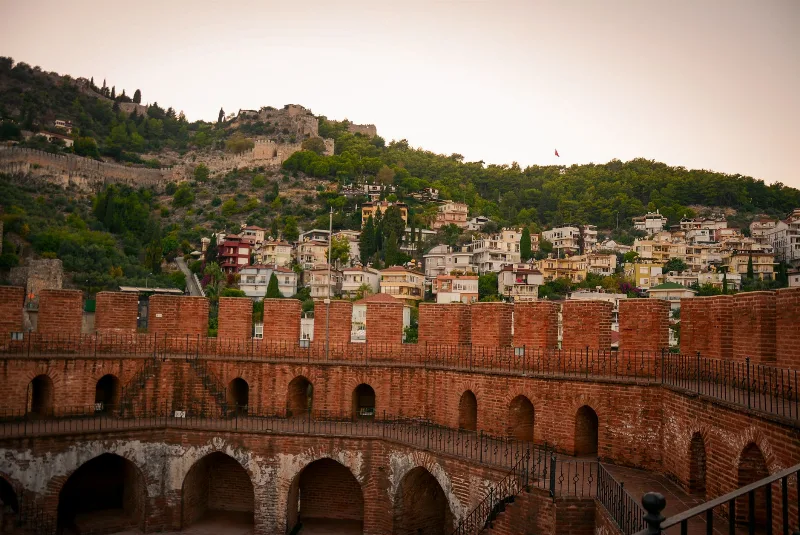
Alanya Castle
Alanya Castle is a medieval fortress on a rocky Mediterranean promontory in Antalya Province, Türkiye, whose surviving defences were largely built under the Seljuk Sultanate of Rum in the 13th century. Its walls, inner citadel, Red Tower and vaulted shipyard form one of the most complete Seljuk military and maritime complexes in Anatolia.
Explore →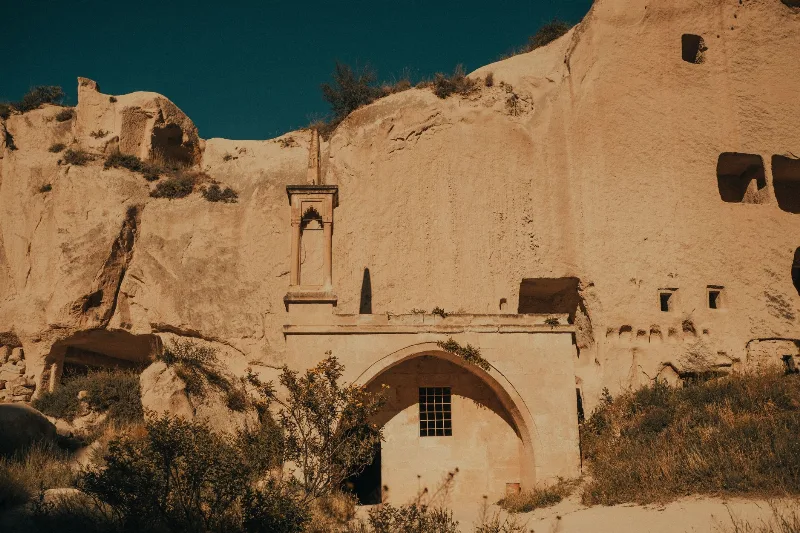
Göreme Open Air Museum
Göreme Open Air Museum is a rock-cut Byzantine monastic complex in the Göreme valley of Cappadocia, Nevşehir Province, whose churches preserve fresco cycles painted between the 10th and 13th centuries. It forms part of the UNESCO World Heritage Site of Göreme National Park and the Rock Sites of Cappadocia.
Explore →Related content
Olympos
Olympos is an ancient Lycian city in Antalya Province, Türkiye, whose ruins stand on both banks of a wooded river valley. Once a member of the Lycian League and later a Roman harbour town, it is best known for its theatre, baths and Lycian sarcophagi, and for the naturally burning Chimaera flames on the mountain above.
Olympos
Olympos is a Lycian and Roman-era city on the Antalya coast, where overgrown ruins share a river valley with a Mediterranean beach and the perpetual flames of Yanartaş burn on the slope above.
Antalya
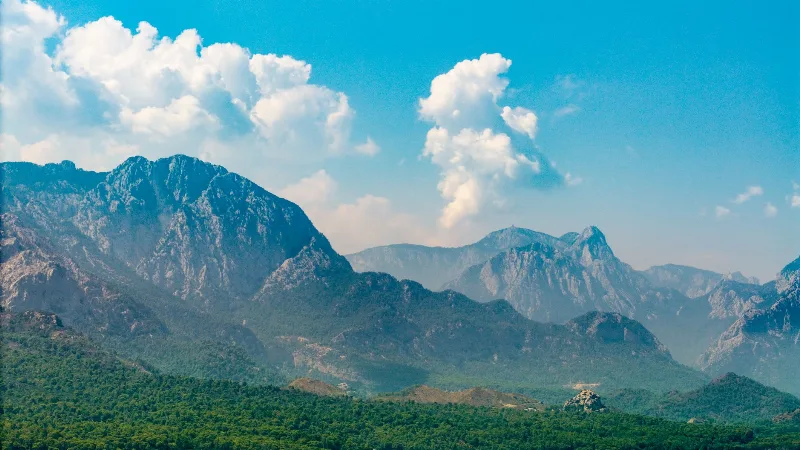
Antalya offers a unique blend of vibrant history and stunning natural beauty, making it a must-visit destination in Türkiye.
Çıralı Beach
A long beach on Antalya’s Mediterranean coast surrounded by mountains, pine forest and the historic landscape of Olympos.
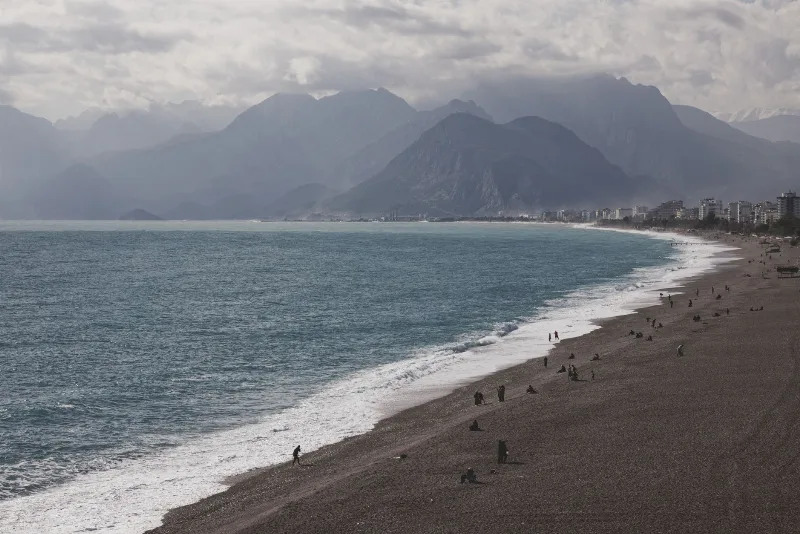
Çıralı
Çıralı is a small protected coastal settlement in Antalya Province, where a loggerhead turtle nesting beach meets the Lycian and Roman ruins of Olympos.
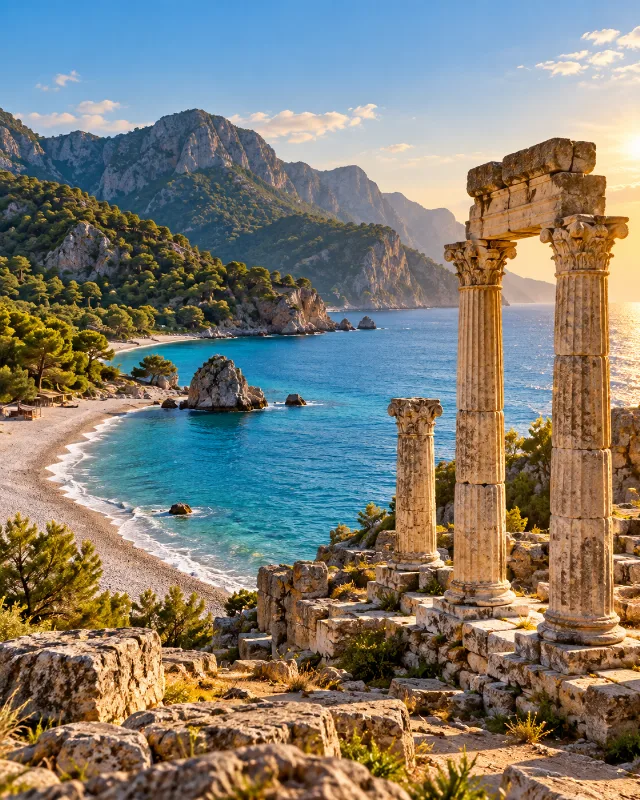
3-Day Antalya Ancient Coast Route
A three-day route combining Antalya’s old city with Perge, Aspendos, Side, Olympos and the Mediterranean landscapes around Çıralı.