
Euromos
Euromos is an ancient Carian city in Muğla Province, Türkiye, whose standing Temple of Zeus Lepsynos is among the best-preserved Roman-period temples in the country. Its theatre, agora, bath and city walls survive on a low hill above the Milas plain.
Euromos is an ancient Carian city in Muğla Province, in southwestern Türkiye, about twelve kilometres northwest of Milas on the road that runs toward Bodrum. It was inhabited from at least the Hellenistic period and prospered again under Roman rule, and it is known today above all for the Temple of Zeus Lepsynos, whose colonnade still stands almost complete and which is counted among the best-preserved ancient temples in Türkiye. Beyond the temple, the site preserves the remains of a theatre, an agora with a stoa, a bath building, a monumental gate and long stretches of fortification wall, all set on a low hill rising above farmland.
Where Euromos Stands
The ruins occupy a gentle eminence in the interior of the Carian peninsula, not on the coast but within sight of the broad plain that surrounds Milas. The surrounding landscape is agricultural: olive groves, fields and low scrub-covered hills, with the Aegean coast at Bodrum lying further to the southwest. The site sits close to the village of Selimiye, and the modern highway between Milas and Bodrum passes directly beside it, which makes Euromos one of the more easily reached inland archaeological sites of the region.
That inland position mattered historically. Euromos lay on routes linking the Carian heartland around Mylasa with the coast, so it belonged to a network of small but politically active cities rather than to the maritime trading towns of Ionia.
The Carian Identity of the City
Caria was the homeland of the Carians, a people who spoke their own language, written in a script only partly understood, and who appear in Greek and Near Eastern sources as early inhabitants of southwestern Anatolia. Euromos belonged to this Carian world. Its citizens were enrolled in the Chrysaoric League, a federal organisation of Carian communities that maintained a common sanctuary and a shared political and religious identity. Membership in that league is one of the clearest indications of how the city saw itself and of the regional structures within which it operated.
The city minted its own coinage, and its coins carry the image and the name of Zeus Lepsynos, the local form of Zeus worshipped at Euromos. The epithet is distinctive: it belongs to this sanctuary and helps identify the temple's dedication with unusual certainty. In the Hellenistic period, like many Carian cities, Euromos passed through phases of shifting outside influence, including Rhodian and later Roman ascendancy, while the neighbouring city of Mylasa, modern Milas, remained the dominant power of the district. Euromos was therefore never a great metropolis; it was a modest but self-conscious polis with its own institutions, cult and civic pride.
The Temple of Zeus Lepsynos
The temple that dominates the site is a Corinthian-order building, planned as a peripteral temple with a surrounding colonnade of six columns across the front and eleven along the sides. The structure visible today is generally dated to the second century AD, in the Roman imperial period, though it was raised on the foundations of an earlier sanctuary, so the sacred place itself is older than the marble architecture that survives.
Its most striking feature is also its most revealing: the temple was never finished. Several column shafts were left without fluting, showing the stage at which work stopped, and the building appears to have been abandoned in an incomplete state rather than damaged. Because it stands apart from the later, densely built core of the settlement, it escaped the systematic quarrying that consumed many ancient monuments, and a large part of its colonnade therefore remains upright.
The temple also documents how such buildings were paid for. Inscriptions carved on the columns record donations made by named individuals and by the city itself, so the monument reads almost like a public account of civic generosity. This practice of funding a temple through elite benefactions and communal contributions is characteristic of the eastern Roman provinces, and Euromos preserves one of the clearer surviving examples of it.
Other Monuments of the Ancient City
Euromos was not only a sanctuary. Its urban fabric can still be traced across the hill and the slopes below.
Together these remains show a small Carian city with the standard equipment of the Greco-Roman world: cult, entertainment, commerce, hygiene and defence. What makes Euromos unusual is not the range of buildings but the condition of the temple that stood at its edge.
From Hellenistic Settlement to Abandonment
The city's history divides into recognisable phases. It existed as a Carian community before the Hellenistic period, took its place within the regional league and the wider political struggles of the Hellenistic age, and then experienced a period of building and prosperity under Roman rule, when the great temple was begun. That Roman phase produced most of the monumental architecture that survives.
In late antiquity and the Byzantine period the settlement contracted, as did many inland towns of western Anatolia, and the site was eventually abandoned. The temple survived because it was never dismantled for reusable stone in a systematic way and because no major later settlement was built over it. Its columns therefore remained standing in the landscape, a landmark for travellers passing through the plain long before archaeology took an interest in the city.
What Can Be Seen at the Site Today
Visitors arrive at the temple first, and it is the temple that defines the experience. The standing columns with their Corinthian capitals and the surviving sections of architrave give a clear sense of the building's original height and proportions, an impression that is difficult to obtain at temples reduced to foundations. The unfinished shafts are visible on close inspection, and the dedicatory inscriptions on the columns can be made out on the stone.
From the temple, the rest of the city spreads out across the hill. The theatre is set into the slope, the remains of the agora and stoa lie nearby, and the lines of the walls and gate can be followed through the vegetation. The site is largely unexcavated in its domestic areas, so much of what lies beneath the surface remains to be studied, which gives the ruins a somewhat open, dispersed character rather than the polished appearance of a fully reconstructed archaeological park.
Visiting Context and Practical Notes
Euromos is reached by road from Milas or from Bodrum along the main highway; there is no railway or convenient public transport to the site, so a car or an organised road journey is the normal approach. The ruins sit directly beside the road, with the temple close to the entrance area. Ground is uneven, with gravel paths, exposed rock and low vegetation, and there is very little shade, so sturdy footwear and sun protection are useful.
The climate is Mediterranean, with hot, dry summers and mild, wet winters. Spring and autumn offer the most comfortable conditions for walking around the site; midsummer visits are best made early in the day. Because opening arrangements and site facilities can change, it is sensible to confirm current access conditions locally before travelling.
Nearby Places of Historical Interest
Euromos is well placed within a wider archaeological landscape. Milas, ancient Mylasa, lies a short distance to the southeast and preserves monuments of its own, including the distinctive Gümüşkesen tomb. Further inland, the sanctuary of Labraunda, set in the mountains above Milas, was the great cult centre of Carian Zeus and belongs to the same religious world as the temple at Euromos. To the southwest lies the coast at Bodrum, ancient Halikarnassos, with its castle and the site of the Maussolleion, and to the east and southeast the Carian cities around the Gulf of Güllük and the inland sanctuary city of Stratonikeia near Yatağan. The lake and ancient city at Bafa, with Herakleia and its fortifications, lie further north. Taken together with Euromos, these sites make the interior of Caria one of the richest archaeological regions of Türkiye.
Routes
All routes →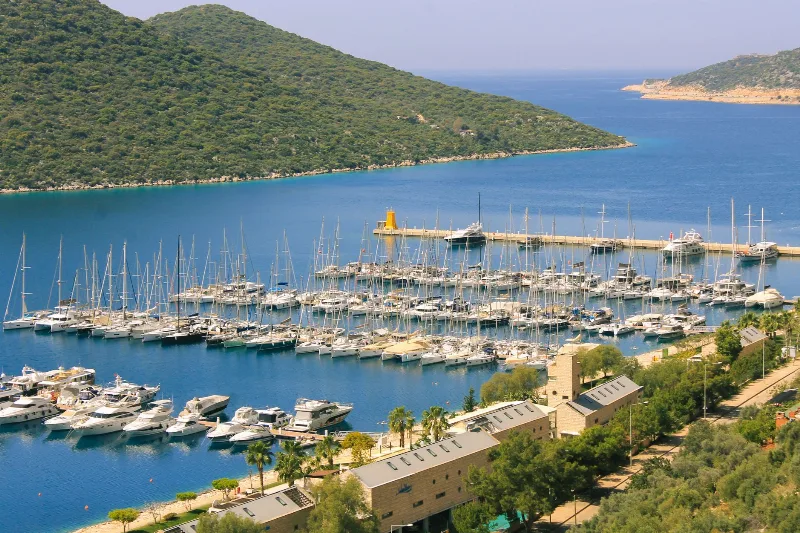
2-Day Kaş and Kalkan Route
Two unhurried days on Türkiye's Turquoise Coast, linking the harbour town of Kaş and its Lycian tombs with a boat trip toward Kekova, the beach at Kaputaş and the old quarter of Kalkan.
Explore →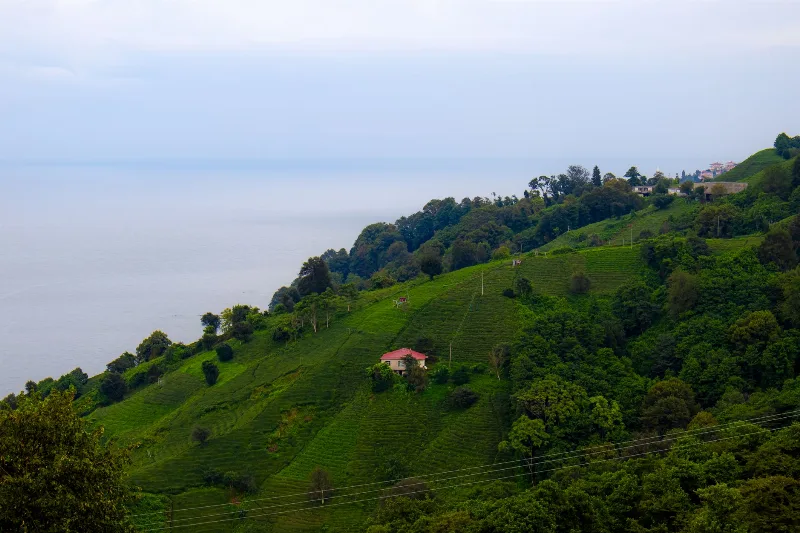
2-Day Rize and Ayder Route
A two-day linear route from Rize city through the coastal tea gardens and the Fırtına Valley to the Ayder Plateau in the Kaçkar Mountains.
Explore →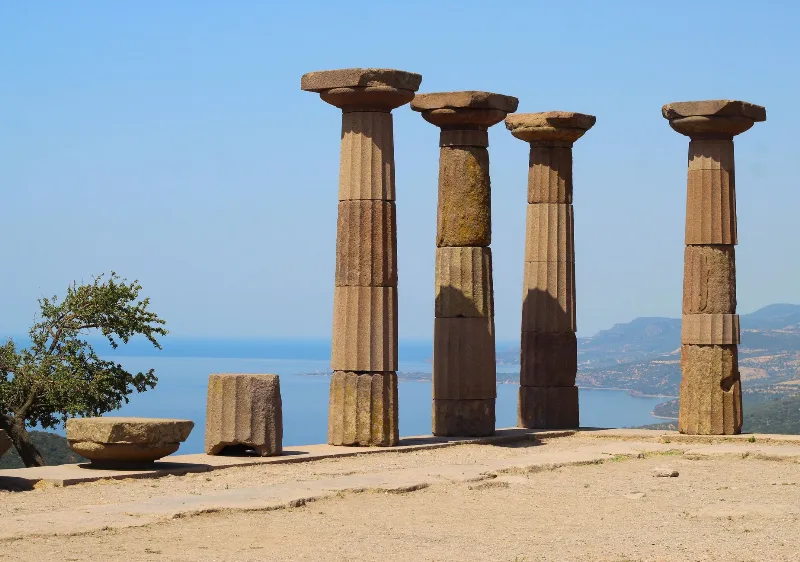
3-Day Çanakkale and Gallipoli Route
A three-day route based in Çanakkale that pairs the memorial landscapes of the Gallipoli Peninsula with the archaeological site of Troy and the southern Troad coast around Assos, using the Dardanelles ferry crossings as the link between two shores.
Explore →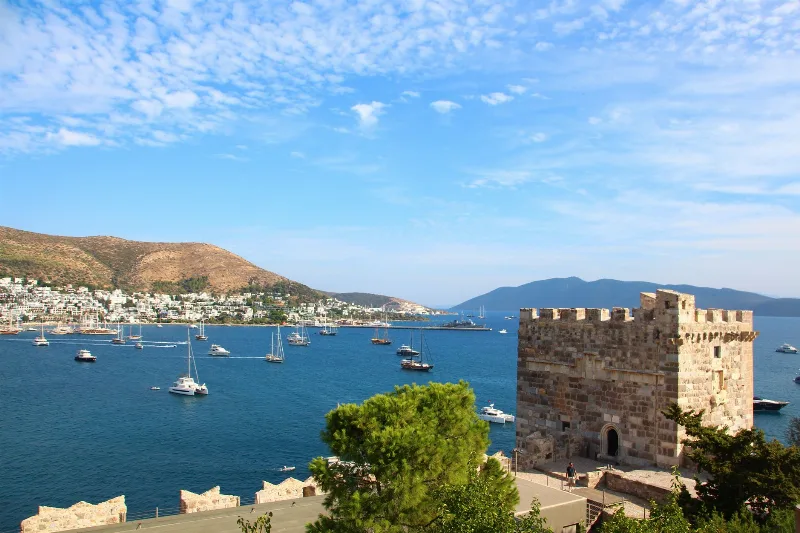
5-Day Bodrum Peninsula Route
A five-day circular drive around the Bodrum Peninsula that links the historic core of Bodrum with the southern shore village of Gümüşlük, the western town of Turgutreis and the northern villages of Yalıkavak, Göltürkbükü and Torba.
Explore →Related content
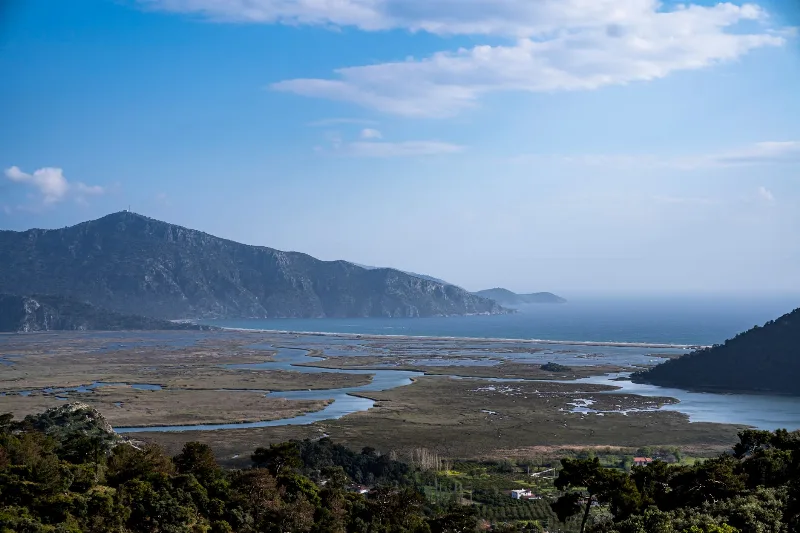
Muğla
Muğla is a captivating province in southwestern Türkiye, renowned for its stunning Aegean coastline and rich cultural heritage.
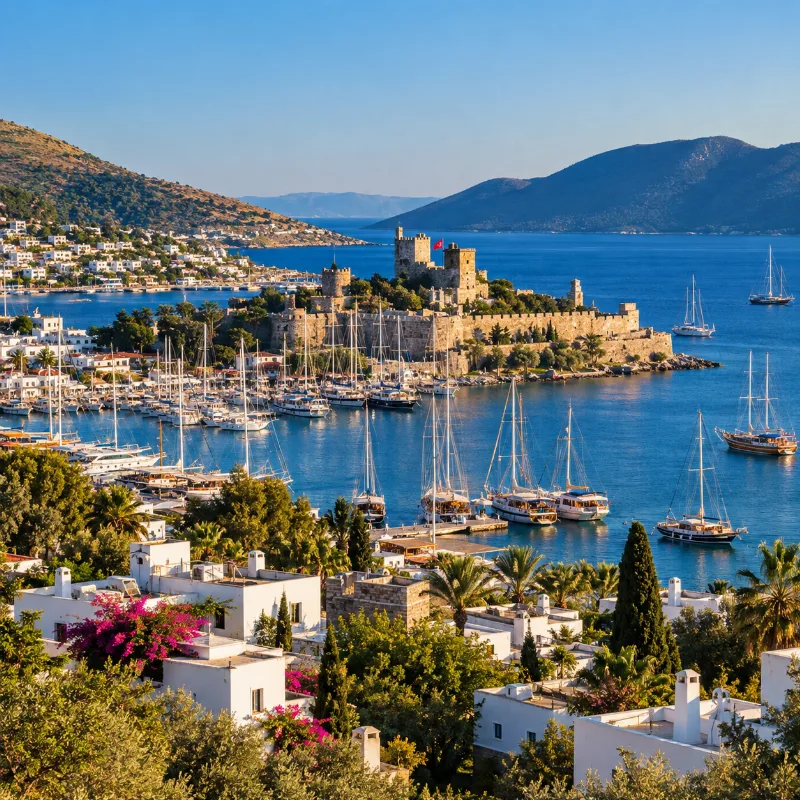
Bodrum
Bodrum is a coastal district of Muğla Province known for its whitewashed architecture, castle, Aegean coastline, bays and ancient Halicarnassus heritage.
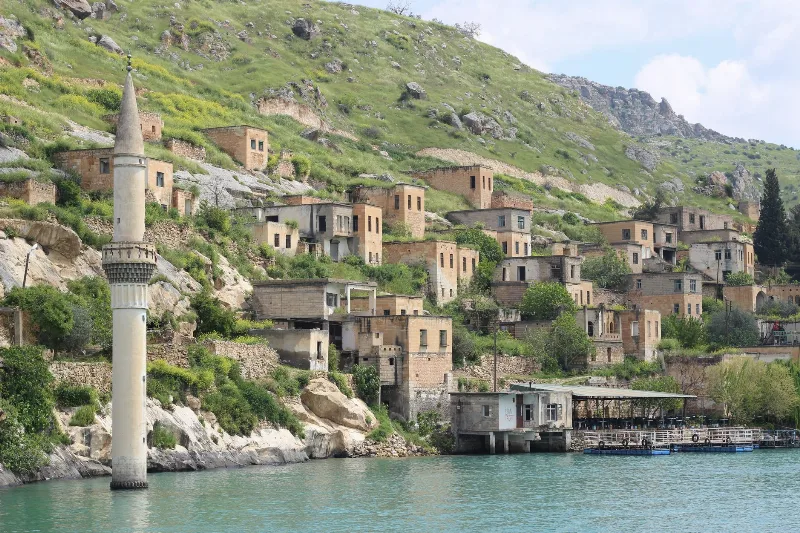
Kapıkırı
Kapıkırı is a small lakeside village in Milas, Muğla, built directly over the ancient city of Herakleia ad Latmum on the southern shore of Lake Bafa. Ancient walls, cut stones and shoreline ruins are woven into the settlement, with the Latmus mountains rising immediately behind it.
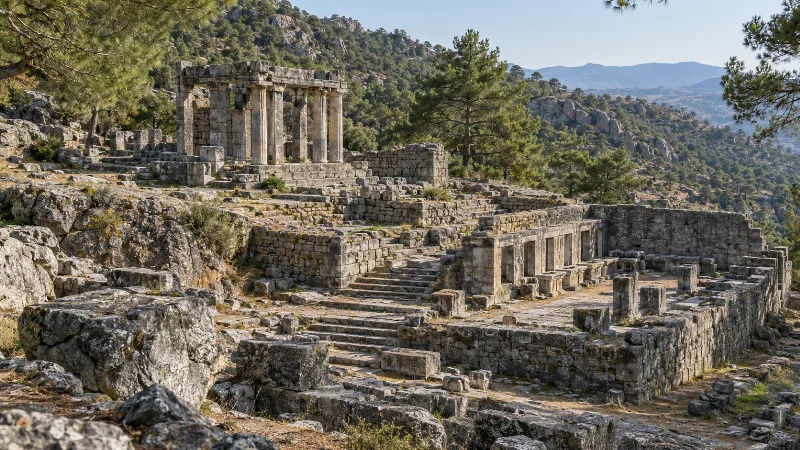
Labranda: The Ancient Carian Sanctuary of Zeus Labraundos
Labranda is an ancient Carian sanctuary of Zeus Labraundos in the hills north-east of Milas, Muğla Province, whose temples, banqueting halls and processional way were largely built in the 4th century BC under the Hekatomnid dynasty.
Gümüşlük
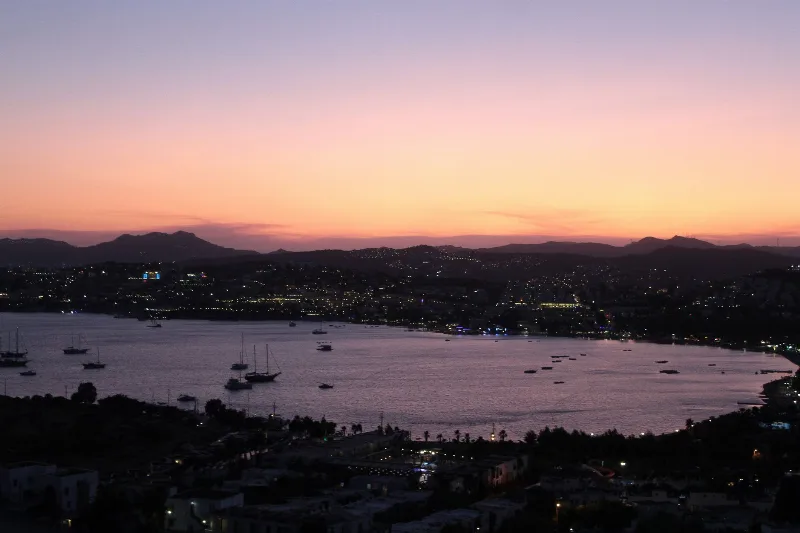
Gümüşlük is a former fishing village on the western tip of the Bodrum peninsula in Muğla, Türkiye, built over the ancient city of Myndos and known for its sunset views across the bay and its seafood culture.
Yalıkavak
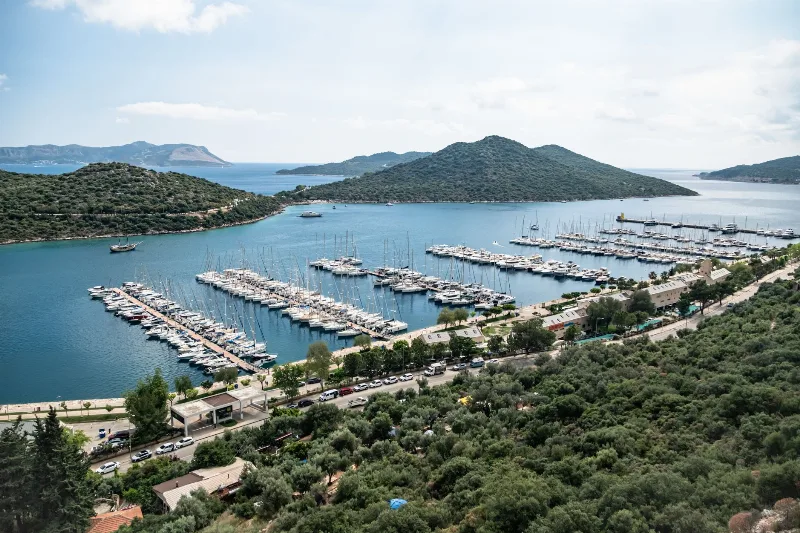
Yalıkavak is a coastal neighbourhood of Bodrum district in Muğla Province, on the northern shore of the Bodrum Peninsula. It is known for its large marina, a group of old stone windmills on the ridge above the bay, and a town centre that still carries traces of its fishing-village past.