
2-Day Kaş and Kalkan Route
Two unhurried days on Türkiye's Turquoise Coast, linking the harbour town of Kaş and its Lycian tombs with a boat trip toward Kekova, the beach at Kaputaş and the old quarter of Kalkan.
This two-day route follows the Turquoise Coast in Antalya province, starting in the harbour town of Kaş and ending in Kalkan a short way further west. Both towns sit on the Teke Peninsula, a rugged limestone coastline where mountains drop almost straight into the sea. The journey is short, linear and coastal: the first day stays around Kaş and the Lycian and Kekova coast it faces, and the second follows the shore road west with a swimming stop before finishing in Kalkan. The pace is unhurried rather than demanding, built around boat travel, short walks, historic sites and beaches, and it is easy to follow without adding long detours.
The route works as a standalone two-day break, but it also slots neatly into longer coastal journeys that continue east toward Antalya or west toward Fethiye and the wider Lycian coast, so it can be extended in either direction if more time is available.
Day 1: Kaş and the Kekova Coast
Day 1 begins in Kaş itself. The town wraps around a small harbour and a series of rocky coves, with narrow streets of whitewashed houses climbing the hillside behind. Right in the middle of this everyday townscape is the ancient settlement of Antiphellos: a small Hellenistic theatre that still looks out over the sea, and a cluster of Lycian rock-cut tombs carved into the rock above the centre. Both are within easy walking distance of the harbour, and they give the day an archaeological starting point that explains why this stretch of coast has mattered for so long.
The water is the other half of the day. Kaş is known for its beaches and bays, and the clearest places to swim lie around the peninsula west of the centre, where small coves such as Küçük Çakıl and Büyük Çakıl sit close to town and the coastal path out to Limanağzı passes one swimming spot after another. This is a place to slow down: the town's appeal comes from moving between the harbour, the theatre, the tombs and the sea rather than rushing between sights.
East of Kaş, the water opens onto the Kekova region, the most distinctive stretch of coastline in the area. Boats leave from Kaş harbour and from the village of Üçağız, and the trip takes in the sunken ruins submerged along the shore of Kekova island, the tiny hamlet of Üçağız, and Kaleköy, also called Simena, where a small castle and Lycian tombs stand above the water. Because the sailing is slow and the distances along this coast are short, the whole excursion fits naturally into a single day instead of being squeezed in beside the town. Returning to Kaş in the evening closes the loop of the first day.
Day 2: Kaş to Kalkan
Day 2 starts with a final morning in Kaş. A swim at one of the town beaches, or a walk out along the peninsula, is a good way to use the cooler hours before the short drive west. Everything in the centre is walkable, so the car can stay put until it is time to leave.
Leaving Kaş, the road heads west and follows the shoreline, climbing over headlands and dropping back down to the sea. This is the Turquoise Coast at its most photographed: steep slopes on one side, deep blue water on the other, and very few settlements in between. The landscape is the point of this section, and it is worth taking slowly rather than treating it as a simple transfer.
Kaputaş Beach
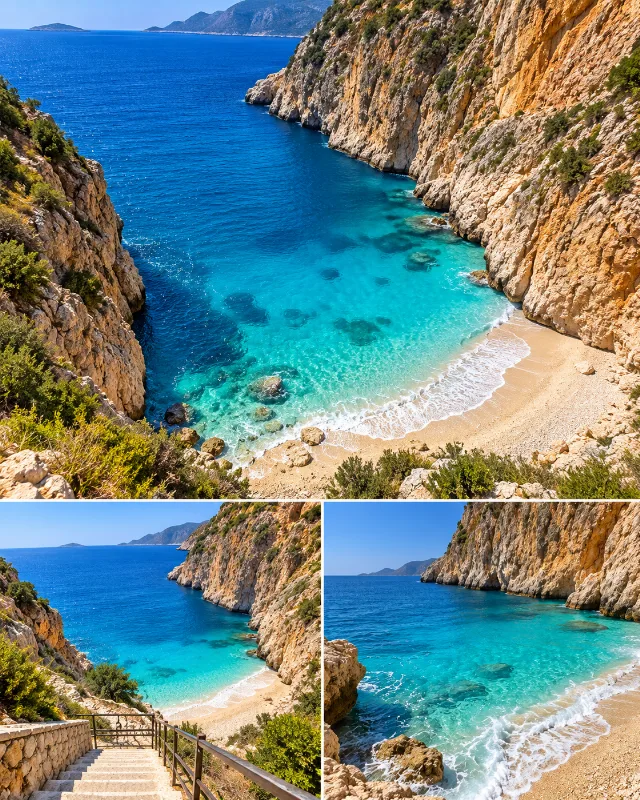
The main stop on the way is Kaputaş Beach, a small sandy cove set in a gorge between high cliffs, right beside the coastal road. The beach is reached on foot down a long flight of steps, and because it is enclosed by rock it feels cut off from everything around it. The water here is clear and shelves gently, which makes it one of the easiest swimming stops on the route. It sits roughly midway between Kaş and Kalkan, so stopping here breaks the drive naturally and keeps the day from becoming one long stretch in the car.
Kalkan
From Kaputaş the road continues west and soon reaches Kalkan, where the route ends. Kalkan is smaller and steeper than Kaş. Its old quarter climbs the hillside above a compact harbour, and its character comes from the stone houses built when the town was a modest trading port, with narrow lanes, balconies and sea views opening up between the buildings. The waterfront and the streets behind it are made for wandering on foot in the late afternoon, and the bay below the town offers more swimming before sunset. Together, the two towns show two faces of the same coast: Kaş is busier and more varied, Kalkan quieter and more contained.
Travellers with extra time rather than a strict two days can continue west of Kalkan, where the ruins of Patara and the long sandy beach beside them, and further on the Lycian sites of Xanthos and Letoon, belong to the same historical landscape. These lie beyond the stated ending point, so they work best as an addition rather than as part of this route.
Driving, Walking and Boat Travel
The route is best done with a car, because the section between Kaş and Kalkan and the stop at Kaputaş are not easily linked by other means. Kaş and Kalkan are connected by the coastal road, and the drive is short enough that the real decisions are how long to spend at Kaputaş and how early to reach Kalkan rather than how to cover the distance. Within both towns everything is on foot, and both are hilly, so comfortable shoes matter more than any transport planning. The Kekova part of Day 1 is reached by boat, from Kaş harbour or from Üçağız further east, and that choice shapes how the day is spent rather than how far it goes. No part of this route requires a ferry crossing; the sea is used for the boat excursion to Kekova, not as a link between the two towns.
Season and Terrain
Spring and autumn are the most comfortable seasons for this stretch of coast. Summer brings intense heat and busy beaches, so early mornings and late afternoons work better than the middle of the day. Winter is mild here, with occasional rain, and the towns stay open in a quieter form; the sea stays swimmable well into autumn. The terrain is consistently steep: limestone cliffs, rocky coves and a road that twists as it follows the shoreline. Mountains rise directly behind both towns, but this route stays at sea level, so there is no mountain driving, no high passes and no winter access problems to plan around. Walking is limited to town streets, the theatre and tombs at Antiphellos, the peninsula paths near Kaş and the steps down to Kaputaş. Olives, olive oil and thyme honey belong to the everyday character of the peninsula and appear in markets and village life along the way rather than as a separate attraction.
Remarkable Places
See all places →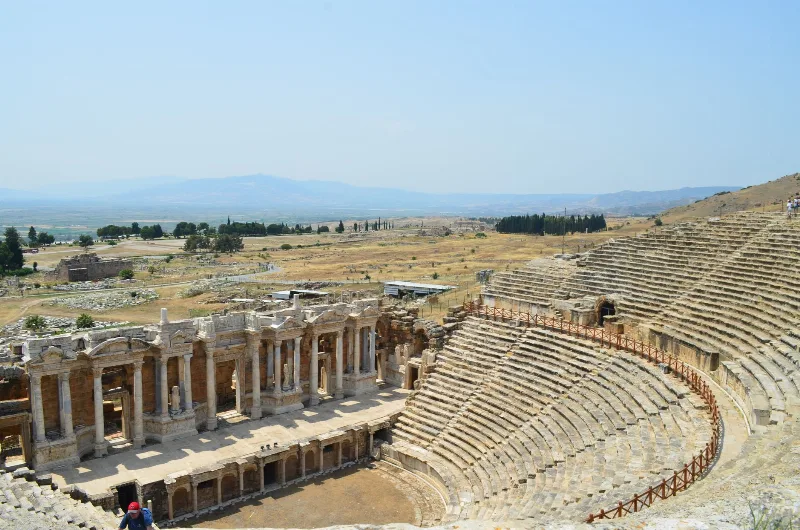
Letoon
Letoon is a Lycian sanctuary near Xanthos in Muğla Province, dedicated to Leto, Artemis and Apollo. Its three temples, theatre and trilingual inscription make it one of southwestern Turkey’s most significant archaeological sites.
Explore →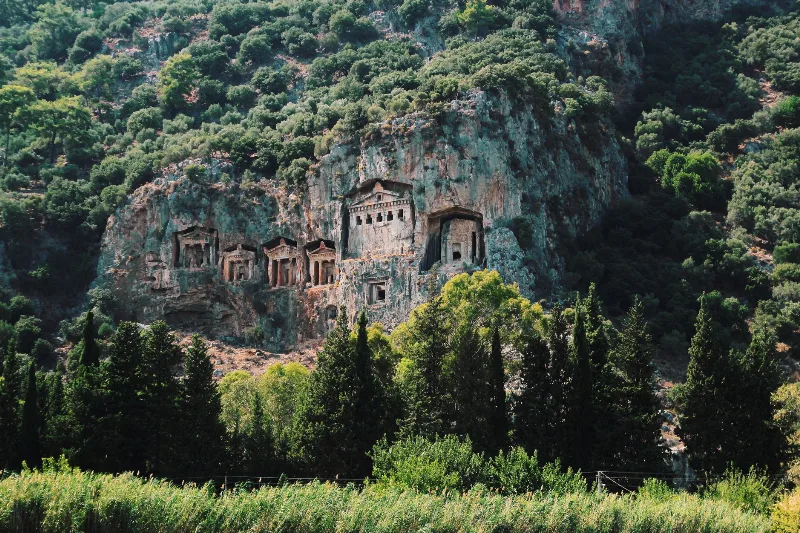
Kaunos
Kaunos is an ancient Carian city on the Dalyan River in Muğla Province, known for its temple-style rock-cut tombs and the extensive ruins of a harbour that silted up centuries ago.
Explore →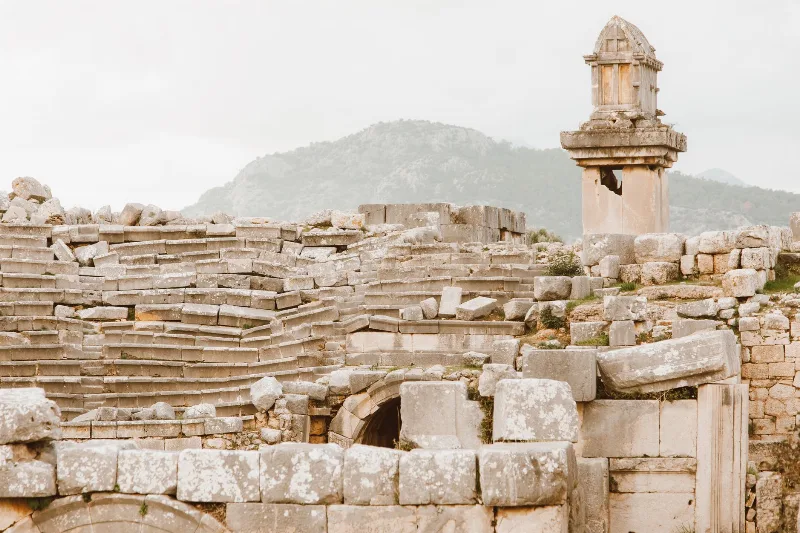
Xanthos
Xanthos is an ancient Lycian city in Antalya Province and a UNESCO World Heritage Site, known for its Lycian tombs, Roman theatre and role as a leading city of Lycia.
Explore →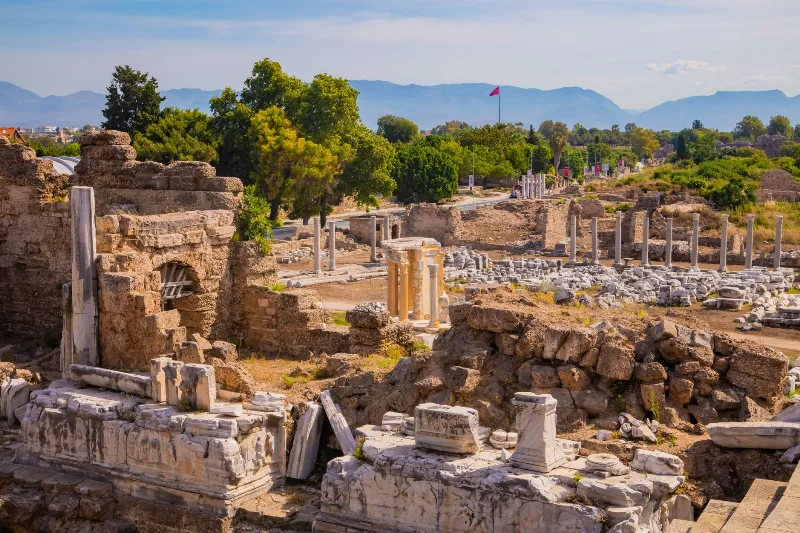
Phaselis
Phaselis is a Rhodian-founded port city on the eastern Lycian coast, where paved streets, agoras, baths and a small theatre stand among pines between three sheltered bays.
Explore →Related content
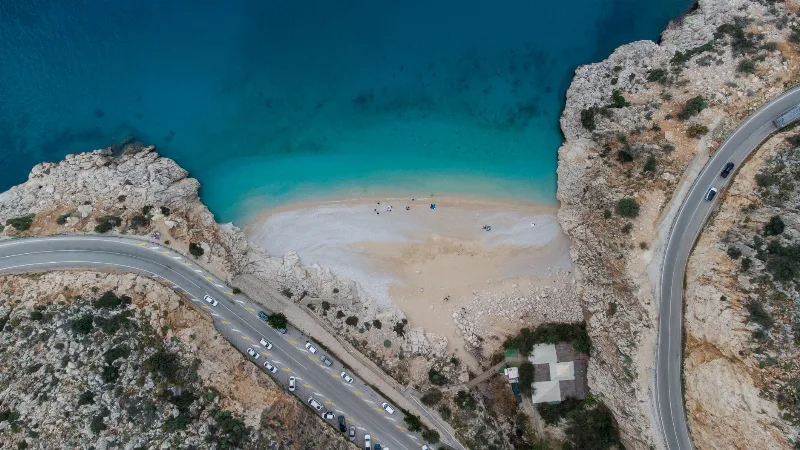
Kaputaş
Kaputaş is a small but stunning beach located between Kalkan and Kas, renowned for its crystal-clear turquoise waters and unique roadside access.
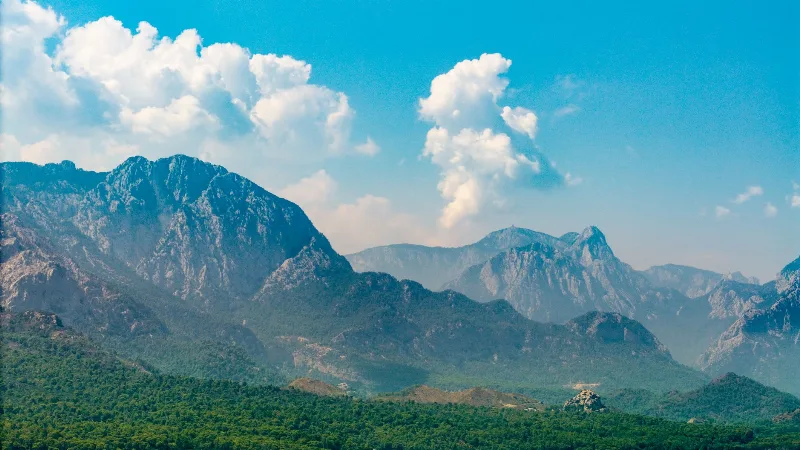
Antalya
Antalya offers a unique blend of vibrant history and stunning natural beauty, making it a must-visit destination in Türkiye.
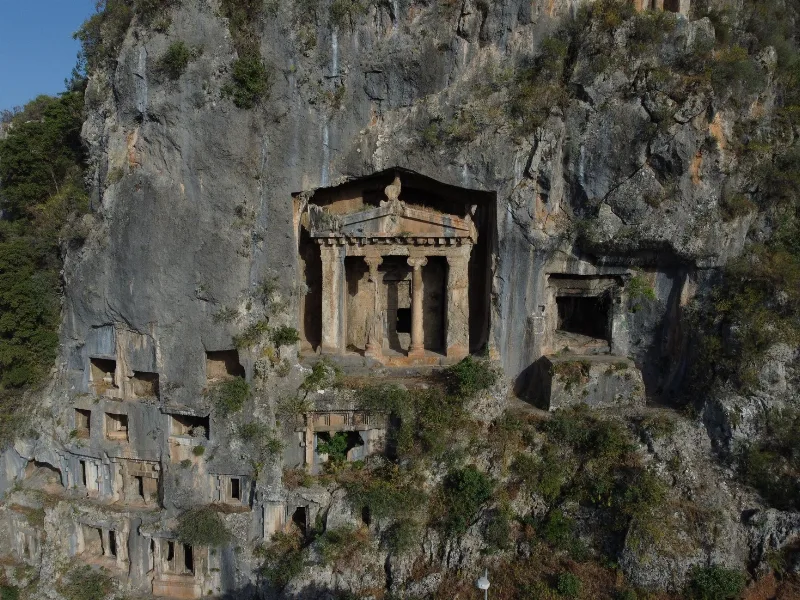
Fethiye
Fethiye is a captivating coastal town known for its stunning blue lagoon, thrilling paragliding experiences, and ancient rock tombs.
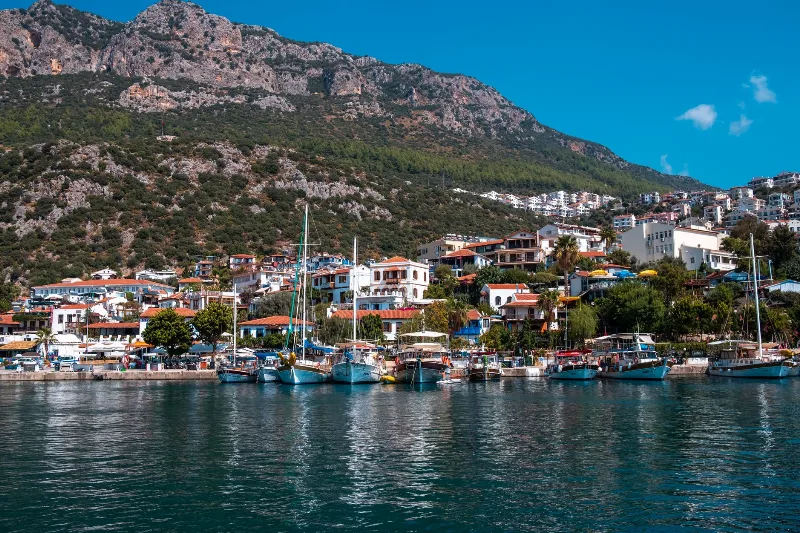
5-Day Antalya to Fethiye Coastal Route
A five-day driving itinerary along Turkey's Mediterranean shore, linking Antalya, Phaselis, Olympos, Demre, Kekova, Kaş, Kalkan, Patara and Fethiye. The route is linear, coastal for most of its length, with short inland detours to Lycian ruins.
6-Day Mediterranean Coast Route: Antalya to Marmaris
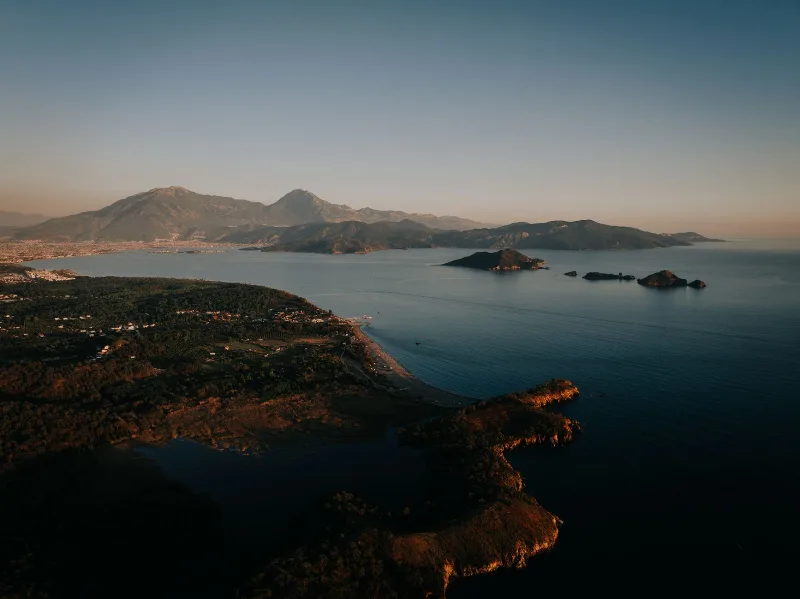
A six-day linear route along Türkiye's Mediterranean coast, linking Antalya, Olympos, Demre, Kekova, Kaş, Kalkan, Patara, Fethiye and Dalyan before finishing in Marmaris. It mixes ancient cities, long beaches and small harbour towns on a continuous westward drive.
Kaputaş Beach
A small Mediterranean beach between Kaş and Kalkan, known for its turquoise water and steep limestone surroundings.