
Kapıkırı
Kapıkırı is a small lakeside village in Milas, Muğla, built directly over the ancient city of Herakleia ad Latmum on the southern shore of Lake Bafa. Ancient walls, cut stones and shoreline ruins are woven into the settlement, with the Latmus mountains rising immediately behind it.
Kapıkırı is a small village in Milas district, Muğla Province, in southwestern Türkiye, on the southern shore of Lake Bafa. What sets it apart from almost any other village in the region is that it stands directly on the site of the ancient city of Herakleia ad Latmum. Ancient walls, foundations, cut stones and fragments of masonry are part of the everyday fabric of the settlement, and more ruins lie in the shallows just offshore. The village is also the practical starting point for the archaeological remains and footpaths of the Latmus mountains that rise behind it.
A Lakeside Setting Below the Latmus Range
Kapıkırı sits at the eastern end of Lake Bafa, where the water narrows and the shoreline curves against the lower slopes of the Latmus mountains, known in Turkish as the Beşparmak Dağları. The lake is not a true inland lake in origin: it was once an arm of the Aegean, cut off over centuries as the Büyük Menderes river carried silt into the gulf and sealed it from the sea. What remains is a shallow, slightly brackish body of water with no outlet, backed by rocky ridges and olive groves.
The village itself is low-rise and spread along the shore and the first slopes above it. Olive trees, small fields and vegetable plots run between the houses, and the water is close enough that the view from much of the settlement is dominated by the lake and the hills on the far side. The surrounding area is protected, and the wetlands and open water attract waterbirds, particularly in the cooler months.
The Ancient City Beneath the Modern Village
Herakleia was a Carian city that grew on this spot in antiquity, and its remains are the reason Kapıkırı is known beyond Muğla. The city was renamed and reorganised in the fourth century BC during the period of Mausolus, and it later prospered as a port on the gulf that once existed here. Its defensive circuit is among the most visible features today: stretches of wall and square towers run along the ridge above the village and down towards the water, following the line of the ancient fortifications.
Within and around Kapıkırı you can find the remains of an agora, a council building, a theatre hollowed into the slope, and the foundations of a temple dedicated to Athena. Much of this is unlabelled and unobtrusive, which is part of the character of the place. There is no reconstructed archaeological park here; the ruins sit among houses, gardens and grazing land.
What the Village Itself Feels Like
Kapıkırı is a working village, not a staged one. Many houses are built at least partly from stone taken from the ancient city, so blocks with old tool marks and carved edges appear in garden walls, doorways and terraces. Roofs are mostly low and tiled, courtyards are shaded by vines and fig trees, and narrow lanes thread between the buildings. The pace is slow, and much of daily life is tied to olives, small-scale farming, livestock and fishing on the lake.
Because the village is small, walking from one end to the other takes only a short time. What rewards a slower look is the way the settlement and the archaeology overlap: a gateway that is clearly an ancient block, a stretch of wall built into a modern boundary, a carved fragment used as a step.
The Shoreline, the Islands and the Ruins in the Water
The most distinctive sight at Kapıkırı is the archaeology below the waterline. When the lake level falls, usually in late summer and autumn, the outlines of ancient harbour structures and building foundations become visible in the shallows and along the shore. Even when the water is higher, the shape of the old waterfront can be traced in places.
Offshore, the small island in the lake carries the remains of a Byzantine monastery, with walls and fragments of masonry still standing among the rocks. The shoreline in front of the village is shallow and calm, and the view across the water towards the northern hills is one of the defining images of the area. Fishing boats are often drawn up along the edge of the water.
Mount Latmus and the Endymion Legend
The mountains behind Kapıkırı are steep, rocky and cut by gullies, and they have their own history. In Greek myth, the shepherd Endymion was loved by the moon goddess Selene and was said to sleep forever on Mount Latmus; a cave on the mountain is traditionally associated with him. The slopes above the village also hold traces of older occupation, including rock shelters and prehistoric paintings in the wider Latmos region.
Footpaths lead up from the village into the hills, passing ancient watchtowers, cisterns and stretches of wall. These routes are rough in places and require proper shoes and a reasonable level of fitness. There is no shuttle or lift, so everything on the mountain is reached on foot.
How to Reach Kapıkırı
The usual approach is from Milas, the district centre. From the Milas–Söke road you turn off at the lakeside village of Çamiçi, also known as Bafa, and then follow the shore road eastwards towards Kapıkırı. The road runs between the water and the mountains and is straightforward for a private car. Coming from the Aydın side, the route passes along the northern shore of the lake before crossing towards Milas.
Public transport in this part of Muğla is limited, and the most reliable way to reach the village is with your own vehicle or as part of a day trip from Milas or the Bodrum and Didim areas. Because the village is small, services are basic, and it is wise to arrive with what you need for the day.
When to Go
Spring and autumn are the most comfortable seasons. In April and May the hills are green and the temperatures are mild, and in September and October the light is clear and the lake level is often low enough to reveal the submerged ruins. Summer is hot and dry, with little shade on the mountain paths, and the middle of the day is best avoided for walking. Winters are mild but wet, and the lake rises, covering much of the shoreline archaeology.
Practical Points Before Visiting
- The terrain around the village is uneven, with stone lanes, slopes and loose ground; sturdy shoes are useful.
- Facilities in Kapıkırı are limited, so bring water, food and sun protection, especially outside the main season.
- The archaeological remains are unprotected and fragile; do not climb on standing walls or remove any stone or fragment.
- The lake and its wetlands are a protected natural area, and wildlife should be observed from a distance.
- Mobile coverage can be patchy in the mountains behind the village.
Places Around Lake Bafa and Beyond
Kapıkırı is part of a wider lakeside landscape. The village of Çamiçi, at the turn-off from the main road, is the other main settlement on the shore and the point from which most visitors arrive. On the northern side of the lake, the road towards Söke passes through open country with views back across the water.
Further afield, the Milas area holds several major ancient sites, including Euromos with its temple and Iasos on the coast. To the north and west lie Priene, Miletus and Didyma, all within reach on a longer circuit. The Latmus mountains themselves continue east and north of the lake and offer some of the roughest and least-visited walking country in this part of Muğla.
From the land
Find All →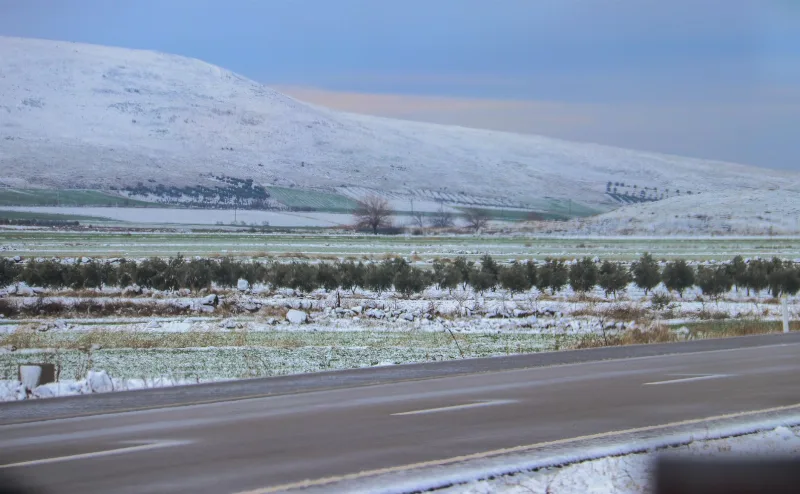
Gaziantep Garlic
Gaziantep garlic is the pungent, sharply aromatic garlic grown in the irrigated garden plots and fields of Gaziantep province in southeastern Türkiye. Its character comes from a hot, dry ripening season, cold winters and the fertile, well-drained soils of the province.
Explore →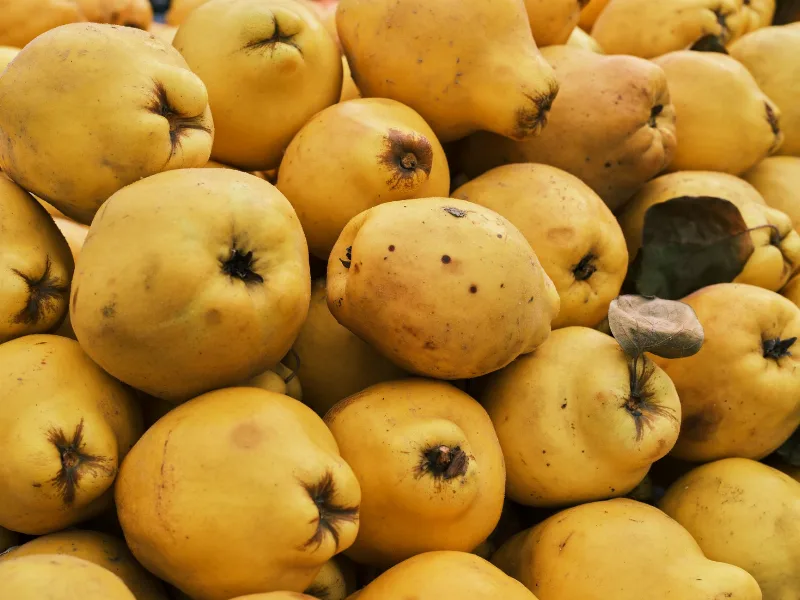
Bursa Quinces
Bursa quinces are the fruit of the quince tree grown around the city of Bursa in northwestern Türkiye, where the province's temperate Marmara climate and fertile soils give the fruit its dense flesh, tart flavour and strong fragrance. The orchards of Bursa are among the places most closely identified with quince growing in the country.
Explore →
Elazığ Apricots
Elazığ apricots are a regional apricot product from eastern Türkiye, valued for their juicy, flavorful fruit. The province’s climate and fertile soils support both fresh use and traditional drying.
Explore →Related content
Muğla
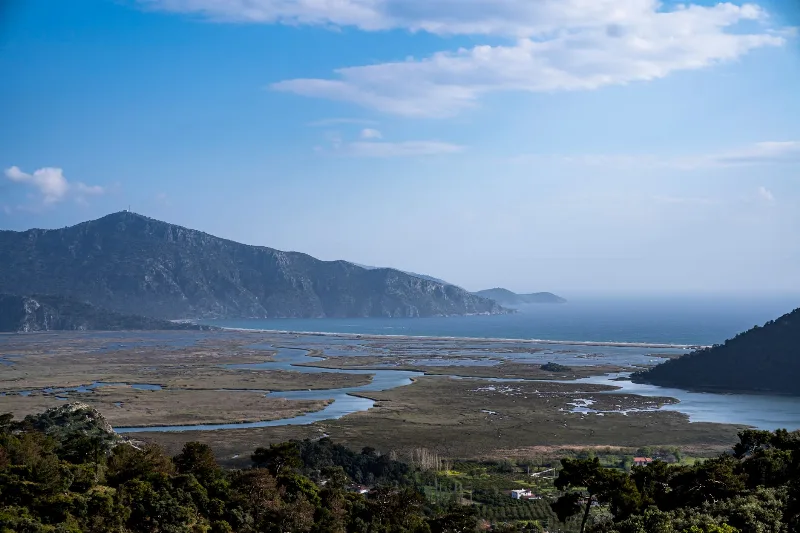
Muğla is a captivating province in southwestern Türkiye, renowned for its stunning Aegean coastline and rich cultural heritage.
Lake Bafa
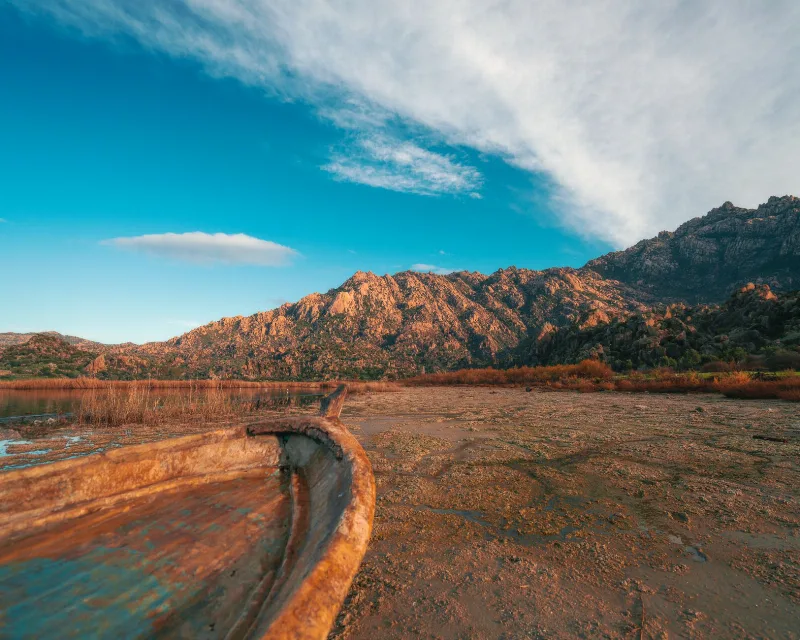
Lake Bafa is a brackish lake in southwestern Türkiye, shared between the provinces of Muğla and Aydın. It is the surviving remnant of an ancient Aegean inlet, now enclosed by farmland, the granite slopes of the Beşparmak Mountains and scattered ruins of harbour towns that once stood on open sea.
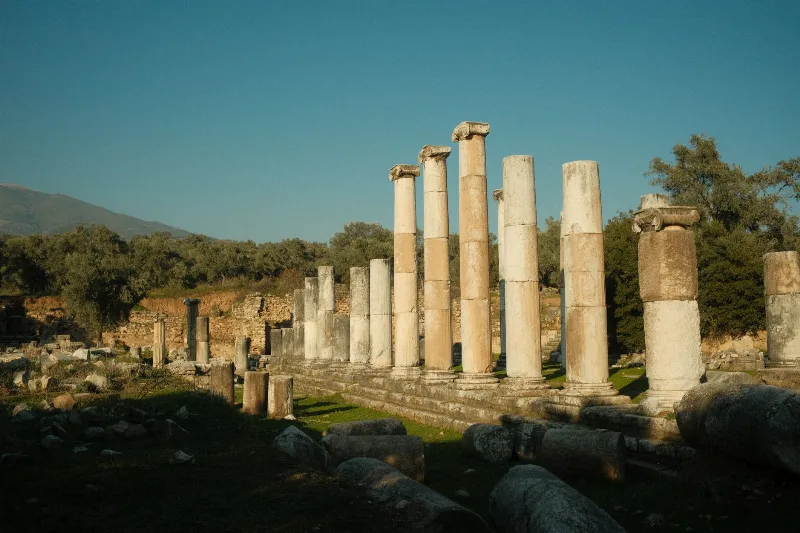
Söke
Söke is an agricultural district in Aydın Province, set on the fertile Büyük Menderes plain near the Aegean coast. It is known for cotton and olive production and provides access to Priene and the Dilek Peninsula National Park.
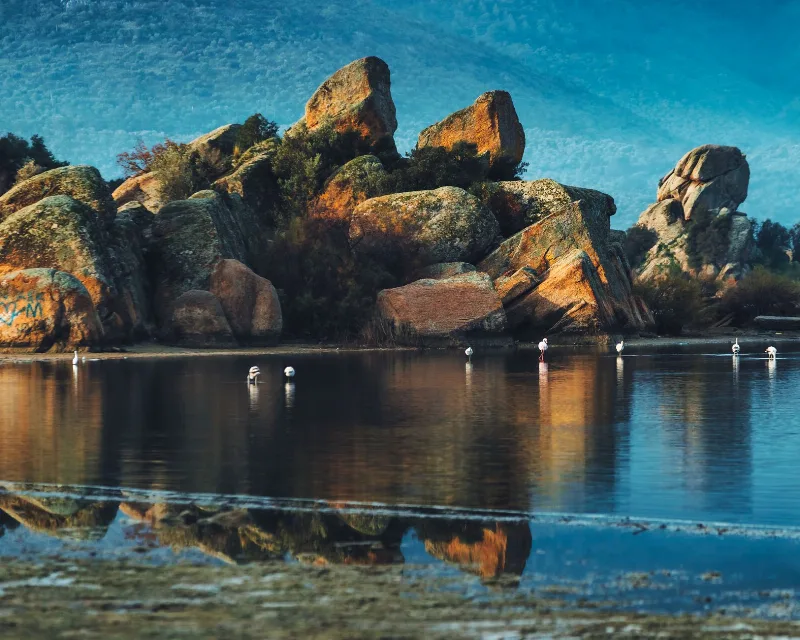
Bird Migration in Lake Bafa, Muğla
Lake Bafa in Muğla sits on a major bird route, and its shallow brackish water fills with migrating and wintering waterbirds during the spring and autumn passages. Timing shifts each year with water levels and weather, which is why the lake is worth visiting across a window rather than on a fixed date.
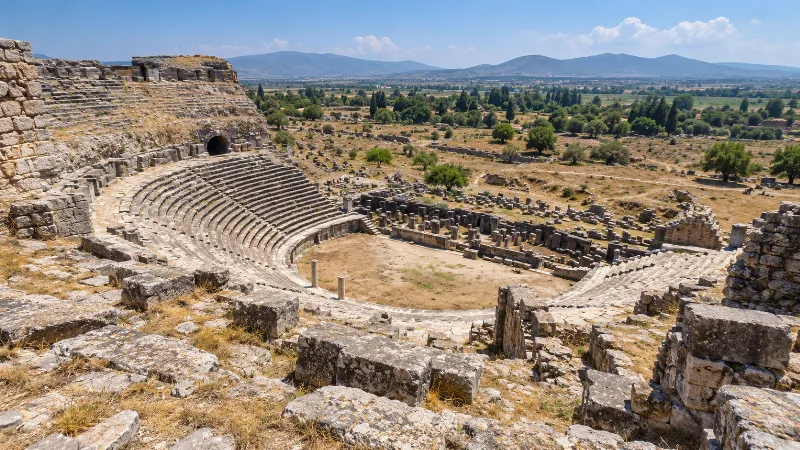
Miletus
Miletus is an ancient Greek city in Aydın Province whose Great Theatre, harbour monuments and Miletian school of philosophy made it one of the defining sites of Ionia — now stranded inland by the Meander River.
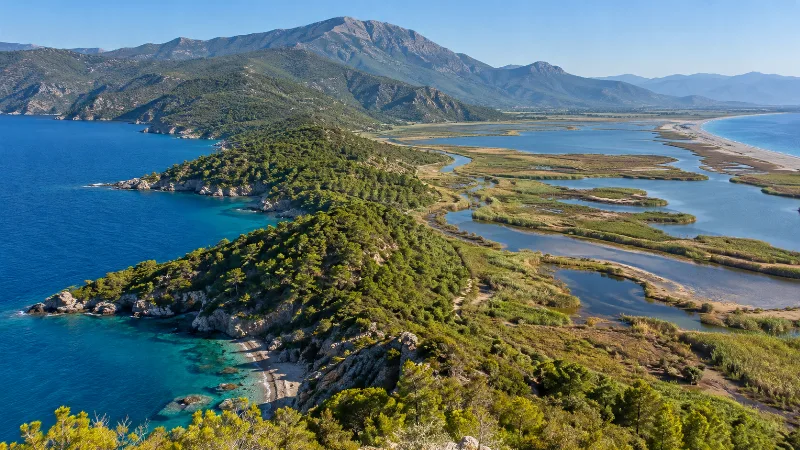
Dilek Peninsula–Büyük Menderes Delta National Park
Dilek Peninsula–Büyük Menderes Delta National Park in Aydın pairs a forested Aegean mountain ridge with a broad river delta of lagoons and reedbeds. The two halves form one of the western coast's most varied protected landscapes.