
Miletus
Miletus is an ancient Greek city in Aydın Province whose Great Theatre, harbour monuments and Miletian school of philosophy made it one of the defining sites of Ionia — now stranded inland by the Meander River.
Miletus is an ancient Greek city on the Aegean side of western Anatolia, standing near the village of Balat in Didim district, Aydın Province. In antiquity it was one of the great harbour cities of Ionia, a trading power whose merchants reached the Black Sea and Egypt, and a place where Greek philosophy, geometry and geography took some of their earliest steps. Its most prominent surviving monument, the Great Theatre, is among the largest ancient theatres in Anatolia. The site today lies on flat, cultivated ground several kilometres from open water, a consequence of the river silting that gradually closed the city's harbours.
Where Miletus stands and why the coastline looks wrong
The ruins occupy a low plain on the southern edge of the Büyük Menderes delta, the river known in antiquity as the Meander. When the city was founded, this was a peninsula with four harbours and direct access to the sea through the Gulf of Latmos. Centuries of alluvium carried down by the river filled the gulf, pushing the shoreline westwards and eventually cutting Miletus off entirely. The process is still readable in the landscape: reed beds, drainage channels, low hills and a wide flat plain where open water once lay. Lake Bafa, further inland to the east, is generally understood as the remnant of that same gulf, now enclosed by the delta.
This geography explains almost everything about the site. The city turned its back on the water it had lost, rebuilt its monuments inland, and shrank into a small settlement that eventually became the modern village of Balat. Visitors arriving today should expect an inland archaeological plain rather than a coastal ruin.
The intellectual importance of Miletus
Miletus is best known in the history of ideas as the home of the Milesian school. Thales, Anaximander and Anaximenes, all associated with the city in the sixth century BC, were among the first thinkers in the Greek world to explain the natural world by natural causes rather than by myth. Anaximander is credited with drawing one of the earliest maps of the known world, and the city's link to early astronomy, geometry and cosmology comes directly from these figures.
That intellectual life was inseparable from commerce. A wealthy port with contacts across the Mediterranean and the Black Sea could support people whose work was not agricultural, and Miletus was also a founder of colonies along those routes. The city's civic identity revolved around the sanctuary of Apollo Delphinios, the Delphinion, which served as its main sacred and political centre.
The Great Theatre
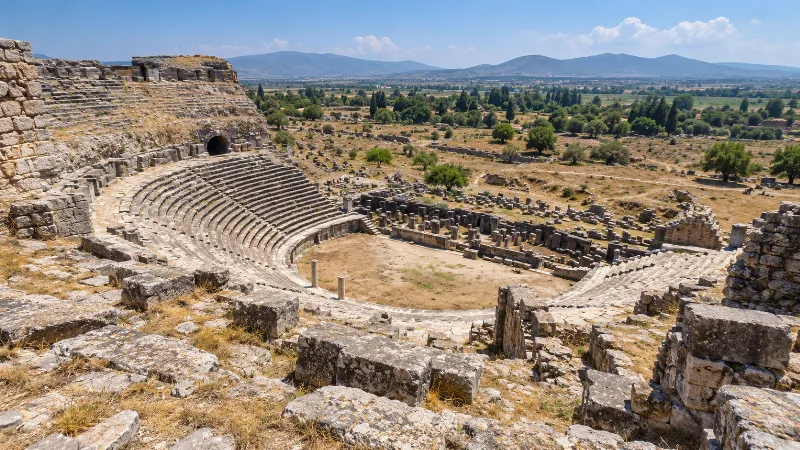
The theatre is the first structure most visitors see and the one that defines photographs of the site. It was built into the slope of a hill overlooking the plain, with a Hellenistic origin and a major Roman-period rebuilding programme that enlarged the seating and added a substantial stage building. Seating estimates often given are in the region of fifteen thousand spectators, which places it among the biggest theatres of the ancient Greek world.
What survives is largely the cavea, the curved bank of stone seating, divided by stairways and horizontal walkways. From the upper rows the whole layout of the city becomes legible: the theatre, the plain, the line of the former harbours and the low hills beyond. The stage building is in a more fragmentary state, but its scale and the passages behind the seating still convey how the structure worked. The steps are steep and worn, and climbing to the top rows requires care.
Other monuments across the site
The archaeological area is extensive, and the theatre is only the beginning of a walk that takes a couple of hours at an unhurried pace.
What to know before visiting
The site is reached by road from the Söke and Didim directions, with a signed turn-off near Balat, and it is normally visited by private vehicle or on organised excursions rather than public transport. Opening times and ticketing arrangements are managed as part of the wider Didim–Miletus archaeological area, so it is worth confirming current details locally or through official museum sources before setting out, as these change with the season.
The terrain is mostly flat but uneven: gravel paths, loose stone, low walls and no continuous boardwalk. Strong footwear is more useful than anything else. Shade is scarce across the site, and the theatre absorbs heat through the afternoon. There are few facilities directly at the ruins, so water and sun protection should be brought rather than assumed.
Climate and the best time to walk the ruins
The climate is Mediterranean Aegean: hot, dry summers with strong sun and minimal rainfall, mild springs, and cooler, occasionally wet winters. Late spring and early autumn give the most comfortable conditions for a site with so little shade, and winter visits are quiet but can be muddy after rain in the lower plain. Midsummer visits are best made early in the morning, when the light on the theatre is also at its clearest.
Related places nearby
Miletus sits within an unusually dense cluster of ancient sites. Didyma, near modern Didim to the south, holds the Temple of Apollo, one of the largest oracular sanctuaries of the Greek world. Priene, on the slopes of the Mycale range near Söke, is a Hellenistic city laid out on a strict grid above the plain. Lake Bafa offers a quieter landscape of enclosed water, hillside paths and rock-cut remains. The market town of Söke and the coastal resort of Didim provide the natural bases for visiting all of them in a single trip.
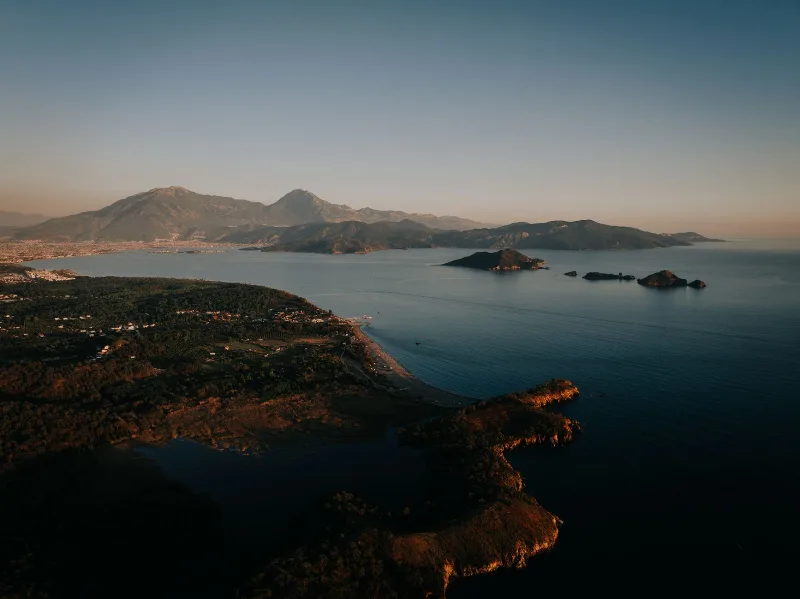
Related content
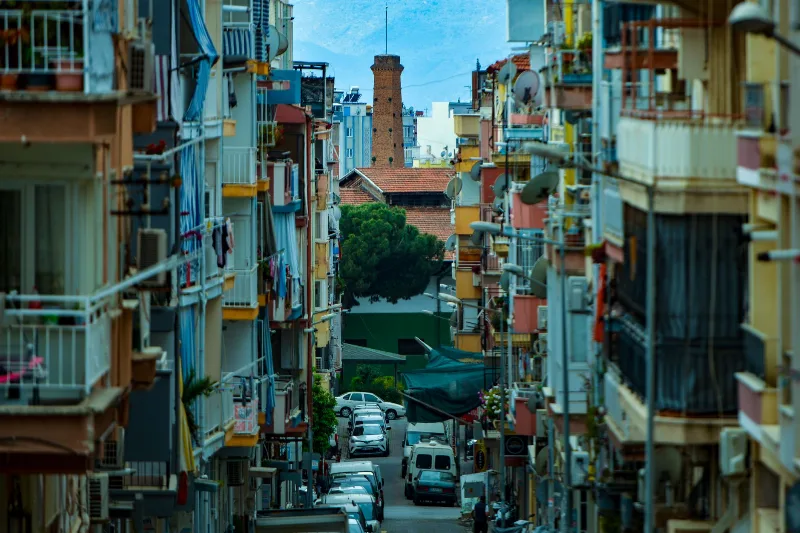
Aydın
Aydın is the inland capital of Aydın Province in Türkiye's Aegean region, recognised for its fig production and its position between the fertile Büyük Menderes valley, the coastal district of Kuşadası and several major ancient sites.
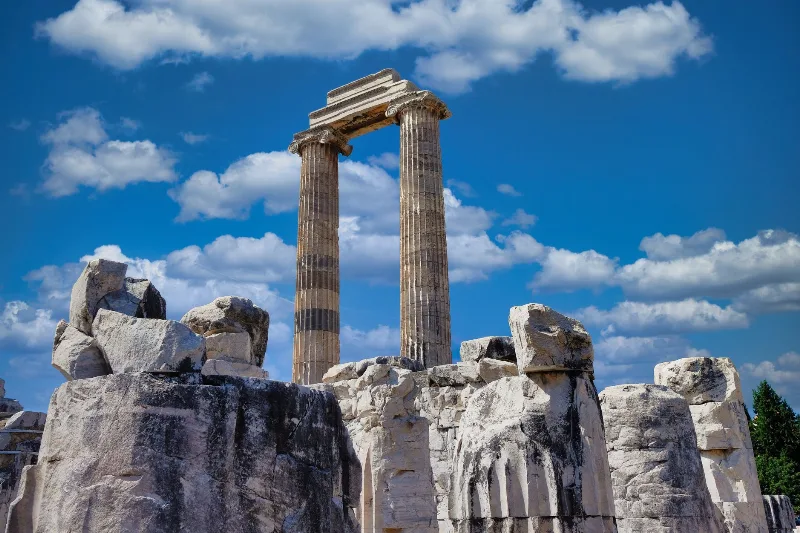
Didim
Didim is a coastal district in Aydın Province on Türkiye's Aegean shore, built around the ancient oracular sanctuary of Didyma and its Temple of Apollo, with the sandy beach of Altınkum at its holiday centre.
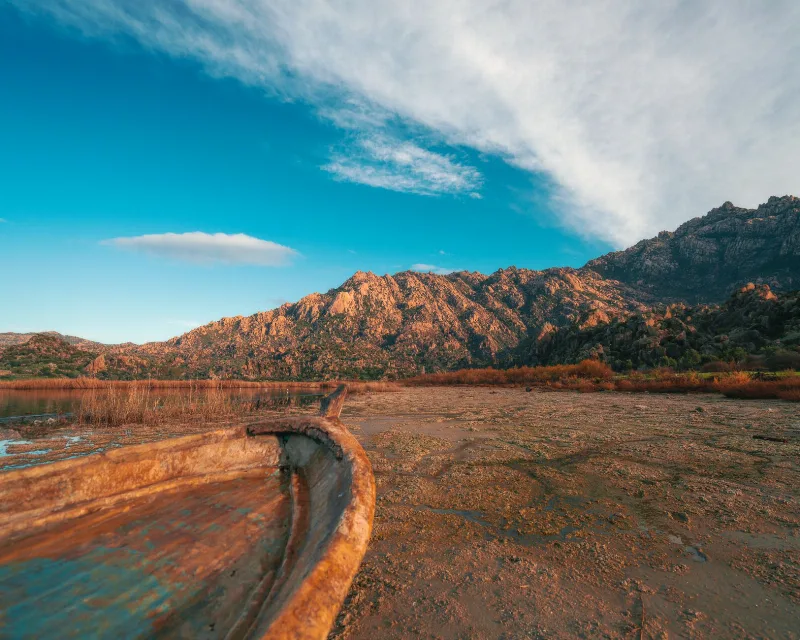
Lake Bafa
Lake Bafa is a brackish lake in southwestern Türkiye, shared between the provinces of Muğla and Aydın. It is the surviving remnant of an ancient Aegean inlet, now enclosed by farmland, the granite slopes of the Beşparmak Mountains and scattered ruins of harbour towns that once stood on open sea.
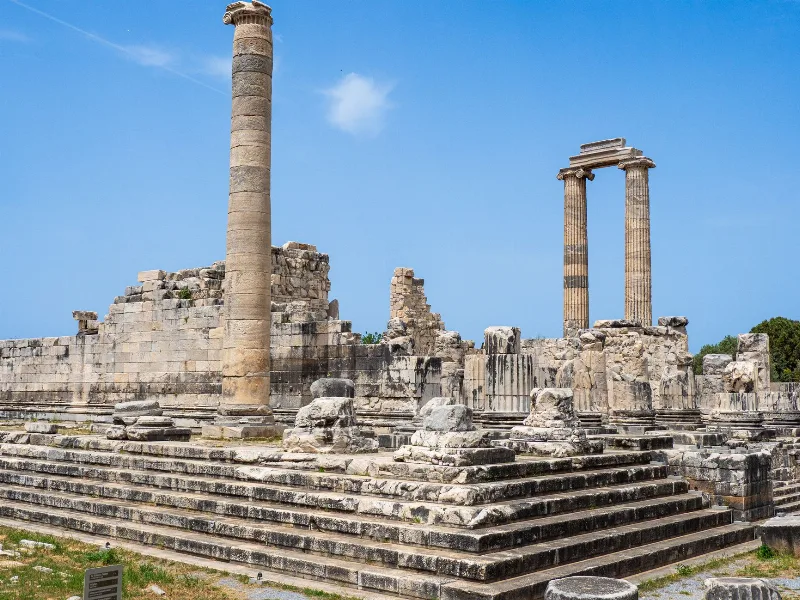
Didyma
Didyma is an ancient Greek sanctuary and oracle of Apollo in Aydın Province, Türkiye, whose vast Temple of Apollo is one of the largest ever built in the Greek world. Its surviving platform, columns, reliefs and Sacred Way make it a major archaeological site on the coast near Miletus.
Miletus
Miletus was one of the great Ionian Greek cities of western Anatolia, a major maritime power and the birthplace of the Milesian school of philosophy. Today its extensive ruins near Balat in Aydın Province include one of Anatolia's largest ancient theatres.
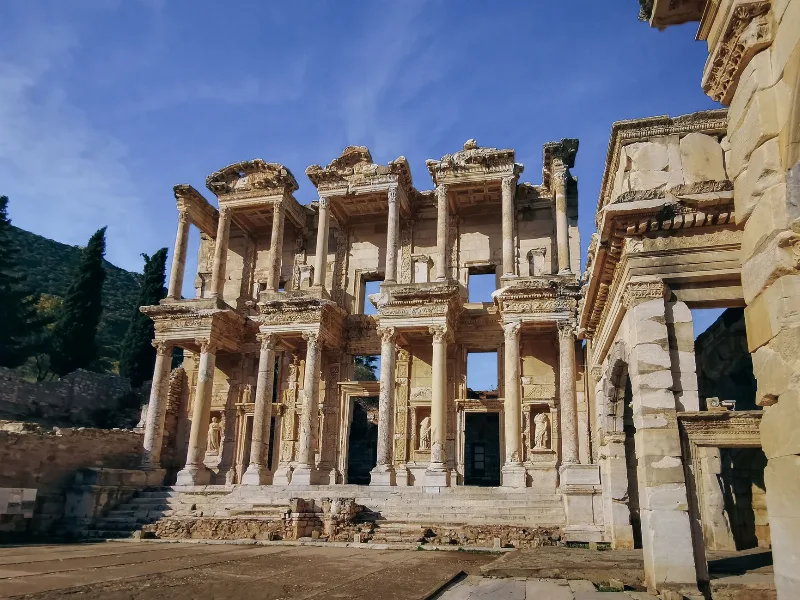
6-Day Aegean Ancient Cities Route
A six-day linear journey from Izmir to Denizli through the great ancient cities of the Aegean, linking Ephesus, Priene, Miletus, Didyma, Lake Bafa, Pamukkale, Laodicea and Aphrodisias in one coherent corridor.