
2-Day Antalya Waterfalls and Ancient Cities Route
A circular two-day route based in Antalya that pairs the Düden and Kurşunlu waterfalls with the ancient cities of Perge, Aspendos and Termessos, following the eastern coastal plain on the first day and the Taurus foothills on the second.
This route begins and ends in Antalya, the Mediterranean city that acts as the natural base for everything around it. Over two days it links two of the region's best-known waterfalls, Düden and Kurşunlu, with three ancient cities: Perge, Aspendos and Termessos. The first day follows the coastal plain east of the city, through the Aksu and Serik districts, where Pamphylian ruins sit close to the sea. The second day turns inland and climbs into the foothills of the Taurus Mountains to the north-west. Because the route is circular rather than linear, travellers can sleep in the same place on both nights and treat each day as a self-contained excursion from Antalya. The character of the journey is a mix of archaeology, forest and falling water, with the first day mostly level and the second noticeably steeper underfoot.
Day 1: Düden Waterfall, Perge and Aspendos on the Eastern Plain
The day starts in Antalya itself and heads east, following the coast in the direction of Lara. The Düden stream is the theme of the morning. It flows across the plateau, disappears underground, and then reappears dramatically at the point where it drops over the cliffs into the Mediterranean. This lower cascade, often simply called the Düden waterfall, is the one that reaches the sea, and the surrounding area belongs to the Beaches & Bays landscape of the Lara coast. Further inland, the same water system forms the upper Düden, a quieter spot set among trees and gardens on the northern edge of the city, where the stream is still above ground. Seeing both in one morning explains the geography of the river — a single watercourse that sinks and resurfaces within a short distance.
From there the route continues east along the coastal plain, leaving the city behind and entering the district of Aksu. Just north of the main road lies Perge, one of the great cities of ancient Pamphylia. Its layout is easy to read on the ground: a broad colonnaded street runs through the middle of the site, with a theatre and stadium on the edge, baths and an agora filling the space between. Perge is included here because it sits almost directly on the eastward line of travel, so no detour is needed. It also frames the day's archaeology well, since the city was a inland-facing settlement that depended on the river plain around it rather than on a harbour.
The final stop of the day is Aspendos, further east near Serik. Its Roman theatre is the most complete of its kind in the region, and the structure is still legible from the stage to the upper rows. Behind the theatre stands the city's aqueduct, whose arches cross the low ground and show how far Aspendos reached for its water supply. Perge and Aspendos belong together geographically, both lying on the same flat corridor between the mountains and the sea, which makes them a realistic pair for a single day rather than two separate outings. From Aspendos travellers either turn back west toward Antalya or continue a short way east to the coastal town of Side, which sits in the same historic landscape and can be added as an extension if the day allows. The return to Antalya follows the same coastal route in reverse.
Day 2: Kurşunlu Waterfall and the Mountain City of Termessos
The second day sets out from Antalya toward the north and north-west, away from the sea and into higher ground. The first stop is the Kurşunlu waterfall, reached through the northern districts of the city. Unlike the Düden cascade, Kurşunlu is a wooded gorge, where a small stream falls between rocks and dense vegetation. Shaded paths run beside the water, and the site is a good introduction to the greener, inland side of the Antalya region, which travellers who stay only on the coast often miss.
From Kurşunlu the route crosses to the western side of the city and takes the road that climbs toward the interior in the direction of Korkuteli. This is the approach to Termessos, an ancient city set high on the slopes of Güllük Dağı within a national park. The drive itself is part of the experience: the road leaves the coastal plain and rises through pine forest as the Taurus Mountains close in. On the way, the Karain Cave area lies close to the same road and can be visited briefly as a stop of its own, adding a much older layer of settlement to the day before the classical ruins of Termessos.
Termessos is the most demanding stop on the two-day route. The ancient city spreads across a natural shelf in the mountains, and reaching it involves walking uphill from where vehicles stop, with further paths leading between the ruins once inside. The reward is a Pisidian city in a setting unlike Perge or Aspendos: walls, tombs, a theatre and a gymnasium among the trees, with wide views over the coastal plain below. This is why the site closes the itinerary rather than opening it — it needs time, energy and suitable footwear, and it works best as the final and most dramatic contrast to the flat archaeology of the first day. The return to Antalya descends by the same mountain road.
How to Follow the Two-Day Route
Both days are best done with a vehicle, since the ancient cities and waterfalls are spread out and public transport does not connect them conveniently in sequence. The first day is largely flat and involves only short walks between the monuments. The second day combines driving with real walking, particularly at Termessos, where the terrain is uneven and the climb is part of the visit. Travellers should treat the two days as different in character: one coastal and architectural, the other wooded and mountainous.
Spring and autumn are the most comfortable seasons for this route. The waterfalls are generally at their strongest after the winter rains and the spring snowmelt, when the inland streams carry more water. Summer brings high heat on the exposed plain around Perge and Aspendos, so the first day is easier if started early. Winters are mild on the coast, but the mountain road toward Termessos can be colder and wetter, and paths there may be slippery after rain. Because the route is circular and based in one city, plans can be adjusted day by day without changing accommodation.
For those building a wider trip, the places in this itinerary sit in several different parts of TürkiyeKart: Antalya and the surrounding districts in Cities & Districts, the waterfalls and the national park around Termessos in Nature, the three ancient cities in Historic Places, the Lara shoreline in Beaches & Bays, and the small inland settlements passed on the second day in Villages & Small Towns. Read together, they explain the individual stops; followed in order across two days, they form one continuous and geographically sensible journey.
Remarkable Places
See all places →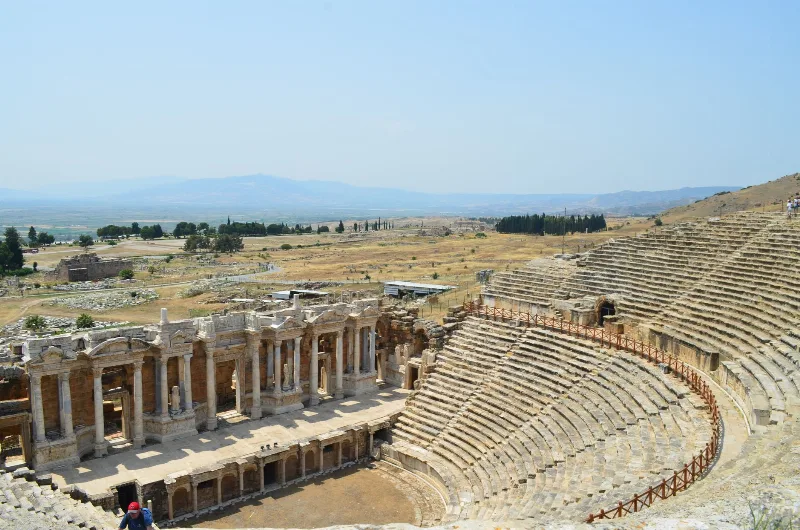
Letoon
Letoon is a Lycian sanctuary near Xanthos in Muğla Province, dedicated to Leto, Artemis and Apollo. Its three temples, theatre and trilingual inscription make it one of southwestern Turkey’s most significant archaeological sites.
Explore →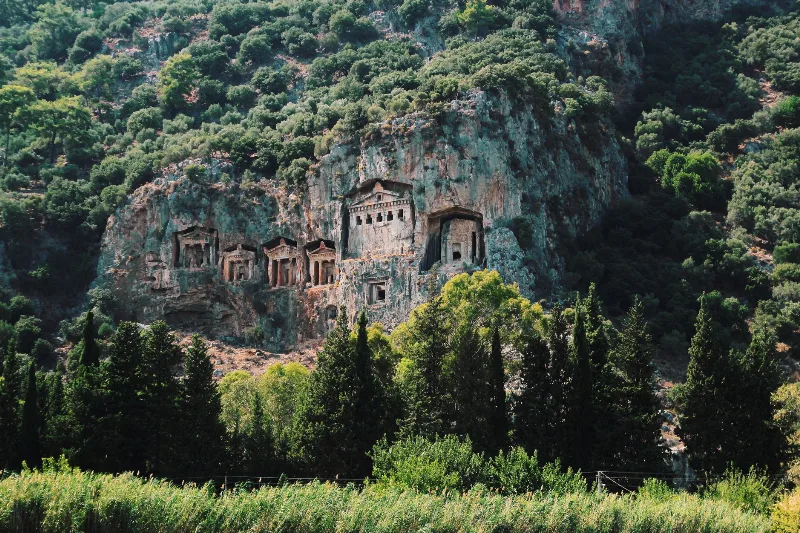
Kaunos
Kaunos is an ancient Carian city on the Dalyan River in Muğla Province, known for its temple-style rock-cut tombs and the extensive ruins of a harbour that silted up centuries ago.
Explore →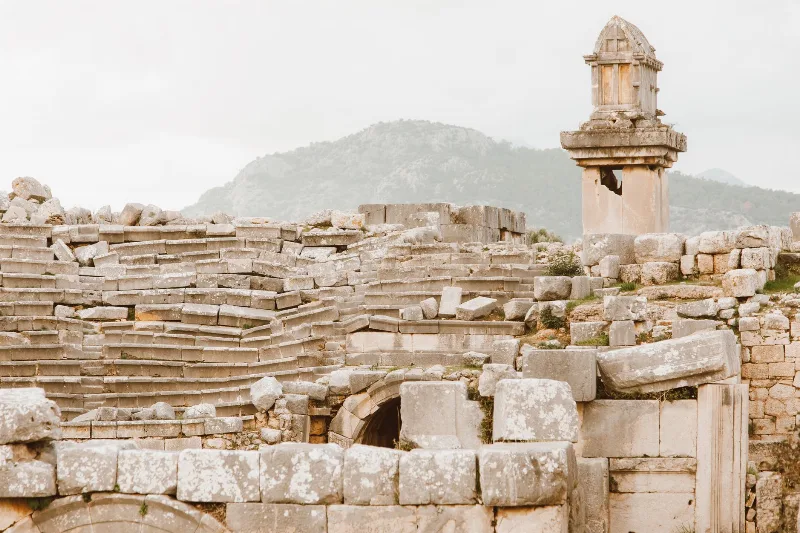
Xanthos
Xanthos is an ancient Lycian city in Antalya Province and a UNESCO World Heritage Site, known for its Lycian tombs, Roman theatre and role as a leading city of Lycia.
Explore →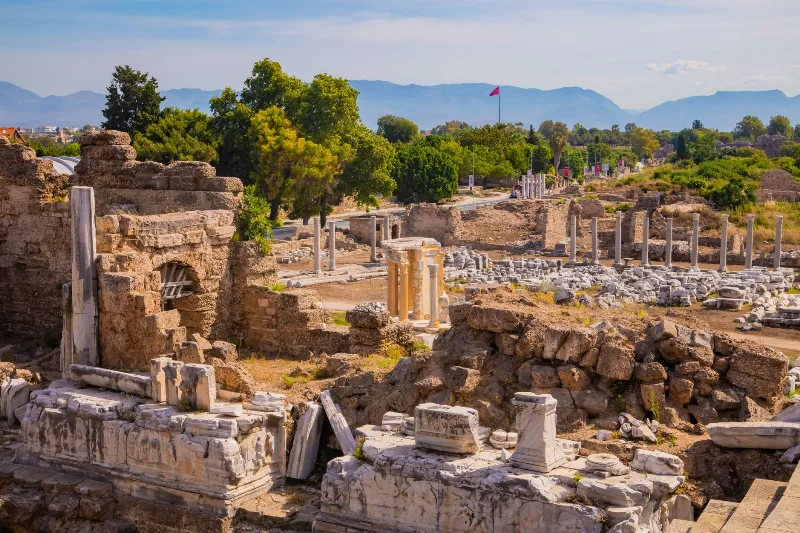
Phaselis
Phaselis is a Rhodian-founded port city on the eastern Lycian coast, where paved streets, agoras, baths and a small theatre stand among pines between three sheltered bays.
Explore →Related content
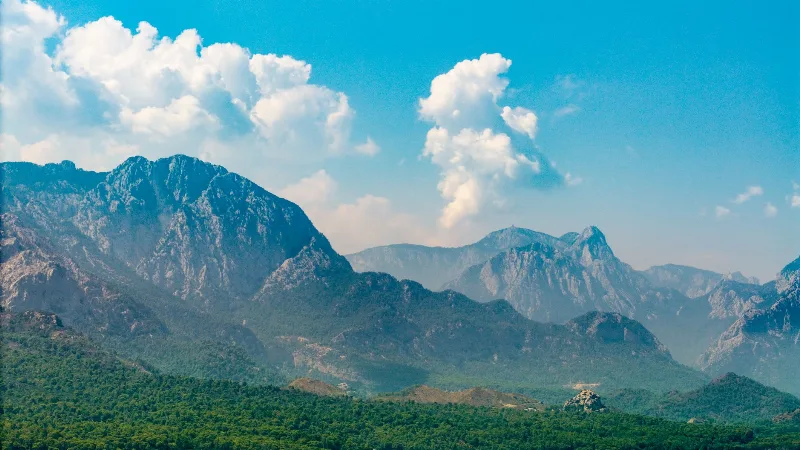
Antalya
Antalya offers a unique blend of vibrant history and stunning natural beauty, making it a must-visit destination in Türkiye.
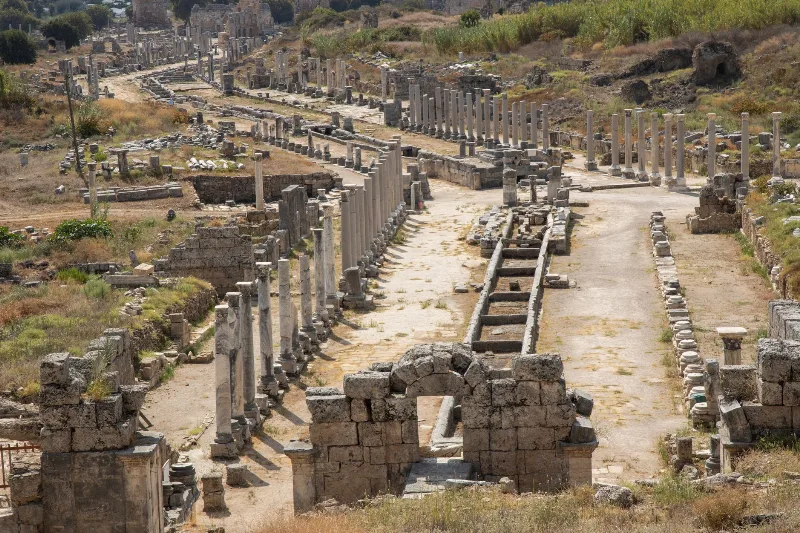
Perge
Perge is a Graeco-Roman city in the Pamphylian plain east of Antalya, Türkiye, whose surviving urban plan includes two colonnaded streets with central water channels, a hillside Roman theatre and one of Anatolia's best-preserved stadiums.
Perge
Perge is an ancient Pamphylian city east of Antalya, whose Hellenistic gates, colonnaded streets, theatre and exceptionally well-preserved stadium make it one of the most legible Roman-era sites in southern Turkey.
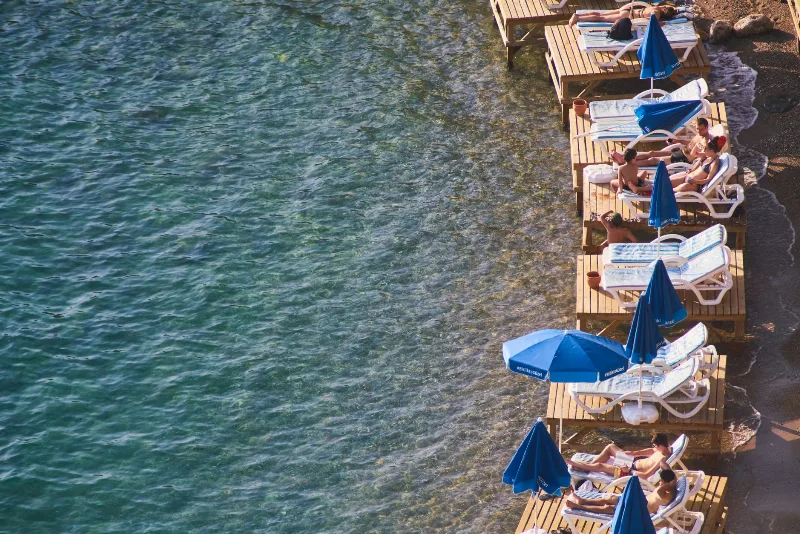
Antalya's Mediterranean Coast
Antalya's Mediterranean coast, located in Türkiye, offers stunning beaches and rich historical sites, making it a captivating destination.
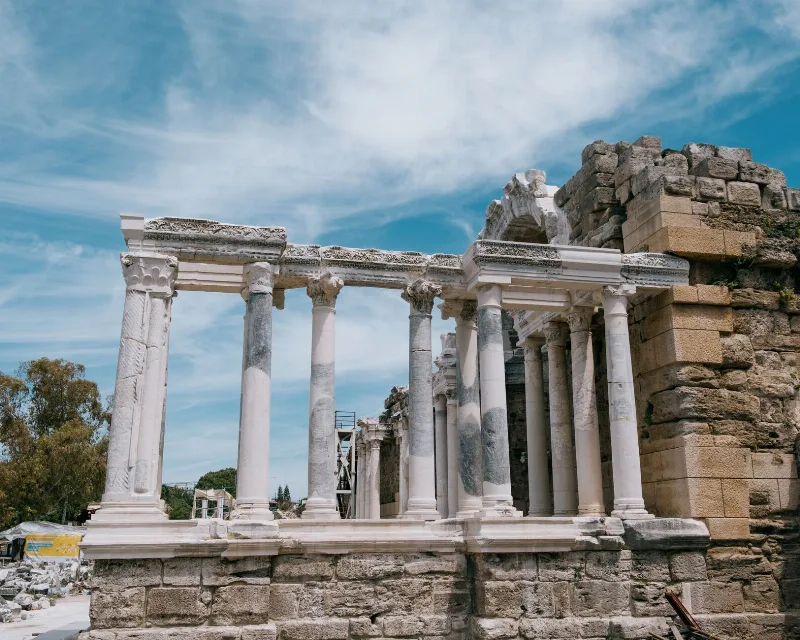
3-Day Antalya to Side Ancient Coast Route
A three-day coastal journey from Antalya to Side that links the archaeological sites of Perge and Aspendos with the Manavgat Waterfall and the ruins of Side, with a clear day-by-day sequence of stops.
3-Day Antalya Ancient Coast Route
A three-day route combining Antalya’s old city with Perge, Aspendos, Side, Olympos and the Mediterranean landscapes around Çıralı.