
3-Day Antalya to Side Ancient Coast Route
A three-day coastal journey from Antalya to Side that links the archaeological sites of Perge and Aspendos with the Manavgat Waterfall and the ruins of Side, with a clear day-by-day sequence of stops.
This route begins in Antalya, on the Gulf of Antalya in the eastern Mediterranean, and finishes in Side, further east along the same coast. It takes three days and covers the Pamphylian plain between them, combining the cities and districts of Antalya and Side with the ancient cities of Perge and Aspendos and the natural setting of the Manavgat Waterfall. The journey is linear rather than circular: you start in the provincial capital and travel eastward, ending among the ruins and beaches of Side. The character is mixed — part urban, part archaeological, part river-and-coast scenery — and it is best done with a car, since the archaeological sites sit inland from the coast and are not conveniently linked by public transport in a single logical order.
Travellers following this route should expect a moderate amount of driving on each day, most of it on the flat coastal plain with the Taurus Mountains rising behind. Spring and autumn are the most comfortable seasons; midsummer afternoons at open archaeological sites can be very hot, and the walking at Perge, Aspendos and Side is largely unshaded. Winter is quieter and often still walkable, though rain can make some ground slippery.
Day 1: Antalya Old Town and Perge
The day begins in Antalya itself, in the historic core around Kaleiçi, where narrow streets run down to the old harbour below the cliffs. This is the part of the route that belongs to the Cities & Districts section: a working Mediterranean city with a walled old quarter, a Roman-era harbour, and a museum that holds much of the sculpture recovered from the surrounding ancient cities. Spending the morning here sets up the rest of the trip, because the artefacts and the city's Roman and Hellenistic layers make the later ruins easier to read.
In the afternoon, head north-east out of the city towards Perge, one of the great cities of ancient Pamphylia. Perge is inland from the coast on the Aksu plain, and its layout is unusually legible: a theatre and stadium on the slope outside the walls, then a gate, a broad colonnaded street running through the centre, a Hellenistic gate, and a nymphaeum at the foot of the acropolis. Walking the colonnaded street gives a strong sense of the city's grid. Because Perge sits between Antalya and the road east, visiting it on the first day keeps the route moving in one direction rather than doubling back.
End the day either back in Antalya or somewhere along the corridor towards Serik, so that the next morning starts closer to Aspendos. Historic Places and Remarkable Places entries for the region will fill in the detail on individual monuments; the route's job is simply to place Perge where it belongs in the sequence.
Day 2: Aspendos and the Manavgat Waterfall
From the Antalya side, continue east across the Pamphylian plain towards Serik and Aspendos. Aspendos is the second great ancient city of the route and is known above all for its theatre, one of the best preserved Roman theatres anywhere, cut into the hillside with the stage building still standing. The site also has an aqueduct stretching across the valley below, and an acropolis hill above the theatre. Because Aspendos lies close to the main east–west corridor, it fits naturally into a morning stop before the route turns towards the river plain.
Continue east from Aspendos towards Manavgat. The Manavgat Waterfall is a broad, low cascade on the Manavgat River rather than a tall drop, and it belongs to the Nature section of the regional picture: cool, green, and a distinct change of scenery after the dry archaeological sites. It works well as an afternoon counterpoint to the stone and marble of the morning, and it sits on the same eastward line as Side, so no detour is needed.
From the waterfall, the final short leg takes you south to the coast and into Side. Arriving in the late afternoon leaves time to see the town's setting — the peninsula, the harbour, the long beaches on either side — before a full day among the ruins. Beaches & Bays is the relevant reference here, since the sand east and west of the old town is part of what makes Side a natural place to end the route.
Day 3: The Ancient Ruins of Side
The last day is spent entirely in Side, walking rather than driving. The old town occupies a small peninsula, and its antiquities are woven into the modern streets: the theatre, the largest in Pamphylia, is built into the slope and now sits among shops and houses; the Roman baths have been adapted as a museum; and the Temple of Apollo stands at the water's edge on the southern tip, its columns framed by the sea. The city walls, the agora, and the harbour all lie within easy walking distance of one another.
Because everything is compact, the day can be paced slowly — ruins in the morning while it is cooler, the museum and shaded streets in the middle of the day, then the shoreline and the temples towards evening. This is also the point where the route ends: Side is a logical finishing place because it combines archaeology, coast and accommodation in one compact setting, and travellers can either stay on the coast or continue east towards Alanya rather than returning to Antalya.
Taken as a whole, the three days move from a large modern city with an ancient past, through two inland archaeological cities of the Pamphylian plain, to a river landscape and finally to a coastal town built directly on its own ruins. That progression — urban, inland, natural, coastal — is what makes the order work, and it is why the route is best followed from west to east rather than in reverse.
Remarkable Places
See all places →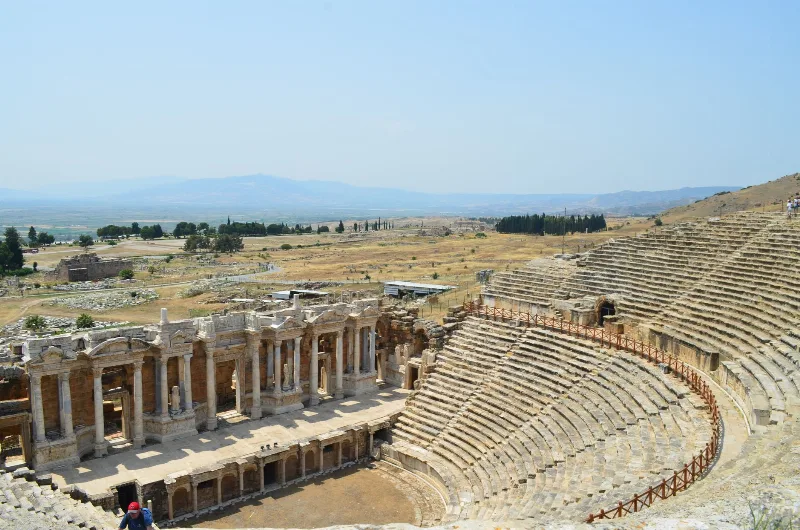
Letoon
Letoon is a Lycian sanctuary near Xanthos in Muğla Province, dedicated to Leto, Artemis and Apollo. Its three temples, theatre and trilingual inscription make it one of southwestern Turkey’s most significant archaeological sites.
Explore →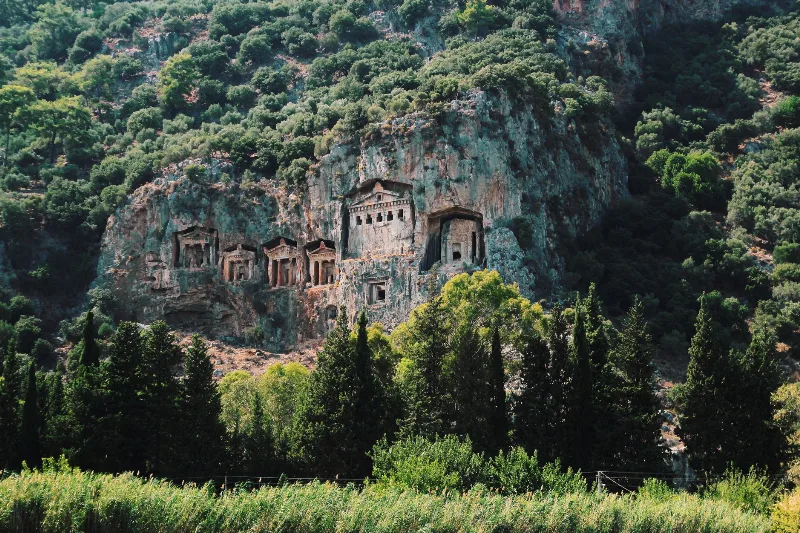
Kaunos
Kaunos is an ancient Carian city on the Dalyan River in Muğla Province, known for its temple-style rock-cut tombs and the extensive ruins of a harbour that silted up centuries ago.
Explore →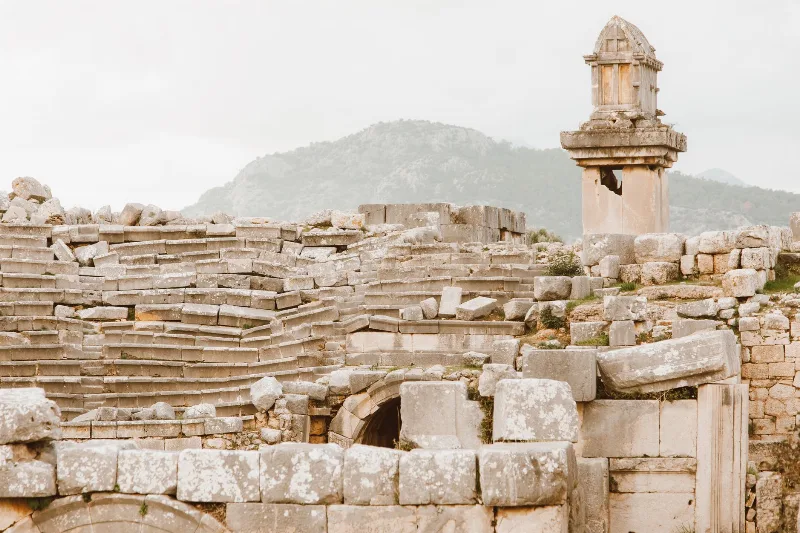
Xanthos
Xanthos is an ancient Lycian city in Antalya Province and a UNESCO World Heritage Site, known for its Lycian tombs, Roman theatre and role as a leading city of Lycia.
Explore →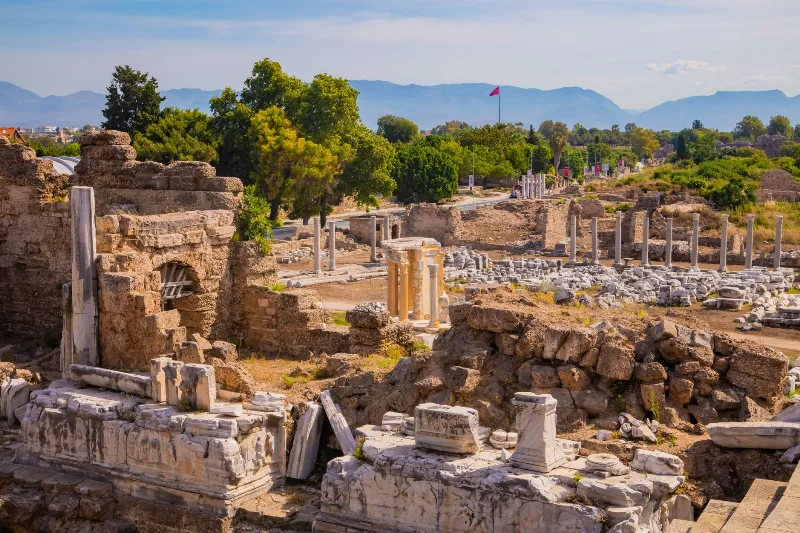
Phaselis
Phaselis is a Rhodian-founded port city on the eastern Lycian coast, where paved streets, agoras, baths and a small theatre stand among pines between three sheltered bays.
Explore →Related content
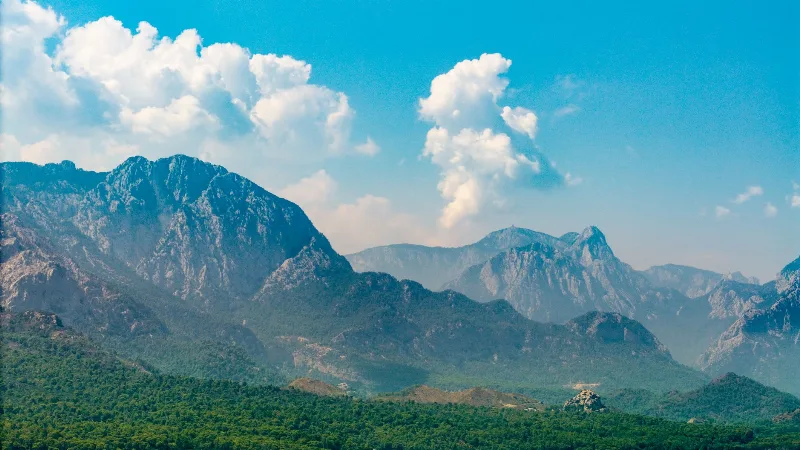
Antalya
Antalya offers a unique blend of vibrant history and stunning natural beauty, making it a must-visit destination in Türkiye.
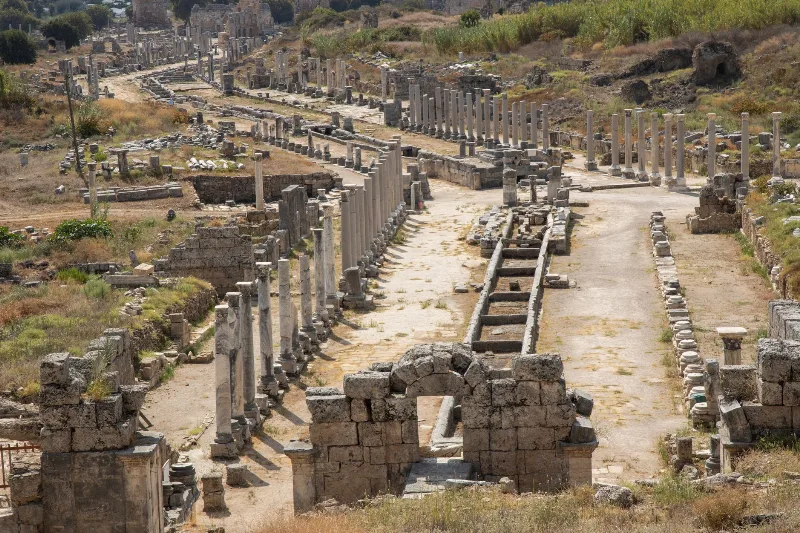
Perge
Perge is a Graeco-Roman city in the Pamphylian plain east of Antalya, Türkiye, whose surviving urban plan includes two colonnaded streets with central water channels, a hillside Roman theatre and one of Anatolia's best-preserved stadiums.
Perge
Perge is an ancient Pamphylian city east of Antalya, whose Hellenistic gates, colonnaded streets, theatre and exceptionally well-preserved stadium make it one of the most legible Roman-era sites in southern Turkey.
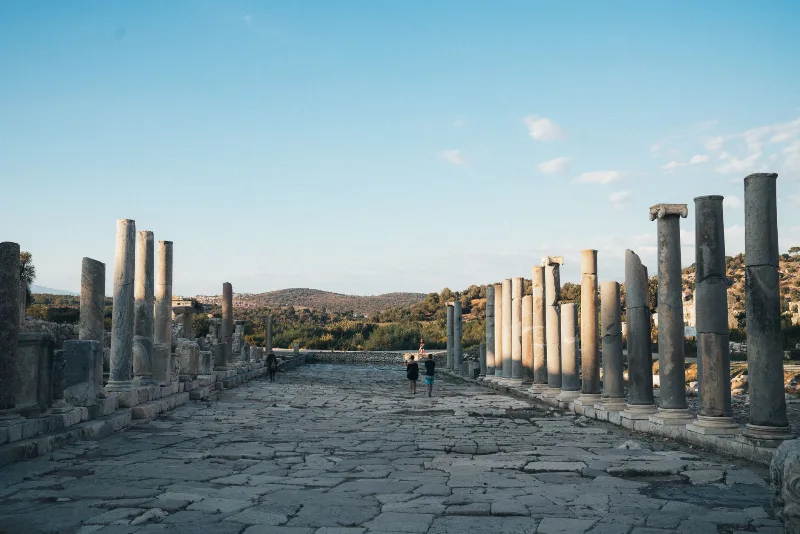
The Ancient City of Perge Near Antalya
Perge, an ancient Pamphylian city on the plain east of Antalya, preserves colonnaded streets, a theatre, a stadium and baths that show how a Roman-era city was laid out and lived in.
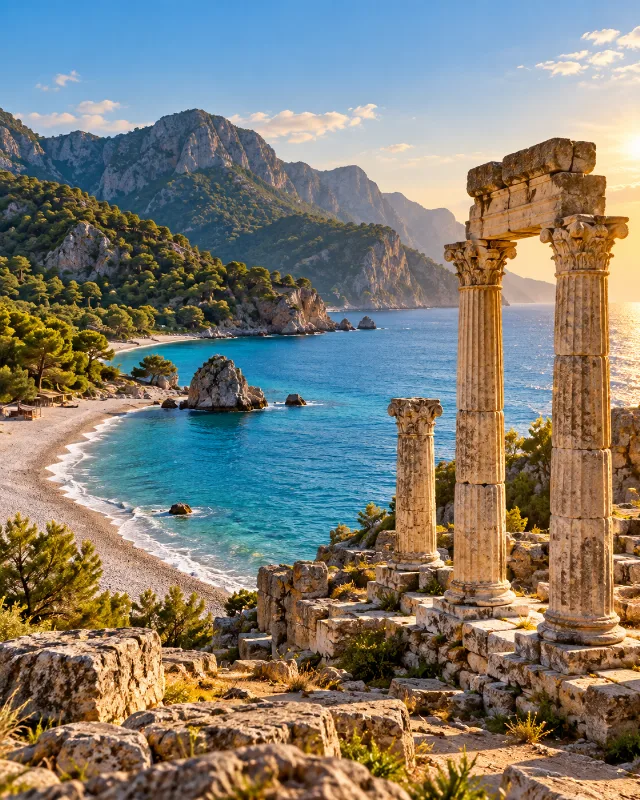
3-Day Antalya Ancient Coast Route
A three-day route combining Antalya’s old city with Perge, Aspendos, Side, Olympos and the Mediterranean landscapes around Çıralı.
2-Day Antalya Waterfalls and Ancient Cities Route
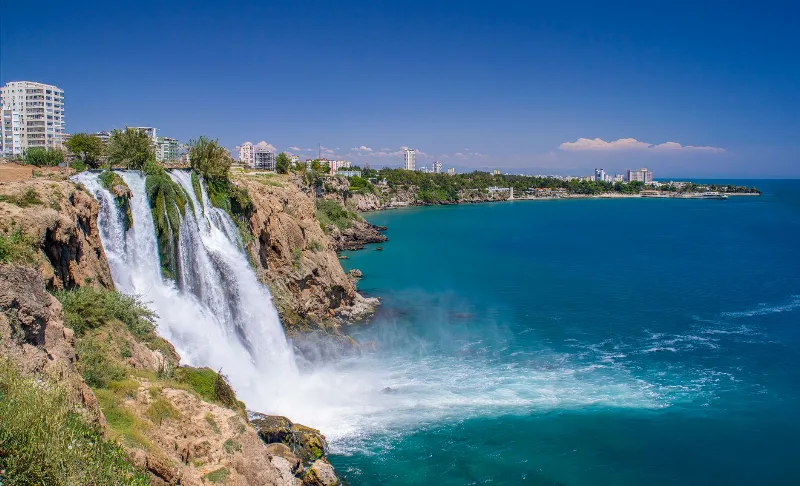
A circular two-day route based in Antalya that pairs the Düden and Kurşunlu waterfalls with the ancient cities of Perge, Aspendos and Termessos, following the eastern coastal plain on the first day and the Taurus foothills on the second.