
Perge
Perge is a Graeco-Roman city in the Pamphylian plain east of Antalya, Türkiye, whose surviving urban plan includes two colonnaded streets with central water channels, a hillside Roman theatre and one of Anatolia's best-preserved stadiums.
Perge is an ancient city in the Pamphylian plain of southern Anatolia, located roughly 15 kilometres east of Antalya near the modern town of Aksu in Antalya Province, Türkiye. It was one of the leading cities of Pamphylia, the coastal region that stretches between the Gulf of Antalya and the lower valley of the Kestros river, known today as the Aksu Çayı. The site is notable for the breadth of its surviving urban plan: two colonnaded streets meeting at right angles with a water channel running down the middle of each, a Roman theatre built into the eastern slope of the acropolis hill, a stadium that is among the best preserved of its kind in Anatolia, and extensive bath, agora and gate complexes. Because so much of the city's layout remains legible on the ground, Perge is studied as a clear example of a planned Graeco-Roman city in Asia Minor.
Geography and Setting
The city was founded on and around a low limestone hill that served as its acropolis, on the western edge of the Pamphylian plain. To the east the plain opens toward the Kestros river, which in antiquity reached the sea and gave Perge access to a harbour. Over the centuries the river deposited silt across its own mouth, and the coastline retreated; the port that once linked Perge to Mediterranean trade now lies inland, and modern farmland occupies what was once water or marsh. This silting is one of the principal reasons for the city's later decline. The acropolis hill still commands a wide view over the flat surrounding farmland, and the ruins of the lower city spread out beneath it.
Early Settlement and the Founding Legend
Archaeological evidence shows that the acropolis hill was occupied long before the classical city existed, with traces of settlement reaching back to prehistoric periods. The classical and later city, however, belongs to the historical record of Pamphylia, a region whose population was a mixture of indigenous Anatolian communities and Greek settlers.
Ancient tradition offered a heroic explanation for the city's origin. According to one version of the legend, Perge was founded after the Trojan War by the seers Calchas, Mopsus and Amphilochus, who were said to have led Greek settlers to the Pamphylian coast. This account is preserved in later Greek and Roman sources and should be understood as a founding legend rather than a documented historical event. What is certain is that Perge appears as an established Pamphylian city in the historical record by the classical period and grew into one of the region's most important urban centres.
Hellenistic Perge
Perge's development into a substantial city belongs mainly to the Hellenistic age, after the conquests of Alexander the Great and the subsequent rule of the Hellenistic kingdoms over Anatolia. During this period the city acquired a defensive circuit, and its acropolis and lower town were increasingly integrated into a single urban organism.
The most conspicuous Hellenistic survival is the so-called Hellenistic gate at the southern approach to the city. It consists of two massive round towers flanking an entrance, with a horseshoe-shaped courtyard behind them. The towers, faced with carefully cut masonry, are dated to the third century BC and are among the most recognisable structures at Perge. The Hellenistic walls and the remains of towers along the circuit give some sense of the scale of the fortifications that once enclosed the settlement.
Perge in the Roman Imperial Period
Perge reached the height of its prosperity under Roman rule, particularly from the first to the third century AD. As a city of the province of Pamphylia, it benefited from the wider Mediterranean economy and from the patronage of wealthy local families. Roman Perge was substantially rebuilt and expanded: streets were laid out on a regular grid, public baths and fountains were constructed, and monumental gateways were added to the existing defences.
One of the best-documented acts of civic patronage came from Plancia Magna, a member of a leading local family and a priestess of Artemis, who in the early second century AD funded a new monumental gate and a precinct decorated with statues of gods, emperors and members of her own family. Her name and those of her relatives are preserved in inscriptions from the city, and the arrangement of statues she commissioned is a well-known example of elite self-representation in the Roman provinces.
The Colonnaded Streets and the Water System
The defining feature of Roman Perge is its pair of colonnaded streets. A north–south avenue runs from the area of the Hellenistic gate toward the acropolis, while an east–west avenue crosses it at right angles. Both were lined with columns supporting porticoes, behind which stood shops and other buildings. Down the centre of each street ran a shallow channel carrying running water, fed from springs on the acropolis and distributed through the city by an elaborate system of channels and pipes.
This combination of a paved, colonnaded avenue with a central watercourse is unusual and gives Perge a distinctive appearance among Anatolian cities. A monumental fountain house, or nymphaeum, stood at the northern end of the main street near the foot of the acropolis; its two-storey facade was designed to be seen from the length of the avenue. Together with the aqueducts and reservoirs that supplied the city, these features show how carefully water was managed in the urban design.
The Theatre
The theatre occupies the eastern slope of the acropolis hill, using the natural incline to support its cavea. It is dated to the Roman imperial period and was modified in later phases. Its seating capacity has been estimated at roughly twelve thousand spectators. The stage building, or scaenae frons, was decorated with a columned facade, and sculpted decoration from the theatre, including a frieze depicting scenes connected with Dionysus, has been recovered and is displayed in the Antalya Museum. The theatre was never buried as deeply as some others in the region, and its cavea and part of its stage structure remain visible.
The Stadium
West of the acropolis hill stands the stadium, one of the largest and best-preserved ancient stadiums in Türkiye. It is a long U-shaped structure, roughly 234 metres in length, with tiered seating along its sides and a vaulted substructure on one flank. Its capacity is estimated at around twelve thousand spectators. The stadium is dated to the Roman period, and its track and seating banks remain strikingly legible in the landscape. Because stadiums rarely survive in such condition, the example at Perge is important evidence for the design of ancient athletic facilities.
Baths, Agora and Other Public Buildings
Perge contains more than one bath complex. The so-called South Bath, a large imperial-period building, is notable because it was here that many of the city's statues were discovered. The bath's rooms follow the standard Roman sequence of cold, warm and hot chambers, and its walls preserve elements of their vaulting and marble decoration.
Near the centre of the city lay the agora, a large square enclosed by porticoes, with rows of small rooms or shops along its edges. Nearby stood a palaestra and other buildings associated with civic and social life. The combination of baths, market square, colonnaded streets, fountains and gates gives a fairly complete picture of the public infrastructure of a mid-sized Roman provincial city.
Artemis Pergaia and Religious Life
Perge's chief deity was Artemis Pergaia, a local form of Artemis whose sanctuary lay outside the city and became widely known across the ancient Mediterranean. Coins and inscriptions from Perge and other cities attest to the goddess's importance and to the reputation of her cult. The sanctuary itself has been the subject of archaeological investigation, although it is less well preserved than the urban core. The prominence of Artemis at Perge is reflected in the role of her priestesses, including Plancia Magna, in the civic life of the Roman city. Other deities were also worshipped, as the statues and inscriptions recovered from the city show.
Perge in Christian Tradition and the Byzantine Period
Perge has a place in early Christian history. According to the Acts of the Apostles, the apostle Paul and his companions passed through Perge in Pamphylia during their missionary journey, and the city is named in that account. By late antiquity Perge was a bishopric, and the city continued to function as an urban centre into the Byzantine period, when churches were built within and around it. The transition from a pagan city centred on the cult of Artemis to a Christian city with its own bishops is one of the major themes of Perge's later history.
Decline and Abandonment
Perge's decline is usually connected with a combination of factors rather than a single event. The silting of the Kestros river progressively cut the city off from the sea and undermined its role as a port. Repeated raids and the unstable conditions of the seventh century and afterwards affected many coastal settlements in Anatolia. As its harbour and its regional importance diminished, the city shrank and was eventually abandoned. Later occupants reused its stone, and much of the site was left to accumulate soil and vegetation until systematic excavation began.
Excavation and the Perge Finds
Large-scale excavation at Perge began in 1946 under the direction of Arif Müfid Mansel and continued under later Turkish archaeologists, including Jale İnan and subsequent directors. Work has concentrated on the streets, gates, baths and theatre, and has produced a large body of sculpture, inscriptions, coins and architectural material. Many of the finest pieces, including statues from the bath complexes and sculptural decoration from the theatre, are held in the Antalya Museum, where they form one of the most important collections of Roman provincial sculpture in Türkiye. Excavation and conservation at the site continue, and new finds are periodically reported.
What Visitors Can See Today
A visit to Perge follows the surviving plan of the city. From the southern approach, the Hellenistic gate with its two round towers is the first major monument, followed by the Roman gate and the colonnaded streets beyond. Walking north along the main avenue, visitors pass the water channel in the centre of the street, portico foundations, and the remains of shops and other buildings along both sides. The nymphaeum stands near the foot of the acropolis, and the agora, baths and palaestra lie within easy reach of the streets.
The theatre is set into the eastern slope of the acropolis, and the stadium stands beyond the hill to the west. The scale of the site means that seeing all of the principal monuments involves a considerable amount of walking over uneven ground, with limited shade across much of the lower city.
Practical Context for a Visit
Perge lies close to Antalya and is usually reached by road from the city toward the east, in the direction of the Aksu district. The terrain is largely flat in the lower city but includes slopes and steps around the acropolis and the theatre. Because the site is exposed, the spring and autumn months are generally more comfortable for walking than the heat of high summer, and a visit is best planned with enough time to cover the distance between the southern gates and the stadium. Sturdy footwear is useful on the gravel and stone surfaces.
The site is not currently inscribed as a UNESCO World Heritage Site, though it is recognised as a major archaeological site of national importance in Türkiye.
Related Places in the Region
Perge belongs to a dense cluster of ancient cities in and around the Pamphylian plain. The Antalya Museum in the city itself holds most of the sculpture found at the site. Aspendos, further east near Serik, is known for its exceptionally well-preserved Roman theatre. Side, on the coast to the east, preserves a large archaeological area with a theatre, temples and harbour remains. Sillyon, a hilltop city on the plain between Perge and Aspendos, and Termessos, in the mountains northwest of Antalya, are other ancient settlements within reach. Together these sites give a sense of how densely urbanised Pamphylia and its neighbouring regions were in the Graeco-Roman period.
Routes
All routes →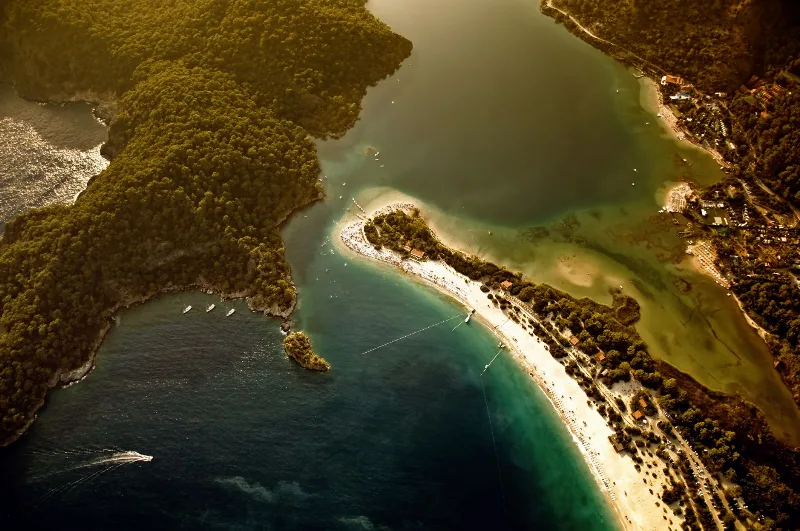
4-Day Lycian Coast Route
A four-day route along Turkey's Lycian coast, driving from Fethiye and Ölüdeniz through Kalkan, Kaş, Kekova, Demre and Olympos to finish in Antalya.
Explore →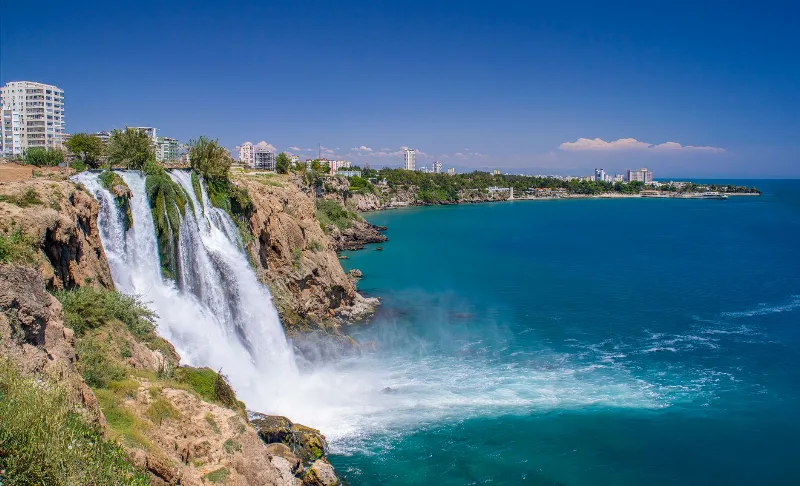
2-Day Antalya Waterfalls and Ancient Cities Route
A circular two-day route based in Antalya that pairs the Düden and Kurşunlu waterfalls with the ancient cities of Perge, Aspendos and Termessos, following the eastern coastal plain on the first day and the Taurus foothills on the second.
Explore →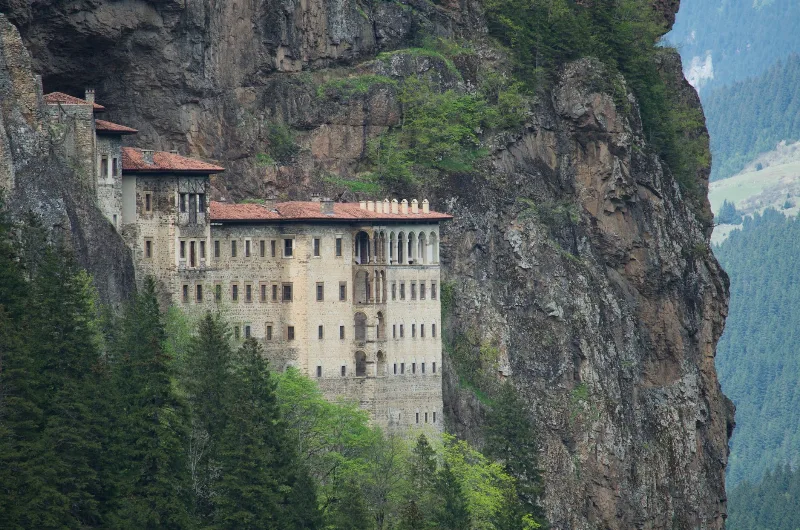
7-Day Eastern Black Sea Highlands Route: Trabzon to Artvin
A seven-day driving route through the Eastern Black Sea highlands, from Trabzon and Sumela to Uzungöl, Ayder, the Kaçkar Mountains and the forests of Şavşat, ending at Artvin.
Explore →
4-Day Marmara Sea Route
A four-day loop around the Sea of Marmara that starts in Istanbul, crosses to Yalova, travels inland to Bursa and finishes among the ruins of Troy and the memorials of the Gallipoli peninsula. The itinerary is built around short, logical daily drives rather than long transfers.
Explore →Related content
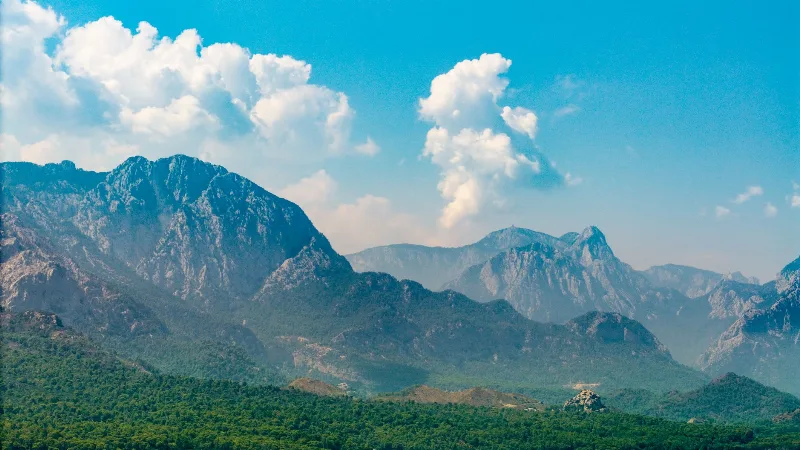
Antalya
Antalya offers a unique blend of vibrant history and stunning natural beauty, making it a must-visit destination in Türkiye.
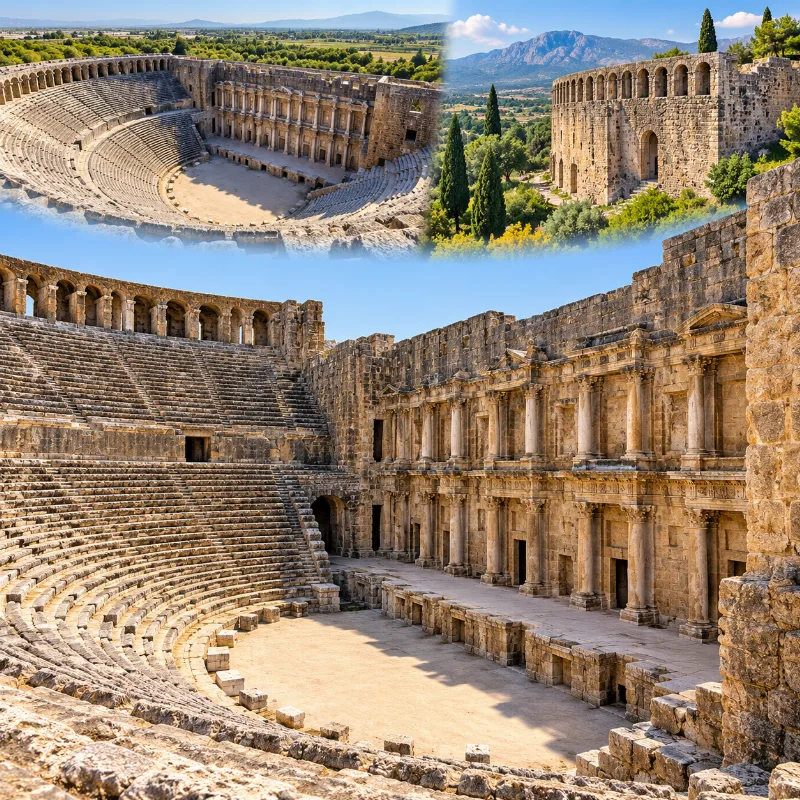
Aspendos
An ancient city near Antalya best known for its large Roman theatre and other surviving structures.
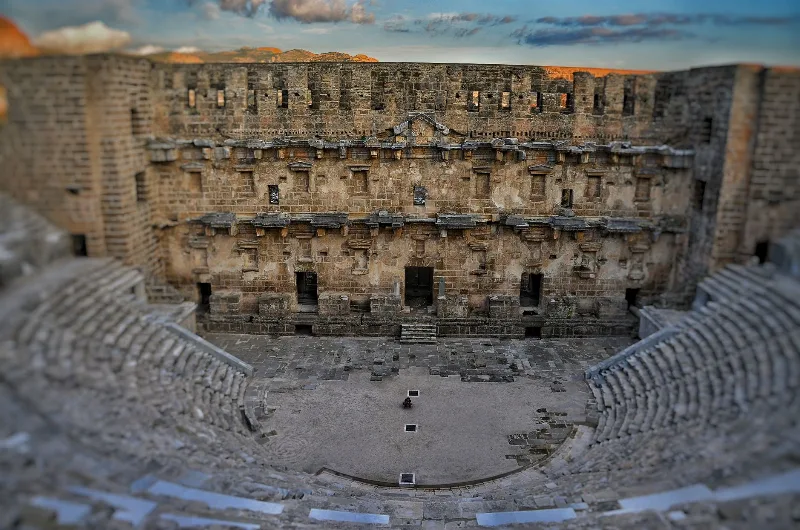
Aspendos
Aspendos is a Pamphylian ancient city near Serik in Antalya Province, dominated by a second-century Roman theatre that survives almost intact. Its aqueduct, acropolis and lower-city ruins sit in the flat farmland of the Köprüçay plain.
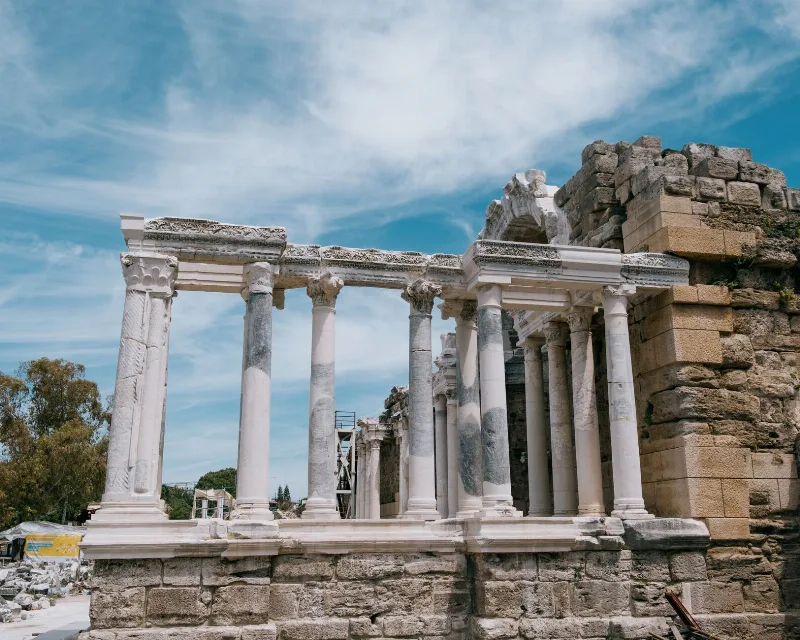
3-Day Antalya to Side Ancient Coast Route
A three-day coastal journey from Antalya to Side that links the archaeological sites of Perge and Aspendos with the Manavgat Waterfall and the ruins of Side, with a clear day-by-day sequence of stops.
2-Day Antalya Waterfalls and Ancient Cities Route
A circular two-day route based in Antalya that pairs the Düden and Kurşunlu waterfalls with the ancient cities of Perge, Aspendos and Termessos, following the eastern coastal plain on the first day and the Taurus foothills on the second.
3-Day Antalya Ancient Coast Route
A three-day route combining Antalya’s old city with Perge, Aspendos, Side, Olympos and the Mediterranean landscapes around Çıralı.