
The Ancient City of Perge Near Antalya
STORIES FROM TÜRKİYE
On the flat Pamphylian plain east of Antalya, roughly eighteen kilometres from the modern city centre, the ruins of Perge spread across a broad, sunny site at the foot of a low acropolis hill. The city was once one of the wealthiest in this coastal region of southern Türkiye, prospering from agriculture and from trade carried along the Kestros river, whose course has since shifted and silted. What remains today is unusually legible: streets, gates, fountains and public buildings still mark out the shape of an ancient urban plan.
Perge is mentioned in Hittite-era records and later appears in Greek and Roman sources, but most of what a visitor walks through belongs to the Roman imperial period, when the city was rebuilt in stone on a generous scale. Excavations began in the mid-twentieth century and continue, and many of the finest sculptures found here are now displayed in the archaeological museum in Antalya.
A City Built on a Grid
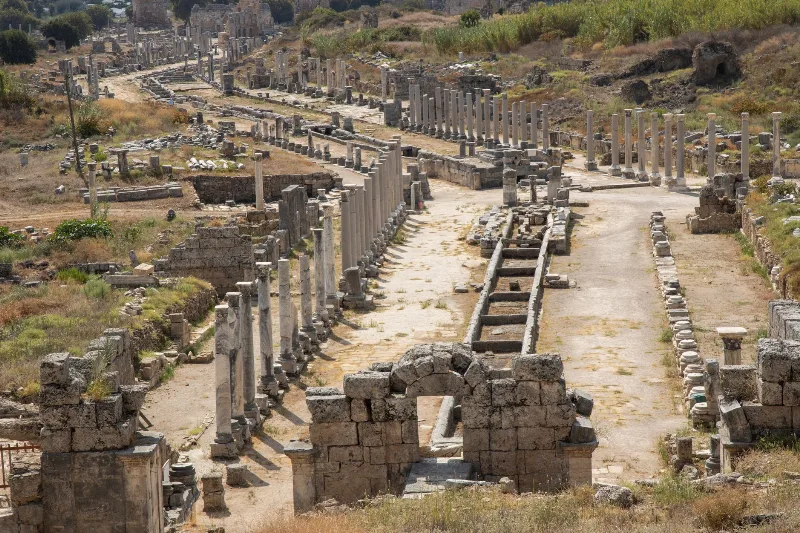
Perge is often described as a textbook example of planned Hellenistic urban design, later adapted by Roman builders. Two main colonnaded avenues cross the site, and a water channel once ran down the centre of the wider street, bringing fresh water through the city and cooling the air. Shops and porticoes lined both sides, and behind them stood houses, workshops and public halls.
At the southern end of the main avenue, two monumental gates stand close together. The older Hellenistic gate, with its round towers, opened onto a horseshoe-shaped courtyard. Just beyond it, the Roman gate was raised in the second century in honour of Plancia Magna, a local woman of great wealth and influence who held public office and paid for much of the city's embellishment.
Streets, Fountains and Baths
Walking north along the colonnaded avenue, the visitor passes the remains of a nymphaeum, a monumental fountain house that once spilled water into the street below. Farther on, a large bath complex with a palaestra opens out to one side, its rooms and pools still easy to read in plan. The state agora and the commercial agora formed the civic heart of the city, where markets, meetings and ceremonies took place.
The acropolis hill above the ruins holds traces of earlier settlement layers, including walls from the Hellenistic period. From the top, the whole grid of the lower city becomes clear, with the two great entertainment buildings visible at its edge.
The Theatre and the Stadium
On the slope outside the city walls, the Roman theatre rests against the hillside, its cavea of tiered seating built partly into the ground and partly on vaulted substructures. Seating capacity is usually estimated at around twelve thousand spectators. In later antiquity the stage building was altered, and its decorative niches held statues that are now among the highlights of the Antalya museum collection.
Beside the theatre lies one of the most striking structures at Perge: a long stadium, measuring well over two hundred metres, with rows of seats along both sides and shops or service rooms tucked beneath them. Its preservation makes it a rare example in Anatolia of a racing and athletics venue that can still be traced almost end to end.
Sculpture and Civic Pride
Perge had a reputation for stone carving, and its workshops produced portraits, statues of emperors and images of gods and heroes. Many of these were set up in public spaces by wealthy citizens, a tradition that tied private generosity to civic prestige. Inscriptions scattered across the site record the names of benefactors, priests and magistrates, giving a sense of how the city governed and honoured itself.
The city also has an early Christian history, linked to the journeys of Saint Paul through Pamphylia, and it later became a bishopric. Over the centuries earthquakes, shifting rivers and changing trade routes drained its prosperity, and the site was gradually abandoned.
Landscape and Light
Perge sits in open countryside, with fields and low hills around it and the Taurus Mountains rising far to the north. The light on the pale stone is strong through much of the year, and the flat ground makes the ruins comfortable to explore at an unhurried pace. In spring the surrounding plain is green, while late summer brings a dry, dusty warmth that gives the colonnades a very different atmosphere.
Because the site is large and its layout so coherent, Perge offers something rare: a chance to follow an ancient street from gate to fountain, then climb to a hillside theatre and look back over the whole design. It rewards curiosity more than haste.
Historic places
Explore history →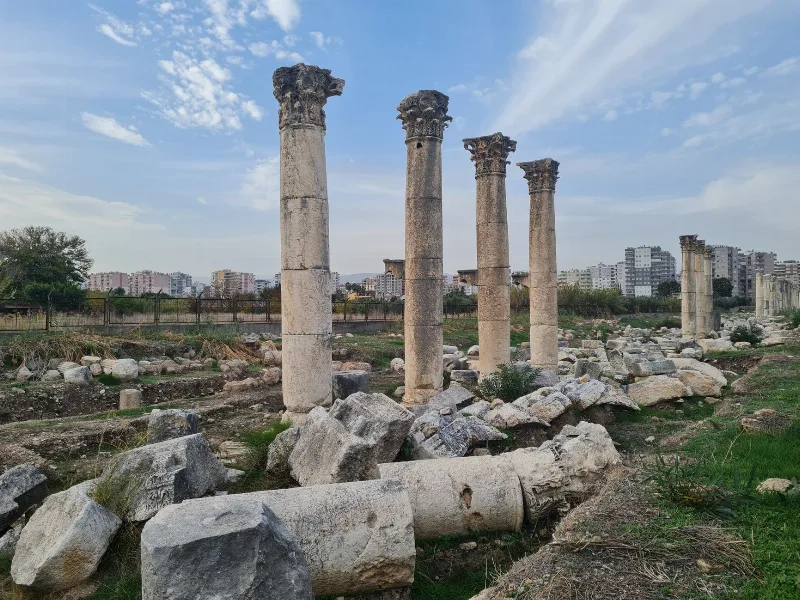
Zeugma
Zeugma was a Hellenistic and Roman city on the Euphrates in Gaziantep Province, important for its river crossing and Roman garrison. Its excavated houses produced celebrated mosaics, many now shown in the Zeugma Mosaic Museum in Gaziantep.
Explore →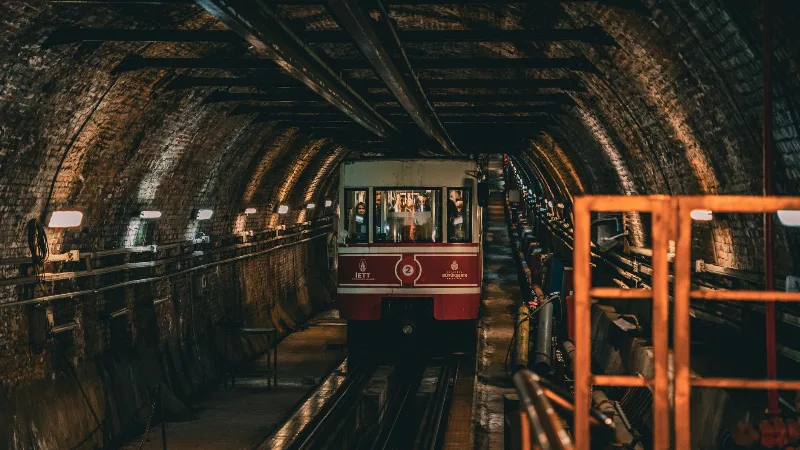
Kaymaklı Underground City
Kaymaklı Underground City is a multi-level subterranean complex in Nevşehir Province, Cappadocia, used as a refuge by early Christian communities. It features tunnels, stone doors, storage rooms, and churches carved into volcanic tuff.
Explore →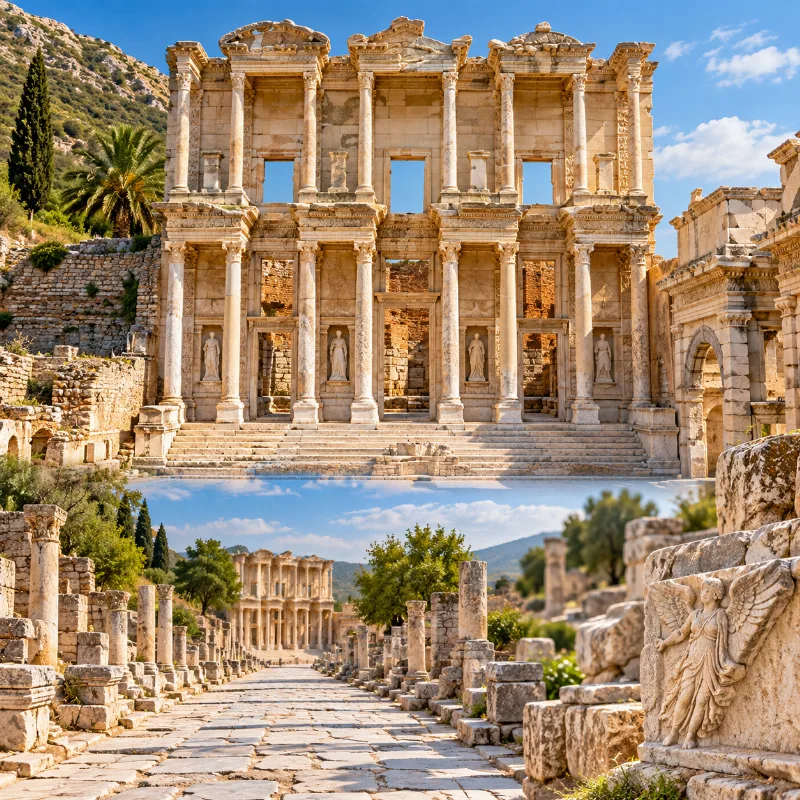
Ephesus
One of the best-preserved ancient cities in the Aegean, known for its monumental streets, library, theatre and Roman-era remains.
Explore →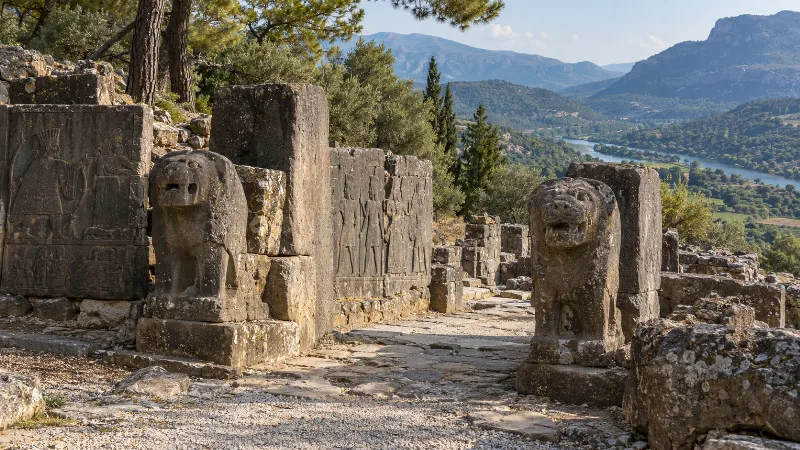
Karatepe
Karatepe is an 8th-century BC Hittite fortress above the Ceyhan River in Osmaniye Province, whose Phoenician–Luwian bilingual inscriptions unlocked the reading of Anatolian hieroglyphs.
Explore →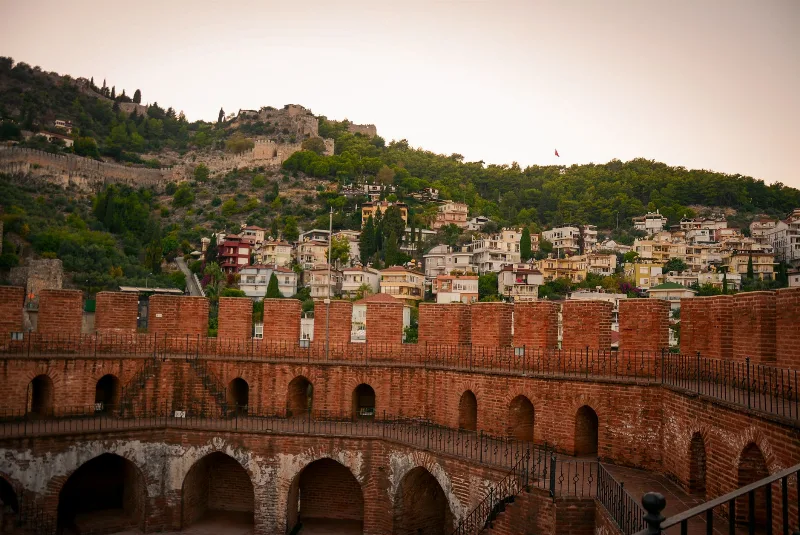
Alanya Castle
Alanya Castle is a medieval fortress on a rocky Mediterranean promontory in Antalya Province, Türkiye, whose surviving defences were largely built under the Seljuk Sultanate of Rum in the 13th century. Its walls, inner citadel, Red Tower and vaulted shipyard form one of the most complete Seljuk military and maritime complexes in Anatolia.
Explore →Related content
Perge
Perge is a Graeco-Roman city in the Pamphylian plain east of Antalya, Türkiye, whose surviving urban plan includes two colonnaded streets with central water channels, a hillside Roman theatre and one of Anatolia's best-preserved stadiums.
Perge
Perge is an ancient Pamphylian city east of Antalya, whose Hellenistic gates, colonnaded streets, theatre and exceptionally well-preserved stadium make it one of the most legible Roman-era sites in southern Turkey.
Antalya
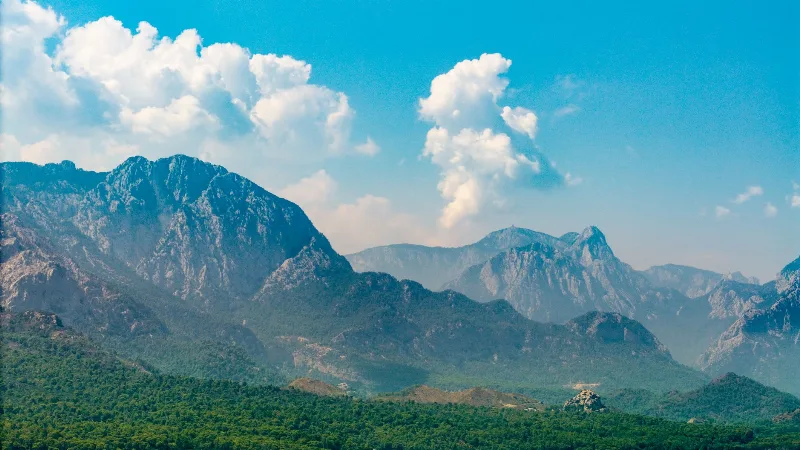
Antalya offers a unique blend of vibrant history and stunning natural beauty, making it a must-visit destination in Türkiye.
3-Day Antalya to Side Ancient Coast Route
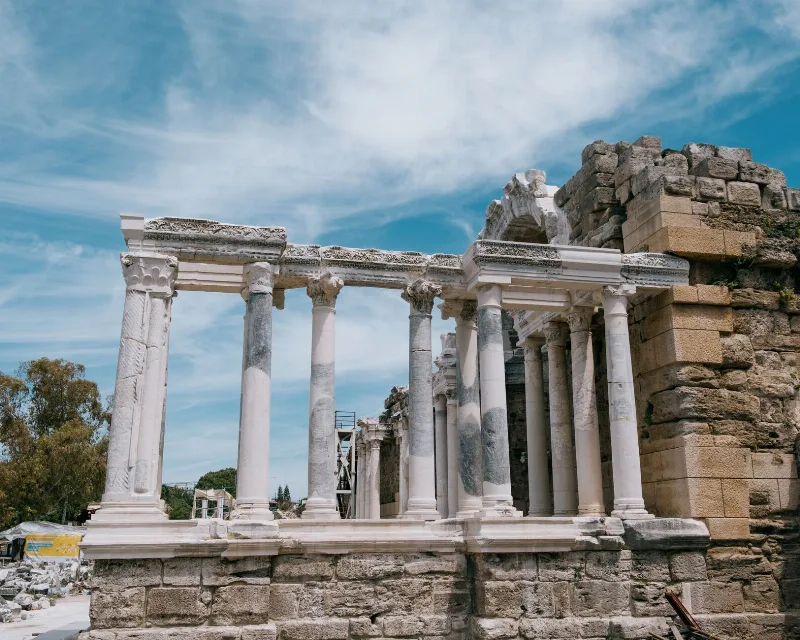
A three-day coastal journey from Antalya to Side that links the archaeological sites of Perge and Aspendos with the Manavgat Waterfall and the ruins of Side, with a clear day-by-day sequence of stops.
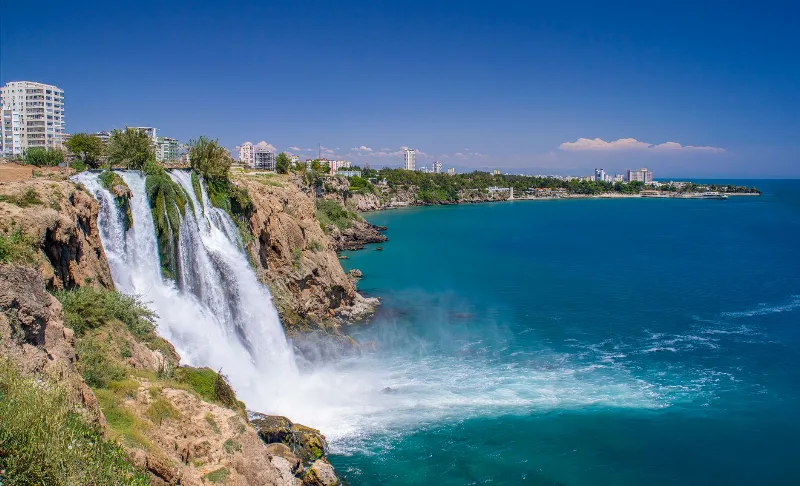
2-Day Antalya Waterfalls and Ancient Cities Route
A circular two-day route based in Antalya that pairs the Düden and Kurşunlu waterfalls with the ancient cities of Perge, Aspendos and Termessos, following the eastern coastal plain on the first day and the Taurus foothills on the second.
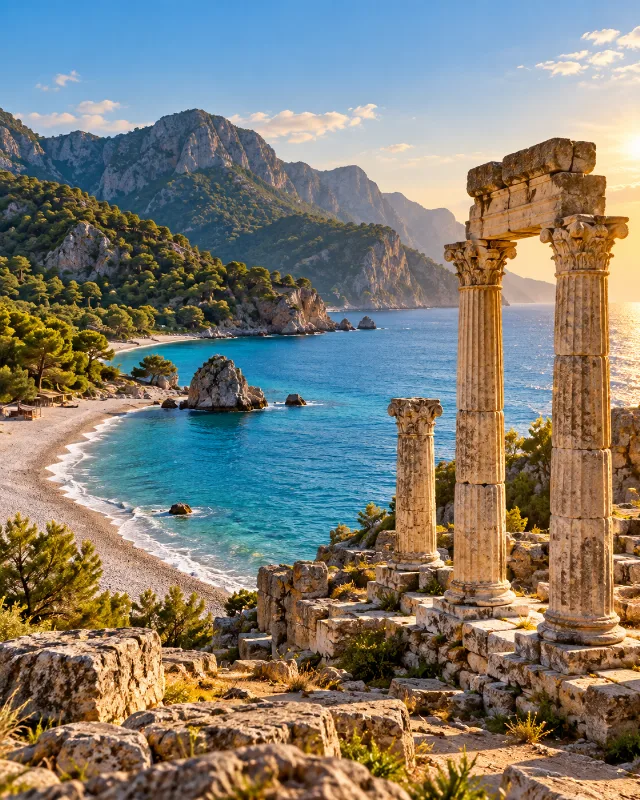
3-Day Antalya Ancient Coast Route
A three-day route combining Antalya’s old city with Perge, Aspendos, Side, Olympos and the Mediterranean landscapes around Çıralı.