
6-Day Aegean Ancient Cities Route
A six-day linear journey from Izmir to Denizli through the great ancient cities of the Aegean, linking Ephesus, Priene, Miletus, Didyma, Lake Bafa, Pamukkale, Laodicea and Aphrodisias in one coherent corridor.
The route begins in Izmir, on the Aegean coast, and finishes six days later at Denizli, the inland gateway to Pamukkale. In between it links the ancient cities of Ephesus, Priene, Miletus and Didyma with the lake landscape of Bafa and the thermal terraces of Hierapolis, before closing with Laodicea and Aphrodisias. It is a linear journey, not a loop: the direction is south along the coast first, then east and inland through the Menderes valley, ending on the Anatolian plateau edge. The overall character is archaeological and scenic rather than resort-based, with a few short stretches of coast and village life to break up the site visits.
Most travellers will want a car for this route. Public transport connects the main towns, but the smaller archaeological sites sit away from the bus lines, and the strongest parts of the itinerary depend on being able to stop between them. Driving distances are moderate rather than extreme, and no section requires a ferry or a mountain crossing. The route mixes driving with walking, since Ephesus, Priene, Hierapolis and Aphrodisias all ask for a couple of hours on foot in exposed terrain.
Day 1: Izmir
The journey starts in Izmir, the large Aegean port city at the head of the route. Day one is deliberately urban: it introduces the Ionian world before any of the ruins appear. The Agora of Smyrna sits in the old centre, and the hill of Kadifekale above it gives a sense of how the ancient city occupied the slope between the bay and the ridge. Around the Kemeraltı bazaar quarter the streets are dense and commercial, while the seafront promenade follows the curve of the bay and provides an easy evening walk. The city archaeology museum is a useful first stop because it gathers material from several of the sites that appear later in the week.
Nothing here needs long drives, which makes Izmir a gentle beginning. The progression southward starts the next morning, heading inland over the low pass that separates the Gulf of Izmir from the plain of Ephesus.
Day 2: Selçuk and Ephesus
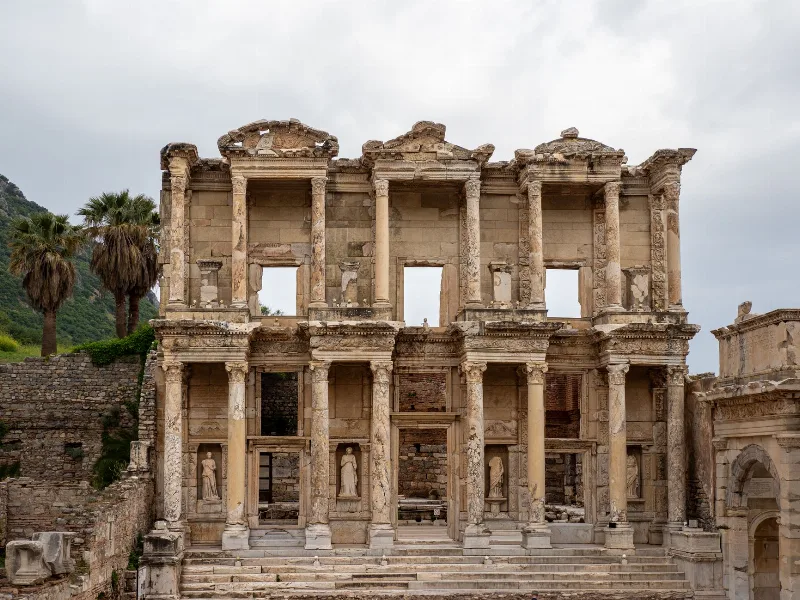
Leaving Izmir, the road runs south and inland toward Selçuk, the small town that serves the Ephesus archaeological zone. Ephesus itself is the central set piece of the whole route: the Library of Celsus, the Great Theatre cut into the hillside, Curetes Street, and the Terrace Houses on the slope above. A visit takes several hours, and the site is best approached early or later in the day, when the heat and the crowds ease.
Selçuk adds context rather than competition. The Basilica of St John stands on Ayasuluk hill above the town, the İsa Bey Mosque sits just below it, and the local museum holds finds from Ephesus and the surrounding sanctuaries. Inland from Selçuk, the hillside village of Şirince is a short detour and shows a very different, quieter side of the region. Beaches near Pamucak and the coastal town of Kuşadası lie close by for anyone who wants sea air at the end of the day. This is the natural place to spend the night before moving onto the southern plain.
Day 3: Priene, Miletus and Didyma
From Selçuk the route continues south, passing Kuşadası and the Dilek peninsula, and enters the broad plain of the Büyük Menderes. The first stop is Priene, set on a rocky slope at Güllübahçe below the Mykale range. Its regular grid plan and its Temple of Athena make it one of the clearest examples of a planned Greek city, and the setting above the plain explains why it was placed there.
Further into the plain stands Miletus, once a major port before the river silted up its harbour. Its theatre and the Baths of Faustina are the most substantial remains. The day closes at Didyma, near the modern town of Didim, where the Temple of Apollo is one of the largest and most impressive oracular sanctuaries in the Greek world. These three sites belong together geographically and historically: they shared the same river plain and were linked in antiquity. Overnight stops are straightforward around Didim, Altınkum and Akbük.
Day 4: Lake Bafa and the Menderes valley
The fourth day is lighter on ruins and heavier on landscape. Lake Bafa lies east of Miletus, where the ancient city of Herakleia sat at the water's edge and the Beşparmak mountains rise behind it with their rock-cut monastic remains. Small villages along the shore, olive groves and quiet roads make this a good half-day by car, with short walks where the terrain allows.
From the lake the route turns inland and follows the Menderes valley eastward, passing Aydın and continuing toward Denizli. This is the main geographical transition of the trip: the coast and the river plain give way to a higher interior basin. It is a driving day with a few stops rather than a site-heavy one, and it positions the traveller close to Pamukkale for the following morning.
Day 5: Pamukkale and Hierapolis
The white travertine terraces of Pamukkale and the ancient city of Hierapolis occupy the same hillside, which makes this a full day on foot. The terraces themselves are the best-known feature, and the site above them contains a large theatre, a long necropolis, temples and the Antique Pool where warm mineral water rises among fallen columns. The adjacent spa area of Karahayıt offers a contrasting landscape of red-tinted springs.
Because the terraces are the most visited part of the route, timing matters: early morning or late afternoon gives cooler temperatures and clearer walkways. The site is exposed, so sun protection and water are essential in summer. This is also the point where the route shifts from Greek and Ionian cities toward the Roman and early Christian centres of the interior.
Day 6: Laodicea and Aphrodisias
The final day stays inland around Denizli. Laodicea, on its low hill near the town, is a large and partly restored ancient city with a theatre, a stadium and an unusual water distribution system, and it is one of the sites associated with the early Christian communities of the region. It is close to Denizli, so it can be visited without a long drive.
Aphrodisias, near Karacasu to the south, is the more remote stop of the week and the most rewarding for sculpture. Its stadium, Temple of Aphrodite, Sebastion and relief panels are exceptional, but the detour should be planned only if there is enough time before the return to Denizli. Travellers with a tight schedule can treat Laodicea as the closing visit and leave Aphrodisias for a longer stay. Either way, the route ends in Denizli, where rail and air connections make it an easy place to finish.
When to travel and how to follow the route
Spring and autumn are the most comfortable months for this itinerary. Summer is workable but demanding, because the archaeological sites offer little shade and the terraces at Pamukkale attract their heaviest numbers in July and August. Winters are mild on the Aegean coast but cooler and sometimes wetter on the inland plateau, and the higher ground above the Menderes valley can feel considerably colder than Izmir.
The route is linear, so travellers should not expect to return to the starting point. It suits confident drivers, though the coastal and town sections could be covered partly by local buses if a car is not available for the whole week. Anyone interested in the wider region can extend the same corridor by adding the coastal bays around Kuşadası and Akbük, the villages of the Söke plain, and the produce of the interior, where olives, figs and cotton shape the landscape between the ruins. Travellers who want deeper background on any single stop can follow the corresponding destination pages for Cities & Districts, Historic Places, Nature, Beaches & Bays, Villages & Small Towns and Remarkable Places.
Remarkable Places
See all places →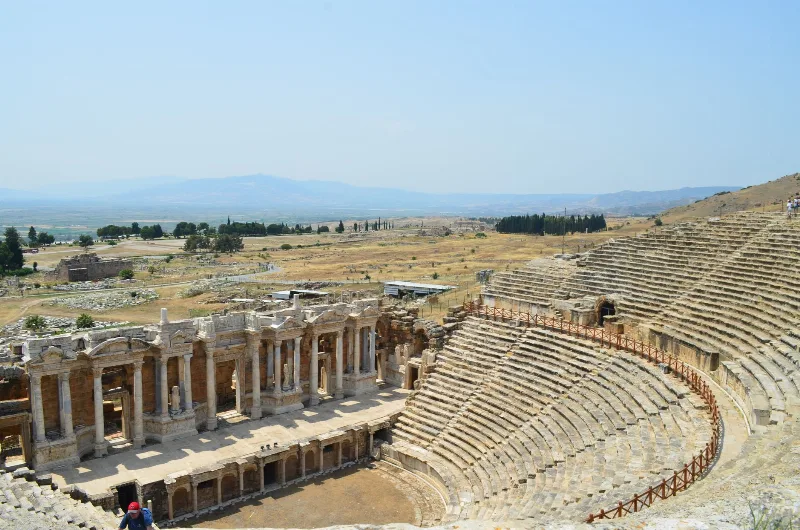
Letoon
Letoon is a Lycian sanctuary near Xanthos in Muğla Province, dedicated to Leto, Artemis and Apollo. Its three temples, theatre and trilingual inscription make it one of southwestern Turkey’s most significant archaeological sites.
Explore →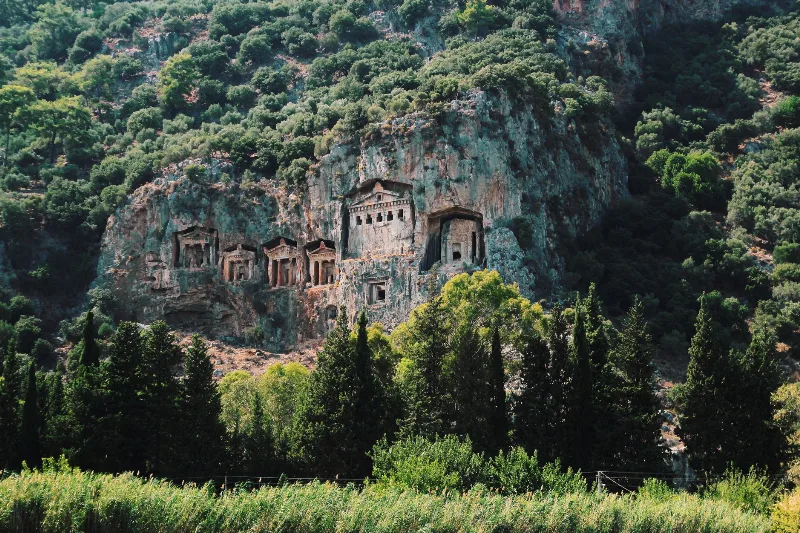
Kaunos
Kaunos is an ancient Carian city on the Dalyan River in Muğla Province, known for its temple-style rock-cut tombs and the extensive ruins of a harbour that silted up centuries ago.
Explore →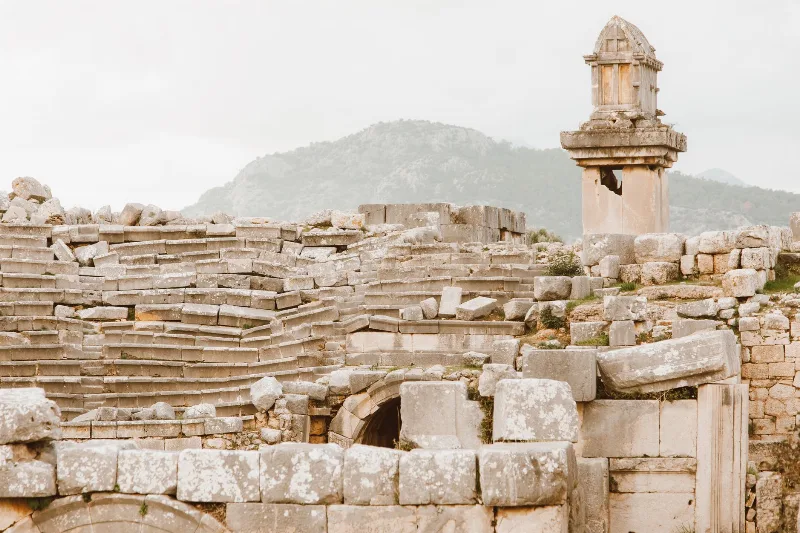
Xanthos
Xanthos is an ancient Lycian city in Antalya Province and a UNESCO World Heritage Site, known for its Lycian tombs, Roman theatre and role as a leading city of Lycia.
Explore →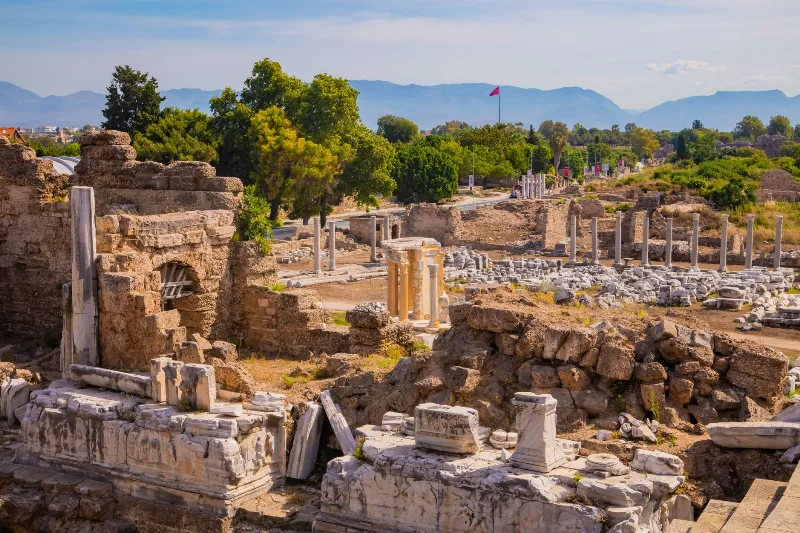
Phaselis
Phaselis is a Rhodian-founded port city on the eastern Lycian coast, where paved streets, agoras, baths and a small theatre stand among pines between three sheltered bays.
Explore →Related content
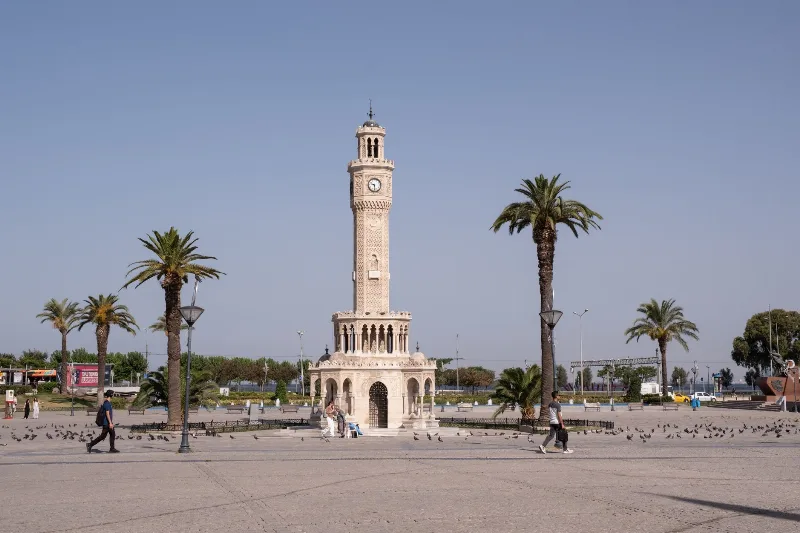
Izmir
Izmir is a major Aegean port city in western Türkiye, built around the Gulf of Izmir and known for its Kordon waterfront. It is the country's third-largest city and the main urban gateway to the ancient sites of Ephesus and Pergamon.
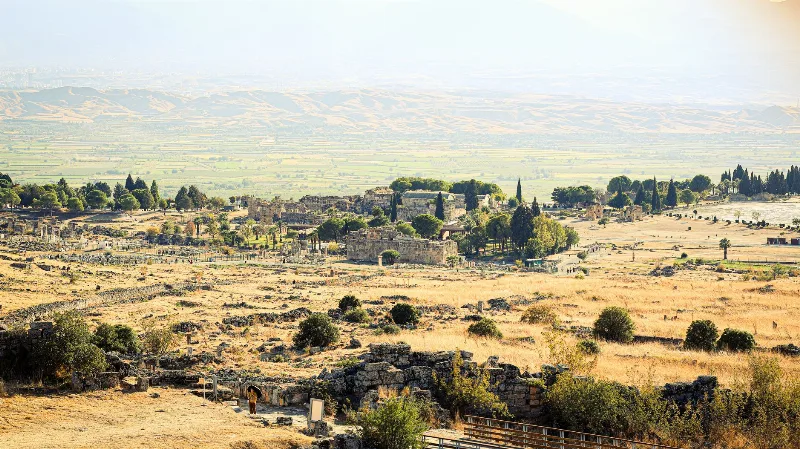
Denizli
Denizli is the inland capital of Denizli Province in Türkiye's Aegean region, known internationally for the Pamukkale travertine terraces and ancient Hierapolis, and at home as a major textile city with its own long-crowing rooster breed.
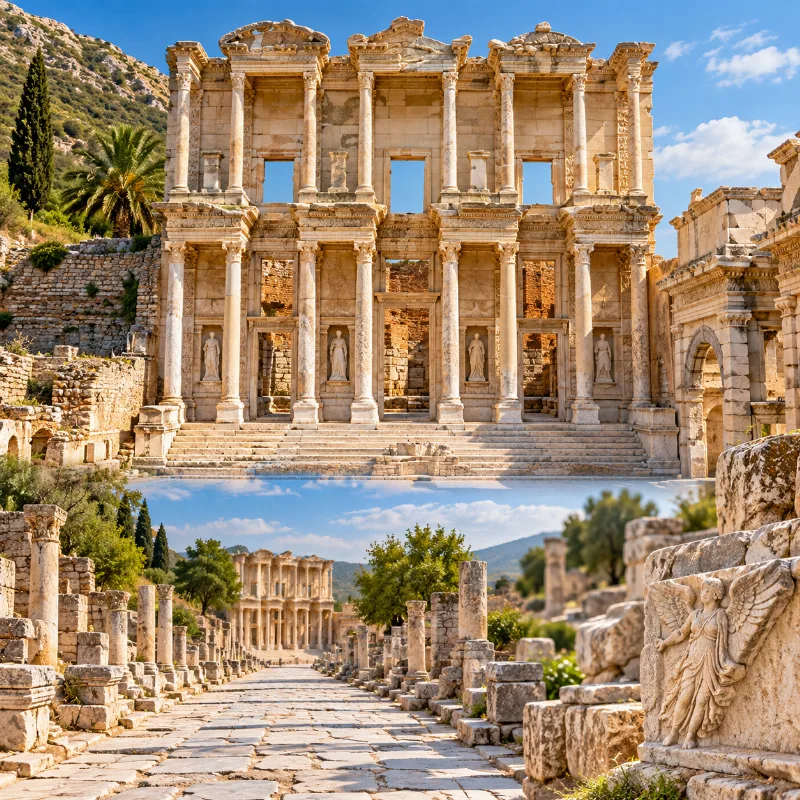
Ephesus
One of the best-preserved ancient cities in the Aegean, known for its monumental streets, library, theatre and Roman-era remains.
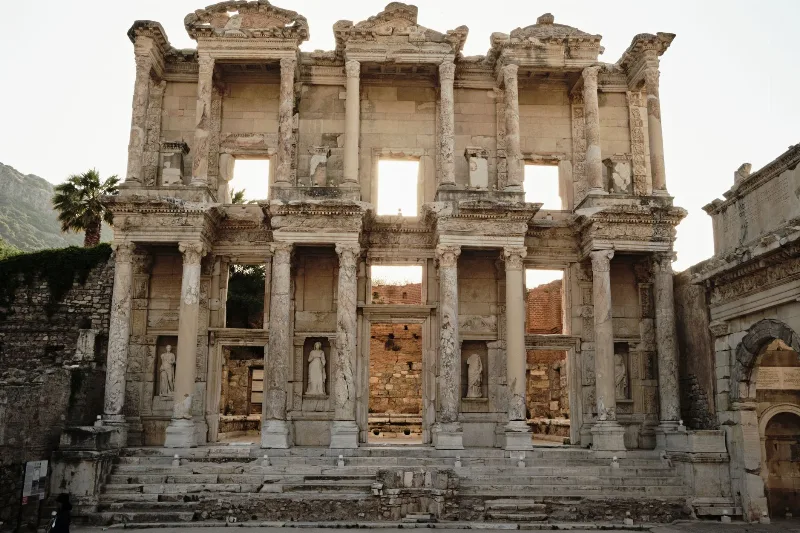
4-Day Ephesus and Pamukkale Route
A four-day west-to-east Aegean route that links the ancient city of Ephesus and the House of Virgin Mary in Selçuk with the white travertine terraces and Hierapolis ruins at Pamukkale, near Denizli.
Ephesus
Ephesus is an ancient Greek and Roman city near Selçuk in İzmir Province, Türkiye, whose ruins include the Library of Celsus, the Great Theatre and the remains of the Temple of Artemis.
The Seven Geographical Regions of Turkey
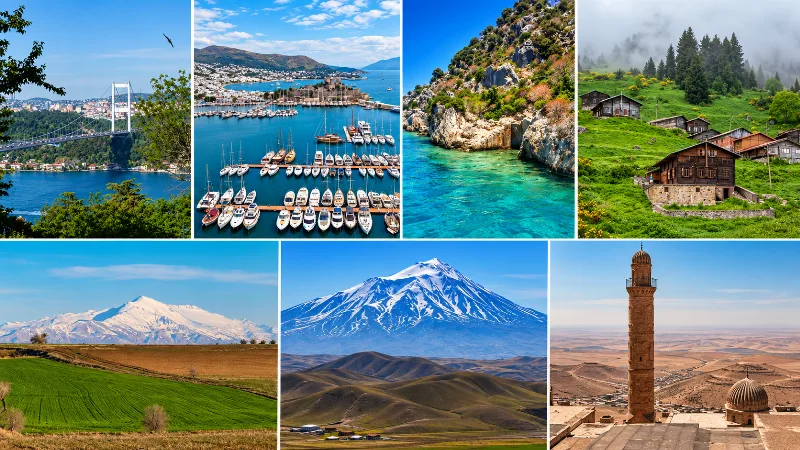
An introduction to Turkey’s seven geographical regions and the landscapes, climates and cultural characteristics that distinguish them.