
The Seven Geographical Regions of Turkey
STORIES FROM TÜRKİYE
The Seven Geographical Regions of Turkey
Turkey is traditionally divided into seven geographical regions, each shaped by different landscapes, climates, agricultural patterns and settlement histories.
These regions are not administrative divisions. Instead, they provide a useful way to understand the physical and cultural variety found across the country.
Marmara Region
The Marmara Region occupies northwestern Turkey and includes Istanbul, Bursa, Edirne, Tekirdağ and surrounding provinces.
It connects Europe and Asia and includes coastlines on the Marmara, Black and Aegean seas.
Large cities, agricultural plains, historic towns and industrial areas all exist within the region. Istanbul dominates its urban character, while places such as Bursa, Edirne and the villages surrounding the Marmara Sea provide very different settings.
Aegean Region
The Aegean Region stretches along western Turkey and includes İzmir, Aydın, Muğla, Manisa, Denizli and nearby areas.
Its landscape combines a long coastline with fertile river valleys and inland mountains.
Olive groves, vineyards and fig orchards are common features of the countryside. Ancient cities such as Ephesus, Pergamon and Aphrodisias also reflect the region’s long history.
Mediterranean Region
Southern Turkey forms the Mediterranean Region, extending through provinces including Antalya, Mersin, Adana and Hatay.
The Taurus Mountains rise behind much of the coast, creating a landscape where high mountains and the Mediterranean Sea often appear close together.
Beaches, bays, forests, ancient cities and agricultural plains are all characteristic of the region.
Central Anatolia Region
Central Anatolia occupies the broad interior plateau of Turkey.
Ankara, Konya, Kayseri, Eskişehir and much of Cappadocia lie within this region.
The landscape is generally more open and dry than the coastal regions, with broad plains, volcanic formations and large agricultural areas.
Cappadocia provides one of the most unusual landscapes, while Konya and Ankara represent important historical and urban centres.
Black Sea Region
The Black Sea Region follows Turkey’s northern coastline.
Mountains rise close to the sea, particularly in the east, producing a humid landscape of forests, rivers and steep green valleys.
Trabzon, Rize, Artvin, Samsun, Ordu and other provinces form part of this long coastal region.
Tea and hazelnut cultivation are strongly associated with different sections of the Black Sea countryside.
Eastern Anatolia Region
Eastern Anatolia contains some of Turkey’s highest and most mountainous terrain.
Long winters, high plateaus, lakes and broad valleys shape the landscape.
Provinces such as Erzurum, Kars, Van and Ağrı belong to the region. Lake Van forms one of its largest natural features, while Ani near Kars represents an important historic landscape.
Southeastern Anatolia Region
Southeastern Anatolia includes Şanlıurfa, Gaziantep, Mardin, Diyarbakır and surrounding provinces.
The region contains broad plains, dry hills and landscapes influenced by the Euphrates and Tigris river systems.
Its cities are known for archaeological sites, historic architecture and strong regional food traditions.
From the forests of the Black Sea to the dry plateaus of Central Anatolia and the Mediterranean coast, Turkey’s seven regions help explain why landscapes, food, architecture and daily life can change so noticeably across the country.
Historic places
Explore history →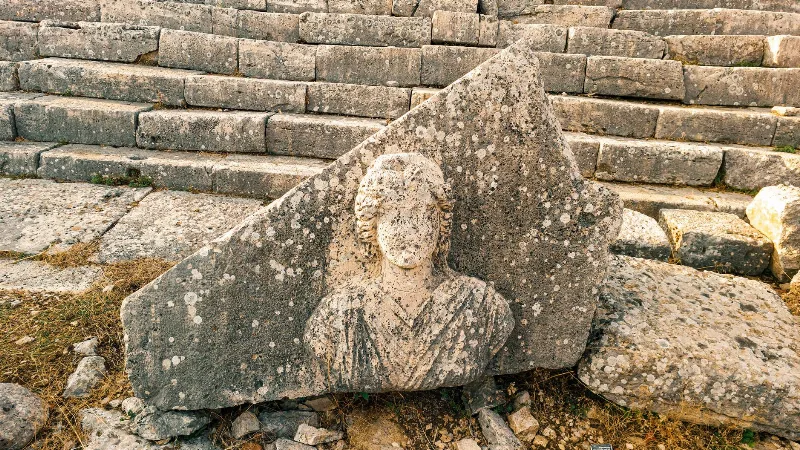
Kibyra
Kibyra is an ancient city on a plateau above Gölhisar in Burdur Province, once the leading city of the Kibyratis. Its theatre, odeon with a Medusa mosaic, and stadium survive in unusual detail.
Explore →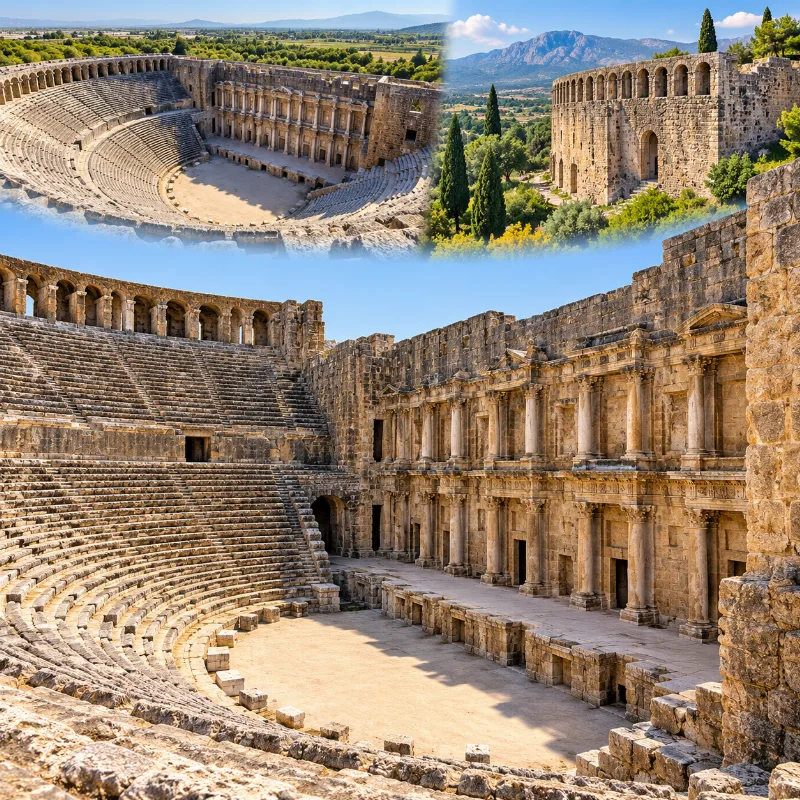
Aspendos
An ancient city near Antalya best known for its large Roman theatre and other surviving structures.
Explore →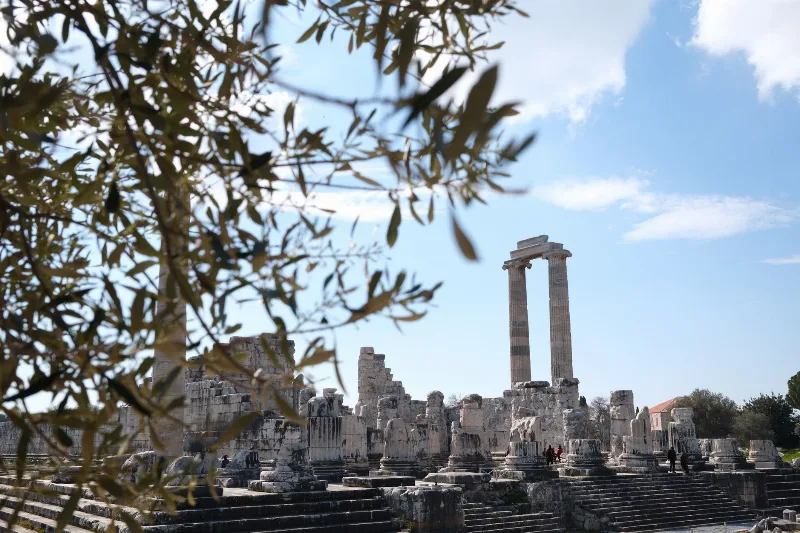
Priene
Priene is a planned ancient Greek city on the slopes of Mount Mycale in Aydın Province, Türkiye, whose grid streets, theatre and Temple of Athena Polias still trace a Hellenistic urban layout.
Explore →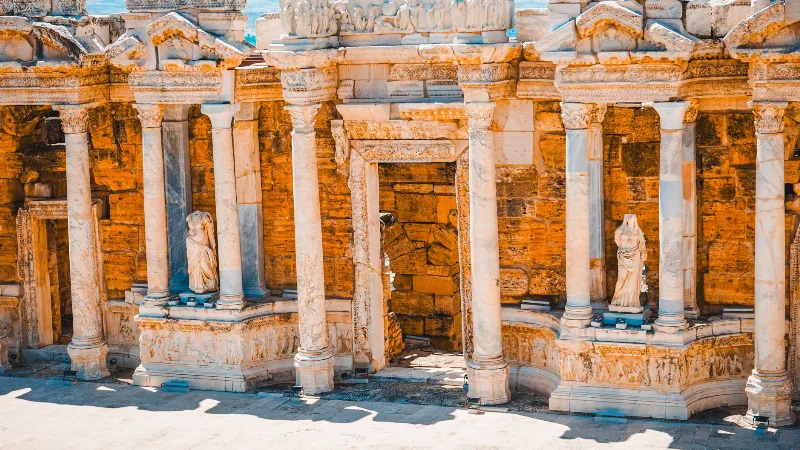
Hierapolis
Hierapolis is an ancient city in Denizli Province, Türkiye, built beside the hot springs and travertine terraces of Pamukkale. Its Roman theatre, vast necropolis, baths and the sanctuary of Apollo make it one of the most extensively preserved Greco-Roman cities in Anatolia and a UNESCO World Heritage Site.
Explore →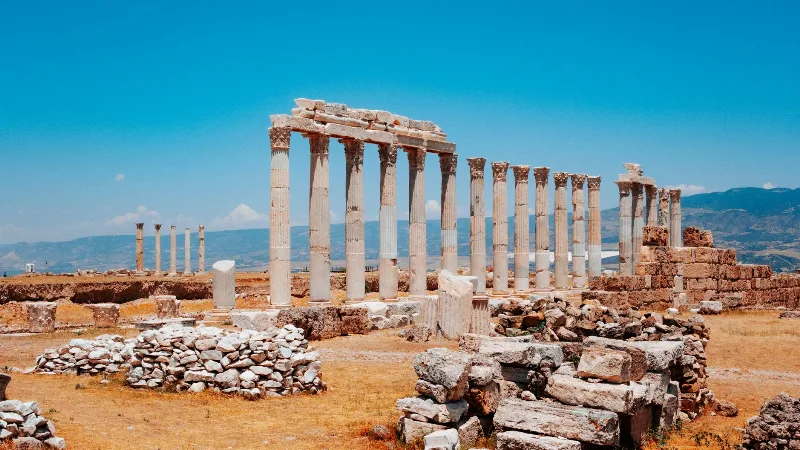
Laodicea
Laodicea is a Hellenistic and Roman city near Denizli in Türkiye, known for its theatre, stadium and early Christian remains. It was a wealthy commercial centre and one of the Seven Churches of Asia.
Explore →Related content
Marmara Region
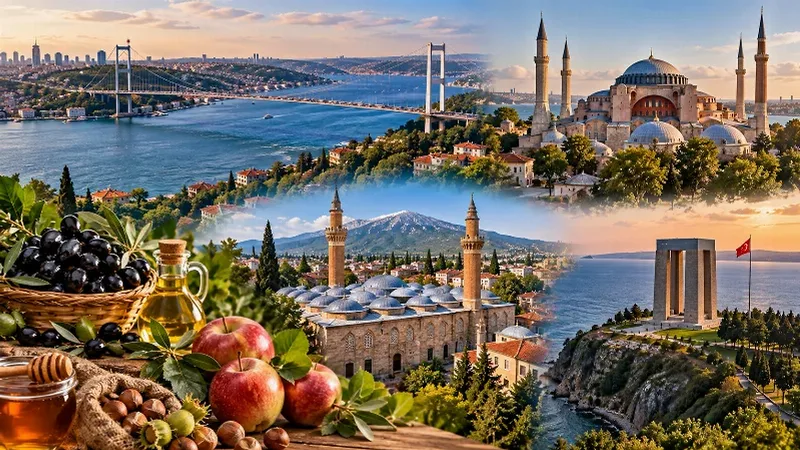
The Marmara Region connects Europe and Asia, bringing together historic cities, beautiful coastlines, green landscapes and a rich cultural heritage. From Istanbul's iconic skyline to the peaceful shores of the Marmara Sea, the region offers a remarkable variety of places to discover.
Istanbul
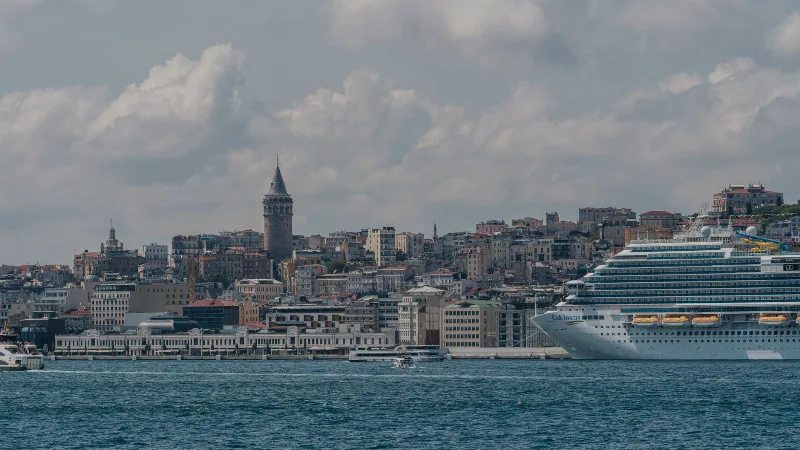
Istanbul is Türkiye's largest city and the country's only metropolis that spans two continents, divided by the Bosphorus strait into a European and an Asian half. Its long run as an imperial capital left a historic core of palaces, mosques and bazaars that still shapes the city's identity.
Bursa
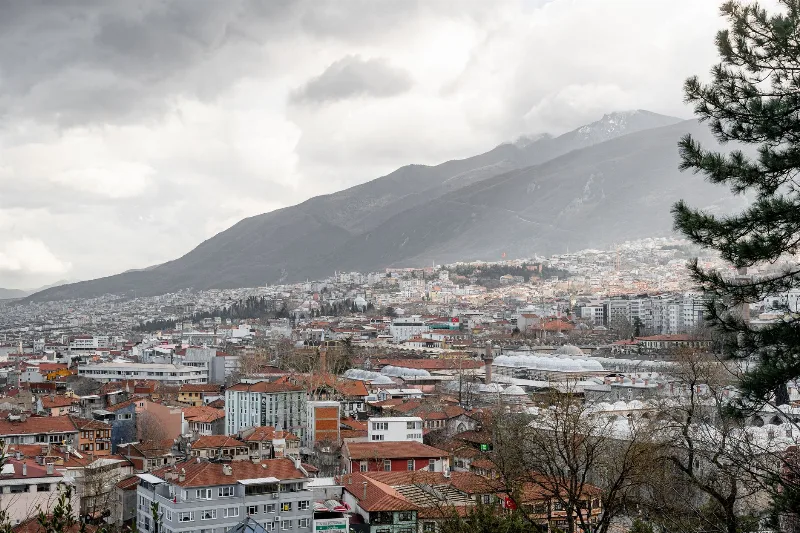
Bursa is a major metropolitan city in northwestern Türkiye and the first great capital of the Ottoman Empire, known for its silk heritage, thermal springs and the mountain of Uludağ rising directly behind it.
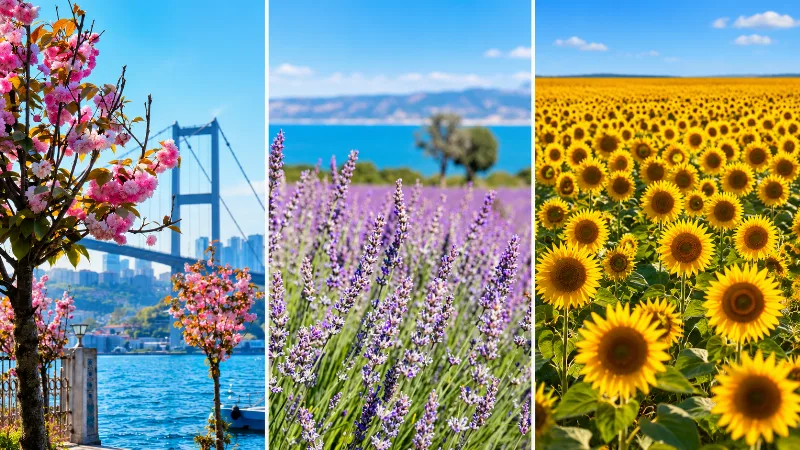
Spring in Turkey
From flowering valleys and green highlands to mild coastal towns, spring changes the landscape across different regions of Turkey.
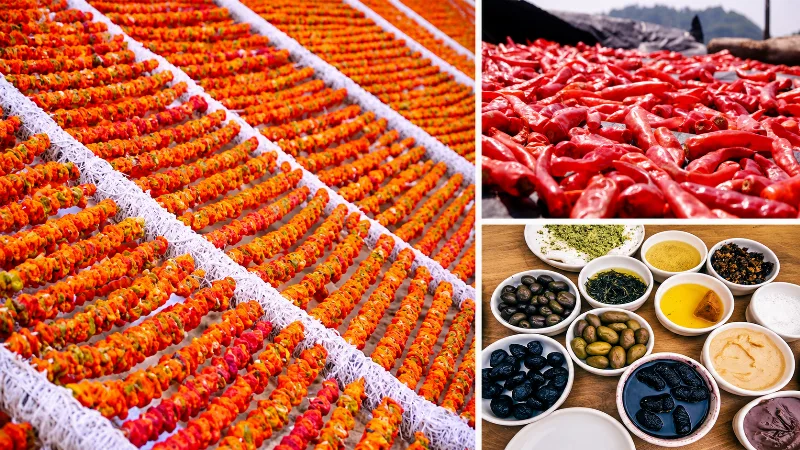
Why Turkish Food Changes from Region to Region
Climate, geography, agriculture and local history shape the ingredients, cooking methods and everyday dishes found across Türkiye. Türkiye’s cuisine is often described as a single national tradition, but food changes considerably from one region to another. Coastal climate, mountain geography, agricultural production, local history and available ingredients all influence what is cooked and how meals are prepared. A dish common on the Black Sea coast may be uncommon in southeastern Türkiye, while ingredients associated with the Aegean can play a much smaller role in the interior. These regional differences form one of the main characteristics of Turkish food culture.
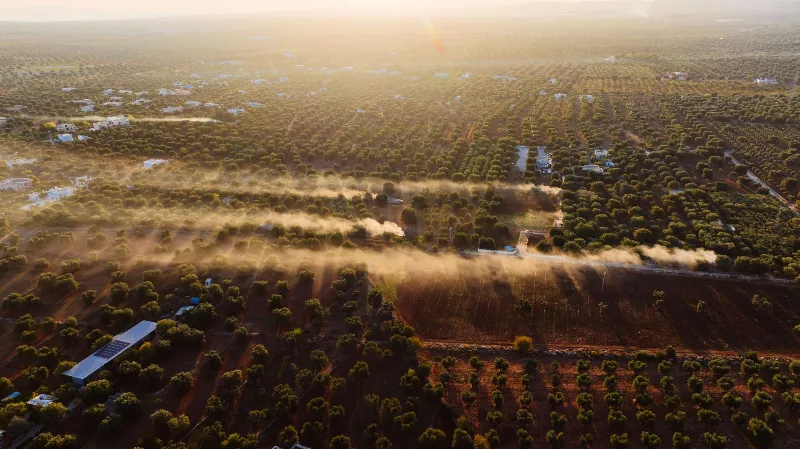
Gemlik
Gemlik is a coastal district of Bursa Province on the Gulf of Gemlik, an inlet of the Sea of Marmara, known for its olive groves, its working port and its position between Bursa and Istanbul.