
Laodicea
Laodicea is a Hellenistic and Roman city near Denizli in Türkiye, known for its theatre, stadium and early Christian remains. It was a wealthy commercial centre and one of the Seven Churches of Asia.
Laodicea is an ancient city in the Lycus Valley near modern Denizli in Türkiye. Founded in the Hellenistic period and developed as a wealthy Roman urban centre, it is known today for its theatre, stadium, gymnasium, temples and early Christian church remains. Its name also appears in the New Testament as one of the Seven Churches of Asia, giving the site historical importance beyond its monuments.
Location and the Lycus Valley
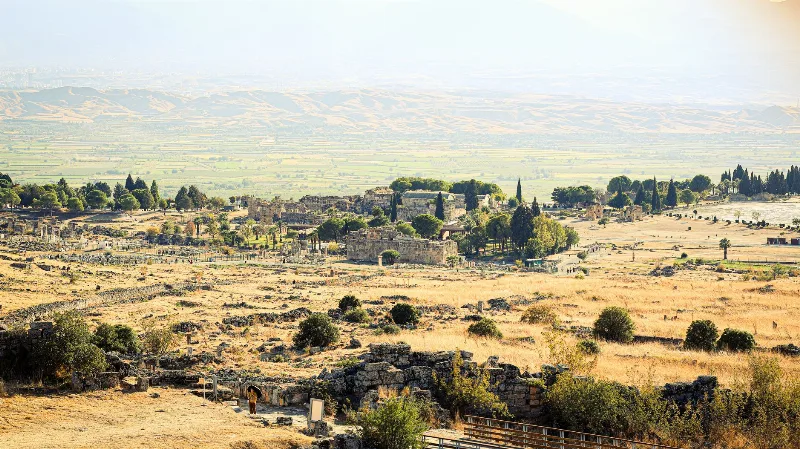
The site lies near the village of Eskihisar, on a plateau above the Çürüksu plain in Denizli Province. In antiquity the river was called the Lycus, and the city was distinguished as Laodicea ad Lycum, Laodicea on the Lycus. This position placed it in a broad valley corridor that connected the interior of Anatolia with the Aegean coast. The valley was never a single isolated settlement area: Laodicea stood close to other ancient cities, including Colossae and Hierapolis, and the roads between them helped shape its commercial role. The plateau setting gave the city a defensible and visible position, while the surrounding plain provided agricultural resources and routes for trade.
Hellenistic Foundation and the Seleucid Name
Laodicea was founded in the middle of the 3rd century BCE by Antiochus II Theos, a ruler of the Seleucid dynasty. The city was named after his wife Laodice. Its Hellenistic origin belongs to the period after the death of Alexander the Great, when competing dynasties established cities across Anatolia as instruments of political control and settlement. Laodicea was not a Greek city of the classical Aegean world; its foundation belongs specifically to the Hellenistic Seleucid context. Over time it passed into the wider political networks of western Anatolia and then into Roman control, but its Hellenistic foundation remained the basis of its later urban identity.
Roman Prosperity and Civic Life
Under Roman rule, Laodicea became one of the important cities of the province of Asia. Its wealth came from several sources. Ancient writers associate the city with textile production, especially a dark wool, and with financial activity. Inscriptions and monuments point to a civic life organised around public buildings, benefactors, festivals and local magistrates. The city had a planned street system, monumental squares, public baths and structures for entertainment and assembly. Laodicea was not merely a stopping point on a road; it was a regional centre with enough wealth to maintain large buildings and to compete with neighbouring cities in public display.
The Earthquake of 60 CE and Rebuilding
Laodicea suffered a major earthquake in 60 CE, during the reign of Nero. The Roman historian Tacitus reports that the city was rebuilt from its own resources, without imperial assistance. This detail is important because it shows the scale of Laodicea's private and civic wealth. Rebuilding after such a disaster required more than repairs to houses: it demanded the restoration of streets, water systems, public buildings and commercial life. The city's ability to recover on its own became part of its later reputation. The earthquake and the subsequent reconstruction also help explain why the surviving monuments belong mainly to the Roman imperial period, even though the city itself was older.
Laodicea in Early Christian Tradition
Laodicea is mentioned in the New Testament as one of the Seven Churches of Asia in the Book of Revelation. The letter to Laodicea criticises the community for being lukewarm and for believing that its wealth left it in need of nothing. The text is religious literature, not a civic description, but it reflects a city known for prosperity. Laodicea is also connected with the early Christian world through the letter to the Colossians, which refers to the church there. In the Byzantine period the city continued as a bishopric, and archaeological work has revealed ecclesiastical structures with mosaics, baptisteries and other features associated with Christian worship. These remains show that Laodicea remained a settled Christian centre long after the Roman imperial peak.
Monuments and Surviving Structures
The archaeological site contains a large number of surviving structures spread across the plateau. Visitors can see the principal public buildings of a Roman city: a large theatre, a smaller theatre, a stadium, a bath-gymnasium complex, a council house, temple remains, a monumental fountain, colonnaded streets, churches and extensive tomb areas. Some monuments have been partly restored, with columns re-erected and walkways created, but much of the site remains in a state of archaeological exposure. The ruins are valuable because they show a full urban ensemble rather than a single isolated monument.
Theatre and Stadium
The large theatre is built into the slope of the plateau and retains the curved seating area and parts of the stage structure. A smaller theatre also survives, indicating that performance and assembly were important in the city's public life. The stadium is a long monumental structure used for athletic contests and other spectacles. Together, the theatre and stadium show that Laodicea invested in the kind of buildings expected of a competitive Roman provincial city. They were not decorative extras; they were places where civic identity, entertainment and public gatherings were expressed.
Baths, Gymnasium and Colonnaded Streets
The bath-gymnasium complex was one of the largest public facilities in the city. Baths in the Roman world were social institutions as well as places for washing, and the adjoining gymnasium was associated with exercise and education. The colonnaded streets formed the framework of urban movement, with covered walkways and rows of columns framing shops and public spaces. At Laodicea these streets help modern visitors understand how the city was organised: public monuments, commercial areas and residential quarters were connected by a planned network rather than arranged at random.
Temple A, Nymphaeum and Water Systems
The structure conventionally called Temple A is among the most visible monumental remains, with columns that give a clear impression of its former scale. Its dedication is not fully certain, and it should not be assigned to a specific deity without qualification. The city also had a monumental nymphaeum, a public fountain that formed part of the water system. Water was brought to Laodicea through aqueducts and distributed through pipes and storage facilities. This engineering was essential in a city of baths, fountains and dense public buildings, and the surviving channels and pipe fragments are among the archaeological details that reveal how the city functioned.
From Byzantine Bishopric to Abandonment
Laodicea continued to exist in the Byzantine period, when it was a bishopric and retained Christian monuments. Its later history was not a simple collapse in one moment. Earthquakes, changes in trade routes and the shifting political landscape of Anatolia weakened the city over time. As Turkish rule spread across western Anatolia and settlement patterns changed, Laodicea lost its urban role. The site was eventually abandoned, while the modern city of Denizli developed nearby. This long transition explains why the ruins present a layered record: Roman public buildings, Byzantine churches and later traces of use all occupy the same plateau.
What Archaeology Reveals
Excavations since the early 2000s have clarified the city's layout and public architecture. Work has uncovered inscriptions, sculpture, mosaics, water pipes, coins and street surfaces. These finds help reconstruct not only the monumental city but also daily life: trade, municipal administration, domestic activity and religious practice. Restoration has made some areas easier to read, especially the theatre, colonnaded streets, fountain and temple area. At the same time, archaeology at Laodicea is ongoing, and interpretations of individual buildings can change as new evidence appears. For that reason, the site is best understood as a working archaeological landscape rather than a fully reconstructed ancient city.
Visiting Laodicea
Laodicea is an open-air archaeological site. Visiting involves walking over uneven stone surfaces, slopes and exposed ground, so sturdy footwear is useful. The site is reached by road from Denizli, and the wider area is also known for Pamukkale and Hierapolis. There are no reliable grounds for treating Laodicea as a quick roadside stop: the monuments are spread out, and several hours are needed to see the main structures without hurrying. Spring and autumn are generally more comfortable for walking, while summer visits require sun protection and water. Laodicea is not inscribed on the UNESCO World Heritage List, although the nearby Hierapolis-Pamukkale property is.
Nearby Historic Places in the Lycus Valley
The Lycus Valley contains several ancient sites that are genuinely related to Laodicea. Hierapolis, at Pamukkale, is the best known, with its Roman theatres, baths, necropolis and travertine terraces. Colossae lies near Honaz and is another ancient city of the same valley network, mentioned in early Christian texts. Further afield, the region includes other archaeological sites that reflect the dense settlement of ancient western Anatolia. Visiting Laodicea alongside these places gives a fuller picture of the valley's Roman and early Christian history, but Laodicea itself remains distinctive for its combination of commercial wealth, monumental public buildings and direct connection with the Seven Churches of Asia.
Routes
All routes →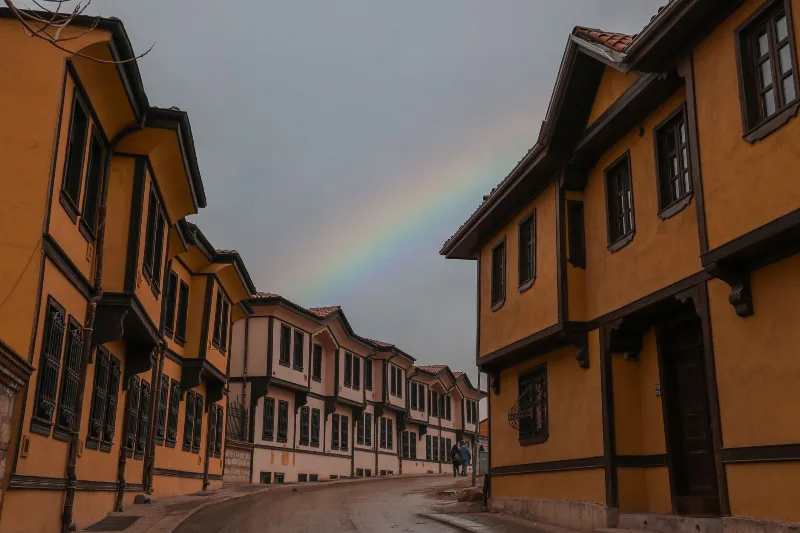
1-Day Eskişehir Route
A compact one-day walking route through Eskişehir, moving from the timber houses of Odunpazarı down to the Porsuk River promenade and finishing among the cafés and trams of the modern centre.
Explore →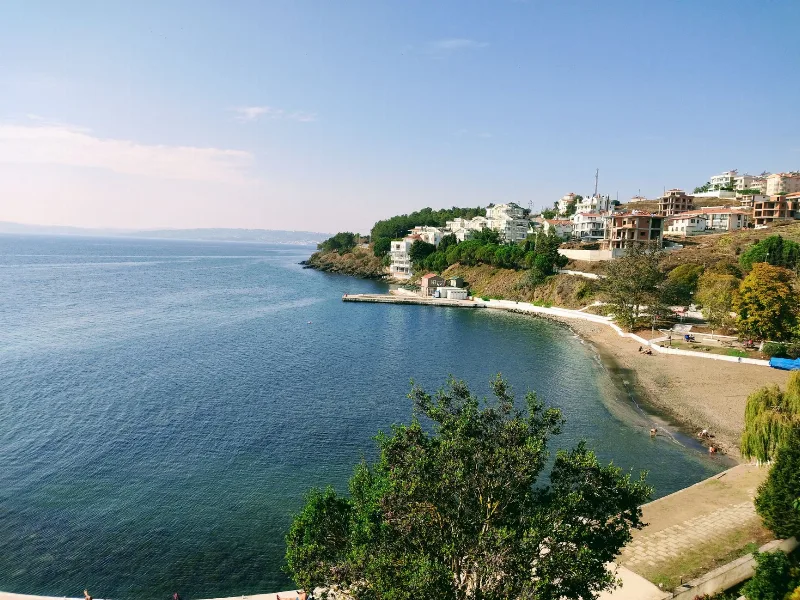
5-Day Black Sea Coast Route
A five-day linear journey along Türkiye's central and eastern Black Sea coast, from Sinop to Trabzon, with an inland detour to Amasya and stops in Ordu and Giresun along the way.
Explore →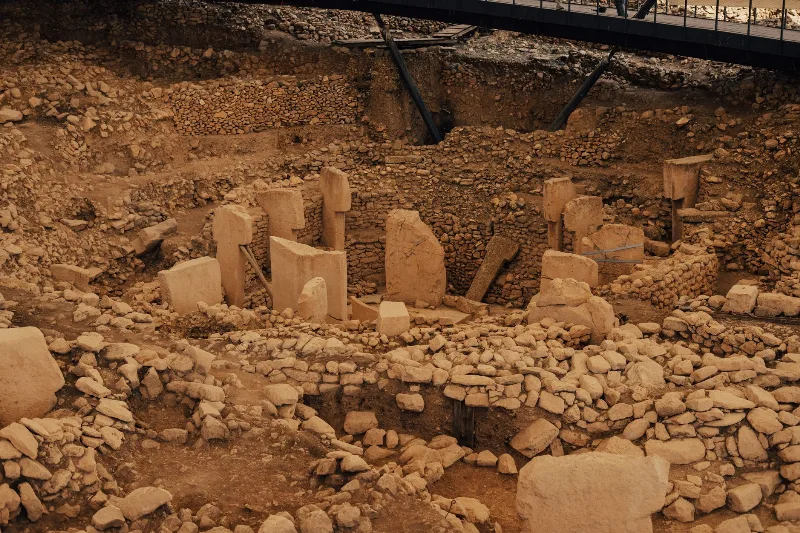
4-Day Southeastern Anatolia Route: Gaziantep to Mardin via Şanlıurfa
A four-day linear route across Southeastern Anatolia, linking the historic cities of Gaziantep, Şanlıurfa and Mardin by road, with the Neolithic site of Göbeklitepe and the ancient settlement of Harran fitted into the middle of the journey.
Explore →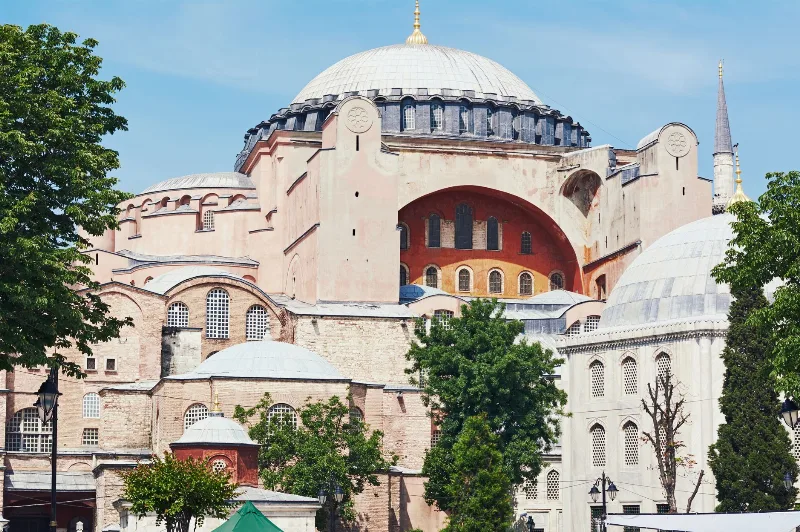
1-Day Istanbul Historic Peninsula Route
Explore Istanbul's Historic Peninsula in one day on foot, visiting Hagia Sophia, the Blue Mosque, Topkapı Palace, and the Grand Bazaar. This compact walking route covers the highlights of Sultanahmet with a logical, easy-to-follow order.
Explore →Related content
Denizli
Denizli is the inland capital of Denizli Province in Türkiye's Aegean region, known internationally for the Pamukkale travertine terraces and ancient Hierapolis, and at home as a major textile city with its own long-crowing rooster breed.
Hierapolis
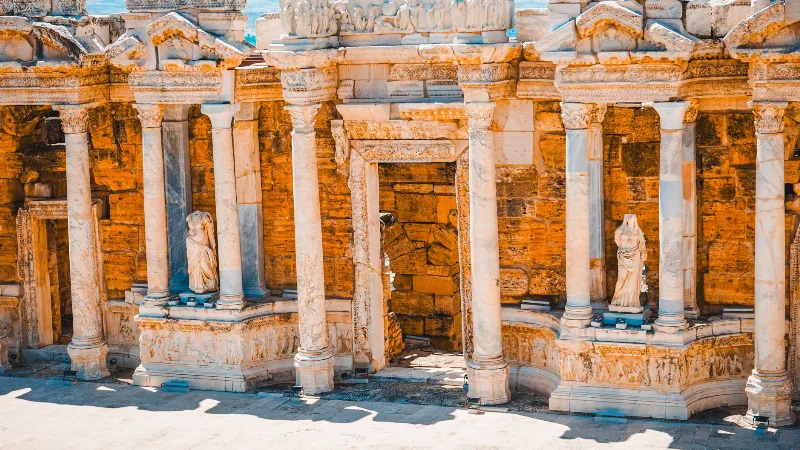
Hierapolis is an ancient city in Denizli Province, Türkiye, built beside the hot springs and travertine terraces of Pamukkale. Its Roman theatre, vast necropolis, baths and the sanctuary of Apollo make it one of the most extensively preserved Greco-Roman cities in Anatolia and a UNESCO World Heritage Site.
Hierapolis
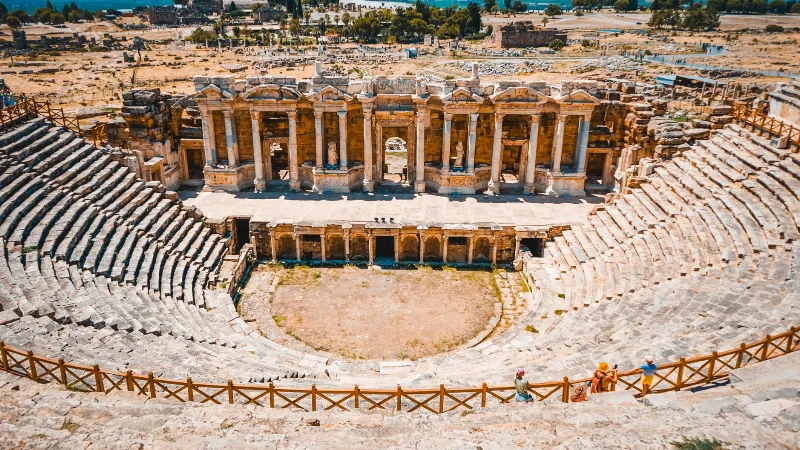
Hierapolis is an ancient Graeco-Roman city built directly on the plateau above the travertine terraces of Pamukkale in southwestern Türkiye. Its thermal springs, the Plutonium, the necropolis and the martyrion of Philip made it one of the most distinctive sanctuaries of the ancient world.
6-Day Aegean Ancient Cities Route
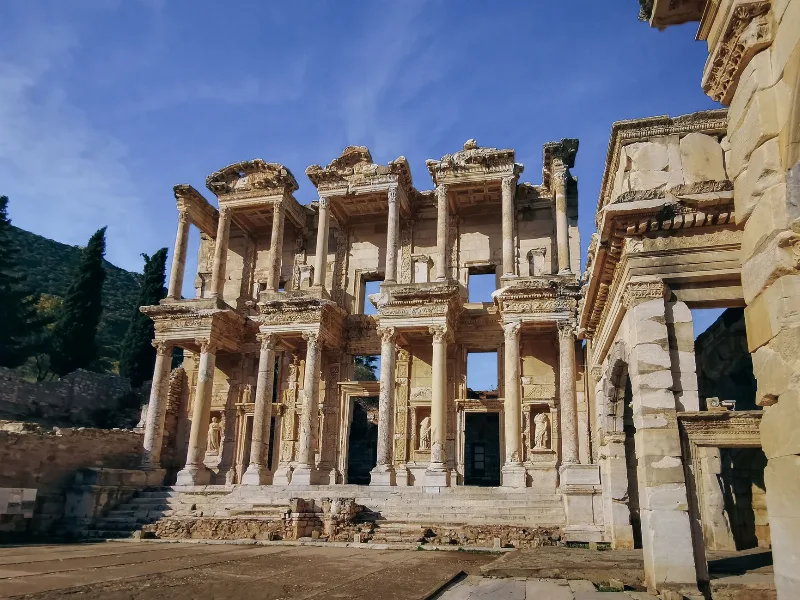
A six-day linear journey from Izmir to Denizli through the great ancient cities of the Aegean, linking Ephesus, Priene, Miletus, Didyma, Lake Bafa, Pamukkale, Laodicea and Aphrodisias in one coherent corridor.
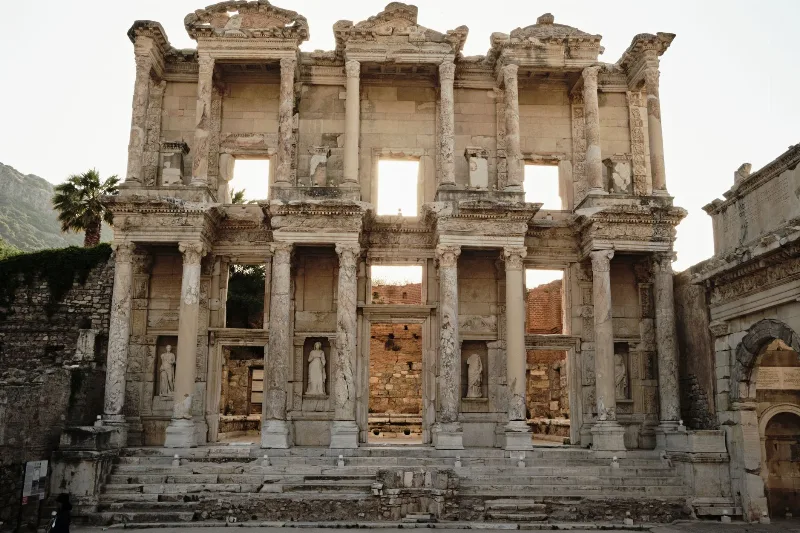
4-Day Ephesus and Pamukkale Route
A four-day west-to-east Aegean route that links the ancient city of Ephesus and the House of Virgin Mary in Selçuk with the white travertine terraces and Hierapolis ruins at Pamukkale, near Denizli.
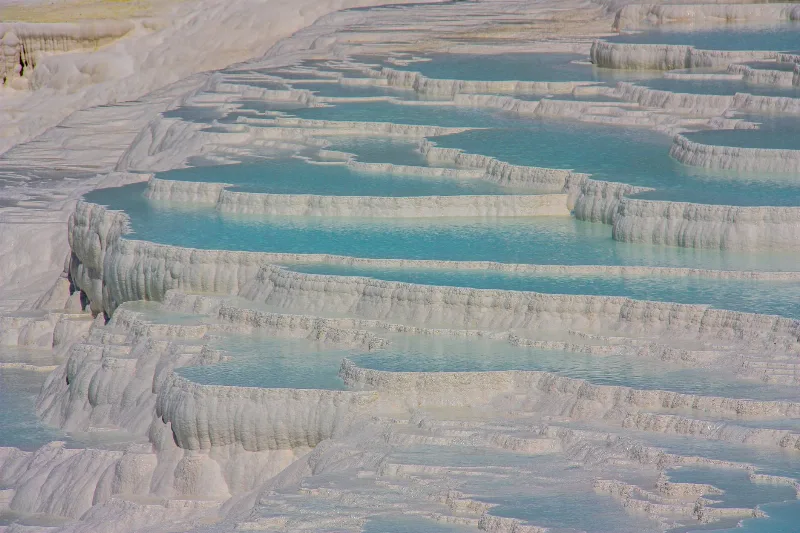
Pamukkale
Pamukkale is a white travertine formation in Denizli Province, built up over millennia by calcium-rich thermal springs that flow down the edge of a plateau beside the ancient city of Hierapolis.