
4-Day Ephesus and Pamukkale Route
A four-day west-to-east Aegean route that links the ancient city of Ephesus and the House of Virgin Mary in Selçuk with the white travertine terraces and Hierapolis ruins at Pamukkale, near Denizli.
This four-day route begins in Selçuk, the small working town that sits directly beside the ancient city of Ephesus in İzmir province, and finishes at Pamukkale and the ruins of Hierapolis near Denizli. It crosses the inland Aegean from the coast-facing hills of Ionia into the broad, hot valley of the Büyük Menderes, moving from one of the Mediterranean's most excavated classical cities to a limestone landscape that has been settled, bathed in and built upon for thousands of years. The journey is short in distance but dense in content, and it is best done by car, with long stretches of walking inside the archaeological sites themselves.
The route is linear rather than circular: you start in Selçuk and end near Denizli, so most travellers arrive at İzmir and leave from Denizli, or simply retrace the corridor. Spring and autumn are the most comfortable seasons for the walking, because both Ephesus and Hierapolis offer very little shade and the terraces of Pamukkale reflect heat strongly in high summer.
Day 1: Selçuk and Ephesus
The first day is spent almost entirely on foot and stays close to Selçuk. Start early at the ancient city of Ephesus, entering from the upper gate so that the route runs downhill through the site rather than up. The terraced houses, the great library facade, the theatre cut into the hillside and the marble streets between them are the core of the visit, and they set the tone for the rest of the trip. Plan the morning for the main archaeological area, because it fills quickly and the light becomes harsh by midday.
In the afternoon, remain in Selçuk itself. The Basilica of St John, the İsa Bey Mosque and the single surviving column of the Temple of Artemis sit within a few minutes of each other, and the Ephesus Museum in town holds many of the finds that were removed from the site. Together they explain how one place can be layered across pagan, Roman, Byzantine and later periods. This is a good point to slow down, because the next two days involve more driving.
Day 2: The House of Virgin Mary and the Hills Around Selçuk
Day two continues from Selçuk but shifts into the wooded hills above the plain. The House of Virgin Mary, on the slopes of Mount Koressos, is the first and most important stop, reached by a short mountain road. From there the route turns toward the village of Şirince, a hillside settlement of white houses and narrow lanes that has become known for its fruit wines and its preserved Aegean village character. It belongs to the Villages & Small Towns side of the region and makes an easy, pleasant contrast to the marble ruins below.
If time allows, the Grotto of the Seven Sleepers and the coastal town of Kuşadası can be added before returning to Selçuk for a second night. Kuşadası is a natural place to end the day if you prefer a harbour view and a sea horizon before heading inland, and it is one of the Beaches & Bays destinations of this coast. The evening should be used to prepare for the drive east, because the following day leaves the coast behind.
Day 3: Inland to Pamukkale and Hierapolis
The third day is the transition day. Leaving Selçuk behind, the road heads east through Aydın province and then climbs gently into the Denizli plateau, following the broad valley of the Büyük Menderes. The landscape changes from olive groves and coastal hills to open farmland and, finally, to the pale, mineral-stained slopes around Pamukkale. This is the longest driving stretch of the route, so it makes sense to keep sightseeing light until arrival.
The afternoon belongs to Hierapolis and the terraces. The ancient spa city was built directly above the travertine pools, and the two are visited as one site. Walk the white cascades first, then move into the ruins: the theatre, the colonnaded street, the necropolis and the museum housed in the old baths. The site is large and exposed, so the late afternoon is the best time to cover it. Overnight stays are clustered in the Pamukkale and Karahayıt area, which keeps the following morning simple.
Day 4: Hierapolis in Depth and the Denizli Countryside
The final day begins where the previous one finished, but in the cooler morning air. Use it to return to the parts of Hierapolis you missed, particularly the extensive necropolis and the northern sections of the site, which are often quieter than the terraces. The thermal spring that feeds the pools still rises here, and the surrounding landscape of cotton fields and red mineral springs at Karahayıt gives a sense of why this valley attracted settlement for so long.
Before finishing, the nearby ruins of Laodicea, close to Denizli, are a natural last stop on the same corridor and round out the picture of the Lycus valley's ancient cities. From here the route ends at Denizli, which is the practical departure point for onward travel.
Practical Notes for the Route
This is a driving route with substantial walking built into every day. Distances between the main stops are short, but the archaeological sites themselves require several hours on foot, often on uneven marble or gravel. Comfortable shoes, sun protection and water matter more than almost anything else you pack.
Because the route moves from the coast into an inland valley, conditions differ noticeably along the way: Selçuk and Kuşadası are milder and more humid, while Denizli and Pamukkale are drier and hotter in summer, and can be cold in winter. The sequence works best as a spring or autumn journey, when both the coast and the plateau are pleasant. Travellers who prefer a slower pace can easily stretch the same corridor into five or six days by adding time in Selçuk's museum and in the villages of the surrounding hills.
Remarkable Places
See all places →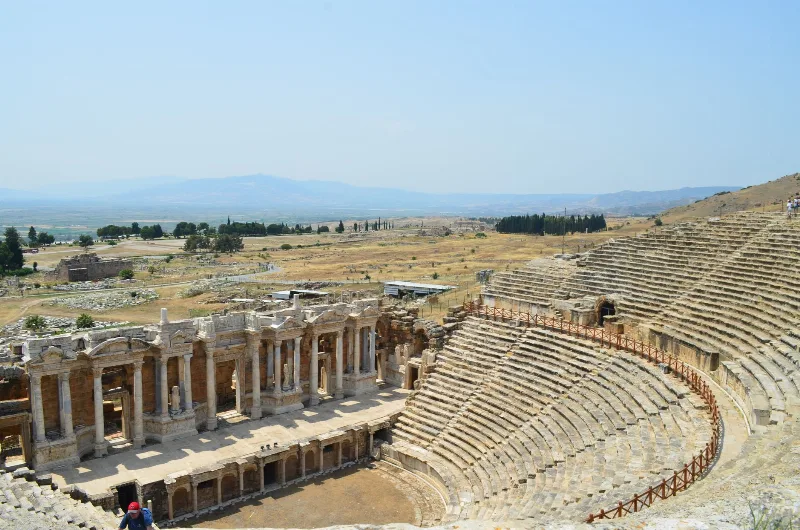
Letoon
Letoon is a Lycian sanctuary near Xanthos in Muğla Province, dedicated to Leto, Artemis and Apollo. Its three temples, theatre and trilingual inscription make it one of southwestern Turkey’s most significant archaeological sites.
Explore →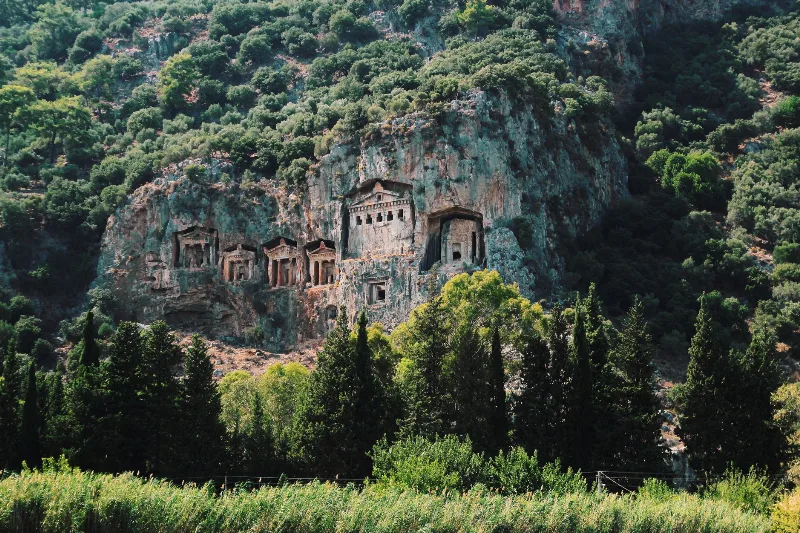
Kaunos
Kaunos is an ancient Carian city on the Dalyan River in Muğla Province, known for its temple-style rock-cut tombs and the extensive ruins of a harbour that silted up centuries ago.
Explore →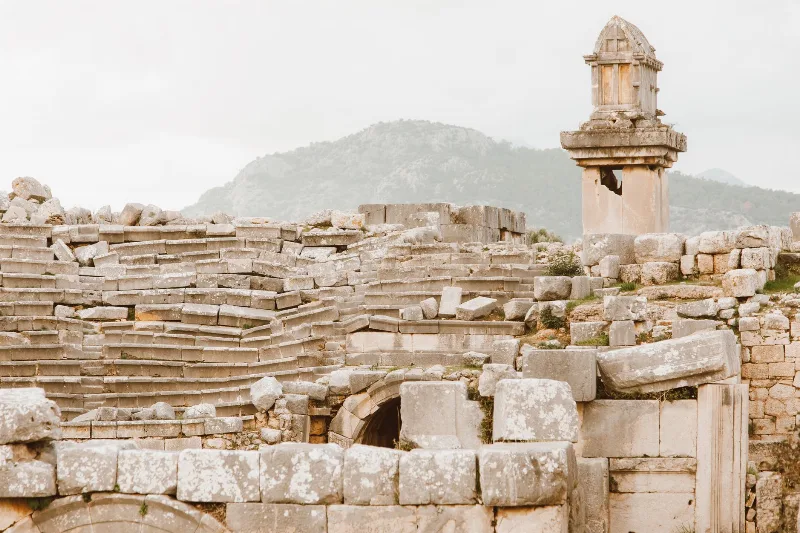
Xanthos
Xanthos is an ancient Lycian city in Antalya Province and a UNESCO World Heritage Site, known for its Lycian tombs, Roman theatre and role as a leading city of Lycia.
Explore →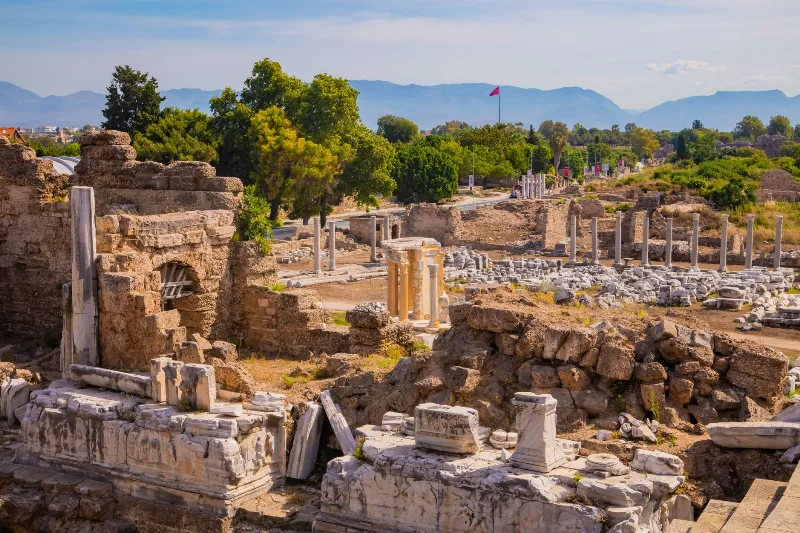
Phaselis
Phaselis is a Rhodian-founded port city on the eastern Lycian coast, where paved streets, agoras, baths and a small theatre stand among pines between three sheltered bays.
Explore →Related content
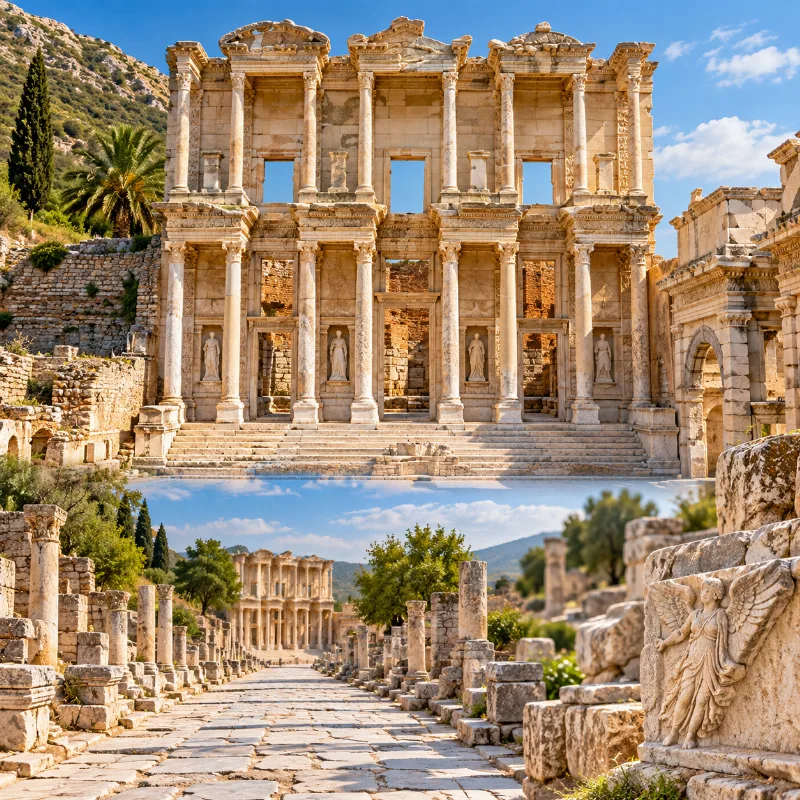
Ephesus
One of the best-preserved ancient cities in the Aegean, known for its monumental streets, library, theatre and Roman-era remains.
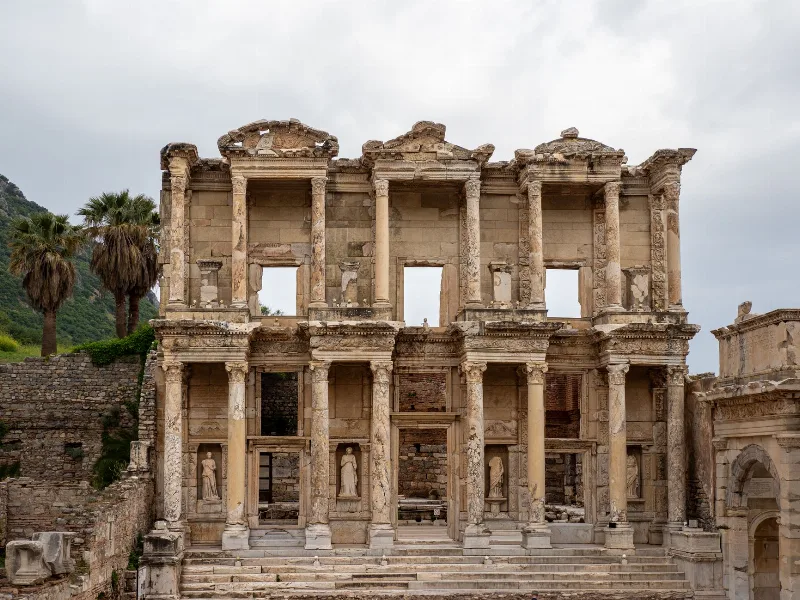
Ephesus
Ephesus is an ancient Greek and Roman city near Selçuk in İzmir Province, Türkiye, whose ruins include the Library of Celsus, the Great Theatre and the remains of the Temple of Artemis.
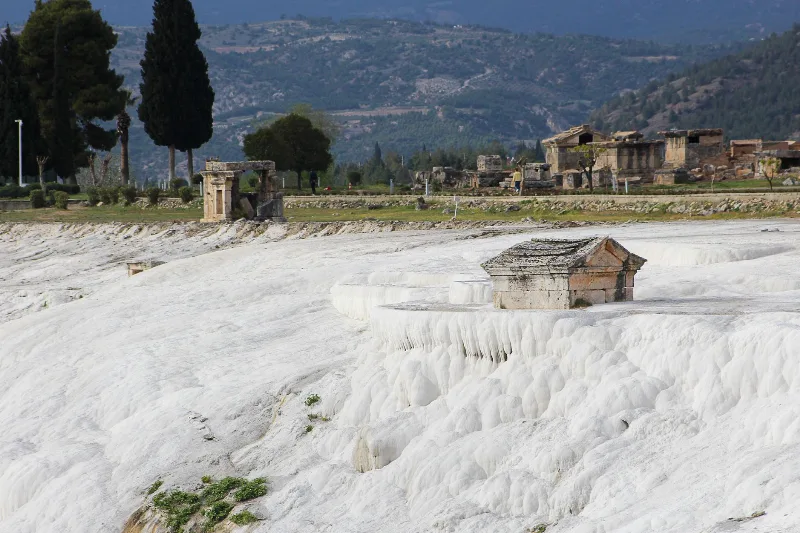
Pamukkale
Pamukkale, Türkiye'nin en etkileyici doğal harikalarından biri olarak bilinir, büyüleyici beyaz termal terasları ve antik Hierapolis kentiyle dikkat çeker.
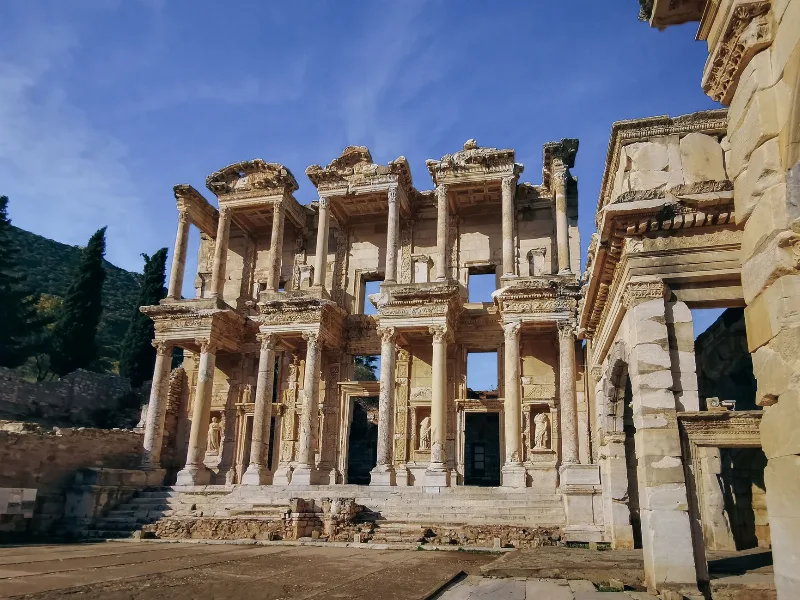
6-Day Aegean Ancient Cities Route
A six-day linear journey from Izmir to Denizli through the great ancient cities of the Aegean, linking Ephesus, Priene, Miletus, Didyma, Lake Bafa, Pamukkale, Laodicea and Aphrodisias in one coherent corridor.
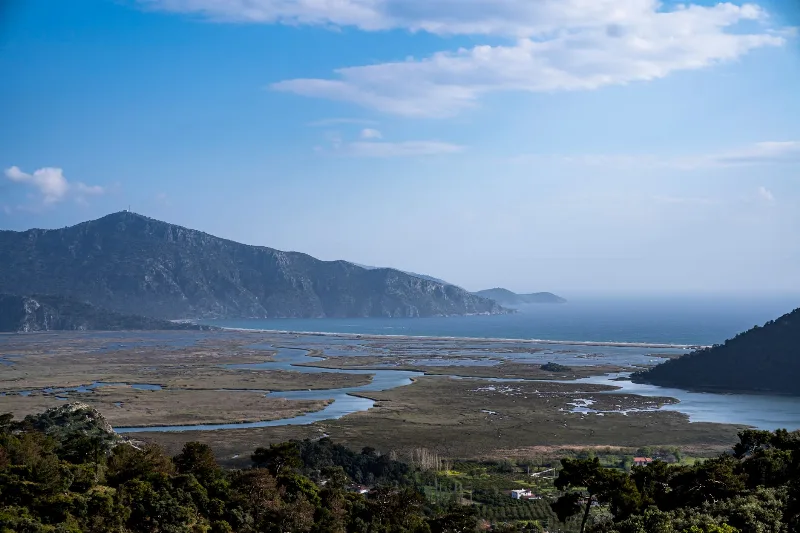
Muğla
Muğla is a captivating province in southwestern Türkiye, renowned for its stunning Aegean coastline and rich cultural heritage.
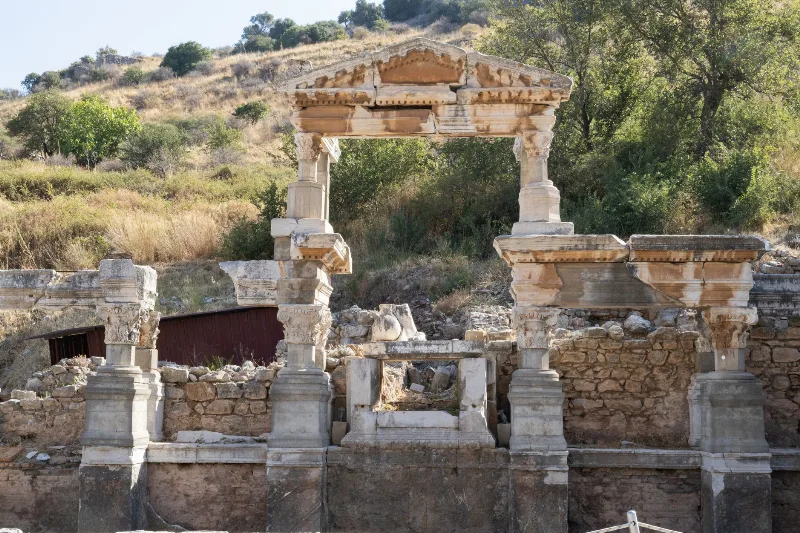
Cultural Heritage of Anatolia
Anatolia's cultural heritage spans millennia, blending ancient civilizations, architectural marvels, and living traditions across Türkiye.