
Izmir
Izmir is a major Aegean port city in western Türkiye, built around the Gulf of Izmir and known for its Kordon waterfront. It is the country's third-largest city and the main urban gateway to the ancient sites of Ephesus and Pergamon.
Izmir is a metropolitan city on the Aegean coast of western Türkiye and the administrative centre of Izmir Province. It is the country's third most populous city, after Istanbul and Ankara, and one of its principal ports. The urban area wraps around the head and eastern shore of the Gulf of Izmir, a deep inlet of the Aegean Sea, and the city is defined by its long waterfront. It is best known for the Kordon, the seafront promenade of the Alsancak district, and for its role as the main urban gateway to the ancient sites of Ephesus and Pergamon.
Where Izmir Sits on the Aegean
The Gulf of Izmir gives the city a sheltered natural harbour that has shaped its history as a trading centre for millennia. The gulf reaches inland from the Aegean and is enclosed by hills and low mountains, so the city spreads along the water and climbs the slopes behind it. The southern and eastern shores hold the historic core and the main commercial districts, while the northern shore is occupied by districts such as Karşıyaka and Bostanlı, linked to the centre by ferries and by road around the head of the bay. Beyond the gulf, the province extends across the fertile plains and river valleys of the Aegean region, with coastline both to the west and to the north.
From Smyrna to Izmir
The city's earlier identity was Smyrna, an ancient settlement whose remains are still visible within the modern urban area. The Roman Agora of Smyrna lies near the centre, and the hill of Kadifekale preserves the site of the ancient acropolis, overlooking the bay and the city below. Over the centuries the city passed through Roman, Byzantine, Seljuk and Ottoman rule, developing into a cosmopolitan Ottoman port with a large and diverse population. In the early twentieth century, a major fire destroyed much of the central city, and the modern city was rebuilt in the decades that followed. This layered past is part of what separates Izmir from other Turkish coastal cities.
Central Areas and Landmarks
Konak is the historic and civic heart of the city. Konak Square is dominated by the ornate clock tower, the symbol of Izmir, and the square connects to the waterfront and to the historic bazaar district of Kemeraltı, where narrow streets of shops and workshops surround old mosques and hans. The Roman Agora and the Kemeraltı area sit within walking distance of the square. Alsancak, to the north along the shore, is the best-known quarter of the modern city, known for its Ottoman-era houses, its lively streets and its position on the Kordon. Nearby Karataş contains the historic Asansör, an early twentieth-century public elevator that climbs the hillside. Bayraklı, north of the centre, is a modern district built over and around the site of ancient Smyrna. Kültürpark, a large central park, hosts the city's international fair and provides green space in the middle of the urban area.
The Kordon and the Bay
The Kordon runs along the Alsancak waterfront and is the image most people associate with Izmir: a broad promenade of palms, lawns and walkways following the curve of the bay. Ferries cross the gulf between the central quays, such as Konak and Pasaport, and the northern shore at Karşıyaka and Bostanlı, making the water an everyday part of life in the city rather than only a view. The waterfront continues along other central districts, and the bay remains the organising feature around which the city's neighbourhoods are arranged.
Districts Around the City
Izmir's metropolitan area is made up of many districts with distinct characters. Bornova and Buca lie inland to the east and south and are among the largest residential districts. Balçova, on the southern side of the gulf, is known for its thermal springs. Further south along the coast are Narlıdere and Güzelbahçe, while the northern edge of the bay opens toward Çiğli and the plains around Menemen. Each of these districts has its own identity, and together they form a city that extends well beyond the historic centre.
Ancient Sites in the Province
Izmir Province contains some of the most important archaeological sites in Türkiye. Ephesus, near the town of Selçuk to the south, is among the best-preserved ancient cities in the eastern Mediterranean, and Pergamon, at Bergama in the north, was a major Hellenistic and Roman centre. Both are separate destinations in their own right and are covered in detail elsewhere on this site; here they are best understood as part of the wider region that Izmir anchors. The village of Şirince, in the hills above Selçuk, is a well-known settlement in the same area.
Coastline and Coastal Towns
The province's coastline extends in both directions from the city. To the west lies Çeşme, a coastal district known for its shoreline and its castle, and to the north are towns such as Foça and Dikili, with their own harbours and beaches. On the southern side, Sığacık and the coast around Seferihisar offer quieter maritime settings. These coastal areas are distinct from the city itself, and their beaches and bays are treated separately, but they are closely tied to Izmir as weekend and seasonal destinations.
Climate and When to Visit
Izmir has a Mediterranean climate, with hot, dry summers and mild, wetter winters. The long summer season brings high temperatures and clear skies, while spring and autumn are generally the most comfortable periods for walking the city and exploring the surrounding region. Coastal areas are busiest in midsummer, when the Aegean shoreline draws both residents and visitors.
Getting There and the Wider Region
Izmir is served by an airport on the southern edge of the city and by a major port, and it is connected by road to the rest of the Aegean region and beyond. Ferries link the shores of the gulf within the city. Because of its central position on the Aegean coast, Izmir functions as a hub for the surrounding provinces, sitting between the northern Aegean towns and the southern coastal resorts. For anyone planning to explore western Türkiye, the city is both a destination in its own right and a practical base for the ancient sites, coastline and countryside around it.
Discover Food in Türkiye
All food →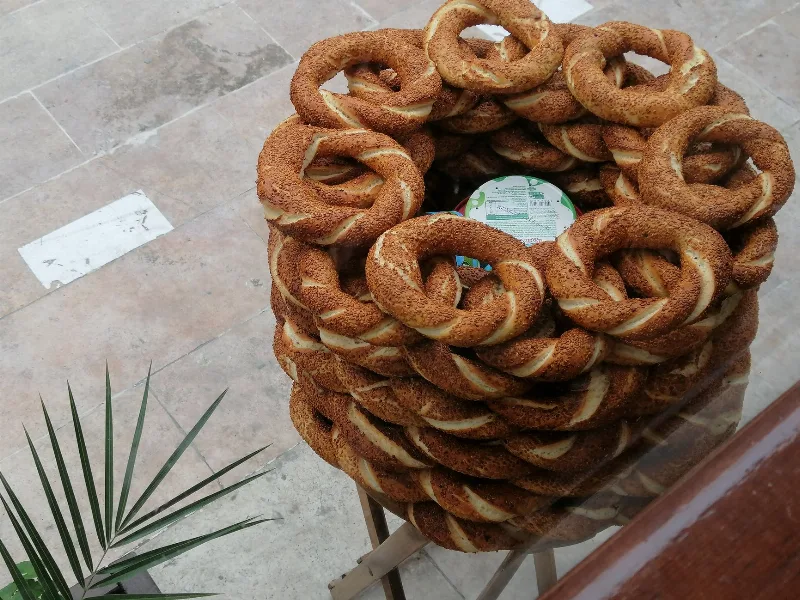
Simit
Simit is a ring-shaped Turkish bread covered in sesame seeds, strongly associated with Istanbul and sold as everyday street food. It is eaten fresh, most often with tea, and has a crisp crust around a chewy crumb.
Explore →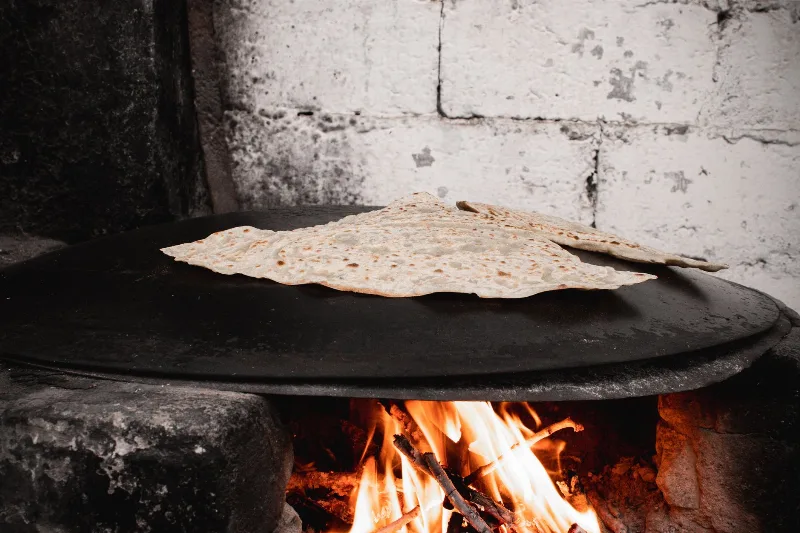
Bazlama
Bazlama is a soft, thick Turkish flatbread made from a leavened dough and cooked on a hot griddle. It is a staple of village baking across Anatolia, eaten warm with butter or used to wrap other foods.
Explore →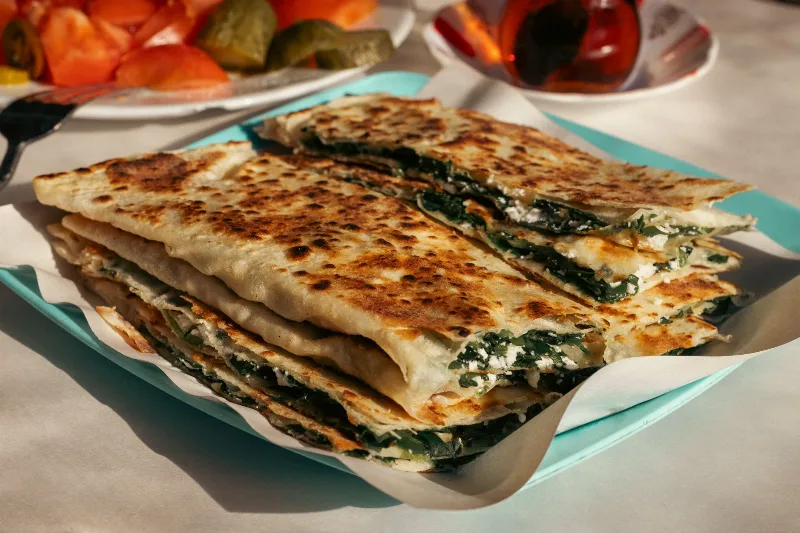
Gözleme
Gözleme is a thin, hand-rolled Anatolian flatbread folded around savory fillings such as cheese, spinach, or minced meat and cooked on a sac griddle. The article covers its regional variations, cooking method, texture, and traditional serving style.
Explore →Related content
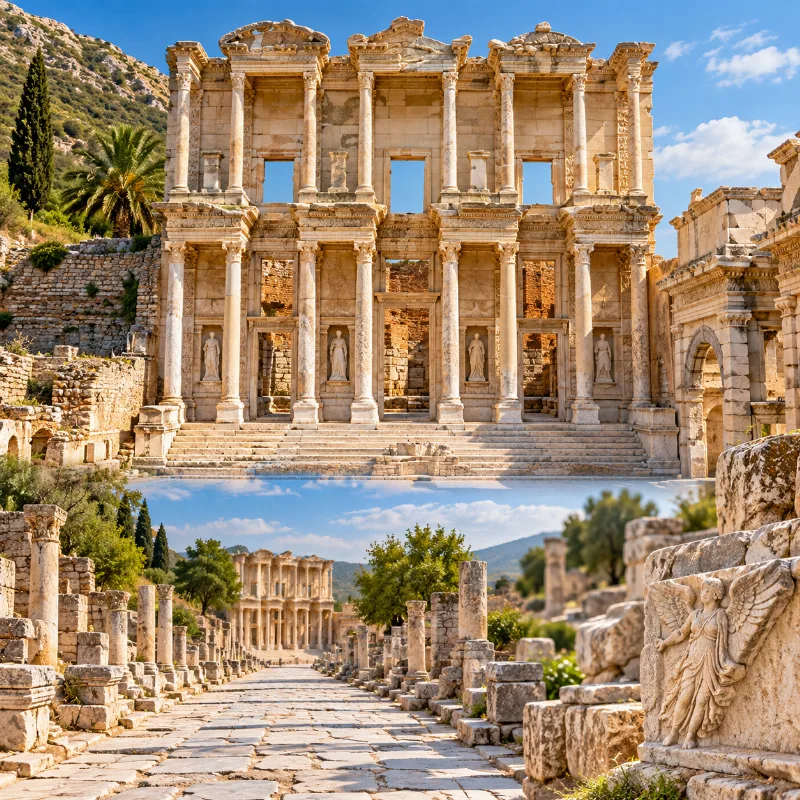
Ephesus
One of the best-preserved ancient cities in the Aegean, known for its monumental streets, library, theatre and Roman-era remains.
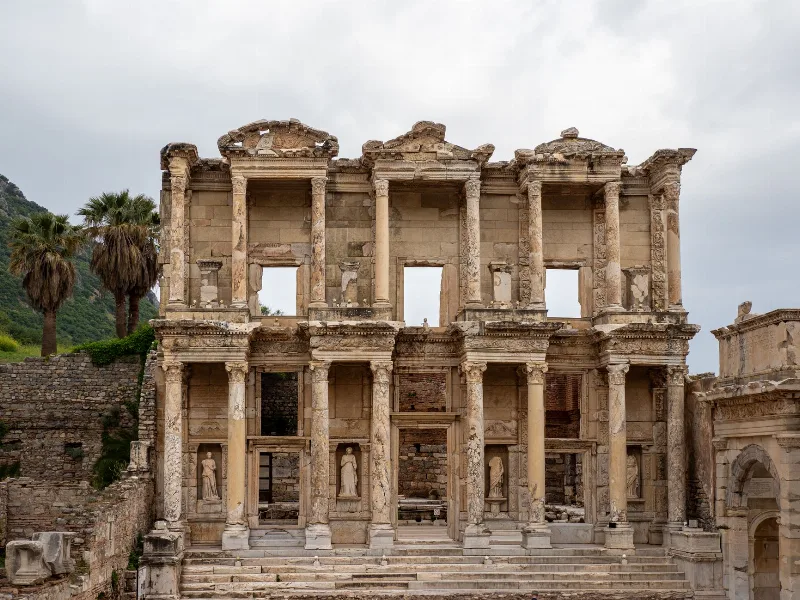
Ephesus
Ephesus is an ancient Greek and Roman city near Selçuk in İzmir Province, Türkiye, whose ruins include the Library of Celsus, the Great Theatre and the remains of the Temple of Artemis.
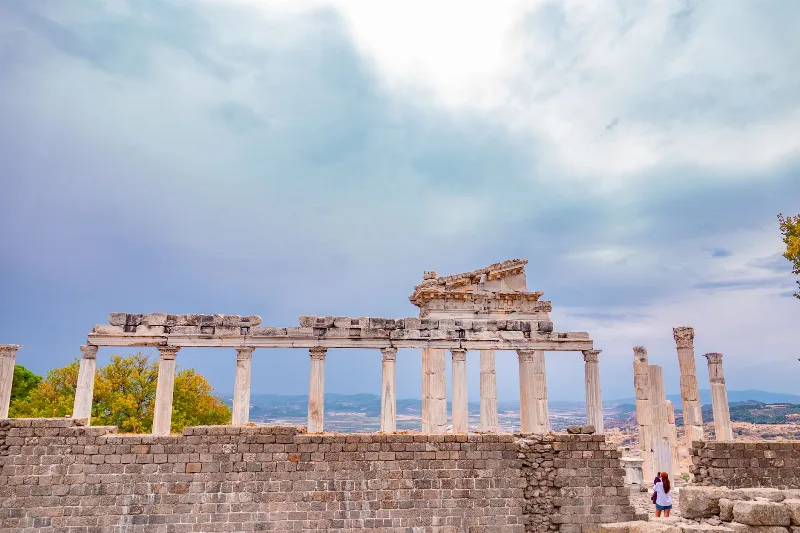
Pergamon
Pergamon was the Hellenistic capital of the Attalid dynasty in western Türkiye, built around a steep acropolis above the modern town of Bergama. Its Great Altar, theatre and Sanctuary of Asclepius make it one of the most important archaeological sites in Anatolia and a UNESCO World Heritage Site.
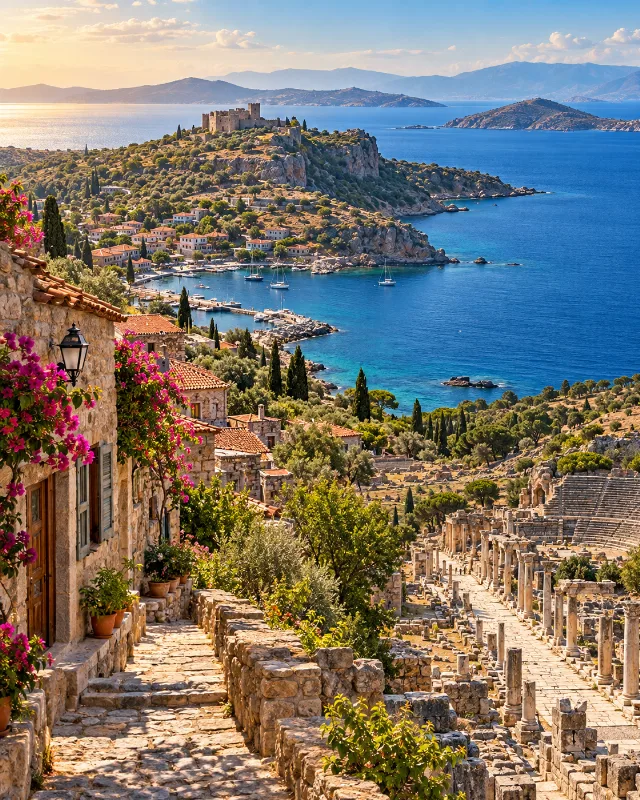
7-Day North Aegean to Ephesus Route
A seven-day southbound route through Troy, Assos, Bozcaada, Ayvalık, Bergama, İzmir and Ephesus, combining archaeology, coastal towns and Aegean culture.
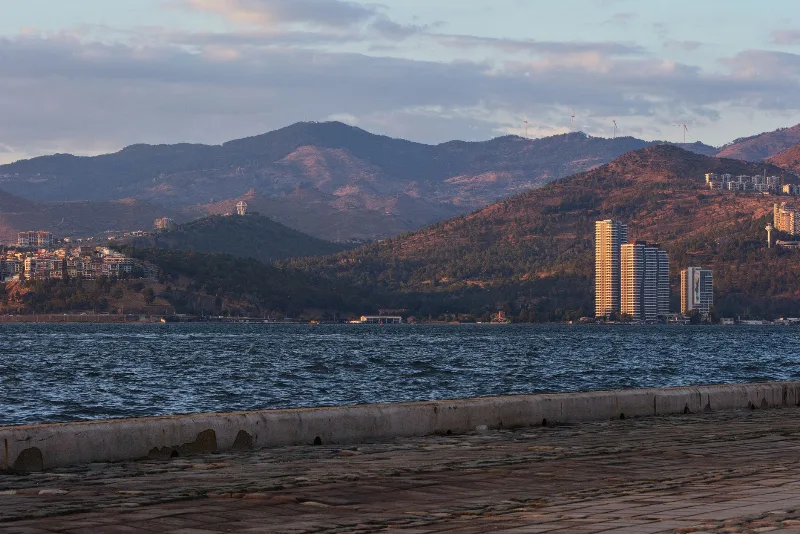
Izmir's Coastal Charm
İzmir is a western Turkish city built around a gulf of the Aegean Sea, where a long waterfront, nearby coves, ancient sites and Aegean cooking shape its coastal character.
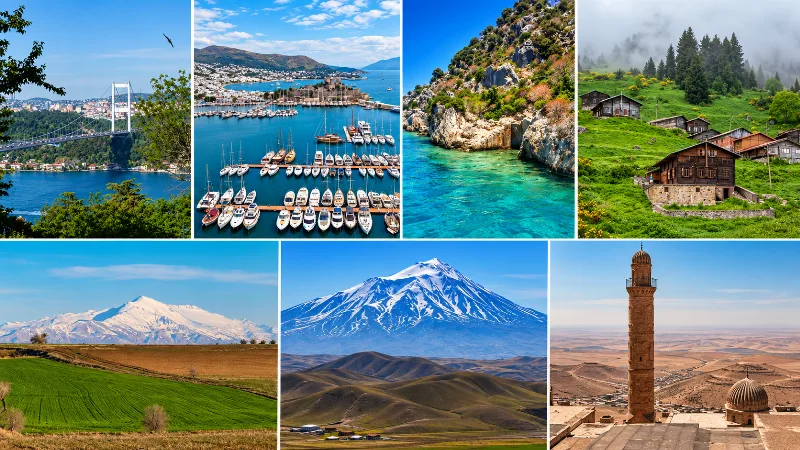
The Seven Geographical Regions of Turkey
An introduction to Turkey’s seven geographical regions and the landscapes, climates and cultural characteristics that distinguish them.