
Bursa Quinces
Bursa quinces are the fruit of the quince tree grown around the city of Bursa in northwestern Türkiye, where the province's temperate Marmara climate and fertile soils give the fruit its dense flesh, tart flavour and strong fragrance. The orchards of Bursa are among the places most closely identified with quince growing in the country.
Bursa quinces are the fruit of the quince tree (Cydonia oblonga), a pome-bearing species in the rose family that is grown in the orchards and garden plots around the city of Bursa in northwestern Türkiye. The quince is a hard, golden, intensely aromatic fruit that is rarely eaten raw and is prized instead for the way its firm flesh softens and sweetens when cooked. Bursa, the largest city of the Marmara region and the historic capital of the early Ottoman state, has a long-standing agricultural identity built on fruit growing, and quince is one of the crops most strongly associated with its surrounding countryside. The combination of a mild, transitional climate, deep valley soils and a dense tradition of orchard keeping explains why quince has remained a familiar sight in Bursa's rural landscape.
Why Quince Thrives Around Bursa
Bursa sits between the Sea of Marmara to the north and the slopes of Uludağ to the south, a position that gives the province a climate caught between the Mediterranean south and the more humid Black Sea coast. Summers are warm and long enough to ripen fruit, winters are cool but generally not severe at orchard elevations, and rainfall is spread across much of the year. This matters because the quince tree needs a period of winter chill to break dormancy, yet it also needs a warm, sunny growing season to develop its size, colour and aroma.
Quince is a tolerant tree that accepts a range of soils, but it performs best in deep, well-drained ground that holds moisture without becoming waterlogged. The alluvial soils of the Bursa plain and the lower valley floors around the city, fed by streams draining Uludağ, provide exactly this kind of ground. The fruit is also comparatively hardy, so it can be grown in mixed orchards and household gardens alongside other local fruit rather than only in specialised plantations. This flexibility helps explain its wide distribution across the province.
The Quince Tree and Its Growing Cycle
The quince is a small deciduous tree, usually reaching only a few metres in height, often with a slightly twisted, spreading habit. Its leaves are broad, dark green and softly downy underneath. In late spring it produces large, solitary flowers that open pale pink or white, standing out clearly against the new foliage. Because the tree tends to flower relatively late, its blossoms escape many of the spring frosts that can damage earlier-flowering fruit, which is part of why it is a dependable crop in areas with cool spring nights.
The fruit then develops slowly through the summer, swelling and firming as the weeks pass. Quinces are self-fertile, meaning a tree can set fruit on its own, though pollination by insects still improves the crop. Trees are long-lived and can remain productive for decades, which suits a tradition of family orchards passed down through generations.
Appearance, Aroma and Flavour
A ripe Bursa quince is typically large and heavy for its size, with a shape that ranges from round to slightly pear-like, sometimes with a gentle ribbing along the sides. The skin is covered in a fine greyish fuzz that is rubbed off when the fruit is handled and polished, revealing a golden-yellow surface underneath. The flesh is pale, dense and almost woody when raw, which is why biting into an uncooked quince is an unpleasant experience; it is hard, dry and sharply astringent.
What sets the quince apart is its perfume. Even at room temperature, a single fruit can scent an entire room with a sweet, floral, slightly spicy aroma that lingers long after harvest. When cooked, the astringency disappears and the flesh turns soft and pinkish, developing a tart, gently sweet flavour that is more complex than that of an apple or pear. These qualities are what make the quince a cooking fruit rather than a snacking one.
Harvest and Post-Harvest Handling
Quinces are gathered in autumn, once the fruit has reached full size and the down has begun to clear from the skin. Because the flesh bruises easily and the fruit can be damaged by rough handling, harvest is done by hand, with each quince lifted and twisted or cut from the branch rather than shaken loose. Pickers take care to avoid nicking the skin, since any break in the surface shortens storage life considerably.
Quince stores unusually well for a soft fruit, a fact that has always been part of its value. In the past, fruit was laid out in single layers in cool, dark cellars, often wrapped in paper or straw to prevent contact between individual fruits, and kept through the winter months. This ability to be held for weeks after picking allowed households to use quinces long after the autumn harvest had ended, extending their contribution to the kitchen well into the cold season.
Quince in the Bursa Kitchen and Local Food Culture
Across Bursa and the wider Marmara region, quince is above all a fruit for preserving and cooking. Its high pectin content makes it a natural choice for jam, jelly and marmalade, and a well-made quince jam is prized for its colour and its enduring, perfumed flavour. The fruit is also stewed into compotes and turned into thick, sliceable pastes and confections that keep for a long time. In winter kitchens, halves of quince are baked until tender and served as a simple dessert.
Quince also appears in savoury cooking, where its tartness cuts through richer flavours. Stuffed and baked quince, and quince cooked together with meat, are both traditional preparations in Turkish home cooking. These dishes show how a fruit too astringent to eat raw has been folded into the local table through slow cooking rather than through fresh consumption. The quince's place in Bursa's food culture is therefore tied to preservation and patience as much as to flavour.
Quince in the Region's Agricultural Landscape
Bursa's agriculture is broad, covering fruit, olives, vegetables and field crops across its plains and mountain foothills, and quince occupies a modest but persistent place within that mix. It is often grown in smaller orchards, garden plots and along field edges rather than in vast single-crop plantations, which keeps it tied to household and village economies as much as to larger markets. The fruit contributes to the province's reputation as a fruit-growing area and remains a recognisable element of the autumn scene around the city.
Because quince is hardy and tolerant of different conditions, it has never been confined to a single district. It is grown across Bursa province and is also cultivated in neighbouring parts of the Marmara region and elsewhere in Türkiye where similar temperate conditions and suitable soils exist. Even so, the association between quince and Bursa is strong enough that the province remains one of the first places many people think of when the fruit is mentioned.
What Sets Bursa Quince Apart
The distinctiveness of Bursa quinces lies less in a single dramatic feature than in the fit between the crop and its setting. A climate that provides both winter chill and a warm ripening season, soils that stay moist but drain well, and a long local habit of keeping orchards and preserving fruit have together produced a quince that is heavy, fragrant and well suited to cooking. For anyone trying to understand the fruit, the key point is that a quince is not simply an unusual apple; it is a crop whose value is revealed only after the harvest, in the preserving pan and the winter kitchen, and Bursa is one of the places where that relationship between land and fruit is most clearly visible.
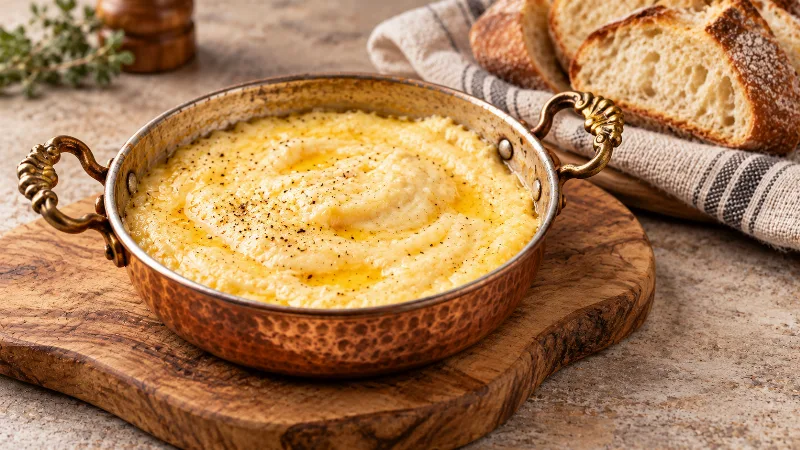
Kuymak
A warm Black Sea dish made with cornmeal, butter and melting local cheese.
Explore →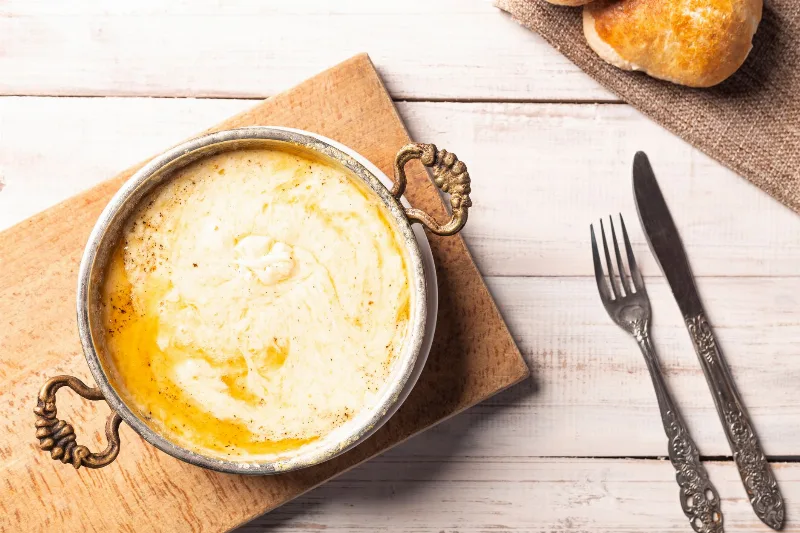
Kuymak
A soft, stretchy cornmeal dish cooked with butter and cheese, kuymak — also known as mıhlama — is a Black Sea breakfast staple served hot from the pan and eaten with bread.
Explore →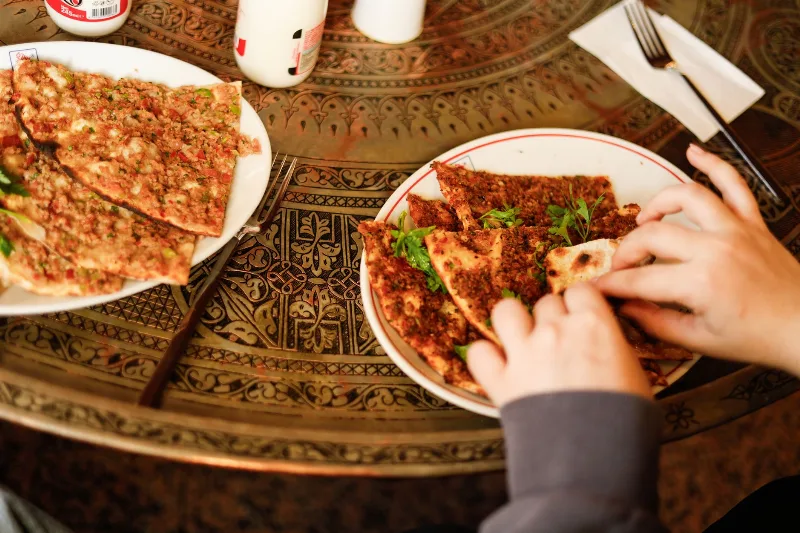
Lahmacun
Lahmacun is a paper-thin flatbread spread with a finely chopped, spiced meat topping and baked quickly at high heat. It is most closely associated with Şanlıurfa and Gaziantep, and is traditionally eaten rolled with lemon and parsley.
Explore →Related content
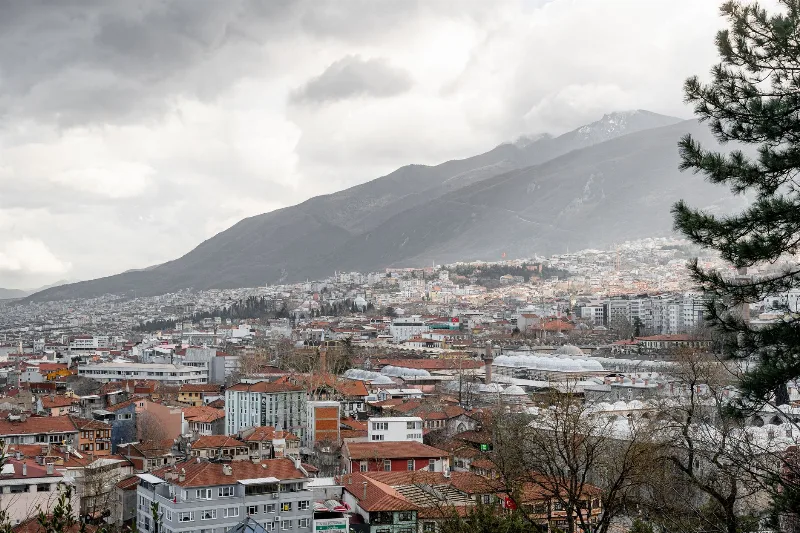
Bursa
Bursa is a major metropolitan city in northwestern Türkiye and the first great capital of the Ottoman Empire, known for its silk heritage, thermal springs and the mountain of Uludağ rising directly behind it.

3-Day Istanbul to Bursa Route
Explore the first Ottoman capital on a three-day route from Istanbul to Bursa, combining historic city sites, the mountain landscapes of Uludağ, and the preserved village of Cumalıkızık.
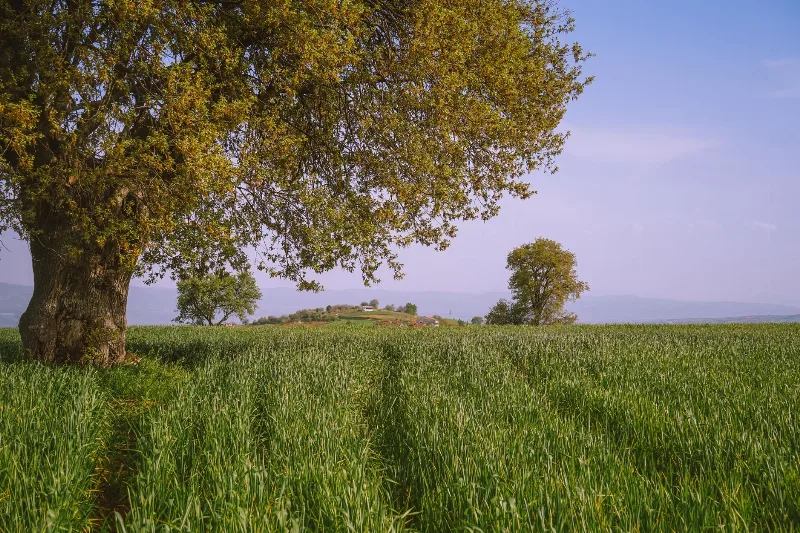
Bursa Chestnuts
Bursa chestnuts are sweet, starchy nuts grown on the sloping terrain of Bursa province in northwestern Türkiye, where a temperate climate supports chestnut trees and an autumn harvest.
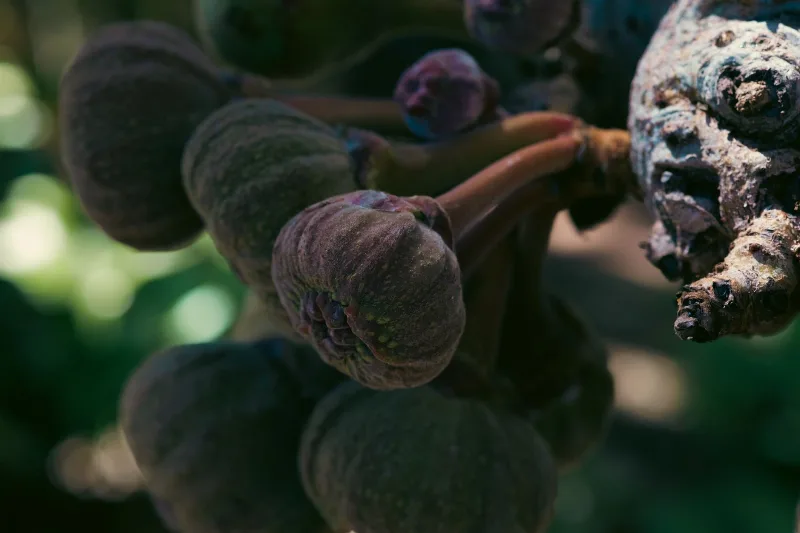
Bursa Figs
Bursa figs are the figs grown in northwestern Türkiye, where the sheltered Marmara climate and fertile soils around Bursa give the fruit its sweet flesh and soft skin, eaten fresh in late summer or dried for the winter months.
Misi Village Traditional Houses in Bursa
Misi Village, also known as Gümüştepe, is a rural settlement near Bursa where Ottoman-era houses, courtyards and narrow lanes reveal the character of traditional village architecture.

2-Day Bursa and Uludağ Route
A two-day route through Bursa's Ottoman monuments and up to the Uludağ National Park by cable car, combining city walking with mountain hiking or skiing.