
3-Day Çanakkale and Gallipoli Route
A three-day route based in Çanakkale that pairs the memorial landscapes of the Gallipoli Peninsula with the archaeological site of Troy and the southern Troad coast around Assos, using the Dardanelles ferry crossings as the link between two shores.
This three-day route begins and ends in Çanakkale, the city on the Asian shore of the Dardanelles, and uses it as a fixed base for exploring two very different landscapes on either side of the strait. Across the water lies the Gallipoli Peninsula, a memorial landscape of castles, coves and hills associated with the 1915 campaign. To the south, the Troad plain holds the archaeological site of Troy and continues down the Aegean coast to the hilltop village of Behramkale, known as Assos, with its temple and old harbour. The journey is historic and archaeological in character, it is linear within each day but circular overall, and it works best with a car, since the peninsula and the southern coast are only loosely served by public transport and the ferry crossings are an essential part of the route rather than an optional extra.
Day 1: Çanakkale City and the Dardanelles Waterfront
The first day is deliberately light and stays entirely within the city, because the next two days depend on understanding the geography you are about to cross. Start on the Kordon, the waterfront promenade that follows the strait, where the current of the Dardanelles runs visibly past the ferries and the shipping traffic heading for the Sea of Marmara. The oversized wooden horse that stands near the ferry pier — a leftover from a film production — is an easy first orientation point and a natural introduction to the Troy story that comes later in the route.
From there, walk to Çimenlik Castle, the Ottoman fortification guarding the narrowest part of the strait, which now houses the naval museum and displays the minefield and defence arrangements of the 1915 campaign. Its counterpart across the water at Kilitbahir is visible from the walls, which is a useful preview of the following day. Behind the waterfront, the old market streets of the city centre are worth an hour of wandering, and the archaeological museum gathers finds from Troy and from the wider region, giving context that makes the site itself far more legible.
Spend the evening looking over the strait rather than travelling further. Çanakkale is a university city with a lively street life, and the regional produce of the surrounding countryside — olives and olive oil from the Troad, cheese, and fish from the strait — is part of the character of the place. Keep the day short, because tomorrow requires an early ferry and a long loop on the European side.
Day 2: The Gallipoli Peninsula, from Kilitbahir to Cape Helles and the Anzac Sector
Take one of the short crossings from Çanakkale to the peninsula, either to Kilitbahir directly below the castle or to Eceabat further north. Both land you within the historic battlefield area, and both are genuine working ferry routes rather than tourist services, so check the current timetable locally the day before rather than relying on a plan made in advance.
From the landing point, head south along the strait. Kilitbahir Castle, with its distinctive round tower, sits almost opposite Çanakkale and can be visited briefly before you continue. The road then runs down the spine of the peninsula through Morto Bay to Seddülbahir, at the tip of Cape Helles, where the landscape opens out to the Aegean and where the memorials of the British and French landings stand. The contrast between the calm strait side and the exposed ocean side becomes clear within a single morning.
Turn north up the Aegean coast, which is the heart of the Anzac sector. Anzac Cove and the ridges above it — Lone Pine, the Nek and Chunuk Bair, with the Ottoman memorials and the 57th Regiment monument nearby — form a compact and deeply moving area that repays slow walking rather than driving past. The Kabatepe museum near the coast road adds context. Because the sites are scattered across hills and coves, this is a day for short drives broken by walking, and the winding roads should be given plenty of time. End the loop at Eceabat and cross back to Çanakkale in the evening.
Day 3: Troy and the Southern Troad to Assos
Leave Çanakkale heading south across the plain toward Tevfikiye, the village beside the archaeological site of Troy. Plan the morning here. The mound with its layered city walls, the reconstructed wooden horse at the entrance, and the remains of the sanctuary and the defensive circuit require at least a couple of hours on foot, and the site is exposed, with little shade. Visiting Troy after the museum in Çanakkale on day one is what makes the sequence sensible, since the finds and the ruins explain each other.
Continue south through the Troad rather than turning back. The road passes small agricultural towns and olive groves, and near the coast at Geyikli there is a ferry link to Bozcaada, a walled island town that is a fine extension if you have an extra day, but which cannot realistically be folded into this one. Keep going instead to Behramkale, the hilltop village above the ancient city of Assos. The Temple of Athena on the summit looks straight across the Aegean toward Lesbos, and a steep path leads down through the old walls to the small harbour with its stone houses.
Return north to Çanakkale in the late afternoon, or end the route here if you are continuing south along the coast toward Ayvalık and the northern Aegean. The drive back is straightforward but not short, so leave the coast before dark.
Route Practicalities
Spring and autumn are the most comfortable seasons for this route: the archaeological sites and the peninsula hills offer almost no shade, and summer heat makes the walking sections on day two and day three harder than they look. A car is the most practical way to cover the peninsula loop and the Troad coast, and the Dardanelles crossings are an unavoidable part of the plan, with weather occasionally disrupting them. Gallipoli is a place of commemoration, so allow quiet and time at the cemeteries and memorials rather than treating them as photo stops, and note that the peninsula and the southern coast are rural, with facilities concentrated in Eceabat, Çanakkale and Behramkale.
Remarkable Places
See all places →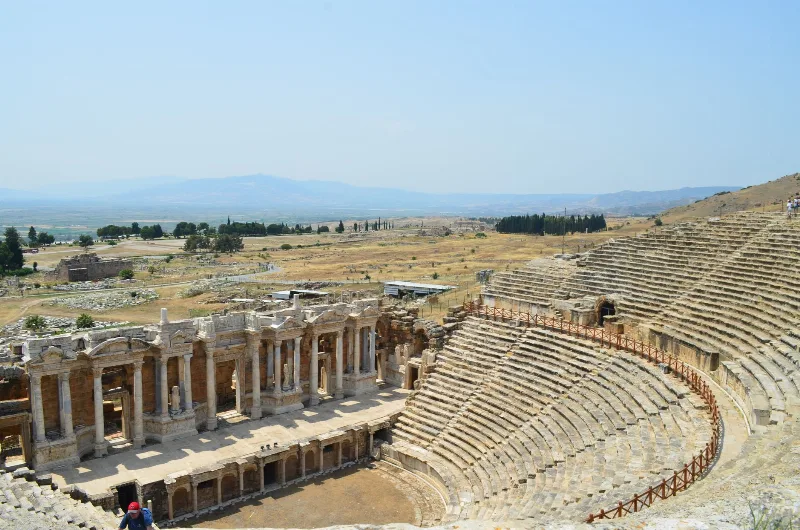
Letoon
Letoon is a Lycian sanctuary near Xanthos in Muğla Province, dedicated to Leto, Artemis and Apollo. Its three temples, theatre and trilingual inscription make it one of southwestern Turkey’s most significant archaeological sites.
Explore →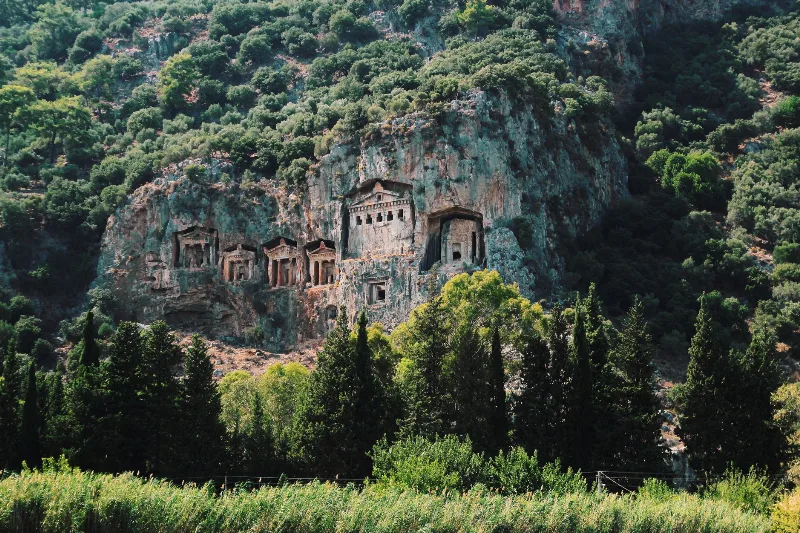
Kaunos
Kaunos is an ancient Carian city on the Dalyan River in Muğla Province, known for its temple-style rock-cut tombs and the extensive ruins of a harbour that silted up centuries ago.
Explore →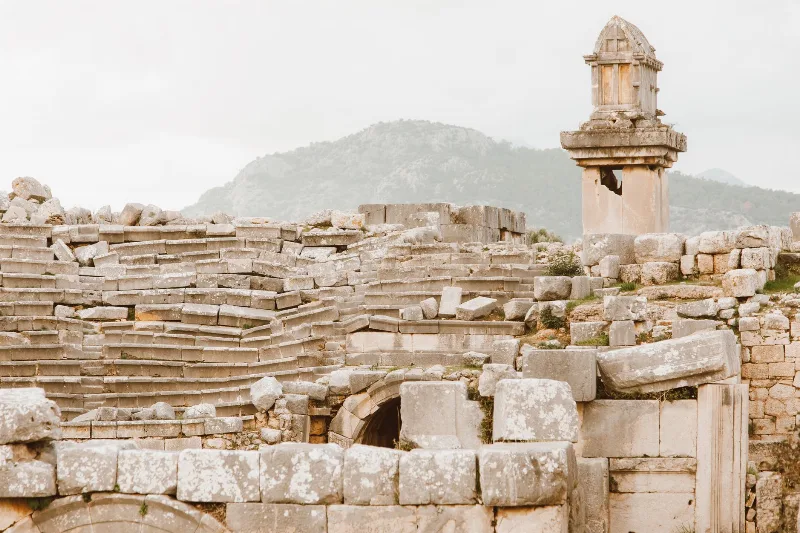
Xanthos
Xanthos is an ancient Lycian city in Antalya Province and a UNESCO World Heritage Site, known for its Lycian tombs, Roman theatre and role as a leading city of Lycia.
Explore →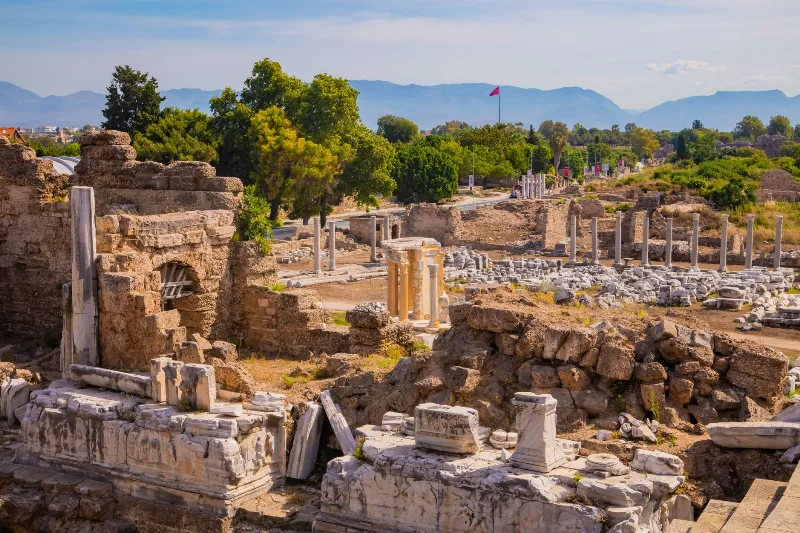
Phaselis
Phaselis is a Rhodian-founded port city on the eastern Lycian coast, where paved streets, agoras, baths and a small theatre stand among pines between three sheltered bays.
Explore →Related content
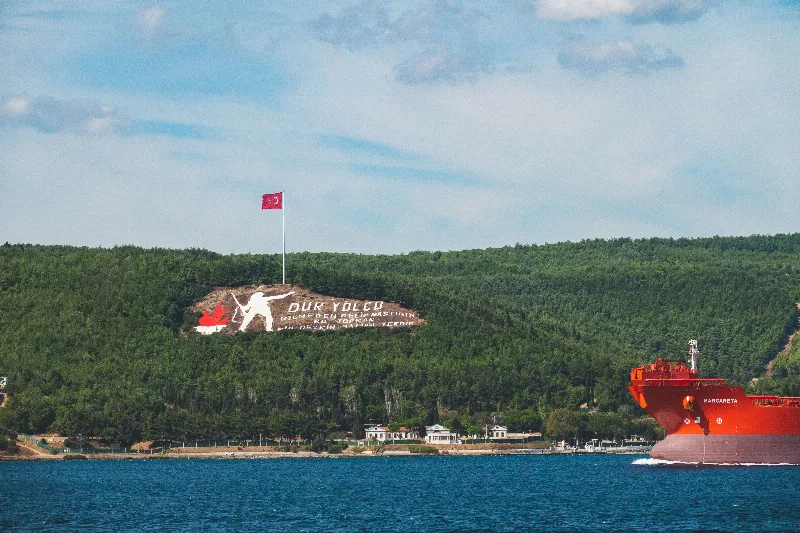
Çanakkale
Çanakkale is a northwestern Turkish city on the Asian shore of the Dardanelles, the strait separating Europe from Asia. It is the administrative centre of a province that includes the Gallipoli battlefields and the archaeological site of Troy.
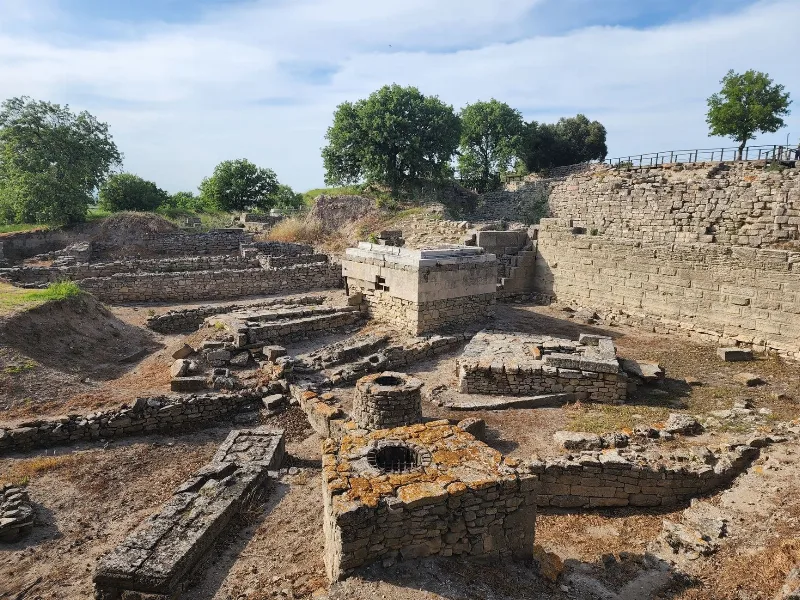
Troy
Troy is the excavated mound of Hisarlık in Çanakkale Province, Türkiye, inhabited from the Early Bronze Age to the Roman era and linked with the Ilion of Homer's Iliad. Its nine settlement layers and surviving Bronze Age fortifications make it one of the most important stratified sites in the eastern Mediterranean.
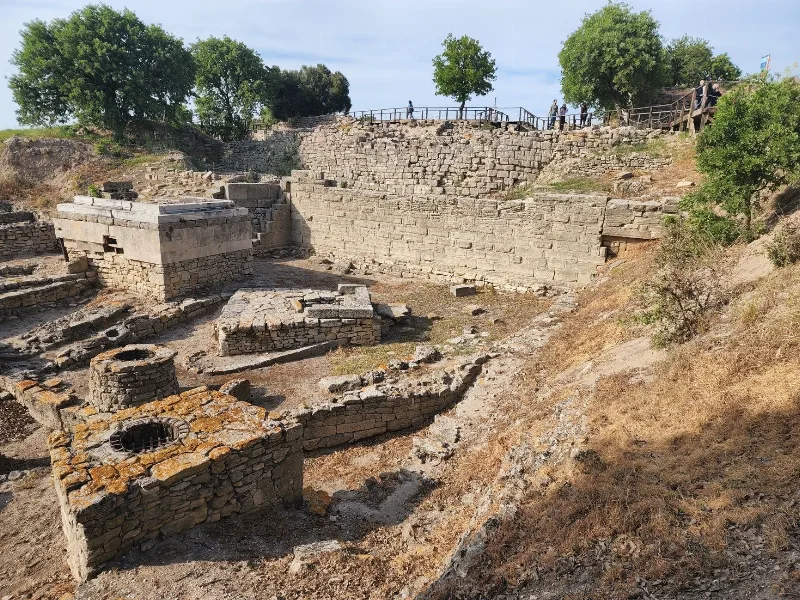
Troy
Troy is an ancient city on the Hisarlık mound in Çanakkale province, northwestern Turkey, known from Homer's Iliad and excavated into nine settlement layers. It is a UNESCO World Heritage Site with a large modern wooden horse near its entrance.
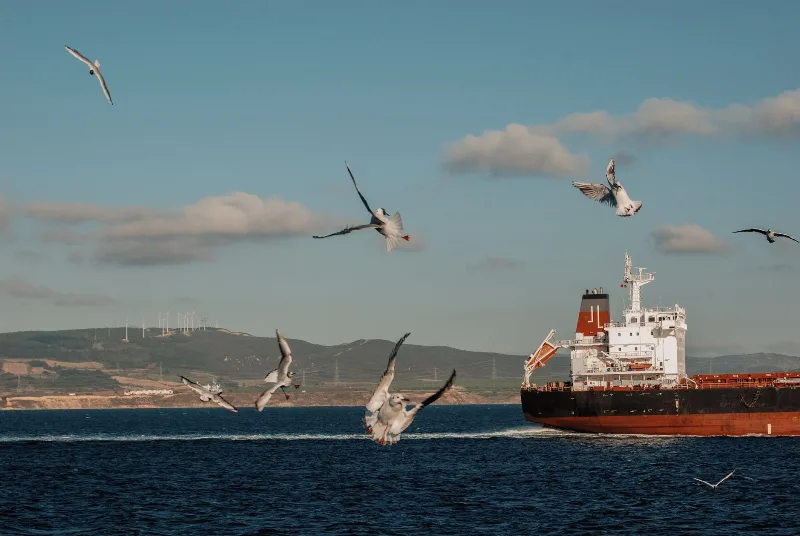
Çanakkale and the Dardanelles Strait
A short guide to Çanakkale and the Dardanelles Strait, covering the geography, ancient sites, island villages and local food of northwestern Türkiye.
4-Day Marmara Sea Route
A four-day loop around the Sea of Marmara that starts in Istanbul, crosses to Yalova, travels inland to Bursa and finishes among the ruins of Troy and the memorials of the Gallipoli peninsula. The itinerary is built around short, logical daily drives rather than long transfers.
3-Day Assos and Troy Route
A three-day route through Turkey's Troad region, starting in Çanakkale and finishing at the clifftop village and ancient harbour of Assos, with Troy and the lesser-known classical ruins in between.