
Troy
Troy is an ancient city on the Hisarlık mound in Çanakkale province, northwestern Turkey, known from Homer's Iliad and excavated into nine settlement layers. It is a UNESCO World Heritage Site with a large modern wooden horse near its entrance.
Troy is an ancient city on the Hisarlık mound in Çanakkale province, in the northwestern corner of Turkey, beside the village of Tevfikiye and roughly 30 kilometres south of the city of Çanakkale. It sits in the historical region known as the Troad, close to the Dardanelles — the strait the ancient Greeks called the Hellespont. Troy is best known as the city of the Trojan War in Homer's Iliad, and systematic excavation there since the late nineteenth century has produced one of the longest continuous archaeological sequences in the Aegean world. UNESCO added the site to the World Heritage List in 1998.
Where Troy stands
The ruins occupy a low, broad mound called Hisarlık, which means something like "place of the fortress" in Turkish. The mound is artificial: it grew over millennia as one settlement after another was built, destroyed, levelled and rebuilt on almost exactly the same spot. Because each generation raised its buildings on the debris of the last, the hill preserves a compressed vertical history rather than a single horizon.
The surrounding landscape is a coastal plain that has changed since antiquity. Rivers such as the Scamander (today the Karamenderes) and the Simoeis have carried sediment down from the hills, pushing the shoreline away from the mound over time. The Dardanelles now lies several kilometres to the north, so the sea does not lap the foot of the citadel as it once did. The plain is fertile and flat, bordered by low ridges, which is part of why the position was worth defending for so long.
Nine cities on one hill
Archaeologists divide the mound into nine principal settlement levels, numbered Troy I to Troy IX, with many sub-phases inside them. The sequence begins in the Early Bronze Age, around 3000 BC, and continues, with gaps, into the Roman period.
Troy I and Troy II belong to an early Anatolian Bronze Age culture, with Troy II notable for its treasures of gold and metalwork. Troy VI, dating to roughly the middle of the second millennium BC, is the layer many scholars associate with a powerful, wealthy citadel: it has substantial sloping walls and evidence of a wide culture contact with the Mycenaean world. Troy VIIa, dated to around 1300–1180 BC, shows signs of destruction and is often linked to the war described in epic. Later levels include Greek and Hellenistic phases, and the uppermost level, Troy IX, corresponds to the Roman city of Ilion, which honoured its legendary past with monuments of its own.
The Trojan War and the Homeric question
The Iliad tells of a Greek expedition against Troy over Helen, and of the quarrel between Achilles and Agamemnon in the war's tenth year. For centuries readers treated the story as literature rather than history. Excavation changed that by proving that a real, fortified, repeatedly destroyed city had stood at Hisarlık for thousands of years.
Whether one specific destruction layer is the Homeric Troy remains debated. The city in the poem is a literary creation as much as a remembered place, and the archaeological evidence does not name kings or confirm a ten-year siege. What the mound does show is a strategically placed stronghold with a violent history, which is enough to explain why the legend attached itself here and why ancient Ilion promoted the connection.
What you can see at Hisarlık
The site is an open-air ruin rather than a reconstructed city, so visitors read it through walls, ramps and foundations rather than standing buildings. Among the features travellers commonly walk past are:
- The massive defensive walls of Troy VI, including a sloping stone rampart and a tower section, which give the clearest sense of the citadel's scale.
- The remains of the earlier Troy II and its megaron-style structures, associated with the site's Bronze Age wealth.
- A Roman-era sanctuary area and the traces of a theatre and council building from the period when the city was known as Ilion.
- A raised walkway and viewing points that let you look down over several layers at once, which helps make sense of the stratigraphy.
Because the layers are stacked, the site can be confusing on first view. Signage and a marked route guide visitors through the mound, and following them in order makes the sequence easier to understand.
The wooden horse at the entrance
A large modern wooden horse stands near the entrance area and has become the site's most photographed feature. It is a replica rather than an ancient object, built to represent the horse of the legend and to give visitors a tangible image of the story. A separate horse constructed for a film production is displayed in Çanakkale itself. Neither is archaeological, and it is worth keeping that distinction in mind when comparing the legend with the excavated remains.
The Troy Museum
The Troy Museum opened in 2018 near the site, in the Tevfikiye area, and holds finds from the excavations. Its collection includes pottery, metalwork, small figurines, coins and architectural pieces spanning the mound's long sequence, and it provides context that the open-air ruins alone cannot. Visiting the museum alongside the mound is the most effective way to connect the objects with the layers they came from.
Visiting Troy: access and terrain
Troy is reached by road from Çanakkale, a straightforward drive through the Troad countryside, and the site can also be approached by local transport from the city. Once inside, expect uneven ground: dirt and gravel paths, short slopes, steps in places and exposed areas with little shade. Comfortable shoes matter more than anything else. The route is walkable for most visitors, but some sections are rough, and there are few places to sit.
Troy is operated as an open-air site with a ticket office, and the associated museum has its own entrance arrangements. Opening times and prices change with the season, so it is sensible to confirm current details locally before setting out.
Weather and when to visit
The Troad has a Mediterranean-style climate with hot, dry summers and mild, wetter winters. Midsummer afternoons can be uncomfortably hot on the exposed mound, and shade is limited. Spring and autumn generally offer the most comfortable conditions for walking the site, with softer light and moderate temperatures. Winter visits are quieter, though rain can make paths muddy. Mornings tend to be cooler and less crowded throughout the warmer months.
Around Troy and the Troad
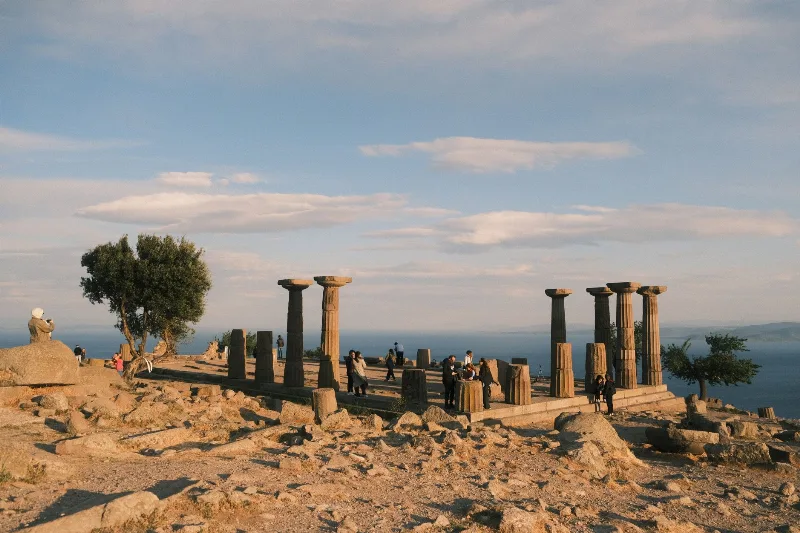
The wider region rewards a longer stay. Çanakkale, on the Dardanelles, is the main base and has its own archaeological museum and waterfront. To the north across the strait lies the Gallipoli peninsula, a separate historic landscape. To the south, the Troad holds further ancient sites and shoreline, including Assos at Behramkale, known for its hilltop temple, and the island of Bozcaada further out in the Aegean. Inland, the forested slopes of Mount Ida — today Kaz Dağı — rise above the plain. Together these places form a natural route for anyone tracing the history of northwestern Anatolia beyond Troy itself.
Related content
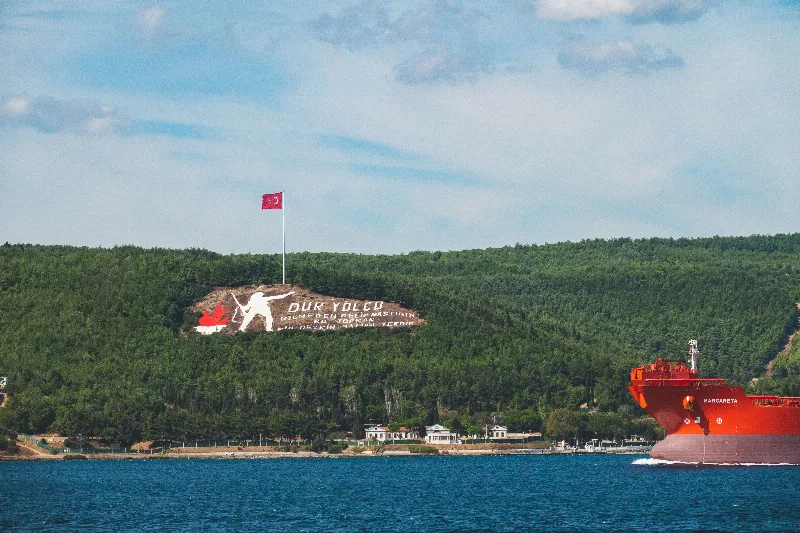
Çanakkale
Çanakkale is a northwestern Turkish city on the Asian shore of the Dardanelles, the strait separating Europe from Asia. It is the administrative centre of a province that includes the Gallipoli battlefields and the archaeological site of Troy.
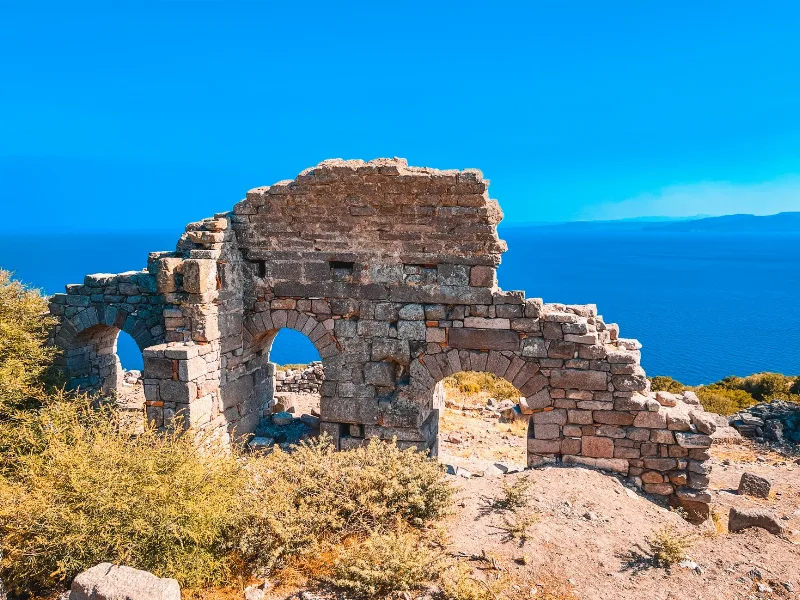
Assos
Assos is an ancient city and hilltop village in Çanakkale province, Türkiye, known for its Temple of Athena and for the years the philosopher Aristotle spent here. The modern settlement, Behramkale, sits above the ruins and an old harbour on the Aegean coast facing Lesbos.
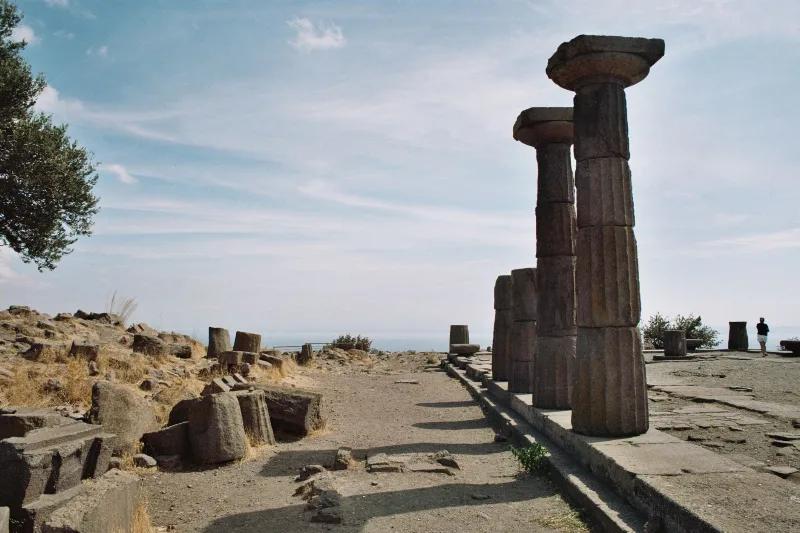
Assos
The ancient Greek city of Assos in Çanakkale, Türkiye, is defined by its sixth-century BC Temple of Athena, kilometres of surviving walls and a small Aegean harbour. Here is how the site is arranged and what a visit involves.
3-Day Assos and Troy Route
A three-day route through Turkey's Troad region, starting in Çanakkale and finishing at the clifftop village and ancient harbour of Assos, with Troy and the lesser-known classical ruins in between.
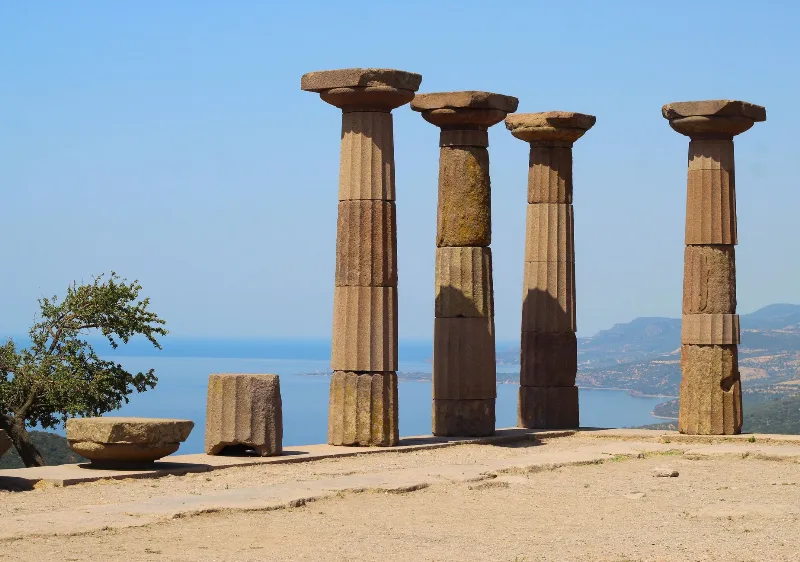
3-Day Çanakkale and Gallipoli Route
A three-day route based in Çanakkale that pairs the memorial landscapes of the Gallipoli Peninsula with the archaeological site of Troy and the southern Troad coast around Assos, using the Dardanelles ferry crossings as the link between two shores.
7-Day North Aegean to Ephesus Route
A seven-day southbound route through Troy, Assos, Bozcaada, Ayvalık, Bergama, İzmir and Ephesus, combining archaeology, coastal towns and Aegean culture.