
2-Day Istanbul Bosphorus Route
A two-day Bosphorus route that starts on Istanbul's European shore at Ortaköy and Bebek, includes a ferry cruise up the strait, then crosses to the Asian side for Kadıköy and Üsküdar.
This two-day Bosphorus route runs from the European shore of Istanbul to the Asian side, starting around the Beşiktaş and Ortaköy area and finishing on the Asian waterfront toward Anadolu Hisarı. Across the two days it combines waterfront walking on the European side, a ferry cruise along the strait, and the contrasting districts of Kadıköy and Üsküdar on the Asian side. The journey works best on foot, with public ferries and local transport filling the gaps, because the Bosphorus is a working waterway and its two shores are connected by regular crossings rather than by a single continuous road. It is a linear route rather than a loop: you move steadily northward along the water and cross once from Europe to Asia.
Day 1: Ortaköy, Bebek and the Northern Bosphorus
Day 1 begins on the European shore in the Beşiktaş and Ortaköy area, where the waterfront squares, the ornate Ortaköy Mosque and its low stone quay set the tone for the whole trip. This first stretch is about settling into the rhythm of the strait: the tide-like flow of ferries, the layered skyline on both banks, and the sense that the water, not the road, is the real spine of the city. Ortaköy is a compact district, so it makes sense to explore it slowly before continuing north.
From Ortaköy the shoreline path climbs gently through a series of coves and neighbourhoods toward Bebek. Bebek sits in a small bay with a curved waterfront, and it is one of the clearest examples of how the Bosphorus combines daily life with a scenic landscape. The walk between the two districts is short in distance but rich in texture, passing schools, small parks and the steep wooded slopes that drop down to the water. As a Cities & Districts stop, Bebek explains why the European shore feels more residential than monumental in this section.
Beyond Bebek the channel narrows, and the Rumeli Hisarı fortress marks one of the most recognisable historic points on the route. Its towers rise directly from the water, a reminder of the strait's strategic importance in the centuries when control of the Bosphorus meant control of the sea route between the Mediterranean and the Black Sea. A little further north, Emirgan opens into a greener, more relaxed stretch, with its well-known park and hillside views across to the opposite shore. This is a good place to slow down before the afternoon cruise.
In the afternoon, board a public ferry at one of the Bosphorus piers and travel north along the strait. The cruise is the heart of Day 1: it lets you see the full sweep of the waterway, from the dense central city to the quieter northern reaches near the Black Sea entrance, passing Sarıyer and continuing toward the village-like atmosphere of Anadolu Kavağı. The ferry is genuinely the best way to understand the geography, because the same shoreline that looks flat from the road reveals its bays, hills and changing character from the deck.
The day ends back on the European side near Beşiktaş, which is also the natural departure point for the crossing on the following morning.
Day 2: Kadıköy, Üsküdar and the Asian Shore
Day 2 opens with a morning ferry across the strait to the Asian side. The crossing itself is part of the experience, offering a wide view back toward the European skyline and a first look at the low hills of the eastern shore. Arriving in Kadıköy sets up a very different mood from Day 1: this is a busy, everyday district with a large market area, long pedestrian streets and a ferry terminal that feeds the whole neighbourhood.
From Kadıköy, travel north along the coast toward Üsküdar. The two districts sit close together along the same shore, so the movement between them is a natural continuation rather than a separate trip. Üsküdar has a historic core of its own, with waterfront squares, old mosques and a calm promenade looking back across the water toward the European side. Together, Kadıköy and Üsküdar show the Asian shore as a place with its own identity, not simply a mirror of the opposite bank.
Once in Üsküdar, follow the Asian waterfront north through Kuzguncuk and Beylerbeyi. Kuzguncuk is a small, low-rise neighbourhood with narrow streets and a strong village feel, one of the Villages & Small Towns moments inside the city. Beylerbeyi continues the waterfront line, where grand historic buildings stand close to the shore and the strait begins to curve more sharply. These stops fit together because they sit in sequence along the same coastal road and promenade, each one slightly quieter than the last.
Continue north to Çengelköy and on toward Anadolu Hisarı, where the route finishes. This final stretch is calmer, with small piers, hillside gardens and a sense of leaving the dense city behind. Nature and Remarkable Places both come into focus here: the wooded slopes above the water, the widening channel, and the historic fortress on the Asian bank that balances the Rumeli Hisarı seen on Day 1.
When to Go and How the Route Works
Spring and autumn are the most comfortable seasons for this route, when walking along the waterfront is pleasant and the ferry crossings offer clear views. Summer is warmer and busier, while winter can bring wind and rain off the strait, though the ferries continue to run and the neighbourhoods remain open. The route is linear, running roughly northward on both days, and travellers should expect a mix of walking and short local journeys rather than a single long drive.
Because the Bosphorus has few road connections between its two shores, the ferry is essential rather than optional, and the itinerary is built around crossing once. The Asian side is generally hillier and greener than the flat central waterfront of the European side, so Day 2 involves a little more up-and-down walking. Treated as a whole, the two days work well as a compact city-and-water journey that can be shortened by skipping the northern ferry cruise or extended by adding more time in Kadıköy's market streets or the quiet coves of Bebek.
Remarkable Places
See all places →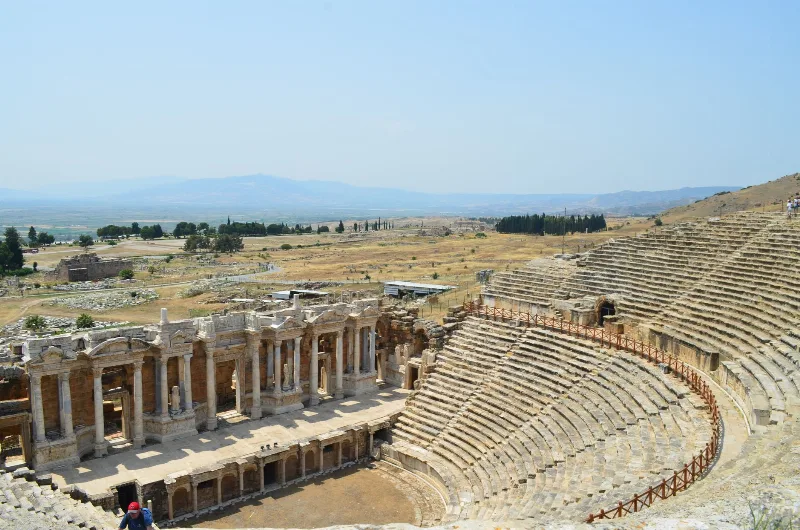
Letoon
Letoon is a Lycian sanctuary near Xanthos in Muğla Province, dedicated to Leto, Artemis and Apollo. Its three temples, theatre and trilingual inscription make it one of southwestern Turkey’s most significant archaeological sites.
Explore →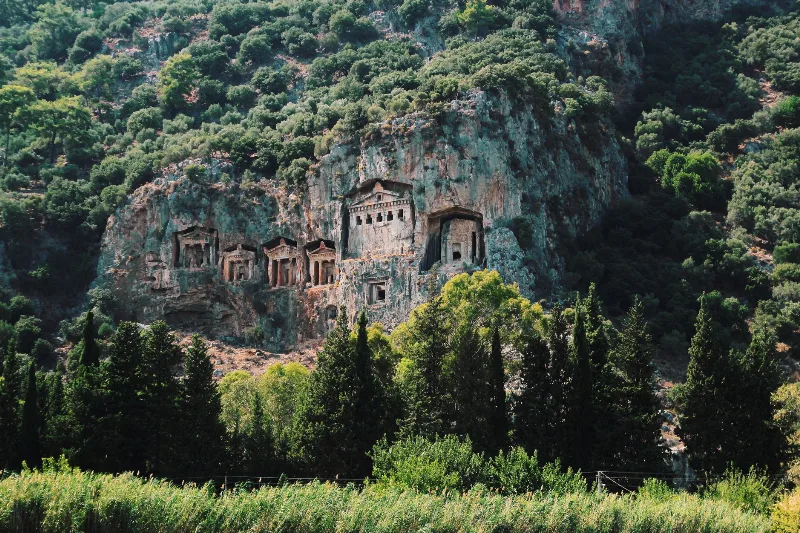
Kaunos
Kaunos is an ancient Carian city on the Dalyan River in Muğla Province, known for its temple-style rock-cut tombs and the extensive ruins of a harbour that silted up centuries ago.
Explore →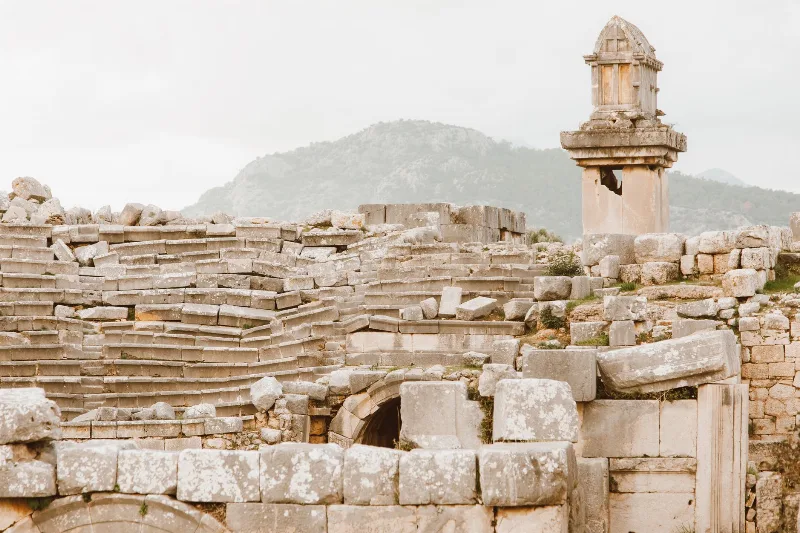
Xanthos
Xanthos is an ancient Lycian city in Antalya Province and a UNESCO World Heritage Site, known for its Lycian tombs, Roman theatre and role as a leading city of Lycia.
Explore →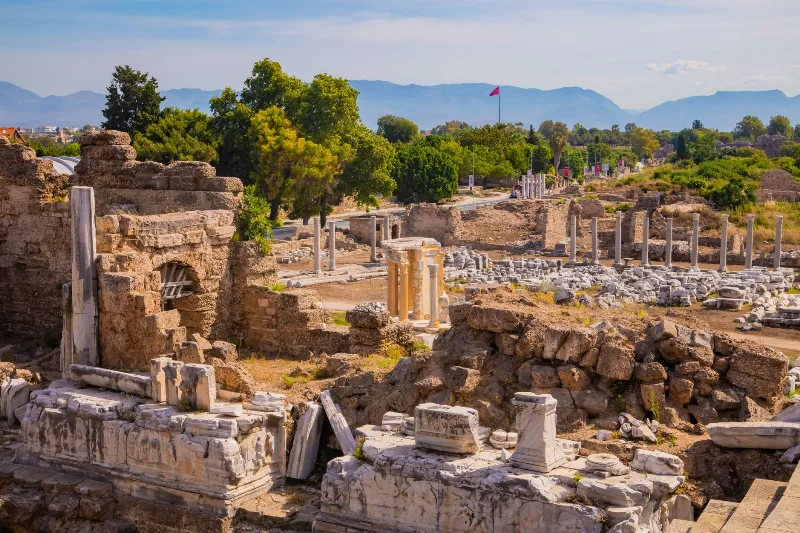
Phaselis
Phaselis is a Rhodian-founded port city on the eastern Lycian coast, where paved streets, agoras, baths and a small theatre stand among pines between three sheltered bays.
Explore →Related content
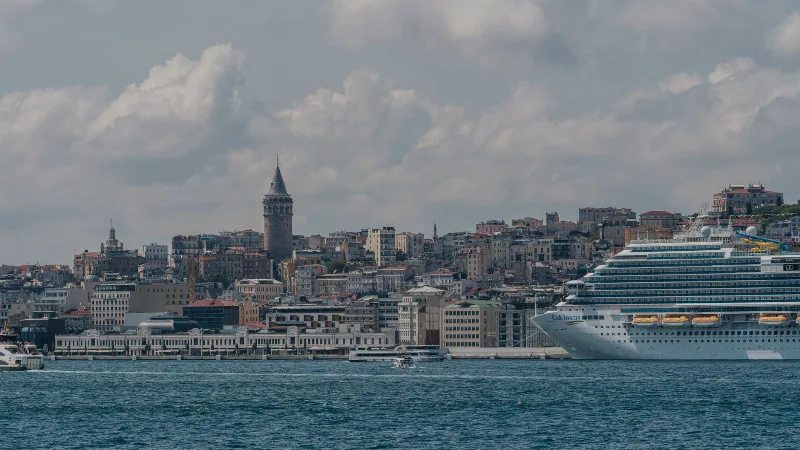
Istanbul
Istanbul is Türkiye's largest city and the country's only metropolis that spans two continents, divided by the Bosphorus strait into a European and an Asian half. Its long run as an imperial capital left a historic core of palaces, mosques and bazaars that still shapes the city's identity.
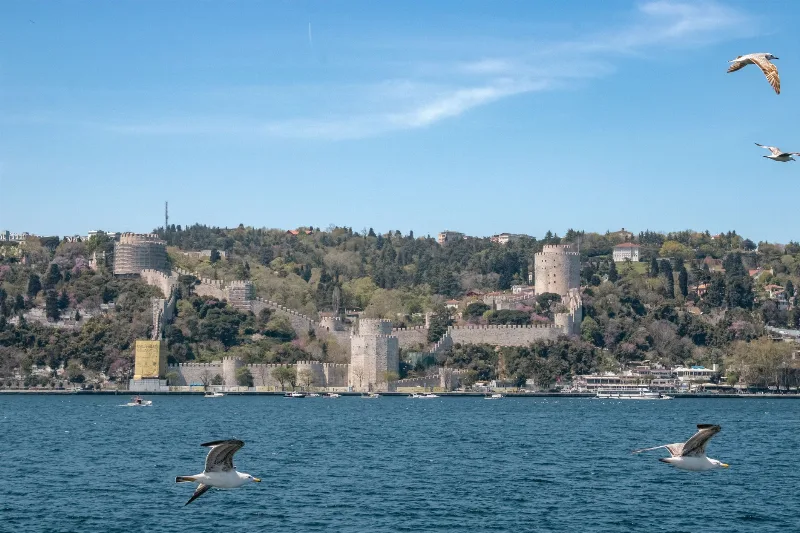
Anadolu Hisarı
Anadolu Hisarı is an Ottoman fortress built by Sultan Bayezid I in 1393–1394 on the Asian shore of the Bosphorus in Istanbul, commanding the narrowest stretch of the strait. Long described as the oldest surviving Ottoman building in the city, it was later reinforced by Mehmed II in preparation for the conquest of Constantinople.
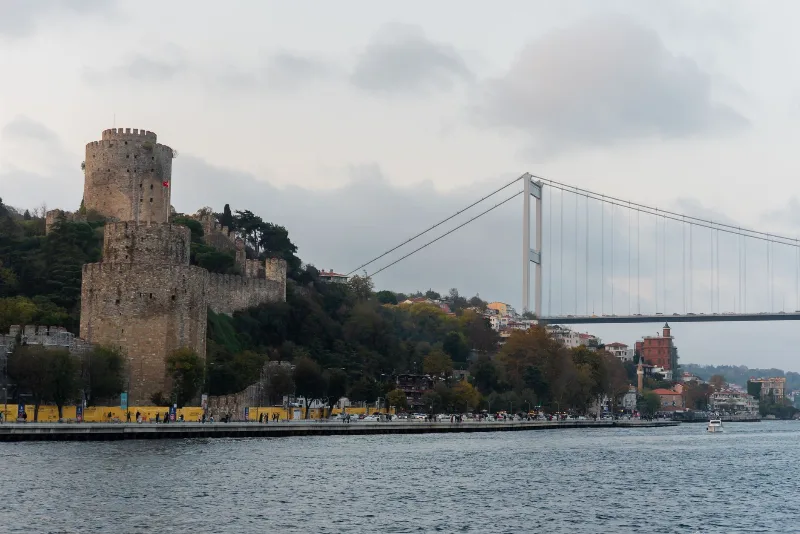
Rumeli Hisarı
Rumeli Hisarı is a 15th-century Ottoman fortress on the European shore of the Bosphorus in Istanbul, built by Sultan Mehmed II in 1452 to control the strait before the conquest of Constantinople. It survives today as a monumental open-air museum.
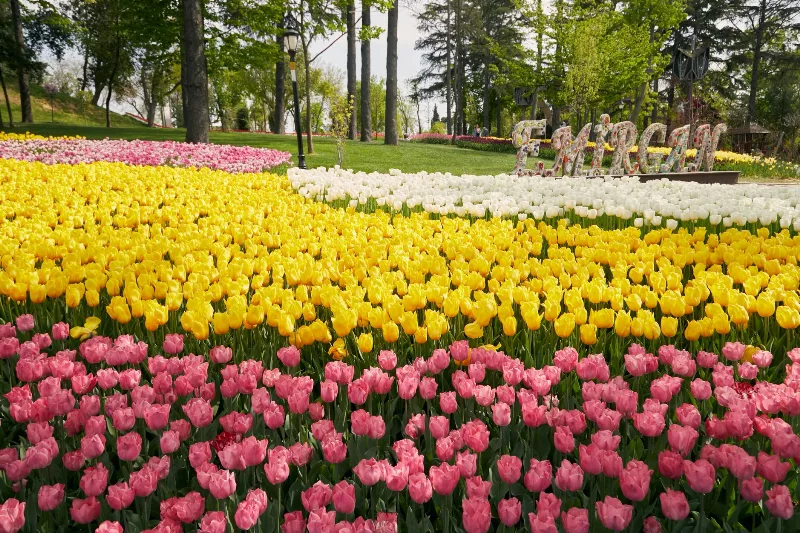
Tulip Bloom in Emirgan Park, Istanbul
Each spring, millions of tulips are planted across the terraced hillsides of Emirgan Park on the Bosphorus, turning Istanbul's largest public garden into a concentrated display of colour that usually peaks between late March and mid-April.
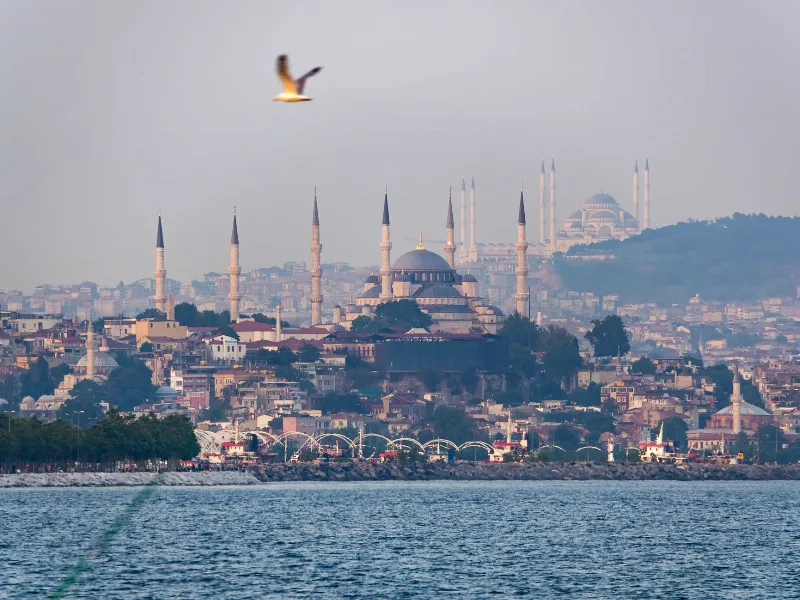
Istanbul's Historic Sultanahmet
Sultanahmet is Istanbul's historic core, a walkable peninsula of Byzantine and Ottoman monuments facing the Bosphorus and the Sea of Marmara.
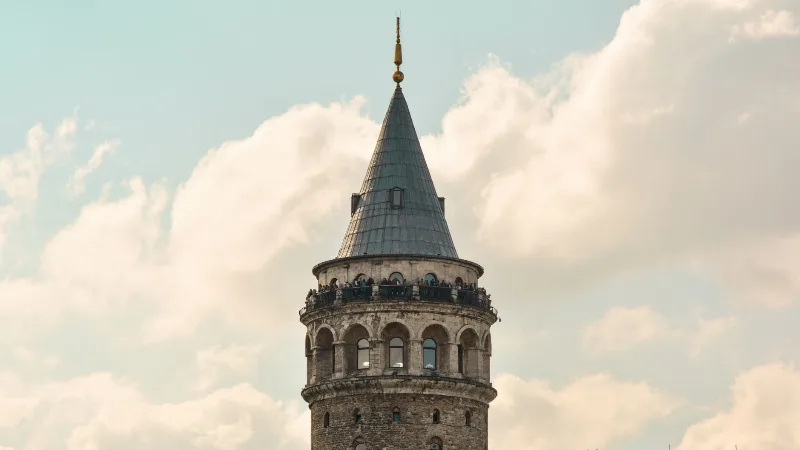
Istanbul's Historic Galata Tower
An informative guide to Galata Tower in Istanbul, covering its medieval origins, architecture, city views, and place within the historic Galata district and Türkiye’s cultural heritage.