
3-Day Assos and Troy Route
A three-day route through Turkey's Troad region, starting in Çanakkale and finishing at the clifftop village and ancient harbour of Assos, with Troy and the lesser-known classical ruins in between.
The three-day Assos and Troy route crosses the Troad, the northwestern corner of Anatolia that looks across the Dardanelles toward the European shore and then opens onto the northern Aegean. The journey begins in Çanakkale, the city on the Asian side of the strait, and finishes at Assos, known locally as Behramkale, where a village sits directly above its ancient harbour. Over three days it pairs one of the most recognisable archaeological sites in the world with a quieter, greener stretch of coastline and several classical ruins that most visitors pass by. The route is linear and runs broadly north to south, and it works best with a car, though a few short walks are unavoidable at the sites themselves.
Day 1: Çanakkale and Troy
The first day begins in Çanakkale, the largest city on this stretch of the Dardanelles. Its waterfront promenade gives a clear sense of the strait's scale, and the city works well as a base, with the full range of services a traveller needs before heading into a more rural landscape. From here the road runs south toward the mound of Hisarlik, the low hill that concealed the layers of Troy for millennia.
The archaeological site near the village of Tevfikiye is compact enough to walk in a few hours. The reconstructed defensive walls, the sloping ramp, the remains of the sanctuaries and the deep trench that exposed the city's many settlement levels are the main things to look for. The wooden horse at the entrance is a modern addition rather than a relic, but it helps visitors fix the place in memory.
The village of Tevfikiye has grown around the site's visitors and is worth a short stop before returning north. Rather than pushing further south on the first day, heading back to Çanakkale keeps the pace realistic and leaves the coastal drive for the following morning. Travellers who want more context can pair the ruins with the city's own museums and its layers of Ottoman and more recent history, which are treated in depth on the TürkiyeKart Cities & Districts and Historic Places pages.
Day 2: The Troas Coast to Assos
The second day leaves Çanakkale and follows the coast and then the inland road south through the Troad. The first worthwhile pause is Alexandria Troas, an ancient port city whose scattered remains lie near the village of Dalyan, close to the point where the road turns toward the sea. Its walls, harbour traces and standing masonry are far less visited than Troy and give a sense of how densely settled this coast once was.
From there the route continues toward Geyikli, the small port from which ferries cross to Bozcaada. The island is a rewarding detour with its own fortified town, vineyards and beaches, but it deserves a separate day; folding it into this itinerary would mean missing the time the route deserves around Assos.
Continuing west and then south, the road finally reaches Behramkale, built on the rocky height above Assos harbour. The arrival is dramatic, because the ancient acropolis and the modern village occupy the same ridge. The evening here, with the sun going down over the Aegean and the island of Lesbos on the horizon, is one of the reasons this route is worth planning slowly rather than as a rushed list of stops.
Day 3: Assos and the Southern Troad
The final day belongs entirely to Assos. Begin in Behramkale itself, where the Temple of Athena stands on the summit, its columns framing a wide view over the coast; below it, the village keeps its Ottoman bridge, small mosque and stone houses. A path winds down from the village to Assos harbour, where the ancient moles and the narrow bay make the site's original purpose obvious. The descent takes time and the climb back is steady, so it is best not to hurry it.
South of the harbour, Kadırga Bay offers a change of pace and a stretch of coast where wooded hills come right down to the water. Further along the same road, near Gülpınar, the ruins of the Temple of Apollo Smintheus belong to the broader sanctuary landscape of the Troad and make a natural final stop for travellers continuing toward Küçükkuyu. This southern edge of the route is olive country, and local olive oil is part of the regional identity rather than a mere souvenir. Assos, Behramkale and the surrounding bays appear among the Beaches & Bays, Villages & Small Towns and Regional Produce pages on TürkiyeKart, which give each place the depth this route only sketches.
How to Travel the Route
A car is by far the most practical way to connect Çanakkale, the Troas ruins and Assos, because public transport between the smaller sites is limited and several of them sit away from the main road. The route is linear, so travellers either return north to Çanakkale or continue south toward Ayvalık and the wider northern Aegean coast.
Spring and early autumn are the most comfortable seasons, with milder temperatures for walking around the ruins and along the harbour path. Midsummer is hot and busy along the coast, while winter can bring rain and wind; the sites remain open, but the experience is far less pleasant. The terrain is gentle overall, yet the ground at Troy, Alexandria Troas and the Assos acropolis is uneven, and the climb between Behramkale and the harbour is steep enough to need proper shoes.
Remarkable Places
See all places →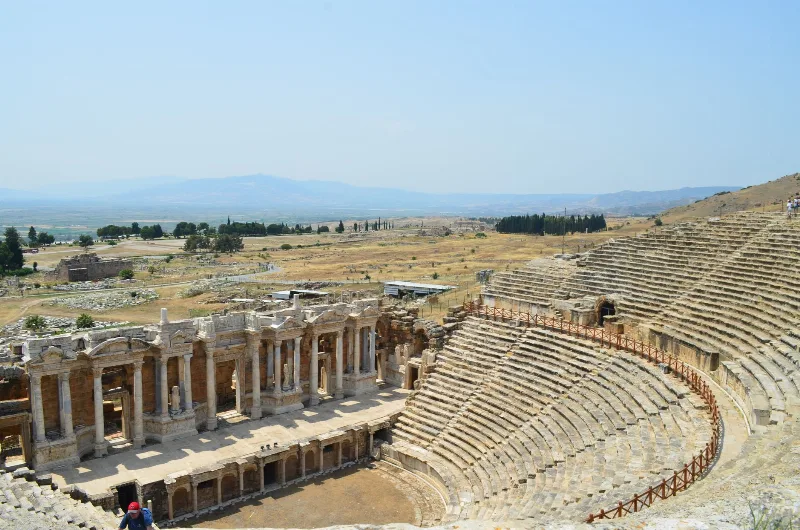
Letoon
Letoon is a Lycian sanctuary near Xanthos in Muğla Province, dedicated to Leto, Artemis and Apollo. Its three temples, theatre and trilingual inscription make it one of southwestern Turkey’s most significant archaeological sites.
Explore →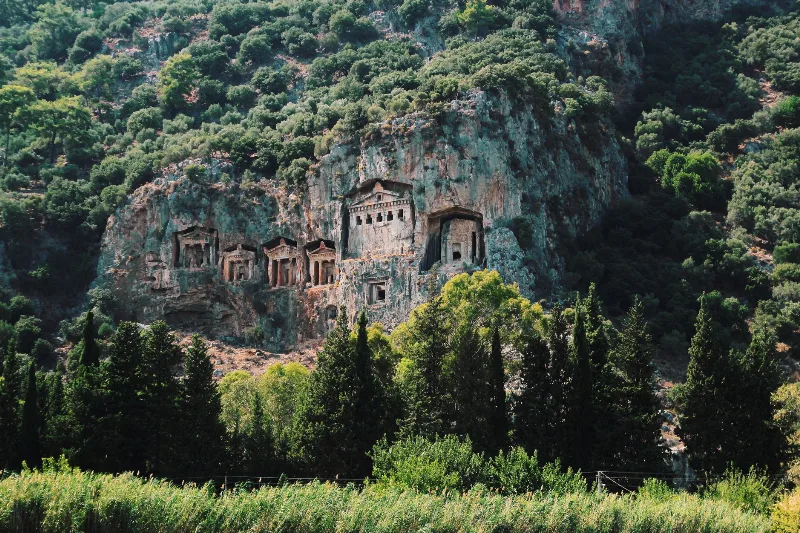
Kaunos
Kaunos is an ancient Carian city on the Dalyan River in Muğla Province, known for its temple-style rock-cut tombs and the extensive ruins of a harbour that silted up centuries ago.
Explore →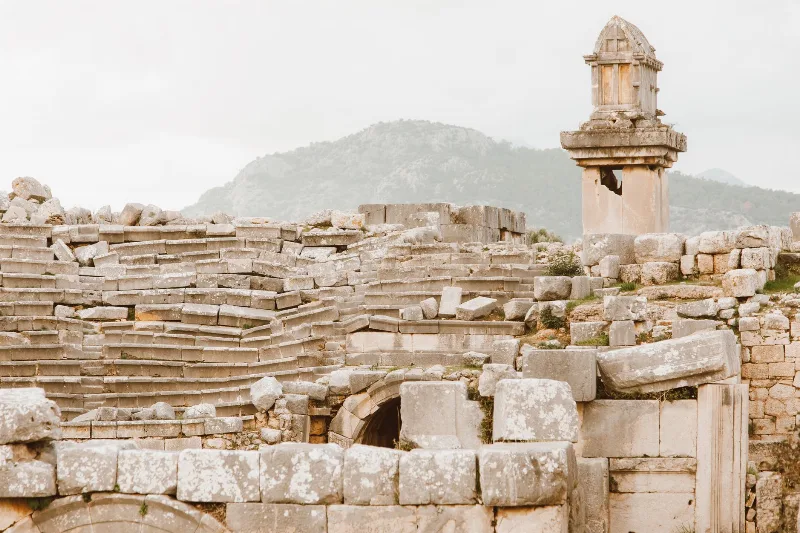
Xanthos
Xanthos is an ancient Lycian city in Antalya Province and a UNESCO World Heritage Site, known for its Lycian tombs, Roman theatre and role as a leading city of Lycia.
Explore →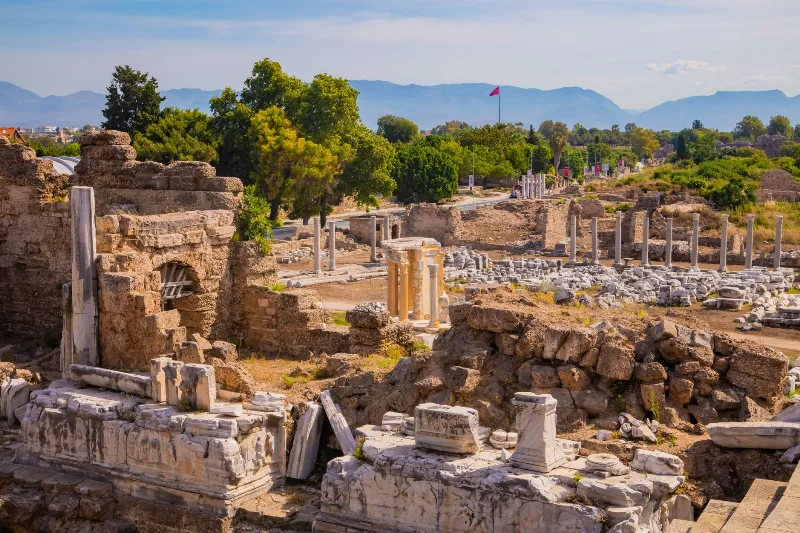
Phaselis
Phaselis is a Rhodian-founded port city on the eastern Lycian coast, where paved streets, agoras, baths and a small theatre stand among pines between three sheltered bays.
Explore →Related content
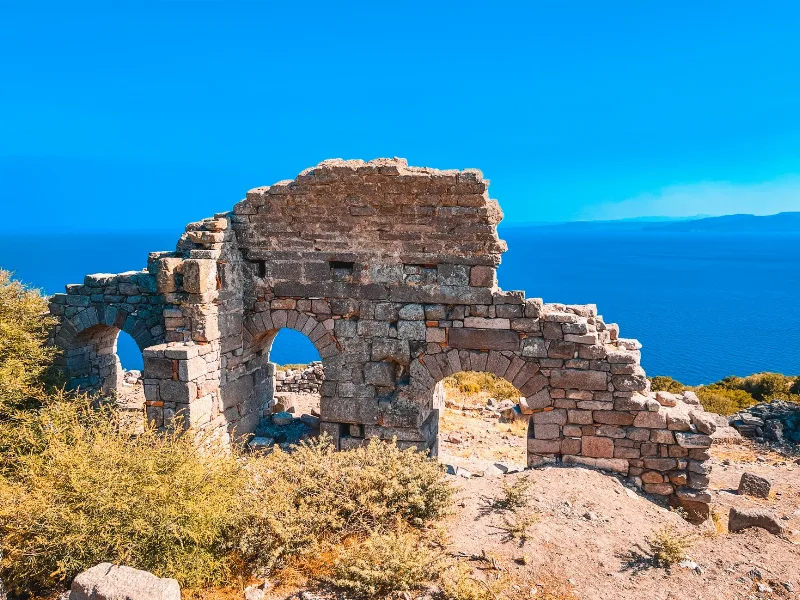
Assos
Assos is an ancient city and hilltop village in Çanakkale province, Türkiye, known for its Temple of Athena and for the years the philosopher Aristotle spent here. The modern settlement, Behramkale, sits above the ruins and an old harbour on the Aegean coast facing Lesbos.
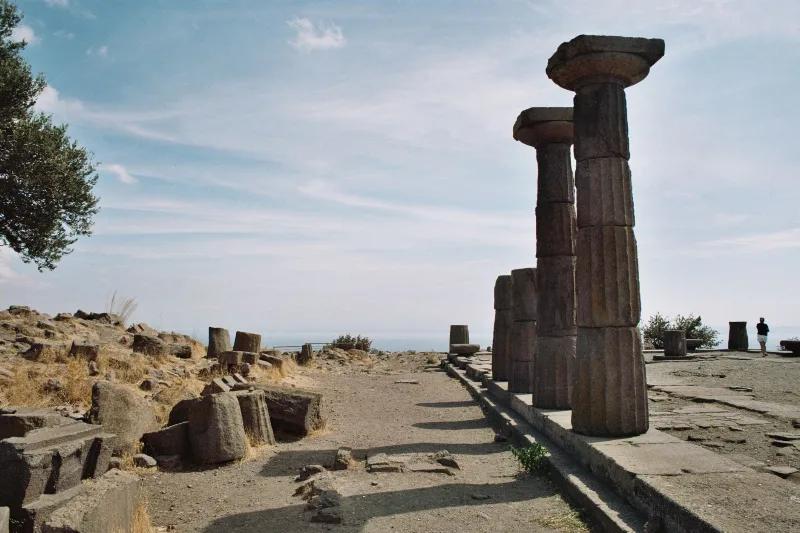
Assos
The ancient Greek city of Assos in Çanakkale, Türkiye, is defined by its sixth-century BC Temple of Athena, kilometres of surviving walls and a small Aegean harbour. Here is how the site is arranged and what a visit involves.
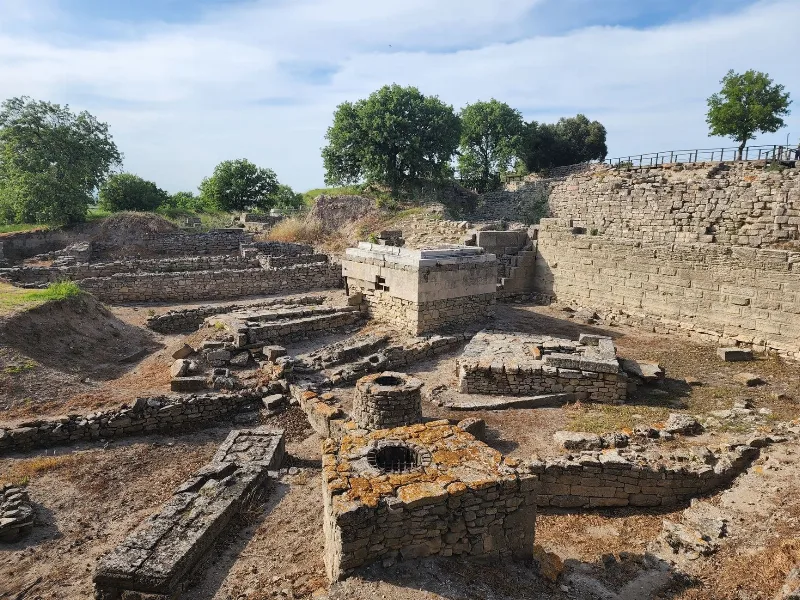
Troy
Troy is the excavated mound of Hisarlık in Çanakkale Province, Türkiye, inhabited from the Early Bronze Age to the Roman era and linked with the Ilion of Homer's Iliad. Its nine settlement layers and surviving Bronze Age fortifications make it one of the most important stratified sites in the eastern Mediterranean.
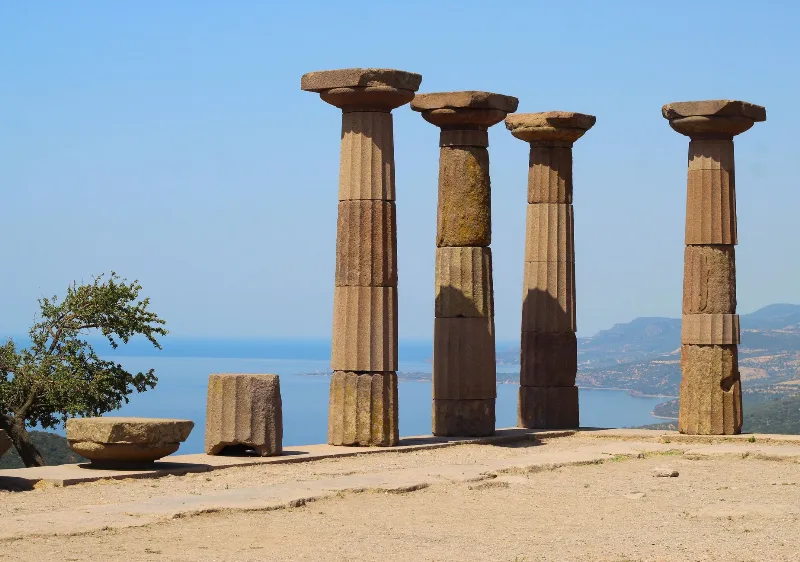
3-Day Çanakkale and Gallipoli Route
A three-day route based in Çanakkale that pairs the memorial landscapes of the Gallipoli Peninsula with the archaeological site of Troy and the southern Troad coast around Assos, using the Dardanelles ferry crossings as the link between two shores.
7-Day North Aegean to Ephesus Route
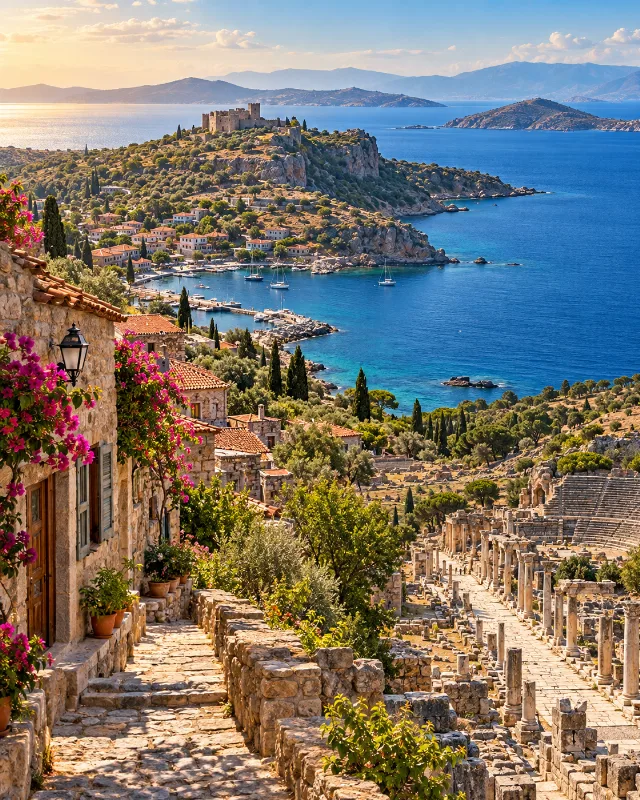
A seven-day southbound route through Troy, Assos, Bozcaada, Ayvalık, Bergama, İzmir and Ephesus, combining archaeology, coastal towns and Aegean culture.
Çanakkale and the Dardanelles Strait
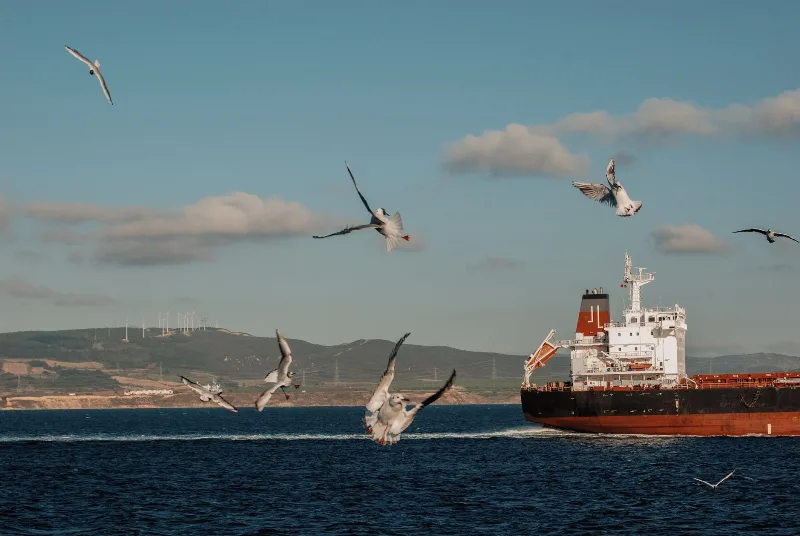
A short guide to Çanakkale and the Dardanelles Strait, covering the geography, ancient sites, island villages and local food of northwestern Türkiye.