
Yalıkavak
Yalıkavak is a coastal neighbourhood of Bodrum district in Muğla Province, on the northern shore of the Bodrum Peninsula. It is known for its large marina, a group of old stone windmills on the ridge above the bay, and a town centre that still carries traces of its fishing-village past.
Yalıkavak is a coastal settlement on the northern shore of the Bodrum Peninsula in Muğla Province, south-western Türkiye, roughly 20 kilometres by road from Bodrum town itself. It is a mahalle of Bodrum district rather than a separate municipality, and its character comes from an unusual combination: a large modern marina, a ridge of old stone windmills standing above the bay, and a compact centre that still reads in places as a former fishing village that grew into a summer town.
Where Yalıkavak Sits on the Bodrum Peninsula
The Bodrum Peninsula is the westernmost extension of the Muğla coast, a hilly finger of land reaching into the Aegean across from the Greek island of Kos. Yalıkavak occupies a bay on the peninsula's northern side, facing roughly north-west, with Geriş and Turgutreis further west and Bodrum town to the east. The settlement spreads up the slopes behind its harbour rather than along a flat plain, so the sea is visible from many points in the upper streets.
The surrounding terrain is dry, rocky and covered with low maquis scrub, olive trees and scattered pines. This is a distinctly Aegean landscape: pale limestone hills, thin soils, and small sheltered coves cut into an otherwise fairly rugged coast. Yalıkavak's bay is one of the more protected anchorages on this side of the peninsula, which is part of the reason the town developed where it did.
The Shape of the Town
Yalıkavak does not have a single historic core in the way that some Aegean villages do. Its older streets sit close to the water and behind the harbour area, while newer development climbs the hillsides and follows the roads out towards Geriş and Turgutreis. Buildings are typically low-rise, mostly two storeys or fewer, and painted white or in pale tones, following the broader Bodrum Peninsula convention that keeps the coastline from being walled off by tall construction.
Walking around, you notice narrow lanes that bend around outcrops rather than following a grid, low garden walls, and a great deal of bougainvillea and other climbing plants spilling over them. The centre is compact enough to cross on foot in twenty minutes or so, but the gradients are real: some streets between the waterfront and the upper residential slopes are noticeably steep, and pavements are inconsistent. Comfortable shoes matter more here than in a flat resort town.
The Windmills Above the Bay
The most recognisable landmark associated with Yalıkavak is the group of windmills standing on the hill to the west of the town, beside the road that runs towards Geriş and Turgutreis. They are cylindrical stone towers, whitewashed, built to catch the steady north-westerly winds that blow across the peninsula. These were grain mills, part of a wider network of windmills that once worked across the Bodrum Peninsula, grinding flour for local communities before motorised milling made them redundant.
Several of the Yalıkavak mills survive, in varying states of repair; some have been restored and others remain as bare stone shells. Their setting is what makes them striking: they stand on open, elevated ground with the bay and the marina below them on one side and scrub-covered hills on the other, so they can be seen from the coastal road well before you reach the town. They are not a ticketed attraction with facilities around them, but a landscape feature you pass on the way in and can walk up to.
The Marina and the Waterfront
Yalıkavak Marina is among the largest marinas in Türkiye and has reshaped the town's relationship with the sea over recent decades. Where a small fishing harbour once served the village, there is now a substantial basin holding a large number of yachts and boats, with breakwaters that form a sheltered inlet. The marina is the reason Yalıkavak appears on sailing itineraries for this stretch of the Aegean, and it draws a seasonal population that the town's permanent size would not otherwise support.
The waterfront around the marina is the busiest part of Yalıkavak in summer. Away from it, the shoreline reverts to something simpler: small quays, rocky edges, and low buildings set back from the water. The contrast between the scale of the marina and the scale of the older lanes behind it is one of the defining features of the place.
Coastline, Coves and Swimming Water
The coast around Yalıkavak is not a long continuous beach. It is a sequence of small bays and coves separated by rocky points, some with mixed sand and pebble shores and others with platforms of flat rock used for swimming. Water clarity is generally high, as it is along much of the Bodrum Peninsula, because there are few large rivers or industrial inflows on this coast.
The northern orientation means the bay can catch wind, particularly in the afternoon, which is welcome in high summer but can make exposed spots choppy. Sheltered corners tend to be calmer. Because the coves are small and separated, the coastline feels more fragmented and exploratory than a resort strip, and walking between them is often a matter of following roads and paths over low headlands rather than strolling along the water's edge.
Citrus Groves and the Peninsula Landscape
Behind the built-up area, the Bodrum Peninsula has a long agricultural history, and citrus — especially mandarins — has been part of that. Groves and garden plots still appear between the houses and on the flatter ground behind the coast, alongside olives and almonds. This gives Yalıkavak a slightly different texture from a purely touristic coastal settlement: it is possible to walk a few minutes inland and be among trees and dry-stone boundaries rather than buildings.
Spring is when this landscape is at its most legible. The hills turn green briefly, wildflowers appear in the maquis, and the contrast between the white walls of the town and the surrounding vegetation is at its sharpest.
A Brief Historical Background
Yalıkavak's origins are those of a small coastal settlement living from the sea and from the land behind it — fishing, sponge-related work in the wider Bodrum area, and cultivation of the peninsula's dry slopes. Like much of the Bodrum Peninsula, the wider region had a Greek Orthodox population until the population exchange of 1923, after which the demographic and cultural make-up of many peninsula settlements changed substantially.
For most of the twentieth century Yalıkavak remained small and relatively isolated, reached by rough roads from Bodrum. The transformation came with tourism and, later, with the marina, which turned a quiet bay into a seasonal hub for boats and visitors. The windmills on the ridge are the most visible physical reminder of the pre-tourism economy.
Getting to Yalıkavak
Yalıkavak is reached by road from Bodrum, following the coastal route west through Ortakent and Ortakent Yahşi or the slightly inland road via Konacık. The drive is short but the peninsula roads wind, so allow more time than the distance suggests. Dolmuş minibuses connect Bodrum with Yalıkavak, and services also link Yalıkavak with neighbouring settlements such as Turgutreis and Gümüşlük.
For arrivals by air, Milas–Bodrum Airport lies to the north-east of the peninsula, roughly 50 kilometres away, and the transfer to Yalıkavak involves crossing the peninsula by road. Travellers coming from further afield via the coast usually route through Bodrum first. Once in Yalıkavak, the town itself is small enough that walking covers the centre; a car or local transport is useful for reaching the surrounding coves and villages.
When to Visit
The Aegean climate here means hot, dry summers and mild, wetter winters. July and August are the hottest and busiest months, when the marina and waterfront area fill up and daytime temperatures make midday walking uncomfortable. Late spring, from about April to early June, and early autumn, from September into October, are generally the most comfortable periods: the sea is still warm enough for swimming in autumn, the light is clear, and the landscape around the town is more pleasant to walk through.
Winter is quiet. Many seasonal businesses close, the town reverts to a much smaller permanent population, and the windmills and hills are at their most exposed and least crowded. Anyone visiting outside the summer season should expect a reduced range of services.
Practical Points Before You Go
- Yalıkavak is hilly. Expect steep streets between the waterfront and the upper parts of town, and uneven or missing pavements in places.
- The coastline is made of small coves rather than a single long beach, so plan for short walks or drives between swimming spots.
- Summer afternoons are windy on this north-facing coast; mornings tend to be calmer.
- The windmills sit on open ground beside the road towards Geriş and are best seen early or late in the day, when the light falls on them from the side.
- Outside the summer months, services in the town are limited, so it helps to arrive with essentials arranged.
Nearby Places on the Same Coast
Several settlements along this part of the Bodrum Peninsula share Yalıkavak's geography and make sense to combine with a visit. To the west, Geriş is a smaller coastal neighbour on the same road, and Turgutreis is a larger town with its own harbour further along the peninsula. Gümüşlük, on the southern side, sits beside the remains of ancient Myndos and has a very different, more enclosed character. To the east, Ortakent, Ortakent Yahşi and Bitez lie along the route back towards Bodrum, each with its own bay and beach.
Together these places show how varied the Bodrum Peninsula still is: a marina town here, a fishing village there, ancient ruins on the southern shore, and the same dry hills and white-walled architecture running through all of them.
From the land
Find All →
Konya Carrots
Konya carrots are grown on the irrigated plains of central Türkiye, where deep alluvial soils and a continental climate produce firm, sweet and crunchy roots.
Explore →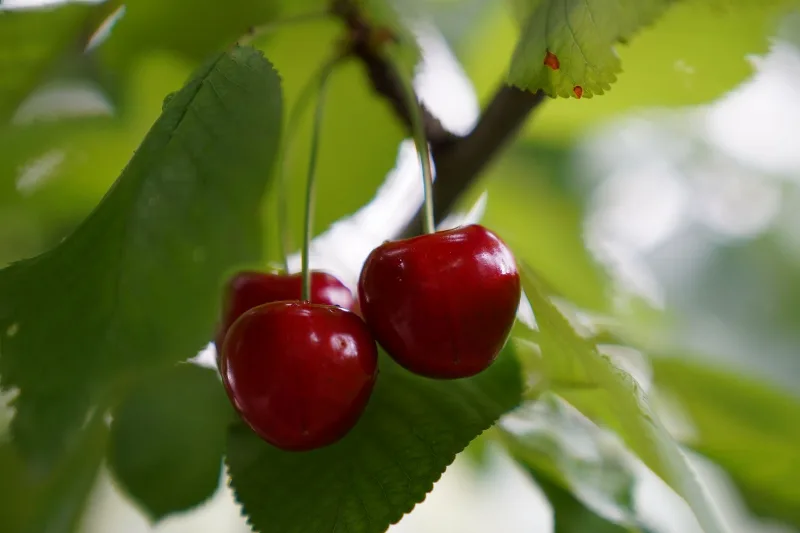
Isparta Cherries
Isparta cherries are the sweet cherries of Türkiye's Lakes Region, grown on high ground where cold winters and dry, sunlit summers give the fruit its size and sweetness.
Explore →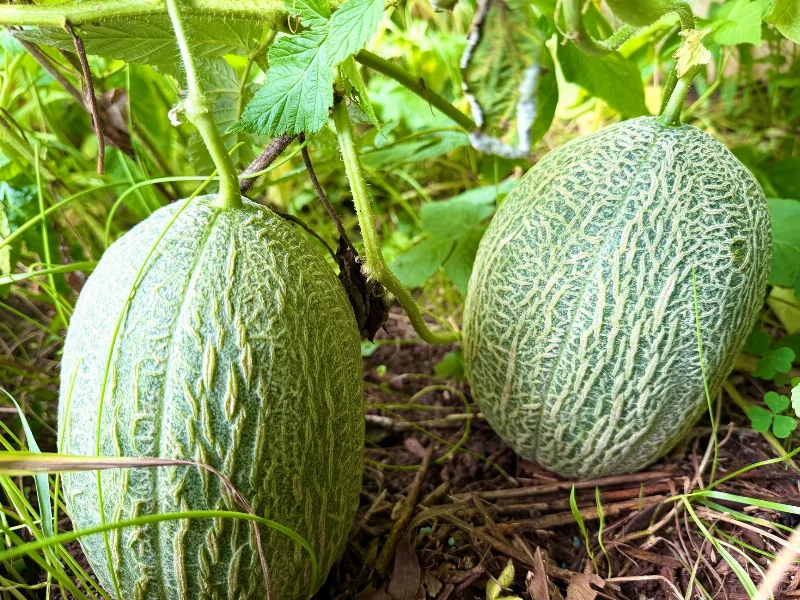
Kırkağaç Melons
Kırkağaç melons are a distinctive melon variety grown around the town of Kırkağaç in Manisa province, western Türkiye, where hot dry summers and fertile valley soils produce large, aromatic fruit that keeps well into winter.
Explore →Related content
Bodrum
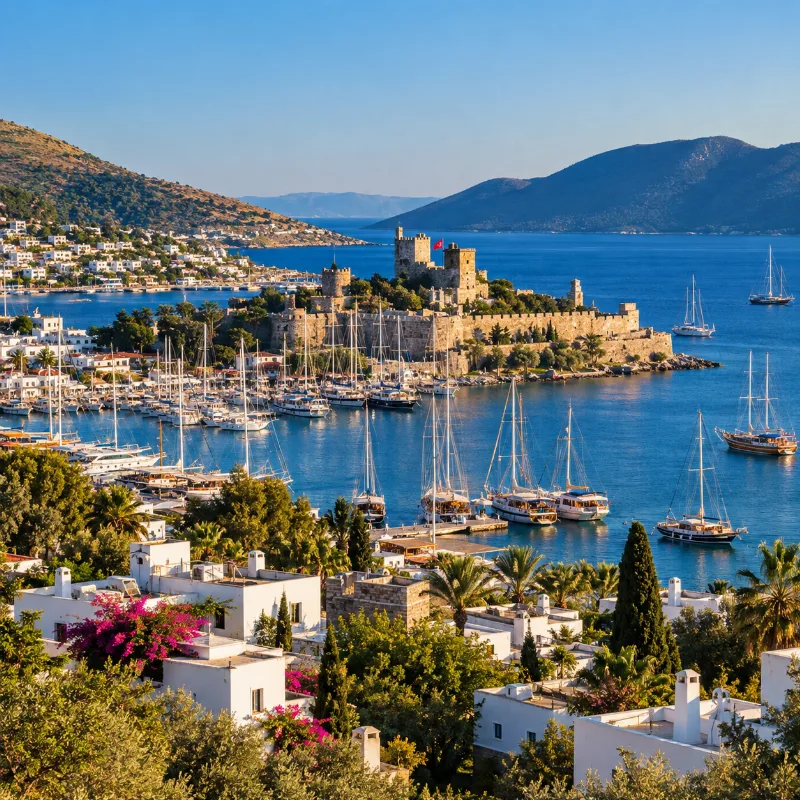
Bodrum is a coastal district of Muğla Province known for its whitewashed architecture, castle, Aegean coastline, bays and ancient Halicarnassus heritage.
Muğla
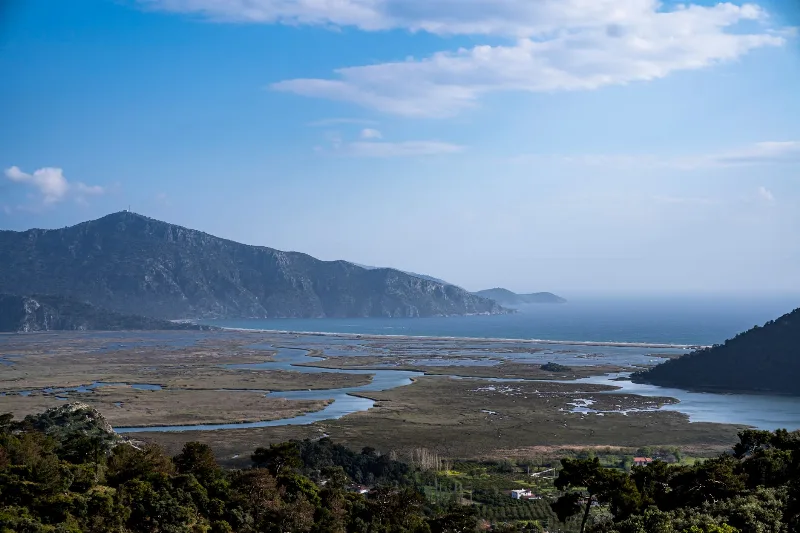
Muğla is a captivating province in southwestern Türkiye, renowned for its stunning Aegean coastline and rich cultural heritage.
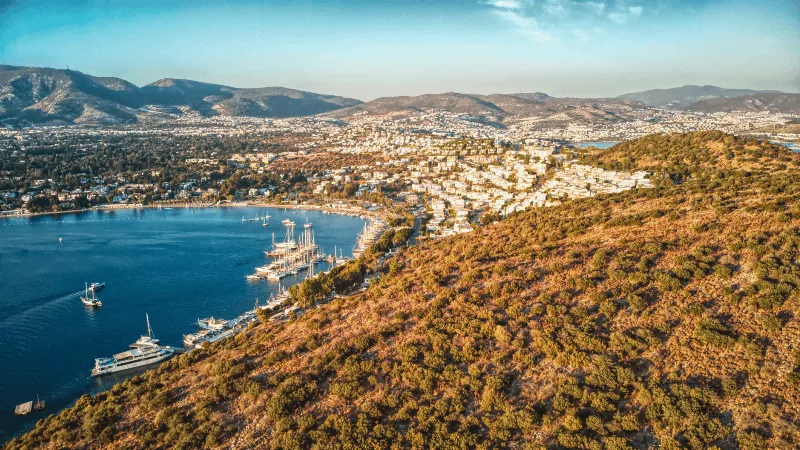
Gümüşlük
Gümüşlük is a sheltered Aegean inlet on the western side of the Bodrum Peninsula, where a shallow bay, a narrow sand spit and a small offshore island shape a distinctive shoreline.
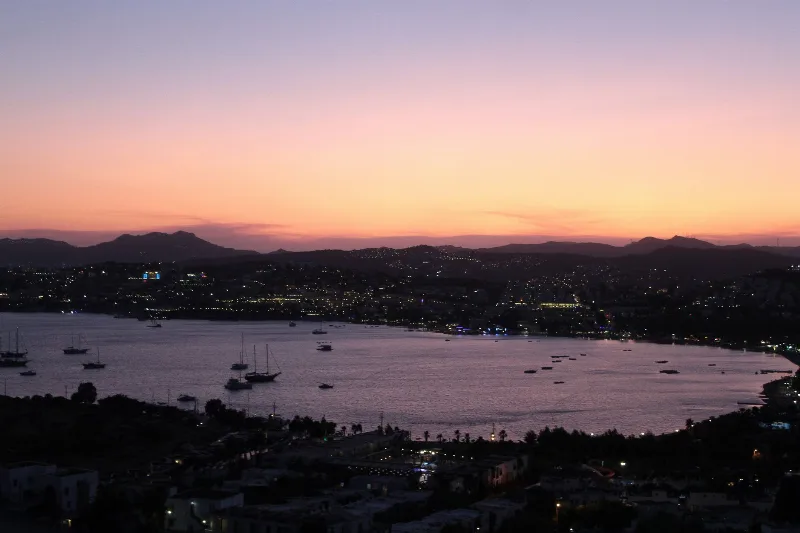
Gümüşlük
Gümüşlük is a former fishing village on the western tip of the Bodrum peninsula in Muğla, Türkiye, built over the ancient city of Myndos and known for its sunset views across the bay and its seafood culture.
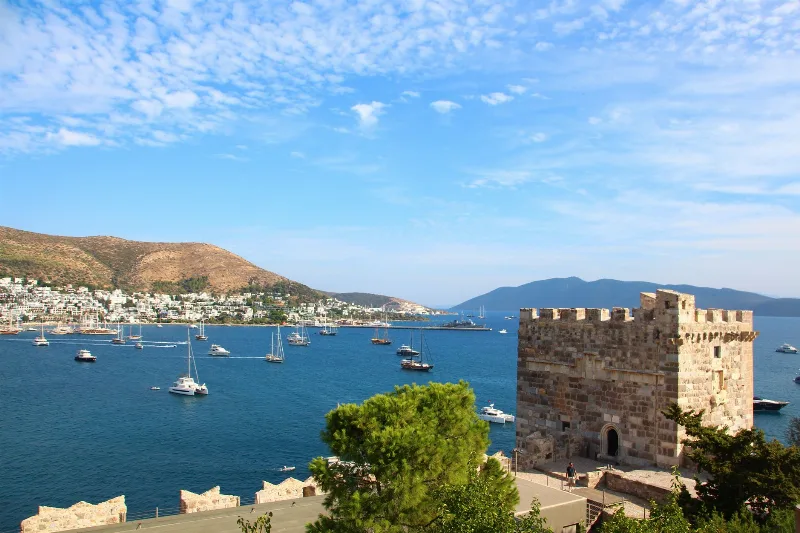
5-Day Bodrum Peninsula Route
A five-day circular drive around the Bodrum Peninsula that links the historic core of Bodrum with the southern shore village of Gümüşlük, the western town of Turgutreis and the northern villages of Yalıkavak, Göltürkbükü and Torba.
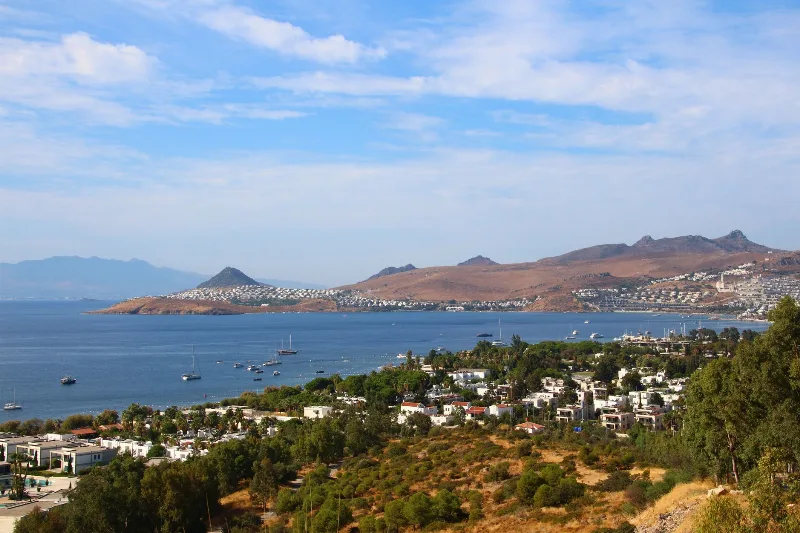
Sailing Adventures in Bodrum
Bodrum's peninsula on the Aegean coast of Türkiye offers sheltered bays, steady summer winds and a coastline shaped by ancient ruins and a long boatbuilding tradition.