
Patara
Patara is an ancient Lycian city in Antalya Province, Türkiye, that served as the meeting place of the Lycian League and preserves a Roman theatre, triumphal arch, bath complexes and an assembly hall beside a long sandy beach.
Patara is an ancient city on the Mediterranean coast of Lycia, in the Kaş district of Antalya Province in southern Türkiye, immediately beside the modern village of Gelemiş. It was one of the leading cities of Lycian civilisation and, under Roman rule, the meeting place of the Lycian League, a federal union of city-states whose assembly building still stands at the site. Patara is significant both for its substantial surviving ruins — a theatre, baths, agoras, a triumphal arch and the League's parliament house — and for the long sandy beach beside it, one of the most important nesting beaches for loggerhead sea turtles in the eastern Mediterranean.
Where Patara Is Located
Patara lies on the southwestern coast of Anatolia, in the Kaş district of Antalya Province, in the region the ancients called Lycia. The ruins occupy a flat coastal shelf immediately behind the modern beach, with the village of Gelemiş at their edge. In antiquity the city was a working port: its harbour opened directly onto the sea, and shipping, trade and naval activity shaped its fortunes. Over the centuries the harbour silted up, and the former anchorage is now marshland and low dunes behind the shore. The surrounding landscape combines a broad sandy beach, a wetland area, cultivated fields and the foothills of the Lycian mountains, which rise steeply a short distance inland.
From Lycian Settlement to Roman Provincial Capital
The Lycians spoke an Indo-European language of their own and organised themselves in a network of cities that controlled the coast and river valleys of southwestern Anatolia. Patara ranked among the most important of these cities. In the fourth century BC the region came within the orbit of the Persian empire, and after the campaigns of Alexander the Great in the 330s BC the city passed through the hands of the Ptolemaic and Seleucid kingdoms and, for a period, the island of Rhodes. During the second century BC Rome recognised Lycia as a free and allied region, and Patara began to act as a focal point for Lycian political life.
In the first century AD, under the emperor Claudius, Lycia was formally organised as a Roman province, later administered together with Pamphylia. Patara became the seat of Roman authority in the region and the regular meeting place of Lycian representatives. The Acts of the Apostles records that the apostle Paul changed ships at Patara during a voyage toward the eastern Mediterranean, an indication of the city's role as a functioning port in the first century. By tradition, though not by secure historical documentation, Patara is also claimed as the birthplace of Saint Nicholas, later bishop of nearby Myra.
The Lycian League and the Bouleuterion
The Lycian League was a federation of Lycian cities that maintained a common assembly, a shared treasury and a coordinated foreign policy while each member city kept its own local government. Representation was adjusted to the size of each community, so that the largest cities held more votes than the smallest. Because the League met at Patara, the city acquired a political importance that outlasted many larger commercial centres of the coast.
The building that housed the assembly, the bouleuterion, survives as one of the most significant political monuments in Anatolia. Its stepped seating, arranged around a central floor, is generally estimated to have accommodated roughly 1,400 people. Historians of political thought frequently cite the Lycian League as an early example of representative federal government, and its assembly hall is the physical setting in which that system operated.
The Main Surviving Monuments
The Arch of Mettius Modestus
A triple-arched triumphal gate, commonly dated to about AD 100, marked one of the principal entrances to the city and honoured the Roman governor Mettius Modestus. The gate's masonry and its sculptural decoration make it one of the most recognisable structures at Patara and a clear marker of the city's integration into the Roman imperial system.
The Theatre, Baths and Agoras
The Roman theatre is built against a slope of the site and retains much of its seating and the remains of its stage building, which was modified in different phases. Bath complexes, with their characteristic sequence of warm, hot and cold rooms, served both residents and travellers. Patara also preserves extensive market and civic squares, sometimes described as commercial and state agoras, where commerce and public business were conducted.
The Harbour Granary and Lighthouse
Beside the former harbour stands a large granary of the kind used in the Roman world to store grain for shipping and for the provisioning of the province. Not far away, a monumental lighthouse is known from its dedicatory inscription, which names the emperor Nero; the structure has been the subject of a modern reconstruction project aimed at restoring its form.
Temples, Streets and Necropolis
Ancient writers record an oracle of Apollo at Patara, and a sanctuary associated with that cult is attested in the sources, although the exact position of the temple within the city is debated by scholars. Colonnaded streets linked the main quarters, and a necropolis on the edge of the settlement contains Lycian-style sarcophagi and tombs, the distinctive funerary architecture of the region.
What Visitors Can See Today
Much of Patara was buried under wind-blown sand for centuries, and excavation has progressively revealed the ancient street plan. Visitors can walk through the remains of the city, passing the triumphal arch, the assembly hall, the theatre, the bath complex and the granary, and can see stretches of paved and colonnaded streets. Because sand still covers parts of the site, new structures continue to emerge as work proceeds, which gives Patara an unusual quality among Anatolian ruins: the visitor is looking at a city that is still being uncovered piece by piece.
The Beach and the Natural Setting
The sandy beach beside the ruins is among the longest in Türkiye and is protected in large part because it is a major nesting ground for loggerhead sea turtles. Nesting occurs in the warmer months, and access to parts of the beach is restricted during that period, particularly at night, in order to protect the nests and the hatchlings. The combination of an archaeological zone and a conservation area means that development along the shore has been limited, and the beach retains a relatively open character.
Excavation and Research
Systematic excavation at Patara began in the late 1980s under Turkish direction and has continued since, with successive campaigns clearing sand from streets, public buildings and residential quarters. The work has clarified the city's urban layout, the sequence of construction and rebuilding across Lycian, Roman and Byzantine phases, and the relationship between the settlement and its now-vanished harbour. Many of the finds are displayed in the excavation area or in local museums, and ongoing research continues to refine the chronology of the site.
Visiting Patara
The site is reached from the coastal towns of Kaş and Kalkan, with the village of Gelemiş serving as the nearest settlement. The terrain is largely flat but sandy and, in summer, extremely hot; shade is limited, and walking shoes, water and sun protection are advisable. The most comfortable periods to visit are spring and autumn, when temperatures are moderate and the light is well suited to seeing the masonry and carved detail of the monuments. Visitors should allow several hours to cover the main structures, and should plan around the beach conservation restrictions during the turtle nesting season.
Nearby Historic Places
Patara sits within one of the richest archaeological landscapes in Türkiye. To the north lie the ruins of Xanthos, the leading city of the Lycian League, and the sanctuary of Letoon, both of exceptional importance for Lycian history and religion. The coastal town of Kaş offers access to the wider region, while the sunken ruins around Kekova and the hilltop site of Tlos lie within reach for travellers extending their route through Lycia. Together with Patara, these sites form a coherent circuit for anyone interested in the civilisation that produced the Lycian League and its distinctive tombs, cities and federal institutions.
Routes
All routes →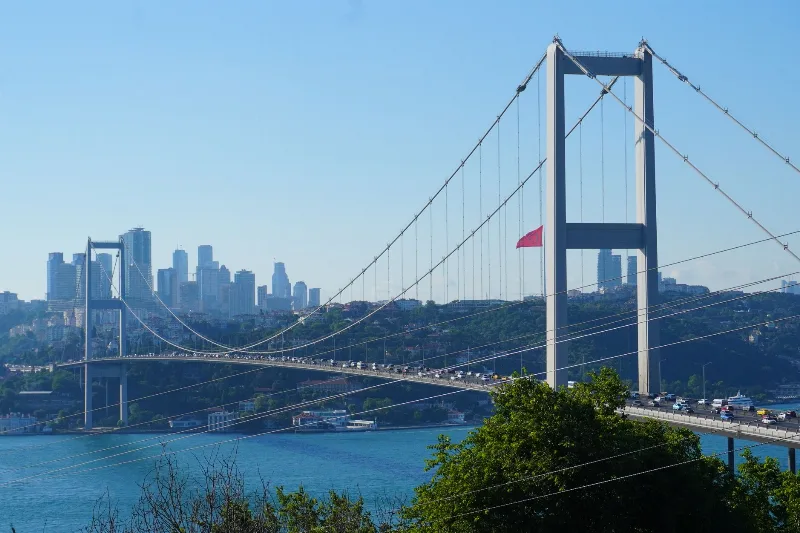
3-Day Istanbul to Bursa Route
Explore the first Ottoman capital on a three-day route from Istanbul to Bursa, combining historic city sites, the mountain landscapes of Uludağ, and the preserved village of Cumalıkızık.
Explore →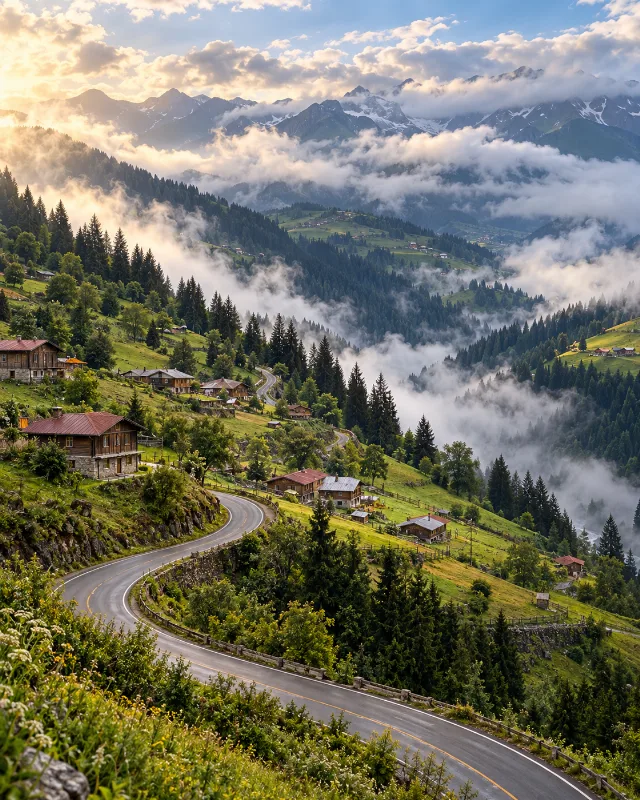
5-Day Eastern Black Sea Route
A five-day journey from Trabzon through Uzungöl, Rize, Çamlıhemşin, Ayder, Borçka and Şavşat, combining Black Sea culture with forests, lakes and highlands.
Explore →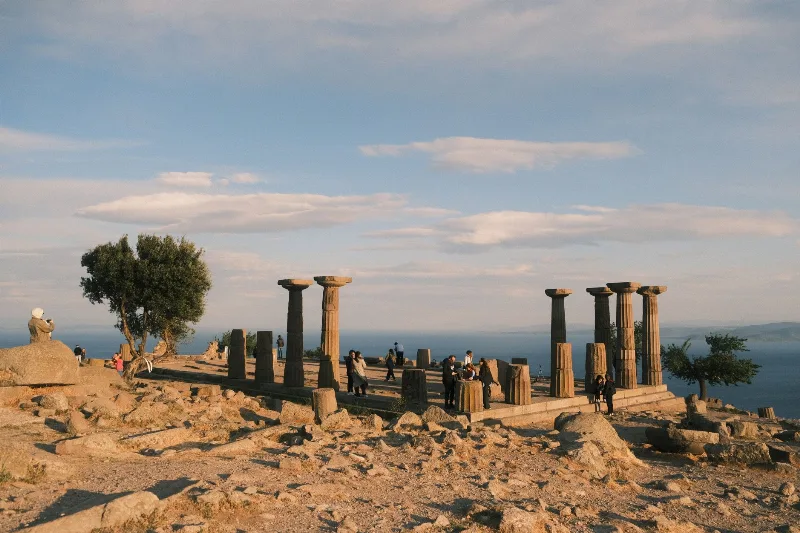
4-Day North Aegean Coast Route
A four-day linear route along the North Aegean coast from Assos to İzmir, with stops at Ayvalık, Cunda, Dikili, Çandarlı, Bergama and Foça. The itinerary is designed for a realistic coastal and inland road trip by car.
Explore →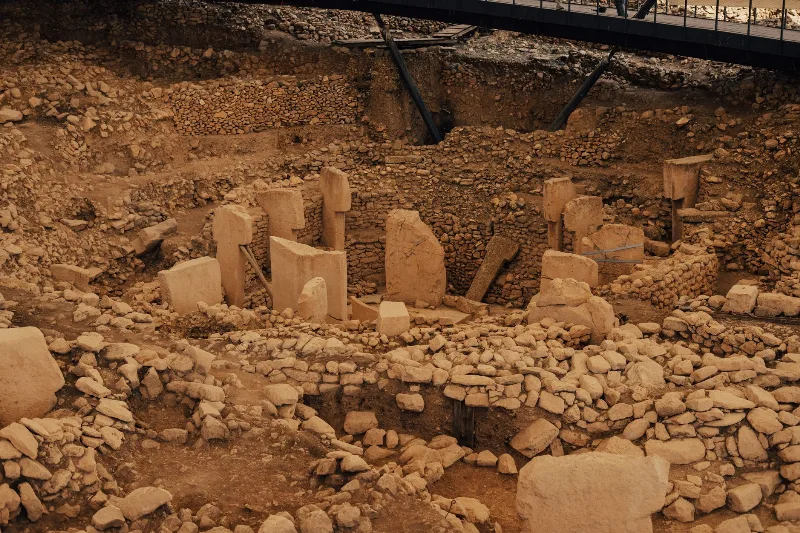
4-Day Southeastern Anatolia Route: Gaziantep to Mardin via Şanlıurfa
A four-day linear route across Southeastern Anatolia, linking the historic cities of Gaziantep, Şanlıurfa and Mardin by road, with the Neolithic site of Göbeklitepe and the ancient settlement of Harran fitted into the middle of the journey.
Explore →Related content
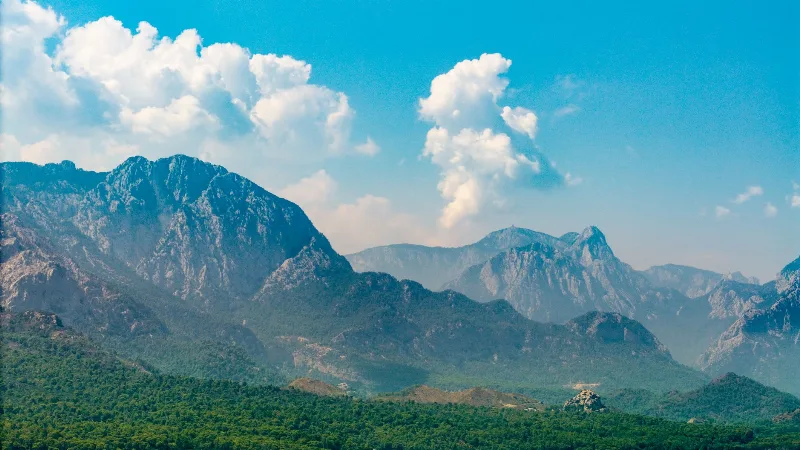
Antalya
Antalya offers a unique blend of vibrant history and stunning natural beauty, making it a must-visit destination in Türkiye.
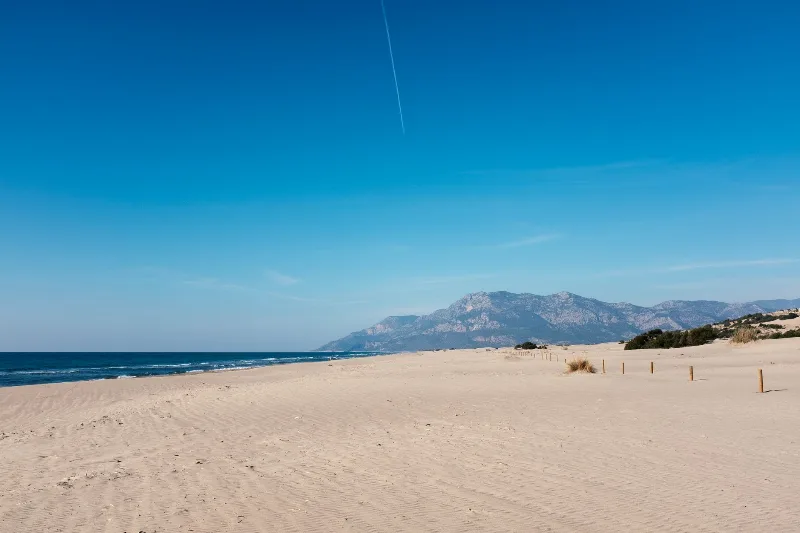
Gelemiş
Gelemiş is a farming village in the Kaş district of Antalya, set on a coastal plain immediately beside the ruins of Patara and the long sandy beach that once served one of Lycia's most important harbour cities.
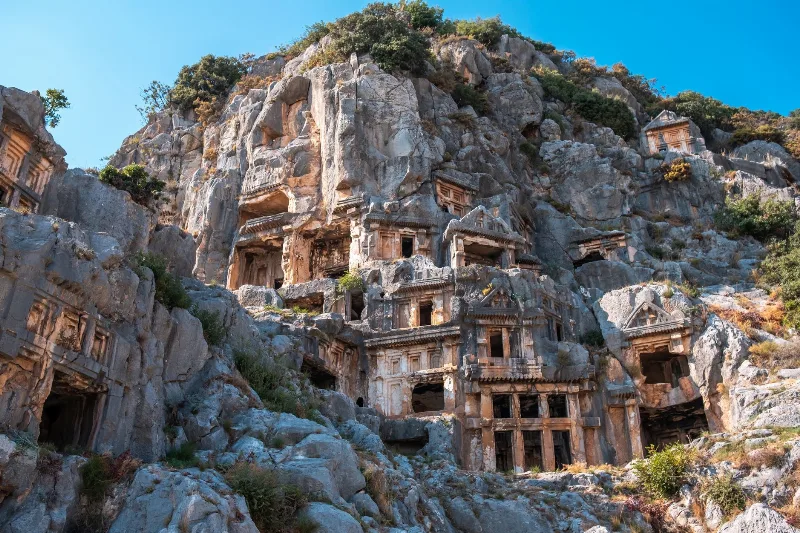
Myra
Myra is an ancient Lycian city in the Demre district of Antalya, whose cliff-carved rock tombs and large Roman theatre stand within the modern town itself.
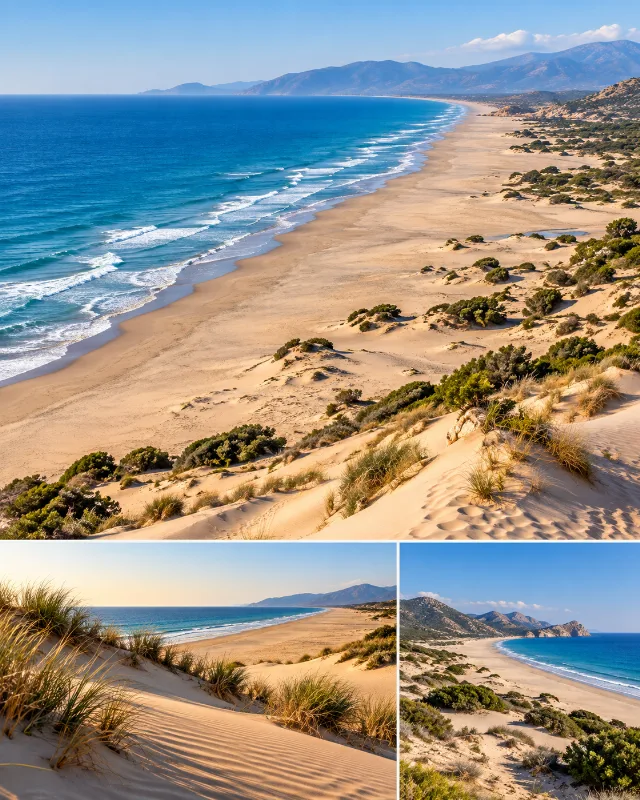
Patara Beach
A long sandy Mediterranean beach near the ancient city of Patara, backed by dunes and open coastal landscapes.
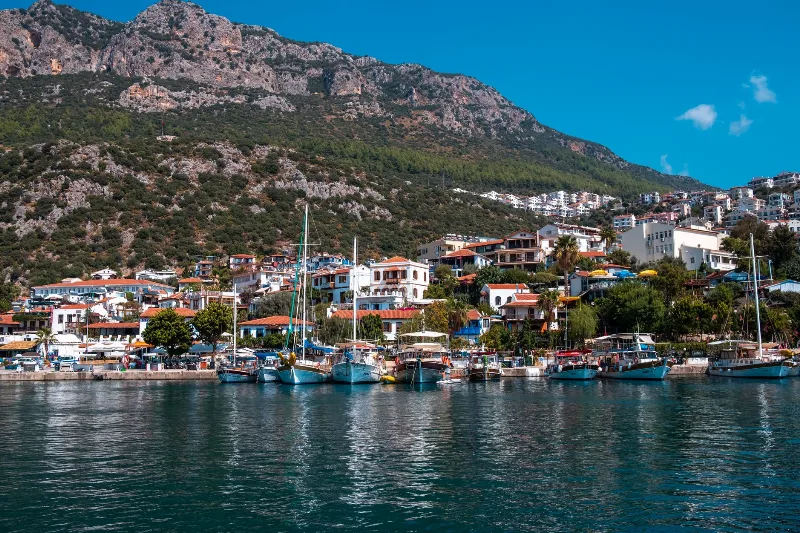
5-Day Antalya to Fethiye Coastal Route
A five-day driving itinerary along Turkey's Mediterranean shore, linking Antalya, Phaselis, Olympos, Demre, Kekova, Kaş, Kalkan, Patara and Fethiye. The route is linear, coastal for most of its length, with short inland detours to Lycian ruins.
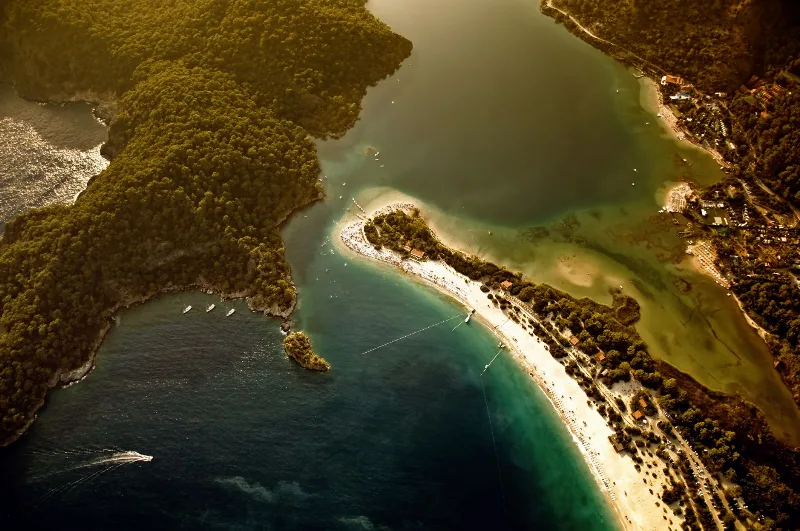
4-Day Lycian Coast Route
A four-day route along Turkey's Lycian coast, driving from Fethiye and Ölüdeniz through Kalkan, Kaş, Kekova, Demre and Olympos to finish in Antalya.