
Patara Beach
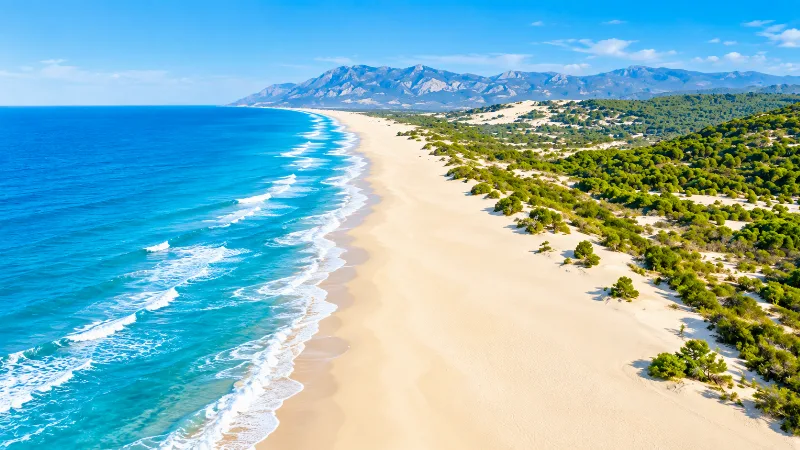
A long sandy Mediterranean beach near the ancient city of Patara, backed by dunes and open coastal landscapes.
Patara Beach
Patara Beach is located near Gelemiş in the Kaş district of Antalya Province, on Turkey’s Mediterranean coast. The beach extends along a wide and largely open section of shoreline close to the ancient city of Patara.
Its scale is one of its defining features. Patara is much longer and broader than many of the small coves found elsewhere around Kaş.
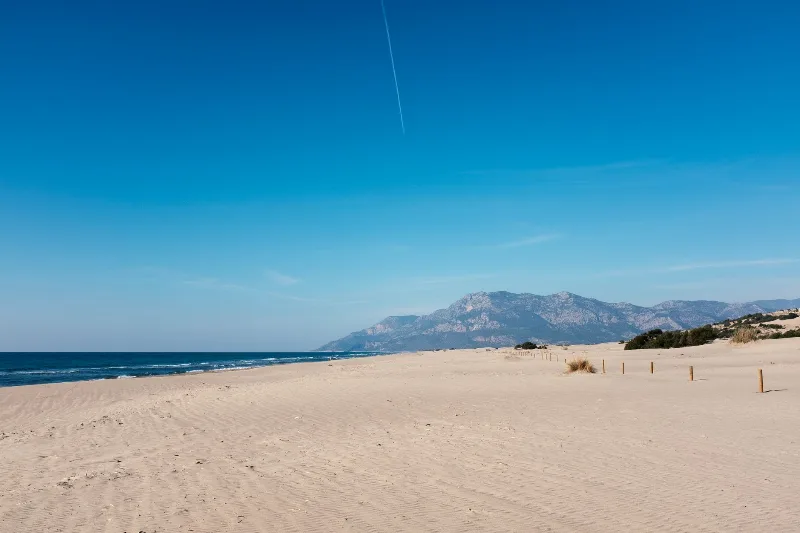
The shoreline consists mainly of fine sand, with dunes rising behind parts of the beach. These sandy formations give the landscape a distinctive open character and create a natural transition between the coast and the inland plain.
The Mediterranean water can shift from pale blue near the shore to deeper blue further out. Because the beach is exposed to the open sea, waves are more common than in sheltered bays and lagoons.
Patara is also associated with Caretta caretta sea turtles, which use the beach as a nesting area.
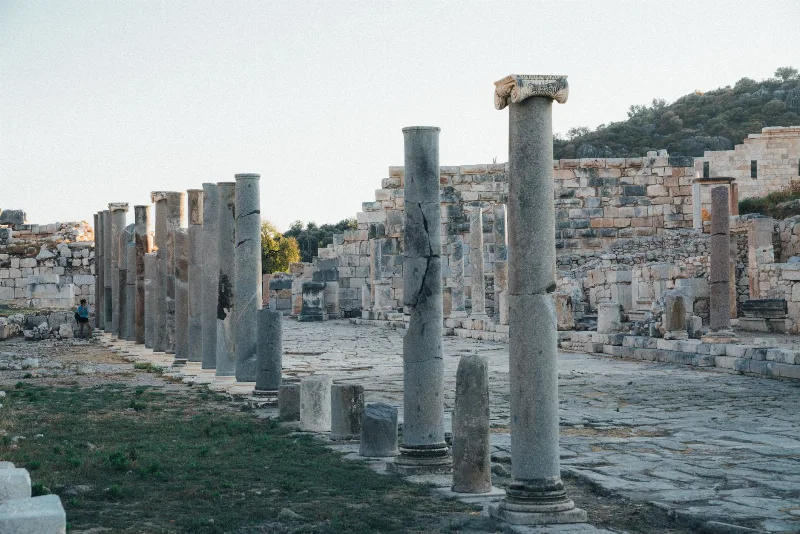
One of the most unusual characteristics of the location is the relationship between the beach and the nearby archaeological landscape. The ruins of Ancient Patara lie inland from the shoreline and include a theatre, assembly building, streets and other remains.
This means the area combines two very different experiences: an ancient city and a long Mediterranean beach.
The dunes are also an important part of the visual landscape. Their soft forms, grasses and pale sand contrast with the blue sea and surrounding hills.
Patara is particularly well suited to long walks because of the length and openness of its shoreline.
As the day progresses, the beach’s appearance changes with the angle of the sun. Late light can produce warmer colours across the sand and dunes while the Mediterranean remains visible across the western horizon.
Patara Beach stands apart from compact resort beaches because of its wide sandy landscape, dunes, wildlife and close connection with one of Lycia’s important ancient cities.
Remarkable places
All places →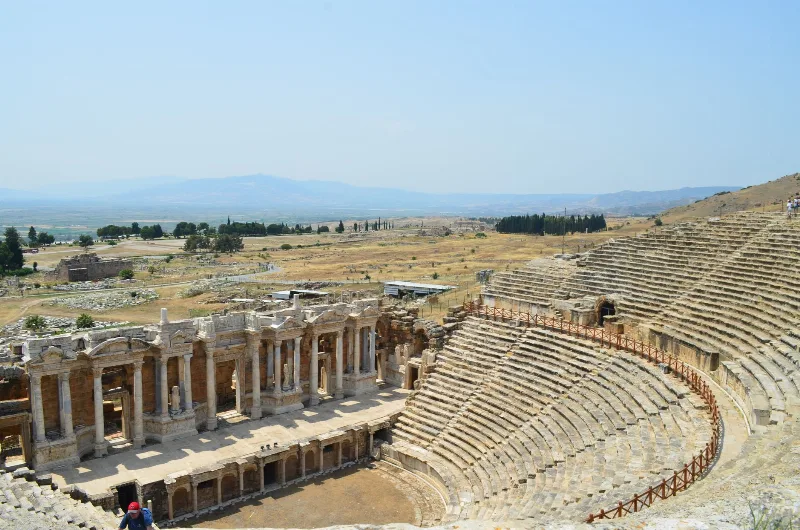
Letoon
Letoon is a Lycian sanctuary near Xanthos in Muğla Province, dedicated to Leto, Artemis and Apollo. Its three temples, theatre and trilingual inscription make it one of southwestern Turkey’s most significant archaeological sites.
Explore →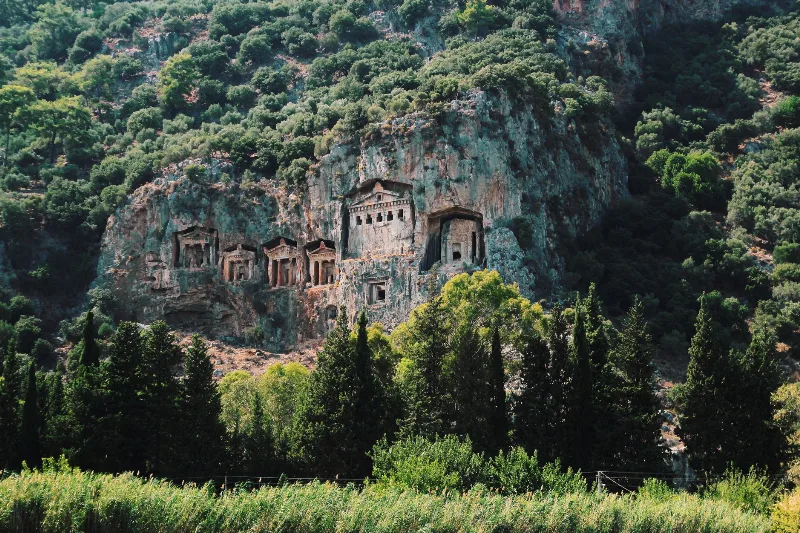
Kaunos
Kaunos is an ancient Carian city on the Dalyan River in Muğla Province, known for its temple-style rock-cut tombs and the extensive ruins of a harbour that silted up centuries ago.
Explore →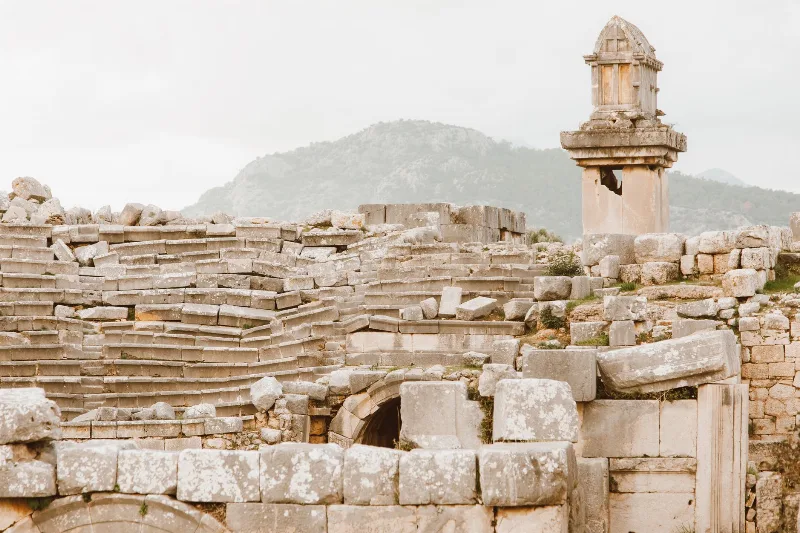
Xanthos
Xanthos is an ancient Lycian city in Antalya Province and a UNESCO World Heritage Site, known for its Lycian tombs, Roman theatre and role as a leading city of Lycia.
Explore →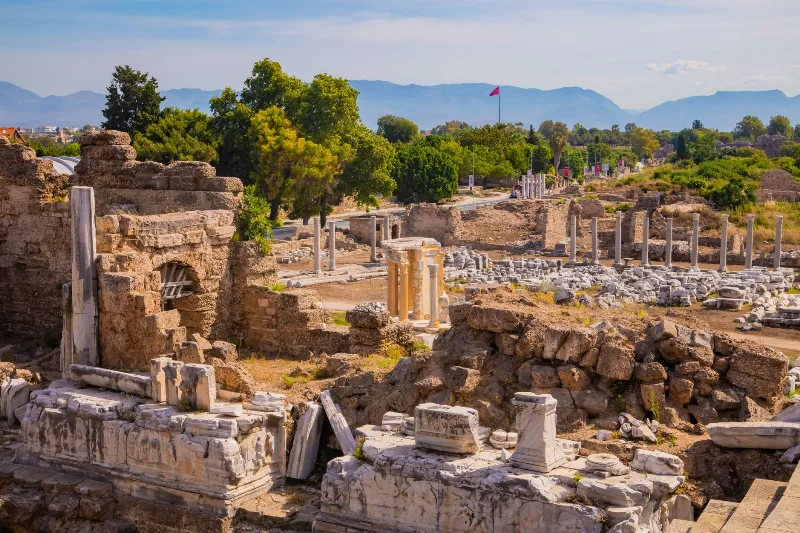
Phaselis
Phaselis is a Rhodian-founded port city on the eastern Lycian coast, where paved streets, agoras, baths and a small theatre stand among pines between three sheltered bays.
Explore →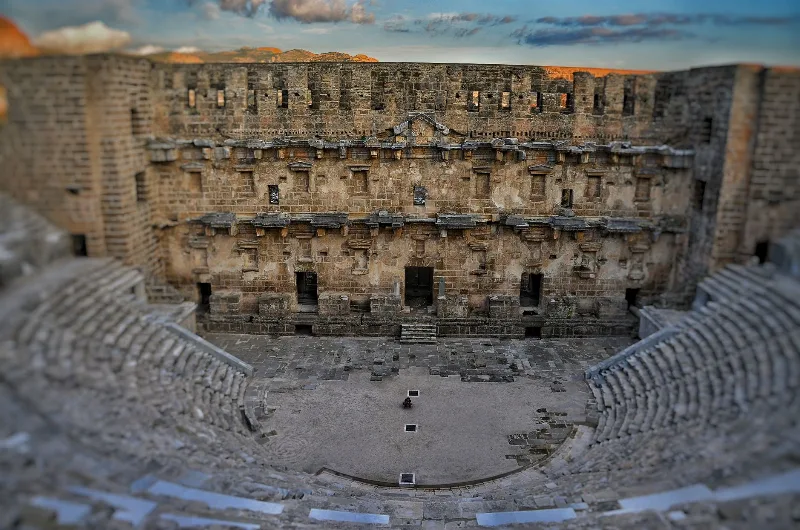
Aspendos
Aspendos is a Pamphylian ancient city near Serik in Antalya Province, dominated by a second-century Roman theatre that survives almost intact. Its aqueduct, acropolis and lower-city ruins sit in the flat farmland of the Köprüçay plain.
Explore →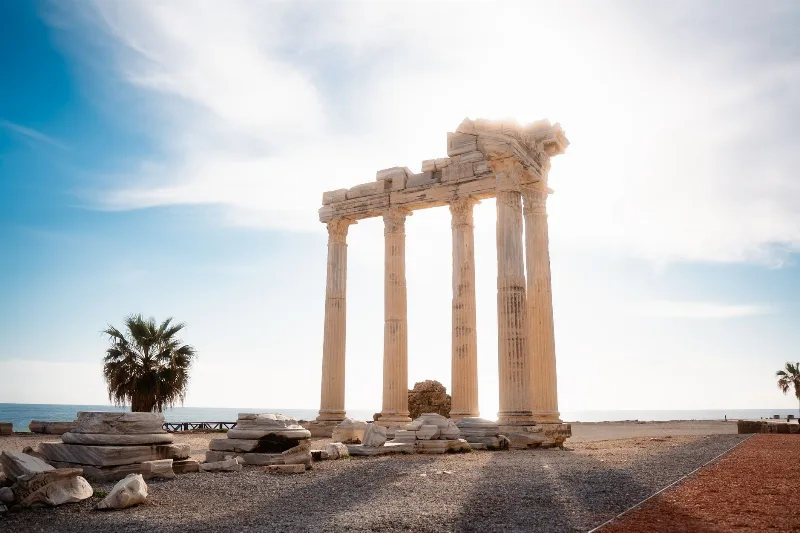
Side
Side is an ancient Greek harbour city on Türkiye's Mediterranean coast, known for the Temple of Apollo, a large Roman theatre and streets of ruins that visitors can still walk through. Its remains sit inside a modern town in the Manavgat district of Antalya Province.
Explore →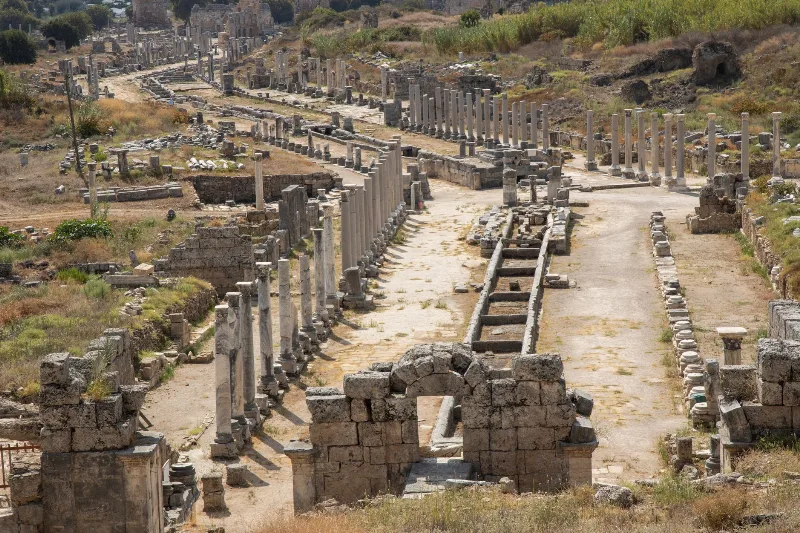
Perge
Perge is an ancient Pamphylian city east of Antalya, whose Hellenistic gates, colonnaded streets, theatre and exceptionally well-preserved stadium make it one of the most legible Roman-era sites in southern Turkey.
Explore →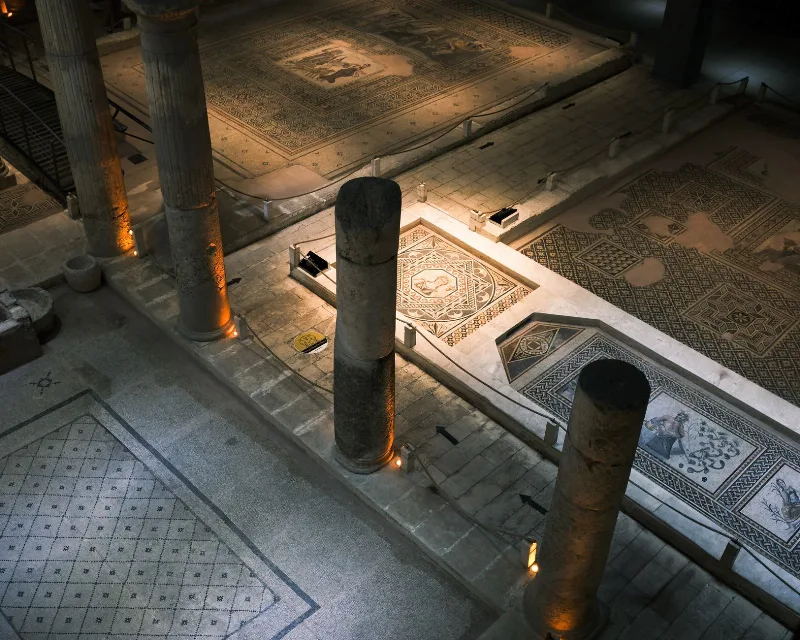
Zeugma
Zeugma was a twin Roman city on the Euphrates in Gaziantep Province, famous for the mosaics recovered from its riverside villas. Here is what the site is, what survives, and what to know before visiting.
Explore →Related content
Patara
Patara is a long, wide sandy beach on Türkiye's Lycian coast, backed by dunes and a shallow wetland, where the open Mediterranean meets a protected coastal landscape.
Patara
Patara is an ancient Lycian city in Antalya Province, Türkiye, that served as the meeting place of the Lycian League and preserves a Roman theatre, triumphal arch, bath complexes and an assembly hall beside a long sandy beach.
Gelemiş
Gelemiş is a farming village in the Kaş district of Antalya, set on a coastal plain immediately beside the ruins of Patara and the long sandy beach that once served one of Lycia's most important harbour cities.
Exploring the Pristine Beaches of Antalya
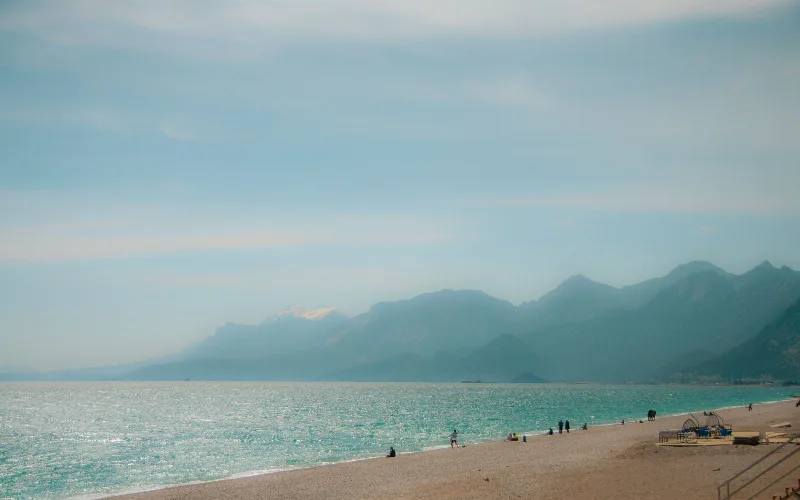
Antalya's beaches offer a serene Mediterranean escape with their clear waters and golden sands. Discover the unique charm of these coastal treasures.
5-Day Fethiye to Kaş Lycian Coast Route
A five-day linear route along the Lycian coast from Fethiye to Kaş, linking Ölüdeniz, Kabak, the Xanthos valley, Patara and Kalkan by road and on foot.
5-Day Antalya to Fethiye Coastal Route
A five-day driving itinerary along Turkey's Mediterranean shore, linking Antalya, Phaselis, Olympos, Demre, Kekova, Kaş, Kalkan, Patara and Fethiye. The route is linear, coastal for most of its length, with short inland detours to Lycian ruins.