
Alanya
Alanya is a district and coastal city in eastern Antalya Province, Türkiye, built around a Seljuk fortress peninsula that carries the Red Tower, a medieval shipyard and an inhabited old town. Long beaches, a mountain backdrop and a long warm season shape its character.
Alanya is a district and coastal city in the eastern part of Antalya Province, on the Mediterranean coast of Türkiye. It is at once an administrative district and one of the larger resort settlements on the country's southern shore, built around a rocky peninsula that juts into the sea. What separates it from most other coastal towns in the region is the scale of its medieval defences: a sprawling Seljuk-era fortress crowns the headland, while a harbour, a stone tower and a shipyard from the same period survive intact at sea level below.
Position and geography
Alanya occupies a stretch of the Turkish Riviera where the Taurus Mountains close in on the sea. Behind the town, the land rises steeply into forested slopes and rocky ridges; in front, a narrow coastal plain widens toward the east. The district borders Manavgat and Gündoğmuş to the west and north and Gazipaşa to the east, and it reaches a long way inland into the mountains as well as eastward along the shore.
Several short rivers and streams meet the sea within the district. The Dim Çayı, east of the centre, drains a valley that stays noticeably cooler than the coast in summer. Further east, the Alara River cuts through the landscape close to the historic Alara Castle and the roadside caravanserai of Alara Han. These valleys, combined with the mountains behind the city, give the district a far more varied geography than its beachfront alone would suggest.
The fortress peninsula and the old town
The defining feature of Alanya is its peninsula, a rocky headland that separates two bays. The whole promontory is enclosed by the walls of Alanya Castle, which the Seljuk sultan Alaeddin Kayqubad I took in 1221 and then fortified. The defences run for several kilometres around the headland, punctuated by towers and gateways, and they surround an area that is still lived in rather than an empty ruin.
Inside the walls, the settlement is arranged in levels. The İçkale, or inner citadel, occupies the highest point near the tip of the peninsula and holds the remains of a palace complex, cisterns and a lighthouse. Below it, the Ehmedek section formed the middle line of defence. Further down, the old town itself is a dense quarter of narrow lanes, stone houses with wooden balconies, small mosques such as the Süleymaniye Mosque and the Bedesten, a covered market building from the Seljuk period. Because people still live and work within the walls, the castle functions as a neighbourhood as much as a historic site.
The harbour, the Red Tower and the shipyard
At the foot of the peninsula, the harbour area preserves the core of the medieval port. The Kızıl Kule, or Red Tower, is an octagonal stone tower built in 1226 under Kayqubad I and attributed to the architect Ebu Ali Reha el Kettani of Aleppo. It stands at the water's edge, guarding the approach to the dock. Beside it, the Tersane, a vaulted stone shipyard with a row of arched bays, was completed in 1227 and counts among the best-preserved Seljuk naval structures anywhere.
This small cluster of buildings gives the waterfront a character quite different from the modern development along the beaches. The harbour is used by small boats, and the quayside works as a public promenade.
The coastline east and west of the centre
Alanya's beaches are divided by the peninsula. To the west lies Cleopatra Beach, a long stretch of sand backed by the base of the castle rock. Near the harbour, Damlataş Beach takes its name from Damlataş Cave, a natural cavern known for its stalactites and humid interior. To the east, Keykubat Beach follows the urban waterfront in front of the main hotel zone.
Beyond the centre, the coast continues east through Oba, Tosmur, Kestel, Mahmutlar, Avsallar and Konaklı, each with its own sandy or pebbly shoreline. İncekum, near Avsallar, is known for fine sand and shallow water. Further east the built-up area thins toward Demirtaş and the Alara valley, where the coast becomes quieter and more open.
Neighbourhoods and the wider district
Modern Alanya has grown well beyond the peninsula. The town centre spreads east and west along the coastal highway, and districts such as Oba, Tosmur, Cikcilli and Kestel serve as residential and hotel zones. Mahmutlar, further east, has developed into a substantial secondary centre with its own seafront. On the western side, Avsallar and Konaklı play a comparable role.
Inland, the district is rural and mountainous. Villages sit in the valleys of the Dim and Alara rivers and on the slopes above them, and agriculture remains central to the local economy. The Sapadere area is known for its canyon, where a stream cuts through high rock walls, and the upper villages maintain a way of life that differs markedly from the coast.
Climate and the most suitable seasons
Alanya has a Mediterranean climate, with hot, humid summers and mild, rainy winters. The sea stays warm well into autumn, and the swimming season is generally long, broadly from late spring into October. Winter is mild enough that the district supports cultivation usually associated with warmer latitudes, including bananas, avocados and citrus, alongside extensive greenhouse production.
For general sightseeing, spring and autumn bring more comfortable temperatures than the height of summer, when heat and humidity can make the climb to the castle strenuous. Winter visitors should expect rain, but also quieter streets and greener inland scenery.
Reaching Alanya and its place in the region
Alanya sits on the coastal highway that follows the Mediterranean between Antalya and the east. Antalya Airport, the main international gateway to the region, lies to the west, while Gazipaşa-Alanya Airport serves the district from the east. The town is therefore easy to combine with other destinations along the coast, including Side and Manavgat to the west and the quieter eastern stretch toward Gazipaşa.
Within Antalya Province, Alanya holds a distinct position. It is larger and more self-contained than most of the resort towns around it, with a permanent population, an agricultural hinterland and a historic core that predates modern tourism by centuries. Its combination of Seljuk heritage, an extended shoreline and a mountain backdrop makes it one of the most recognisable districts on Türkiye's Mediterranean coast.
Discover Food in Türkiye
All food →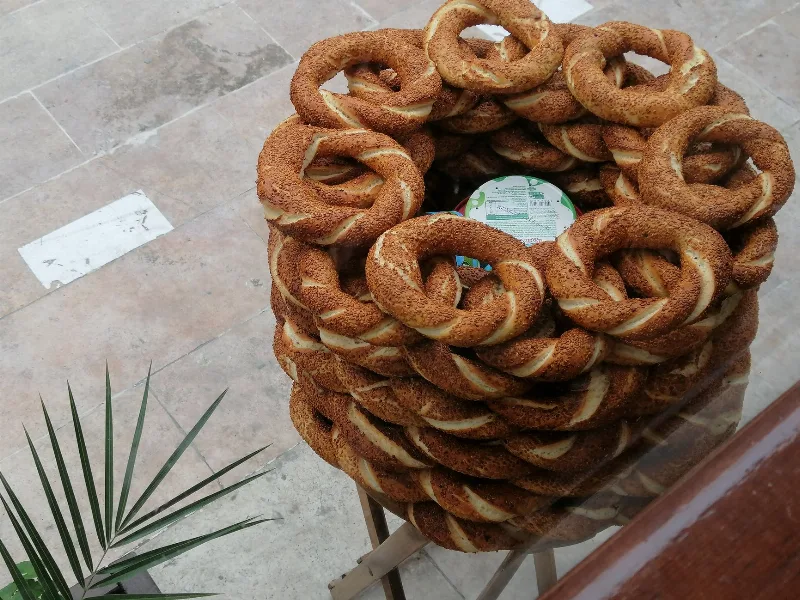
Simit
Simit is a ring-shaped Turkish bread covered in sesame seeds, strongly associated with Istanbul and sold as everyday street food. It is eaten fresh, most often with tea, and has a crisp crust around a chewy crumb.
Explore →
Bazlama
Bazlama is a soft, thick Turkish flatbread made from a leavened dough and cooked on a hot griddle. It is a staple of village baking across Anatolia, eaten warm with butter or used to wrap other foods.
Explore →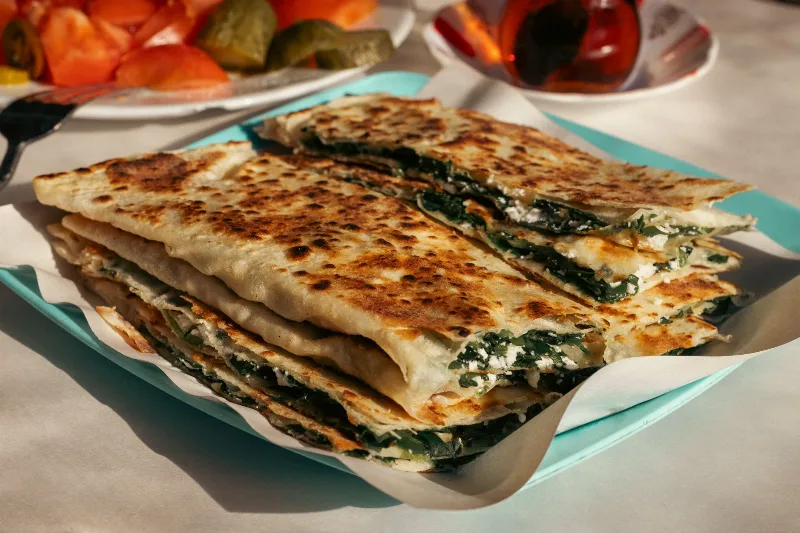
Gözleme
Gözleme is a thin, hand-rolled Anatolian flatbread folded around savory fillings such as cheese, spinach, or minced meat and cooked on a sac griddle. The article covers its regional variations, cooking method, texture, and traditional serving style.
Explore →Related content
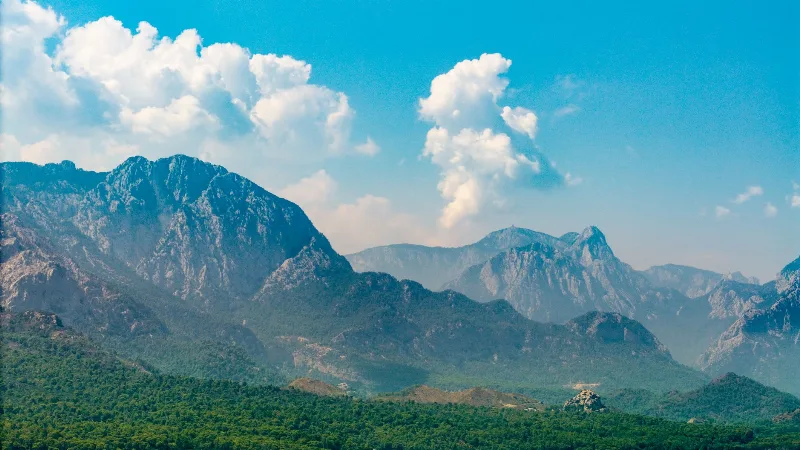
Antalya
Antalya offers a unique blend of vibrant history and stunning natural beauty, making it a must-visit destination in Türkiye.
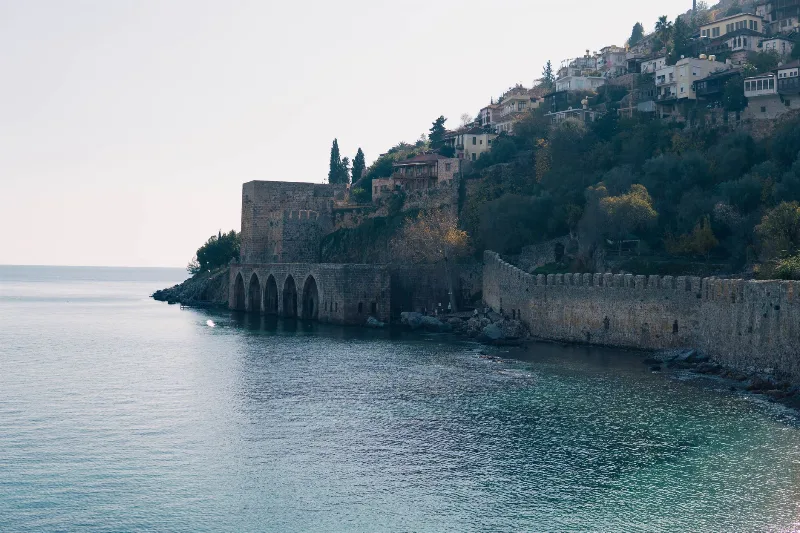
Alanya Castle
Alanya Castle is a 13th-century Seljuk fortress spread across a rocky peninsula above the Mediterranean in Antalya Province, Turkey. Its walls, towers and hilltop citadel form one of the most complete surviving Seljuk defensive complexes in Anatolia.
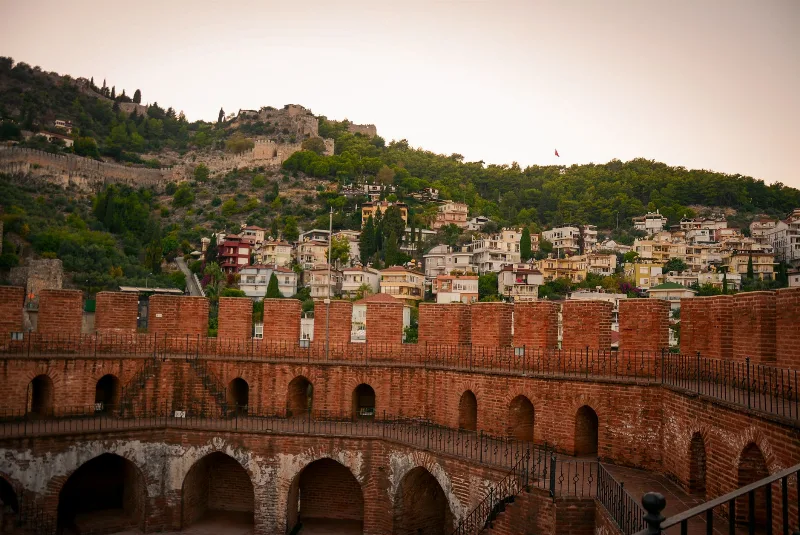
Alanya Castle
Alanya Castle is a medieval fortress on a rocky Mediterranean promontory in Antalya Province, Türkiye, whose surviving defences were largely built under the Seljuk Sultanate of Rum in the 13th century. Its walls, inner citadel, Red Tower and vaulted shipyard form one of the most complete Seljuk military and maritime complexes in Anatolia.
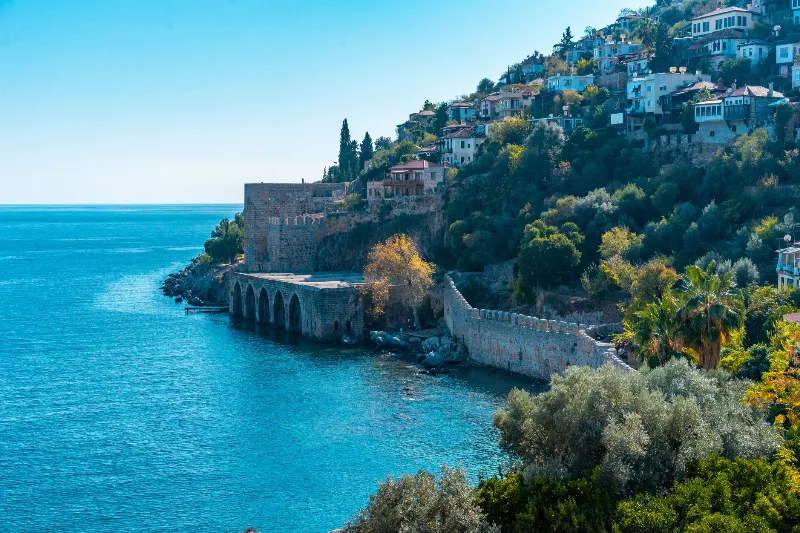
3-Day Alanya and Side Route
A three-day route along Türkiye's eastern Mediterranean coast, starting at Alanya Castle, continuing west to the ancient city of Side, and ending at the Manavgat Waterfalls.
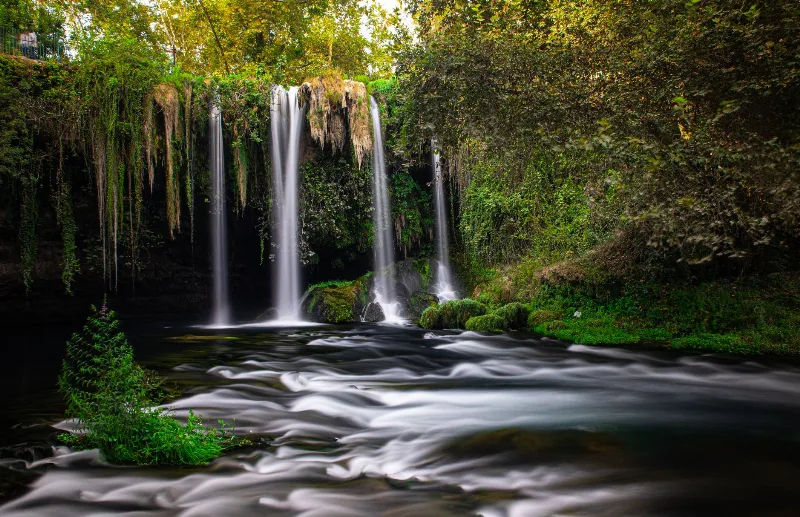
Kurşunlu Waterfall
Kurşunlu Waterfall is a natural cascade in Antalya Province, Turkey, set within a lush forest and nature park. It is known for its series of falls, cave, and walking paths.
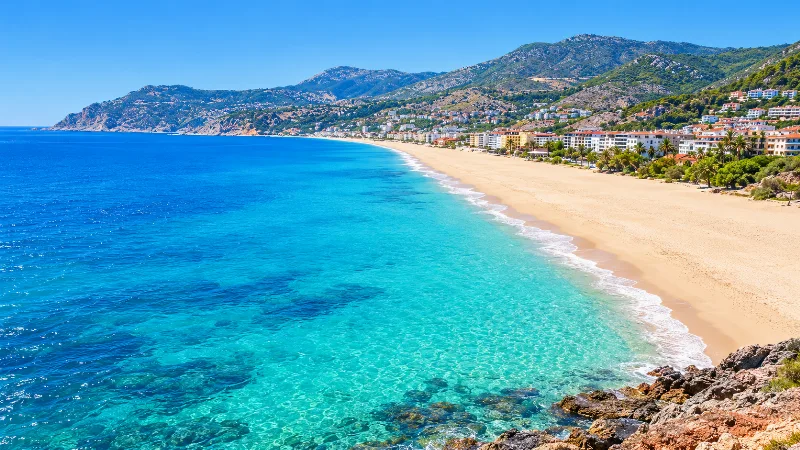
Damlataş
A short, sandy Mediterranean shoreline at the foot of Alanya's limestone headland, taking its name from the cave in the rock above it.