
Ephesus Ancient City in Türkiye
Ephesus is a vast archaeological site on the Aegean coast of Türkiye, where marble streets, terraced houses and a hillside theatre trace the life of a major Roman city. Nearby Selçuk adds museums, a hilltop basilica and a fertile farming plain.
Ephesus is a large archaeological site on the Aegean coast of Türkiye, in the province of İzmir, close to the modern town of Selçuk. Shaped over many centuries by Ionian Greeks, Romans and Byzantines, the city now reveals long marble avenues, terraced houses, monumental gates and a theatre carved into a hillside. Excavation has continued for well over a century, and the result is one of the most readable ancient landscapes in the Mediterranean.
A city shaped by the Aegean
Geography explains much of the story here. Ephesus once stood beside a deep harbour where the Kaystros river, today the Küçük Menderes, met the sea. Over the centuries the river carried silt into the bay, the coastline drew back, and the harbour that had supported a great trading city slowly vanished. The ruins now lie several kilometres inland, a clear record of how the Aegean landscape has shifted since antiquity. In Roman times Ephesus was the seat of the province of Asia and one of the largest cities of the eastern Mediterranean, a position reflected in the scale of its public buildings.
Walking the marble streets
Most routes begin at the upper gates and descend along Curetes Street, once framed by colonnades, statues and fountains. The paving stones are worn smooth and still carry faint inscriptions. On the slope beside the street, the Terrace Houses show how prosperous households lived: mosaic floors, painted walls, private courtyards and underfloor heating. Further down, Marble Street leads towards the Library of Celsus, whose restored façade of columns and niches has become one of the most familiar images of Roman architecture in Türkiye.
Landmarks across the site
The Great Theatre, cut into the slope of Mount Pion, held audiences estimated in the tens of thousands and still gives the site its sense of scale. Nearby, the Gate of Augustus, the commercial agora and the stadium outline the rhythm of public life. A short distance from the main ruins stands the Temple of Artemis, counted among the Seven Wonders of the ancient world; today a single reassembled column and scattered foundations remain among the reeds. Ephesus was inscribed on the UNESCO World Heritage List in 2015.
Selçuk, Ayasuluk and the surrounding hills
The town of Selçuk works as the natural base for the site and holds the Ephesus Archaeological Museum, where finds from the excavations, including statues of Artemis, are displayed. Above the town, Ayasuluk Hill carries the remains of the Basilica of St John, built in the sixth century, beside the walls of a later fortress. On the slopes of Bülbül Dağı, a small stone building known as the House of the Virgin Mary is a place of pilgrimage for visitors of different faiths. Inland, the village of Şirince sits among olive groves with white houses and narrow lanes.
The Aegean table around Selçuk
The countryside below the ruins is farmland: olives, figs, citrus and vegetables grow across the plain. Local cooking leans on olive oil, wild greens and slow-cooked vegetable dishes, with artichokes appearing in spring and stuffed vine leaves through the warmer months. Şirince is known for fruit wines made from mulberry and other local produce, while the town market in Selçuk brings together the region's herbs, cheeses and seasonal fruit.
How the seasons change the visit
Ephesus can be explored throughout the year, but the character of the site shifts with the weather. Spring brings mild air and flowering plants among the stones; summer is hot and bright, with strong light on the marble; autumn offers softer light and quieter paths; winter can be green and wet. Early mornings and late afternoons stretch long shadows across the colonnades. The nearby coast around Pamucak and Kuşadası adds sand and shallow water to a day that begins among ancient streets.
Related content
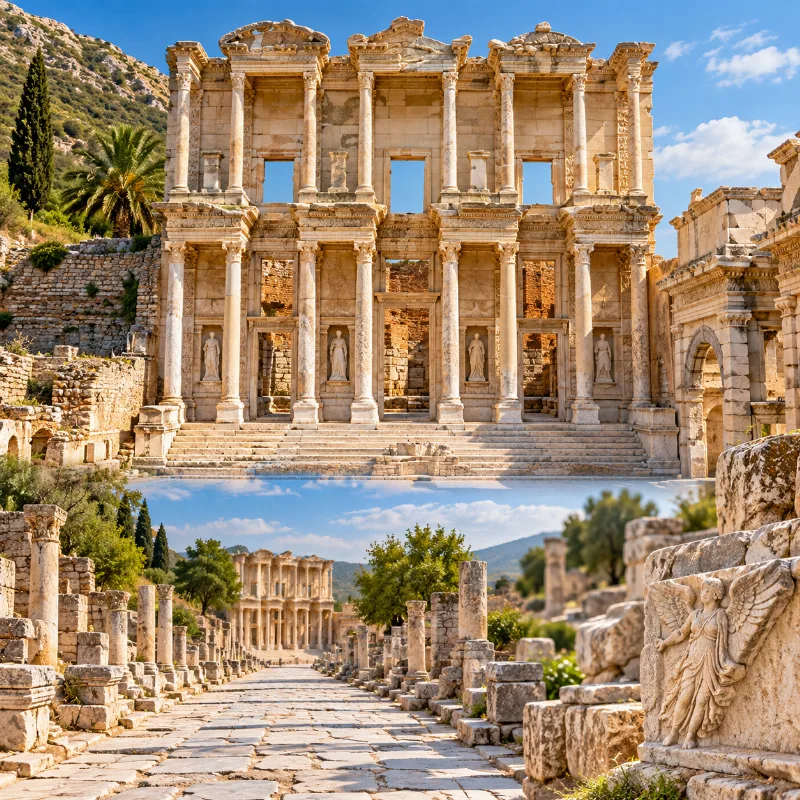
Ephesus
One of the best-preserved ancient cities in the Aegean, known for its monumental streets, library, theatre and Roman-era remains.
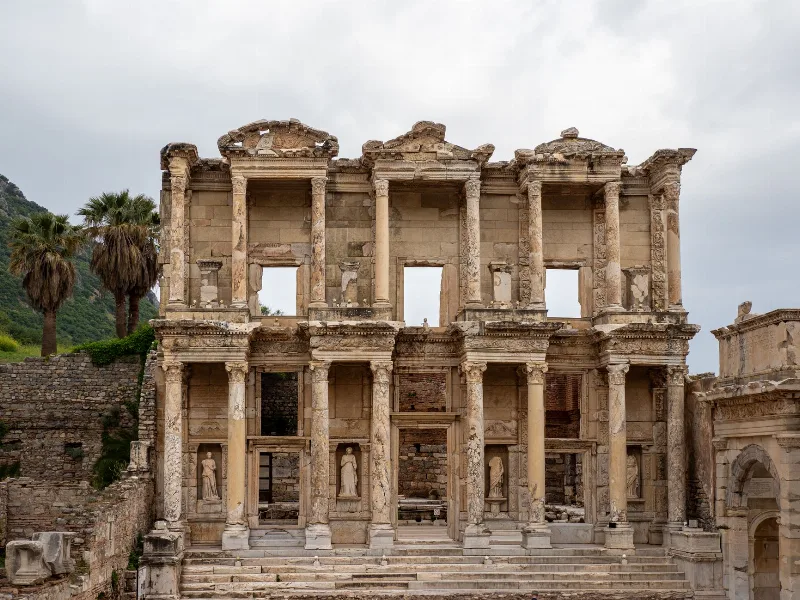
Ephesus
Ephesus is an ancient Greek and Roman city near Selçuk in İzmir Province, Türkiye, whose ruins include the Library of Celsus, the Great Theatre and the remains of the Temple of Artemis.
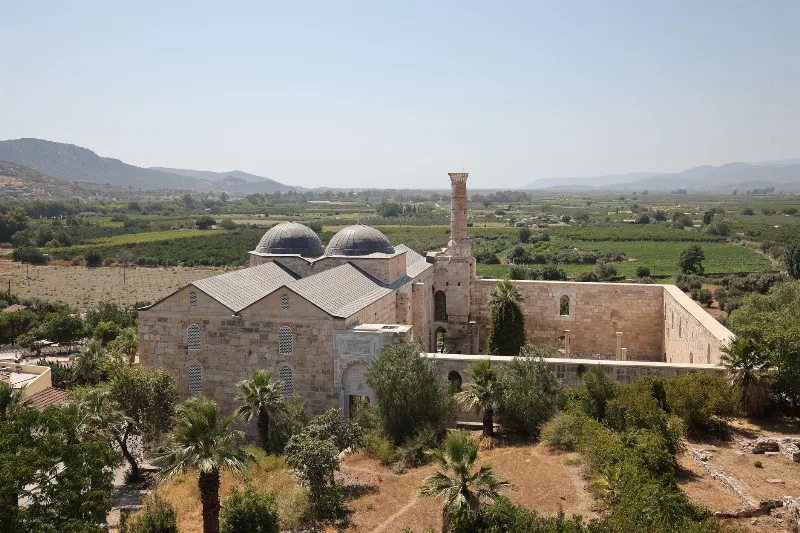
Selçuk
Selçuk is an inland district of İzmir Province in the Aegean region, set in the Küçük Menderes valley near the coast. It is best known as the modern town serving Ephesus, the House of the Virgin Mary and the Basilica of St John.
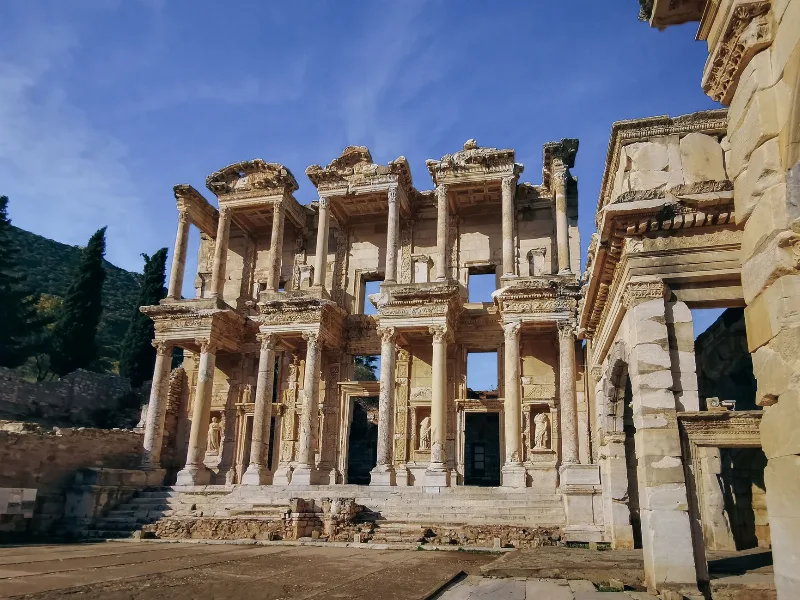
6-Day Aegean Ancient Cities Route
A six-day linear journey from Izmir to Denizli through the great ancient cities of the Aegean, linking Ephesus, Priene, Miletus, Didyma, Lake Bafa, Pamukkale, Laodicea and Aphrodisias in one coherent corridor.
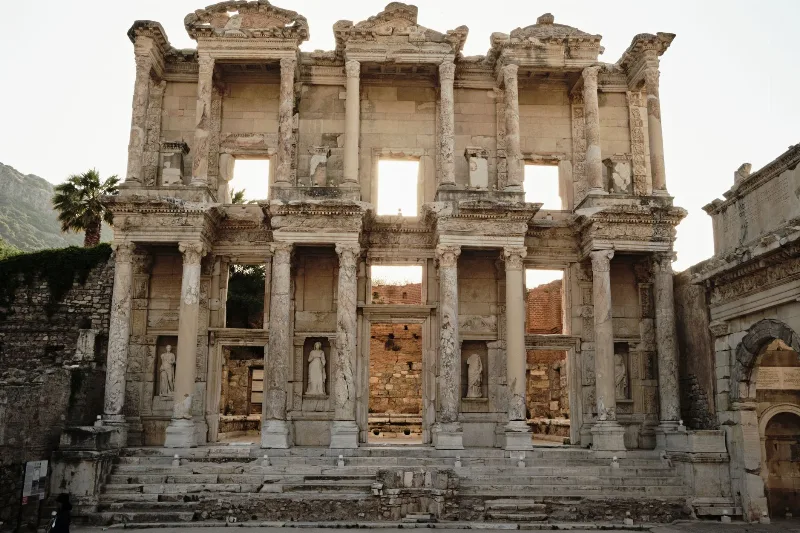
4-Day Ephesus and Pamukkale Route
A four-day west-to-east Aegean route that links the ancient city of Ephesus and the House of Virgin Mary in Selçuk with the white travertine terraces and Hierapolis ruins at Pamukkale, near Denizli.
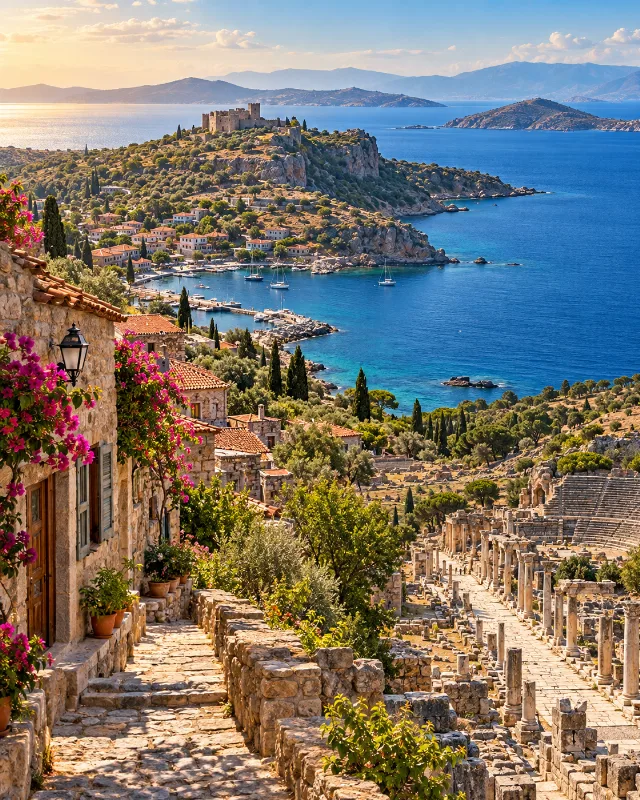
7-Day North Aegean to Ephesus Route
A seven-day southbound route through Troy, Assos, Bozcaada, Ayvalık, Bergama, İzmir and Ephesus, combining archaeology, coastal towns and Aegean culture.
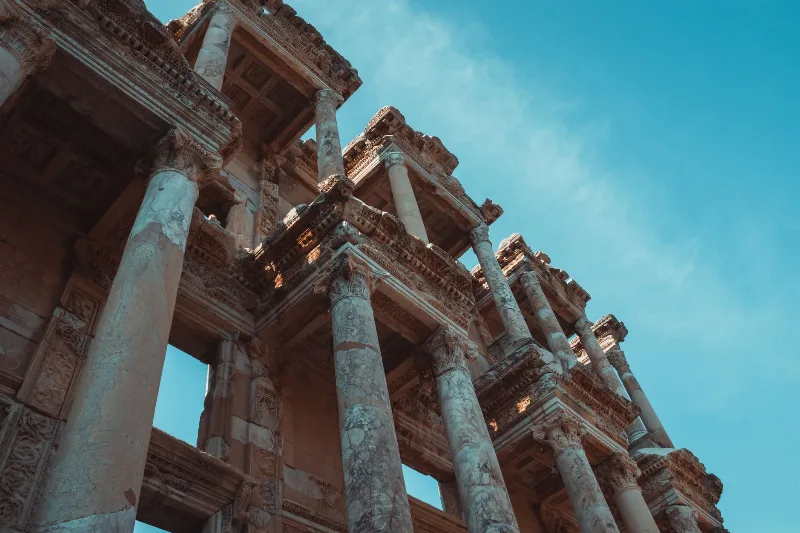
Ephesus Ancient City
Experience the historical allure of Ephesus, one of Türkiye's most well-preserved Roman sites.
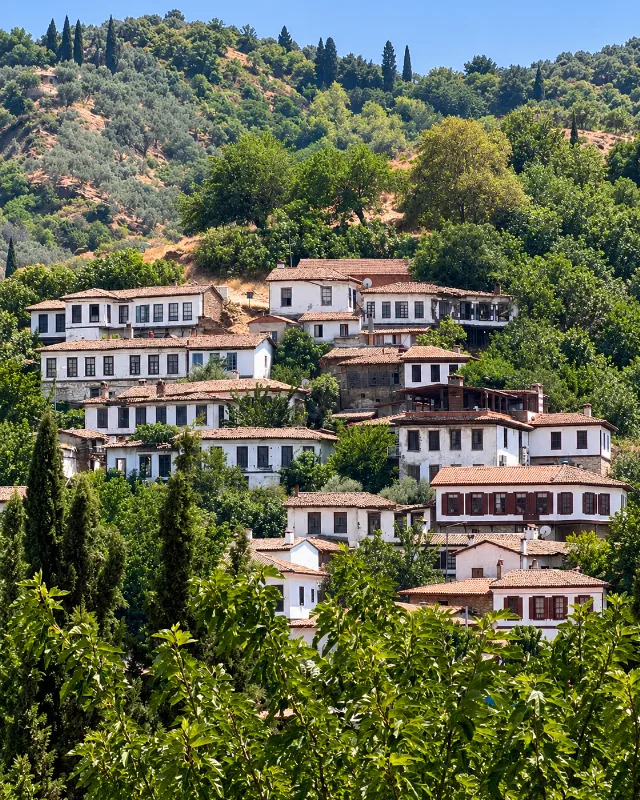
Şirince
Şirince is a hillside village in İzmir's Selçuk district, known for fruit wine, surviving Greek Orthodox buildings and whitewashed houses with terracotta roofs that climb a slope above the plain.