
Adana Kebabı
Adana kebabı is a spicy minced-lamb kebab from the southern Turkish city of Adana, moulded onto wide flat skewers and grilled over charcoal. Its heat, its hand-chopped meat and its distinctive flat skewer set it apart from other Turkish kebabs.
Adana kebabı is a spicy minced-meat kebab that takes its name from the city of Adana in southern Türkiye. Its defining components are hand-chopped lamb, a generous proportion of tail fat, salt and hot red pepper flakes, which are worked together into a sticky paste, pressed around wide, flat metal skewers and grilled over charcoal. The finished kebab is long, slightly flattened and irregular rather than cylindrical, and it is traditionally brought to the table on flatbread with grilled tomatoes and peppers, onions dressed with sumac and parsley, and often a glass of turnip juice or rakı alongside.
What Makes Adana Kebabı Distinct
Three things separate Adana kebabı from the wider family of Turkish minced-meat kebabs. The first is heat: the mixture is deliberately seasoned with hot pepper, giving the kebab a clear, sustained spiciness that is not simply a background warmth. The second is the fat content, which is high by design, because the fat carries the flavour and keeps the meat juicy over the fire. The third is the skewer. Instead of thin round metal sticks, Adana kebabı is moulded onto broad, flat blades, so the meat spreads out into a wide, ribbon-like strip with a larger surface exposed to the coals.
The Meat and How the Mixture Is Prepared
Lamb is the traditional base, and the meat is usually taken from the shoulder, breast or leg, depending on the butcher's habit. In the region's established practice the meat is not passed through a grinder. It is chopped by hand with a heavy crescent-shaped blade known as a zırh, worked over and over until it breaks down into a fine, cohesive mass but never quite becomes a smooth paste. This matters for texture: machine-minced meat releases more liquid and produces a denser, more uniform bite, while hand-chopped meat keeps a slight grain.
Tail fat is added in a proportion that is noticeably higher than in most other kebabs, and the fat is chopped together with the lean meat rather than added afterwards. Salt and hot red pepper flakes go in at the same stage, and some makers also work in fresh hot peppers, a little sweet pepper or a small amount of onion. The mixture is then kneaded by hand for a considerable time, sometimes with a little water or crushed ice, until it turns tacky and holds together. A mixture that is not kneaded enough will slide off the skewer; one that is overworked becomes pasty.
The Flat Skewer and the Charcoal Grill
Once the mixture is ready, it is taken up in handfuls and pressed evenly along the length of each flat skewer, then smoothed with wet fingers until the meat forms a uniform strip with no gaps. The skewers are laid over a charcoal fire with the coals spread flat and even, and the kebab is turned as it cooks so that both sides colour without drying out. The fat drips into the fire and flares up, which is part of the character of the dish: the outer surface catches a little smoke and char while the interior stays soft. A well-made Adana kebabı is browned and lightly blistered on the outside but still moist at the centre when it comes off the grill.
Flavour, Aroma and Texture
The flavour is dominated by grilled lamb and rendered fat, sharpened by the heat of the pepper and a faint smokiness from the charcoal. Because the fat is mixed through the meat rather than sitting around it, the richness is even across the whole strip. The texture is soft and slightly yielding with a light crust where the surface met the fire; it is not a chewy kebab, and it does not have the dense, springy bite of a machine-minced cutlet. The pepper is felt from the first bite and lingers, which is why the kebab is almost always accompanied by something cooling or acidic.
How It Is Served
Adana kebabı is normally served directly on a piece of flatbread, often a thin lavash or the local pide, which absorbs the fat and juices running off the meat. Alongside it come grilled tomatoes and green peppers, sometimes grilled onions, and a salad of sliced raw onion tossed with sumac and chopped parsley. A sharper chopped pepper-and-tomato relish may appear as well. The bread is not treated as a separate side dish; it is part of the plate, and it is eaten with the meat rather than before it.
Drinks follow the region. Turnip juice, a sour fermented drink strongly associated with Adana and the surrounding province, is the standard non-alcoholic partner, while rakı is the usual choice when the meal is a long, social one. Ayran also appears commonly.
Adana Kebabı and the City of Adana
The kebab's identity is inseparable from Adana. The city, on the Çukurova plain in the eastern Mediterranean region, has a long-standing reputation for grilled meat, and the hot, heavily seasoned style of the local kebab reflects a wider preference in the region for sharp, peppery flavours. It is common to hear the dish described simply as kebap in its home city, and the local restaurant culture around it is tied to evening meals that stretch over several hours. Because the dish is so closely tied to a specific place, it is included in Türkiye's geographical indication system, which sets out a defined composition and preparation for the kebab bearing the name.
Urfa Kebabı and Other Related Kebabs
The closest relative is Urfa kebabı, associated with the city of Şanlıurfa to the east. It uses the same minced-lamb and flat-skewer approach but is made without hot pepper, so it is milder and usually slightly less fatty. Confusing the two is a common mistake, and the visual difference is small: the two kebabs can look almost identical on the plate, and the heat level is often the clearest signal of which one is being served.
Adana kebabı also differs from şiş kebab, which is made from cubes of meat rather than minced meat, and from döner, where seasoned meat is stacked and roasted on a vertical spit and then sliced. Another related form is the dürüm, in which the grilled kebab is wrapped in flatbread with onions, parsley and sometimes tomato — a street-food format rather than the plated dish.
Variations and Everyday Practice
Variations exist along the same lines rather than as separate recipes. The proportion of fat varies between makers, as does the amount and type of pepper, so the heat can range from a firm warmth to something considerably stronger. Some versions include a small quantity of onion or fresh pepper in the mixture; others keep it to meat, fat, salt and pepper alone. In households, the mixture may be shaped into shorter pieces or formed around round skewers when flat ones are not available, and it may be grilled on a griddle or over a gas grill rather than charcoal. These are practical adaptations of the same dish rather than distinct regional styles.
What remains consistent is the structure: hand-chopped or finely minced lamb with a substantial fat content, seasoned with hot pepper, pressed onto a wide skewer, and grilled quickly over high heat so that the outside browns while the inside stays soft. That combination, together with the bread and the sumac onions served underneath and beside it, is what defines Adana kebabı.
Related content
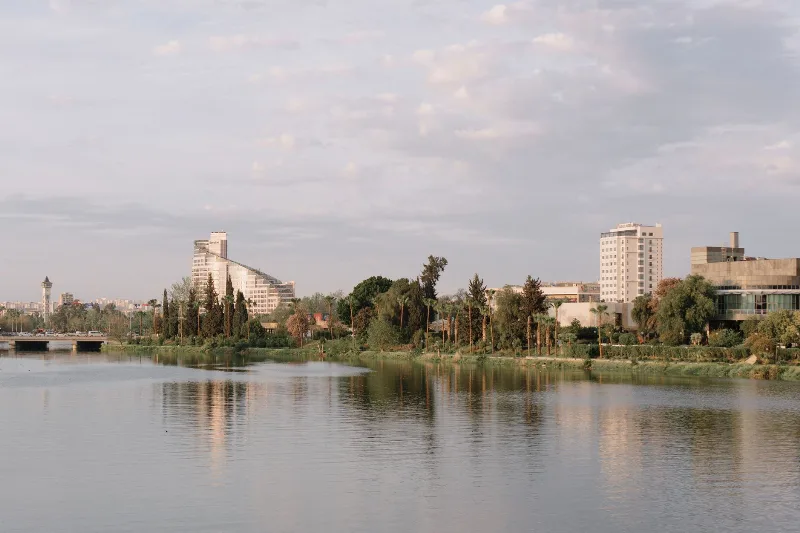
Adana
Adana is a major metropolitan city in southern Türkiye and the urban heart of the Çukurova plain, defined by the Seyhan River, a Roman-era stone bridge and a deeply rooted kebab and agricultural culture.
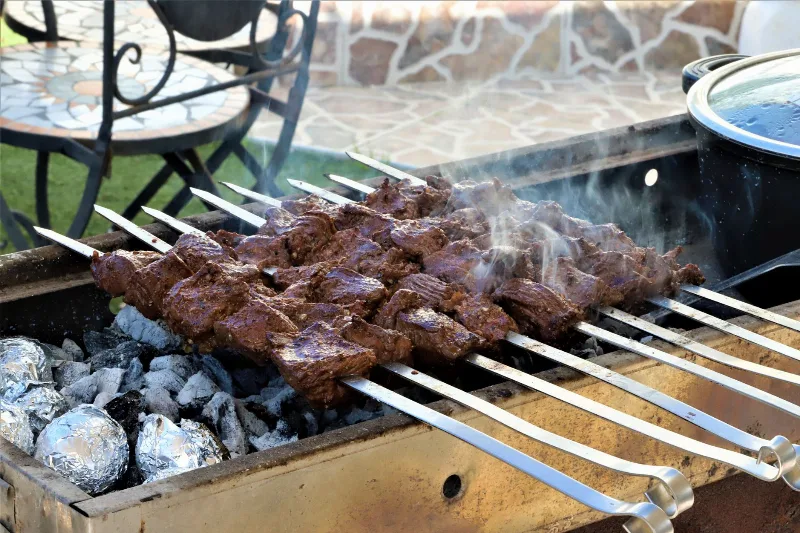
Urfa Kebabı
Urfa Kebabı is a charcoal-grilled minced lamb kebab from Şanlıurfa, seasoned without hot pepper and pressed onto long flat skewers. Its mild, juicy character places it alongside — and directly against — the spicier Adana kebabı.
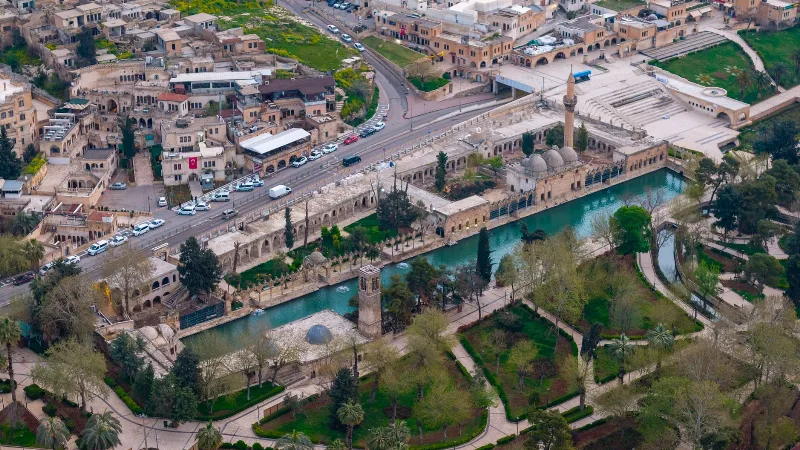
Şanlıurfa
Şanlıurfa, commonly called Urfa, is a large city in southeastern Türkiye and the capital of its province. It is known both as a place tied to the tradition of the Prophet Abraham and as the gateway to Göbekli Tepe, one of the oldest monumental sites ever found.
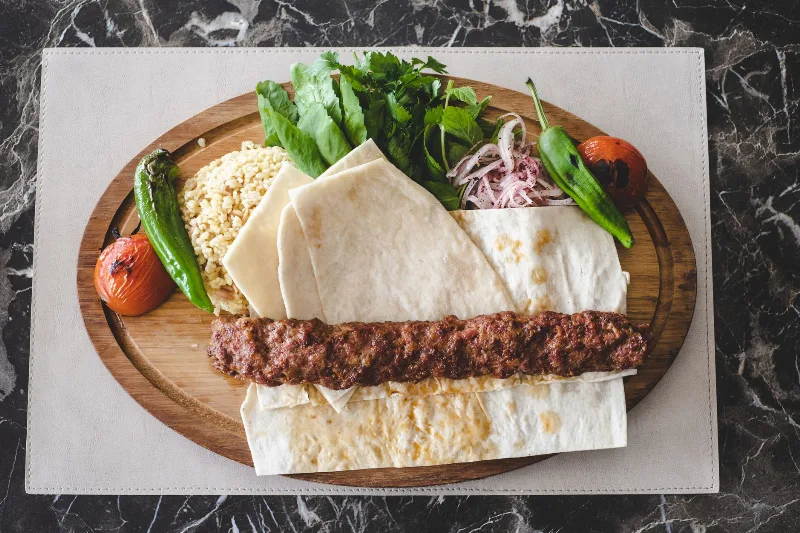
Adana Kebap: Spicy Hand-Minced Lamb Kebab from Adana
Adana kebap is a charcoal-grilled minced lamb kebab from the Çukurova plain, defined by hand-chopped meat, tail fat and generous chilli heat. This article explains its ingredients, preparation, flavour and how it differs from Urfa kebap.
Why Turkish Food Changes from Region to Region
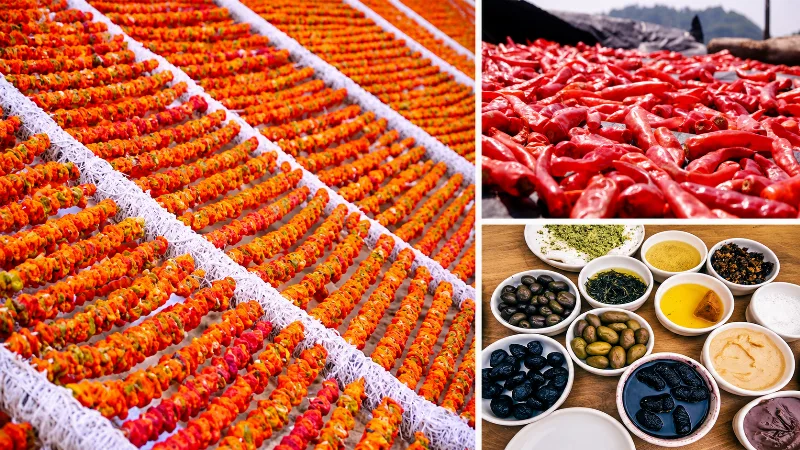
Climate, geography, agriculture and local history shape the ingredients, cooking methods and everyday dishes found across Türkiye. Türkiye’s cuisine is often described as a single national tradition, but food changes considerably from one region to another. Coastal climate, mountain geography, agricultural production, local history and available ingredients all influence what is cooked and how meals are prepared. A dish common on the Black Sea coast may be uncommon in southeastern Türkiye, while ingredients associated with the Aegean can play a much smaller role in the interior. These regional differences form one of the main characteristics of Turkish food culture.
Şiş Kebap
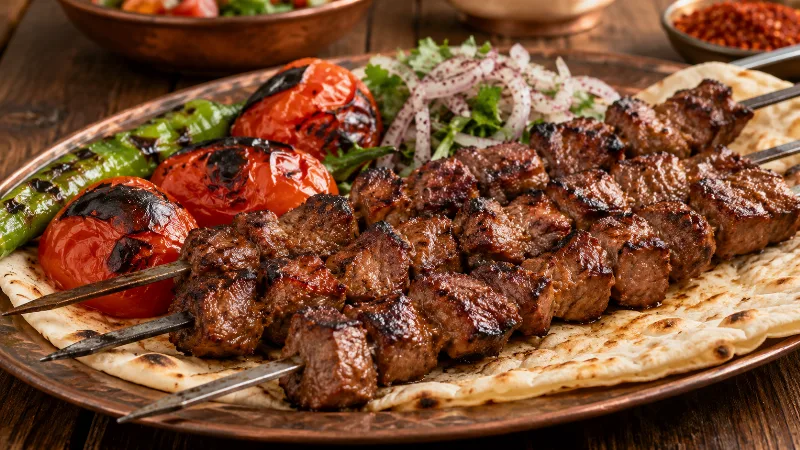
Şiş kebap is built from cubes of marinated meat threaded onto a skewer and grilled over charcoal. It is one of the simplest forms of Turkish kebab, defined by the cut of meat, the marinade and the skewer itself.