
Adana Kebap: Spicy Hand-Minced Lamb Kebab from Adana
Adana kebap is a charcoal-grilled minced lamb kebab from the Çukurova plain, defined by hand-chopped meat, tail fat and generous chilli heat. This article explains its ingredients, preparation, flavour and how it differs from Urfa kebap.
Adana kebap is a charcoal-grilled minced lamb kebab strongly associated with the city of Adana and the Çukurova plain in southern Türkiye. Its defining components are lamb, a substantial share of fat from the tail of a fat-tailed sheep, hot red pepper flakes and salt. What separates it from most other minced-meat kebabs is the way the meat is handled: lamb is chopped by hand with a crescent-shaped knife instead of being put through a grinder, then pressed around wide, flat metal skewers and cooked over charcoal. The finished kebab is coarse in texture, juicy inside, and carries a clear chilli heat. In Turkish the dish is most often written Adana kebabı, and in Adana the word kebap by itself normally refers to this preparation.
Adana and the Çukurova Plain
Adana sits in the Çukurova, a hot, broad plain in southern Türkiye where sheep rearing, butchery and chilli-forward cooking have long roots. The kebab's identity is bound tightly enough to the city that the name travels with the dish: kebabs made in the same manner in other provinces are usually described as being in the Adana style rather than as a separate dish. Local names include Adana kebabı, kıyma kebabı and zırh kebabı, the last referring to the tool used to chop the meat.
The precise origin of the dish is not documented with certainty. Accounts differ on how and where it took its current form, and it is usually discussed as a product of the region's kebab tradition rather than as the invention of one clearly identifiable person or moment. What is not in dispute is that the kebab grew out of conditions particular to the Çukurova: plenty of lamb, skilled hand chopping, and a preference for grilled meat with sharp, hot seasoning.
The Meat and the Hand-Mincing Tradition
Lamb forms the base of the mixture, and fat is treated as an ingredient in its own right rather than as a by-product. Fat from the tail of a fat-tailed sheep, known as kuyruk yağı, is chopped together with the lean meat so that the kebab stays moist over the fire. The balance between lean and fat is one of the main points of disagreement between cooks, and the character of a finished kebab depends heavily on it.
Zırh, Satır and the Texture They Create
The traditional tool is the zırh, a curved chopping blade with a handle at each end, worked on a wooden block. Some cooks use a heavy cleaver, satır, or a combination of both. The aim is a coarse, slightly sticky paste in which individual fibres are still visible, not a smooth, uniform mince. Machine grinding crushes the meat fibres and warms the fat as it works, producing a denser and more homogeneous mass. Hand chopping keeps the mixture looser, and that difference shows up directly in how the kebab eats: the hand-chopped version tends to hold juices better and feels less compact on the tongue.
Seasoning: Chilli Heat as a Defining Trait
Hot red pepper flakes, pul biber, are worked into the meat along with salt, and they do more than add heat. They stain the raw mixture a deep red and give the grilled kebab its colour as much as the fire does. This chilli content is the single clearest marker of an Adana kebab, and it is the main reason the dish is ordered and described in terms of heat: acılı for the standard hot version, az acılı for a milder one. Beyond meat, tail fat, chilli flakes and salt, the mixture is deliberately short, and cooks differ over how much extra seasoning is acceptable. Some keep it to those four elements; others allow small adjustments. In Türkiye the dish is registered as a geographical indication, and the registered definition reflects the traditional method of hand mincing, chilli seasoning, flat skewers and charcoal grilling.
Shaping and Grilling on Flat Skewers
The mixture is moulded by hand around long, flat metal skewers, known as yassı şiş. The flat profile matters: a round skewer lets the meat rotate as it is turned, while a flat one grips the mixture and keeps the kebab in place. The meat is pressed into an elongated, slightly flattened strip, thicker in the middle and tapering at the ends. Grilling takes place over charcoal, traditionally oak charcoal, which gives a dry, even heat and a light smokiness. The kebab is turned frequently so that it cooks through without drying, and the surface picks up charred edges where the fat drips and flares. The final shape is a single long strip of meat rather than a row of separate pieces.
What Adana Kebab Tastes and Looks Like
A finished Adana kebab is reddish brown to dark mahogany on the outside, with a lightly crusted, blistered surface and a juicy interior. The flavour is dominated by lamb, with the tail fat contributing a rich, slightly gamey sweetness and the chilli providing a heat that builds gradually rather than arriving all at once. The texture is coarse and faintly fibrous; the meat is firm enough to hold its shape when lifted from the skewer but soft enough to give way easily. Because the kebab is dense and fatty, a single skewer is a full portion for many diners, and two is a generous meal.
How Adana Kebab Is Served
The kebab is normally laid on a piece of lavaş or pide, which soaks up the juices that run from the meat. Alongside it come a sumac-dusted onion salad, grilled tomato and long green peppers, and often a tomato-and-pepper salad or ezme. In Adana, yogurt with purslane is a common companion, and şalgam suyu, the fermented turnip juice of the Çukurova, is a standard drink at the same table, with ayran also widely served. The kebab is eaten as a main course, most often in the evening, though kebab houses in the city serve it through the day. It is rarely treated as a light dish; the accompaniments exist to cut the fat and the heat.
Adana Kebab and Urfa Kebab: The Key Difference
The closest relative is Urfa kebab from Şanlıurfa. Both are hand-chopped lamb kebabs pressed onto flat skewers and grilled over charcoal, and they are often described as siblings. The difference lies in the seasoning and the fat. Urfa kebab is prepared without hot pepper flakes and relies instead on isot, the dark, mild dried pepper associated with Şanlıurfa, and it generally contains less fat, so it is milder, less oily and slightly darker in colour. Ordering one while expecting the other is a common source of confusion for visitors, since the two look alike on the plate. Adana kebab also differs from döner kebab, which is built from stacked, marinated slices of meat cooked on a vertical rotisserie and then shaved, and from cubed-meat şiş kebab, which uses whole pieces of meat rather than a chopped mixture.
Variations and How the Kebab Is Ordered
Variations exist within the style rather than as separate named dishes. The proportion of fat to lean meat, the coarseness of the chop, the amount of chilli and the thickness of the strip are the main variables, and cooks argue over each of them. Some kebab houses produce a long, thin version; others prefer a shorter, plumper shape. A milder version is made for diners who want the flavour without the heat. Recipes also travel: the same method is used well beyond Adana, and in those cases the result is usually labelled Adana style rather than presented as a different dish.
Place in Adana's Food Culture
In Adana, kebab is everyday food as much as it is restaurant food. The city's food culture is built around grilled meat, sharp salads and fermented drinks, and the kebab sits at the centre of that pattern, served at family meals and at the long tables of the city's kebab houses alike. It shares a table culture with other regional specialities of the Çukurova, including şalgam suyu and the summer dessert bici bici, made with starch cubes, rose syrup and ice. The dish's regional identity is strong enough that it functions as a shorthand for the city itself: for people from Adana, the combination of hand-chopped lamb, tail fat and chilli is not a variation on a kebab but the standard against which other minced-meat kebabs are measured.
Related content
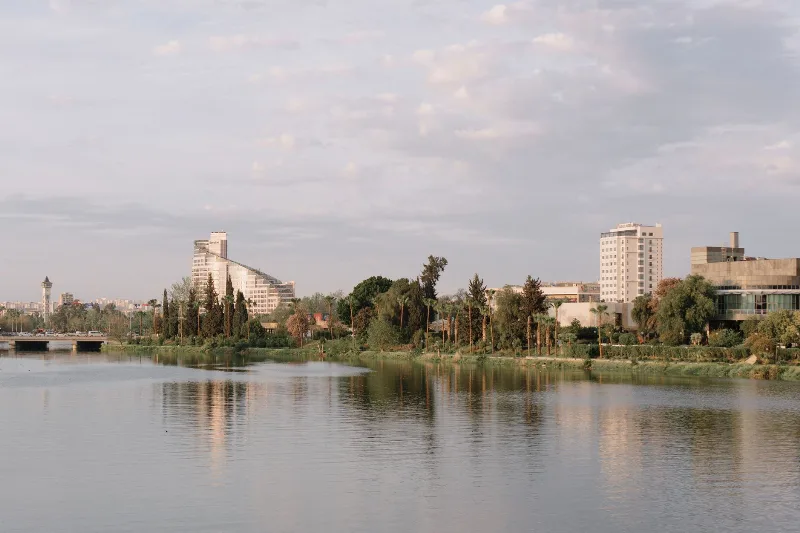
Adana
Adana is a major metropolitan city in southern Türkiye and the urban heart of the Çukurova plain, defined by the Seyhan River, a Roman-era stone bridge and a deeply rooted kebab and agricultural culture.
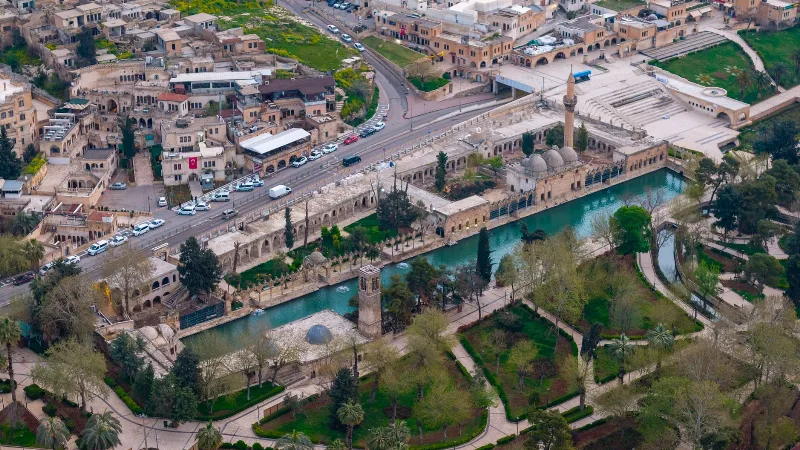
Şanlıurfa
Şanlıurfa, commonly called Urfa, is a large city in southeastern Türkiye and the capital of its province. It is known both as a place tied to the tradition of the Prophet Abraham and as the gateway to Göbekli Tepe, one of the oldest monumental sites ever found.
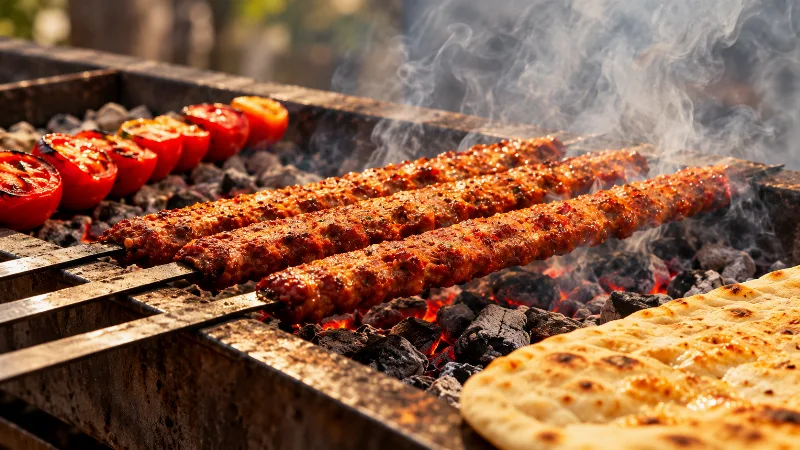
Adana Kebabı
Adana kebabı is a spicy minced-lamb kebab from the southern Turkish city of Adana, moulded onto wide flat skewers and grilled over charcoal. Its heat, its hand-chopped meat and its distinctive flat skewer set it apart from other Turkish kebabs.
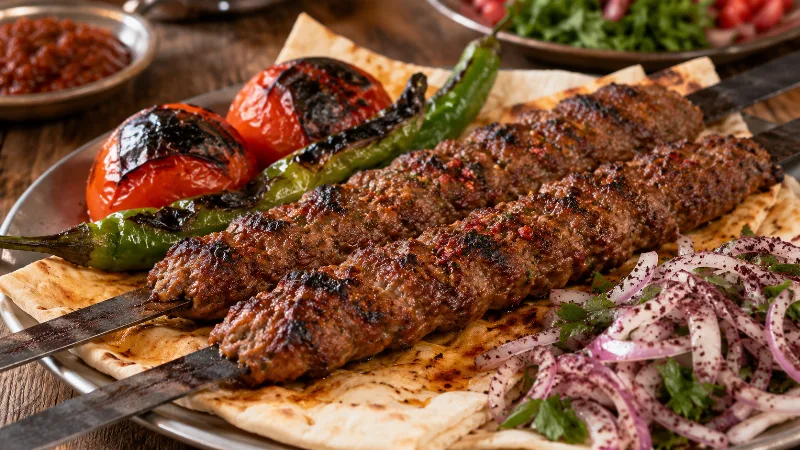
Urfa Kebap
Urfa Kebap is a charcoal-grilled minced lamb kebab from Şanlıurfa, seasoned without hot chilli and shaped around flat skewers. Its mildness is what sets it apart from the region's other minced kebabs.
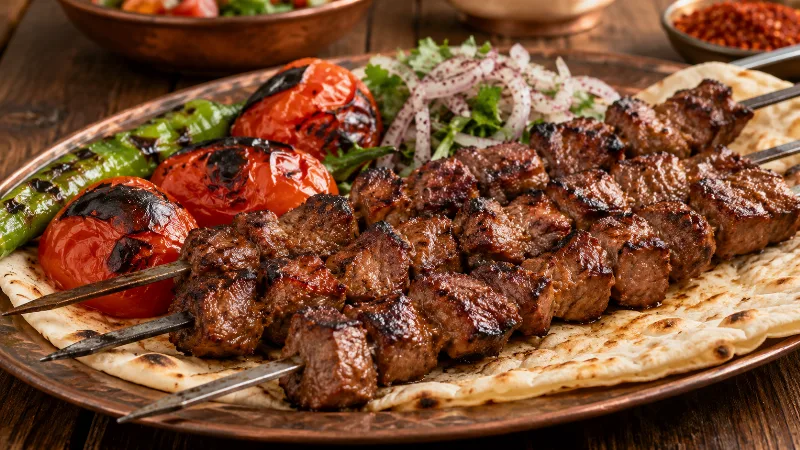
Şiş Kebap
Şiş kebap is built from cubes of marinated meat threaded onto a skewer and grilled over charcoal. It is one of the simplest forms of Turkish kebab, defined by the cut of meat, the marinade and the skewer itself.
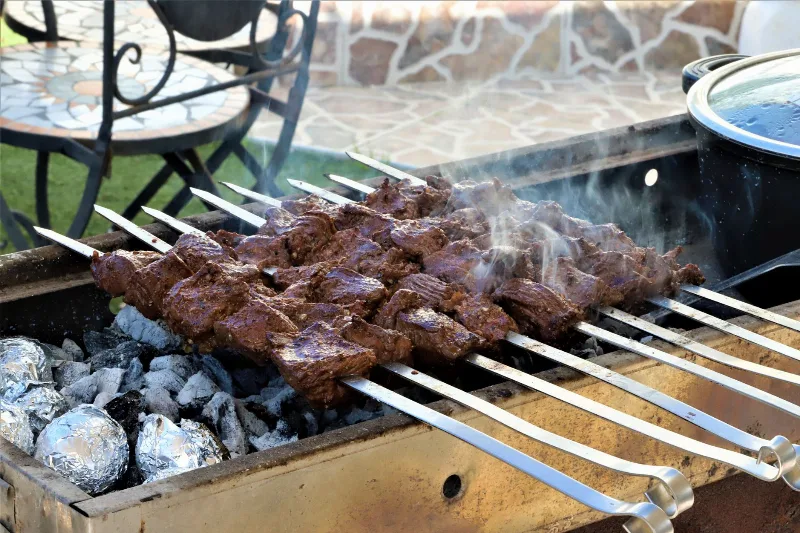
Urfa Kebabı
Urfa Kebabı is a charcoal-grilled minced lamb kebab from Şanlıurfa, seasoned without hot pepper and pressed onto long flat skewers. Its mild, juicy character places it alongside — and directly against — the spicier Adana kebabı.