
Şiş Kebap
Şiş kebap is built from cubes of marinated meat threaded onto a skewer and grilled over charcoal. It is one of the simplest forms of Turkish kebab, defined by the cut of meat, the marinade and the skewer itself.
Şiş kebap is a Turkish kebab made from cubes of marinated meat threaded onto a skewer and grilled over a fire. Its defining parts are few: a cut of meat — most commonly lamb, though chicken and liver also appear — a marinade, and a metal or wooden skewer. The word şiş means "skewer" in Turkish, so the name describes the method as much as the dish. Şiş kebap is not owned by a single city. It turns up in kebab houses, at home grills and on restaurant menus all over Türkiye, and it is one of the standard lamb kebabs in the southeastern kebab repertoire, where Gaziantep and the surrounding region are especially known for grilled lamb.
Şiş, Skewer and Kebab: What the Name Tells You
In Turkish cooking, şiş refers to the long metal or wooden pin used to hold pieces of food over heat, and by extension to the food cooked on it. The word kebap covers a wide family of grilled and roasted meat dishes, from minced-meat kebabs such as Adana and Urfa to döner and oven-baked preparations. Şiş kebap sits at the plain end of that family: whole pieces of meat, cut into chunks, seasoned, skewered and grilled.
Because the concept is so basic, it is difficult to assign a precise origin. Grilling small pieces of meat on sticks is an old and widespread practice across Anatolia, the eastern Mediterranean and the wider region, and no single city can reasonably claim to have invented it. What is specifically Turkish is the way the dish settled into the local kebab tradition — the cuts chosen, the marinades used, the accompaniments served alongside and the place it holds in everyday eating.
The Meat and How It Is Cut
Lamb is the reference version. The meat usually comes from the shoulder or the leg, cut into rough cubes of roughly two to three centimetres. Shoulder is favoured because it carries a little fat and connective tissue, which keeps the cubes moist over high heat; leg meat is leaner and firmer. A small amount of fat is often threaded between the pieces of lean meat for the same reason. Cuts with too little fat dry out quickly on the grill, which is one of the practical concerns behind the choice.
Chicken is the other common version, sold as tavuk şiş. It is normally made from breast or thigh meat, and thigh holds up better on the grill because it retains moisture. Ciğer şiş, skewered liver — usually lamb liver — is a separate speciality associated with the southeastern kebab houses, and it is treated differently from meat şiş in both preparation and serving.
Marinades and Seasoning
Marinades differ from kitchen to kitchen and from region to region, and there is no single fixed formula. Common ingredients include olive oil, onion juice or grated onion, black pepper, dried oregano and pul biber, the mild-to-hot flaked red pepper used widely in Turkish cooking. Some cooks add yoghurt or milk, which tenderises the meat and encourages browning; others keep the marinade to oil, onion and seasoning so the flavour of the lamb stays dominant. Salting may happen before grilling or just at the end.
Resting time varies as well, from a couple of hours to overnight. The purpose is consistent: to season the meat through, soften the fibres slightly and help the surface colour well. Over-marinating in acidic mixtures can make the texture chalky, so many cooks rely on onion and oil rather than lemon or vinegar.
How It Is Grilled
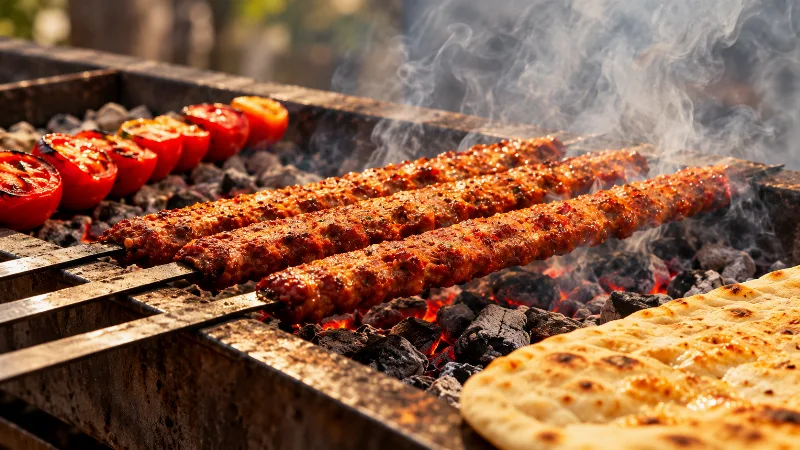
The skewers are cooked over charcoal, which is the traditional method and the one that gives the characteristic smokiness. The fire is normally hot and the skewers are placed close to it, turned regularly so the cubes brown on all sides without drying out. The total cooking time is short — the meat is small and the heat is high — and the aim is a browned, slightly charred exterior with a juicy interior.
Some kebab houses use gas or purpose-built grills, which cook more evenly but contribute less smoke flavour. Home cooks frequently use a mangal, the shallow charcoal grill common in Turkish gardens and balconies, particularly in summer.
Texture, Flavour and Appearance
A well-made şiş kebap has a firm but tender bite. The outside is browned and lightly crisp at the edges, with darker char where the meat met the hottest part of the fire; the inside stays pink-tinged or just cooked through, depending on preference. The flavour is essentially lamb — savoury and slightly sweet from the fat — with smoke, black pepper, oregano and a mild chilli warmth from the marinade. Chicken versions are lighter and take on the marinade more readily.
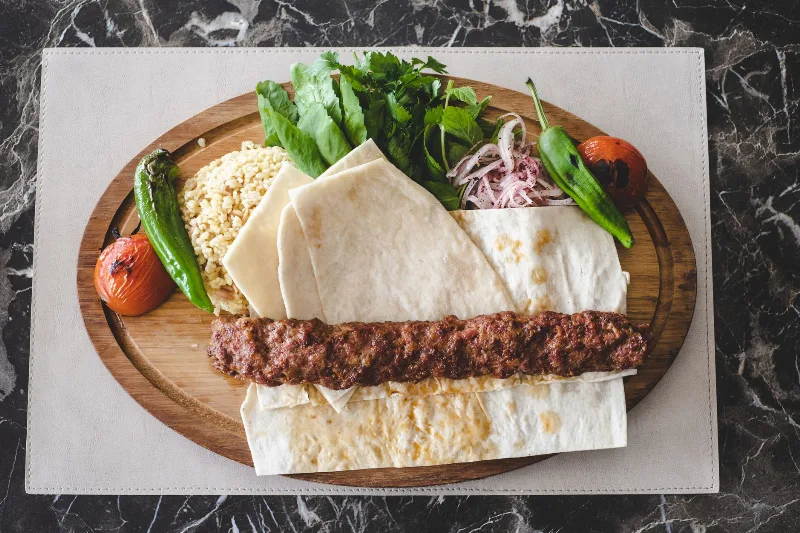
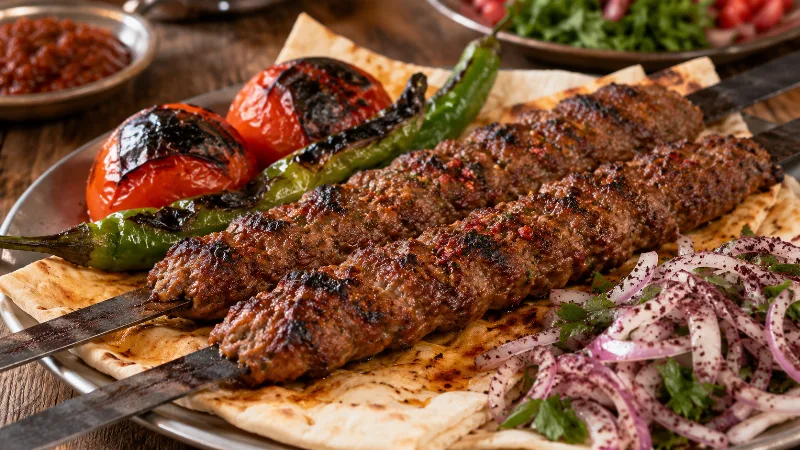
On the plate, the cubes are usually served off the skewer or slid onto flatbread, with the skewer sometimes left in place for presentation. The contrast between the dark grilled meat, the pale bread and the bright red of grilled peppers and tomatoes is a large part of how the dish looks.
How It Is Traditionally Served
Şiş kebap is typically served on or beside a piece of flatbread — lavaş or a soft pide-style bread — which absorbs the meat juices. Alongside come grilled tomatoes and long green peppers, a salad of thinly sliced onion with sumac and parsley, and often bulgur pilaf or rice. Ayran, the diluted yoghurt drink, is the usual accompaniment, and in many establishments a plate of ezme or a simple chopped salad arrives first.
In kebab houses the dish may be plated as a portion with rice and salad, or brought on bread with the grilled vegetables on top. In southeastern cities the serving style tends to lean on bread and grilled vegetables rather than rice, though practices vary from place to place. At home, şiş kebap is often eaten with whatever bread and salad are on the table, and the skewers may be passed around directly from the grill.
Variations
Marinade styles and accompaniments shift from region to region, and it would be misleading to call any one of them the only authentic form. What stays constant is the technique: cubed meat, a skewer, direct heat.
Şiş Kebap Compared with Other Kebabs
The clearest difference is between şiş kebap and the minced-meat kebabs. Adana kebabı and Urfa kebabı are made from hand-chopped or minced lamb pressed flat onto a wide skewer; şiş kebap uses whole cubes of muscle, so the texture and the flavour are quite different. Döner is a large stacked cone of meat roasted vertically and shaved off in slices, a method rather than a skewer dish. Köfte covers grilled minced-meat patties and fingers. Şiş kebap is also distinct from oven-baked kebab dishes such as those cooked in a clay pot or on a tray with vegetables and sauce.
Similar skewer-grilling traditions exist well beyond Türkiye, from the Caucasus to the Balkans and Central Asia, and the family resemblance is obvious. In Türkiye, however, şiş kebap is defined by its place within the local kebab house menu and by the specific set of breads, grilled peppers, onion salad and dairy drinks that come with it.
Where It Belongs in Turkish Eating
Şiş kebap occupies a middle ground in Turkish food culture. It is ordinary enough to be a weeknight grill at home and formal enough to appear on the menu of a serious kebab restaurant. It is strongly associated with summer, when the mangal comes out and skewers are prepared for family gatherings, and with the kebab houses of cities such as Gaziantep, Adana and Urfa, where grilled meat is a central part of local identity. Because the recipe is so simple, quality depends heavily on the meat itself — which links the dish to the sheep-rearing regions of Anatolia — and on the cook's control of the fire.
Related content

Gaziantep
Gaziantep is a major city in southeastern Türkiye and the administrative centre of its province, widely recognised as the country's gastronomic capital and known for its citadel, bazaars and the Zeugma Mosaic Museum.

Adana
Adana is a major metropolitan city in southern Türkiye and the urban heart of the Çukurova plain, defined by the Seyhan River, a Roman-era stone bridge and a deeply rooted kebab and agricultural culture.
Adana Kebap: Spicy Hand-Minced Lamb Kebab from Adana
Adana kebap is a charcoal-grilled minced lamb kebab from the Çukurova plain, defined by hand-chopped meat, tail fat and generous chilli heat. This article explains its ingredients, preparation, flavour and how it differs from Urfa kebap.
Urfa Kebap
Urfa Kebap is a charcoal-grilled minced lamb kebab from Şanlıurfa, seasoned without hot chilli and shaped around flat skewers. Its mildness is what sets it apart from the region's other minced kebabs.
Adana Kebabı
Adana kebabı is a spicy minced-lamb kebab from the southern Turkish city of Adana, moulded onto wide flat skewers and grilled over charcoal. Its heat, its hand-chopped meat and its distinctive flat skewer set it apart from other Turkish kebabs.
Savoring the Flavors of Gaziantep's Cuisine
Discover the rich culinary traditions of Gaziantep, a city known for its diverse and flavorful dishes that showcase the gastronomic richness of Türkiye.