
Urfa Kebap
Urfa Kebap is a charcoal-grilled minced lamb kebab from Şanlıurfa, seasoned without hot chilli and shaped around flat skewers. Its mildness is what sets it apart from the region's other minced kebabs.
Urfa Kebap is a charcoal-grilled minced lamb kebab associated with Şanlıurfa, the city in southeastern Türkiye commonly known simply as Urfa. It is made from minced lamb blended with tail fat, salt and mild seasoning, pressed around flat skewers and cooked over an open fire. Its most defining characteristic is the absence of hot chilli: while closely related kebabs from the region are built around fiery pepper, Urfa Kebap is deliberately restrained, allowing the flavour of the lamb and its rendered fat to lead. It is one of the cornerstones of Urfa's kebab tradition and has become a familiar item on kebab menus across Türkiye.
A Kebab Shaped by One City
Şanlıurfa, usually shortened to Urfa, is a city with a long and well-documented meat and grill culture. It sits in southeastern Anatolia, close to the Syrian border, and its cooking has more in common with the wider Levantine and southeastern Anatolian table than with the kitchens of the Aegean or the Black Sea coast. Grilled meat, thin flatbreads, bulgur and pepper pastes all play a central role in the local repertoire.
Within that repertoire, Urfa Kebap occupies a particular place. It belongs to the family of kebabs made from minced rather than sliced meat, a category sometimes described collectively as kıyma kebabı. Alongside it in the city's food culture are other dishes that carry the Urfa name — liver kebab sold from grill counters, çiğ köfte made with bulgur, and the region's own dried pepper preparations. The area is also known for its mild, dark dried pepper, sold under the name isot, though the kebab itself is not defined by pepper heat so much as by its absence.
What Goes Into Urfa Kebap
The core of the dish is lamb, and specifically minced lamb with a substantial share of fat. In traditional practice the meat is not lean: the kebab relies on fat to stay juicy over the fire and to develop the richness that diners expect. Tail fat, taken from the sheep's tail, is the fat most often added by hand to supplement the natural fat in the meat.
Seasoning is intentionally simple. Salt is essential. Black pepper may be used, and some versions include a mild or sweet red pepper rather than a hot one. Grated or finely chopped onion appears in many versions as well, sometimes worked into the mixture and sometimes used more sparingly. What is consistently excluded is the hot chilli flake that gives neighbouring kebabs their heat. Ingredients vary from one kitchen to the next, and no single formula is universally treated as the only correct one.
How It Is Traditionally Prepared
The traditional method begins with the knife. Lamb is chopped by hand into a fine mince rather than being passed through a grinder, a technique that produces a slightly different texture from machine-minced meat — less uniform, a little more open, and better at holding fat. The minced meat is then combined with the fat and seasoning and kneaded thoroughly, a step that works the mixture until it becomes sticky and cohesive.
After kneading, the mixture is generally left to rest before shaping. The rested meat is then pressed around long, flat metal skewers, spread along the length of the blade in an even layer rather than formed into separate balls. This flat, blade-like shape is characteristic of the minced kebabs of southeastern Türkiye and distinguishes them from round köfte. Once skewered, the kebab goes straight onto the grill.
Grilling and Texture
Urfa Kebap is cooked over charcoal, which contributes both heat and smoke. The skewers are turned as they cook so that the meat browns evenly on all sides. As the fat renders, it drips into the fire and flares, basting the surface of the meat and adding to its aroma.
When well made, the finished kebab has a lightly browned, slightly crisp exterior and a soft, moist interior. The contrast between the two is part of the appeal. Because minced kebab dries out quickly, it is normally cooked to order and served immediately rather than held. A kebab that has sat too long loses the juiciness that the fat was there to provide.
Flavour and Aroma
The flavour profile is savoury and lamb-forward. Rendered fat gives the kebab a richness that carries through each bite, while the restrained seasoning keeps the meat rather than the spice in the foreground. The charcoal adds a mild smokiness. Compared with its better-known relative from Adana, Urfa Kebap tastes noticeably gentler and less aggressive, with warmth from black pepper rather than heat from chilli. Diners who find heavily spiced kebabs overwhelming often find this one easier to eat.
Urfa Kebap and Adana Kebap: The Difference
These two kebabs are frequently confused, and the confusion is understandable because they share the same basic technique: hand-minced lamb, added fat, flat skewers and charcoal. The clearest difference is the chilli. Adana kebap is built around hot red pepper flakes, which give it a pronounced spiciness and often a deeper red colour. Urfa Kebap leaves that heat out, using either no pepper or a mild variety instead.
The result is a lighter-coloured, milder kebab. Because the seasoning differs, the two also read differently on the palate: Adana kebap is led by spice, Urfa Kebap by lamb and fat. The names themselves refer to the two cities with which each kebab is identified, and in practice the labelling on menus reflects that regional association. It is worth noting that individual restaurants interpret both dishes in their own way, so the level of heat can vary from kitchen to kitchen.
How Urfa Kebap Is Served
The kebab is traditionally brought to the table still on its skewer, or slid off onto a piece of thin flatbread that has been laid on the plate. The bread serves a practical purpose: it catches the fat and juices that run off the meat, and it is often eaten along with the kebab itself.
Grilled tomato and grilled green pepper are standard companions, along with a raw onion salad dressed with sumac and parsley. Bulgur pilaf may be served alongside, and a yogurt drink or turnip juice is a common accompaniment in kebab restaurants across the region. In Urfa itself, the meal is usually a substantial one, eaten at lunch or in the evening as a main course rather than as a snack, although kebab counters in the city also serve grilled meat throughout the day.
Variations and Related Dishes
Minced kebab in southeastern Türkiye is a broad category, and Urfa Kebap sits within it rather than apart from it. Some kitchens offer a version with a small amount of mild pepper worked into the mixture, and some add a finer or coarser mince depending on preference and local habit. The proportions of fat to lean meat vary widely, and this affects both juiciness and flavour more than any other single factor.
Other kebabs from the same tradition share the technique but differ in ingredient or cut. Sliced meat kebabs, liver kebabs and the plated kebab dishes that combine grilled meat with bread, tomato sauce and yogurt all belong to the wider family. Urfa Kebap is distinct within that family because of what it leaves out: no chilli heat, no sauce, no layered presentation. The dish is essentially meat, fat, salt and fire, and its reputation rests on how well those four elements are handled.
Where It Belongs
Urfa Kebap is a regional dish with a clear identity tied to one city. Understanding it means understanding that identity: a grilled minced kebab whose mildness is not an accident or a compromise but the point. It is the counterpart to the region's spicier kebabs, and for many diners it is the version that best shows what well-prepared lamb tastes like when the seasoning steps back.
Related content
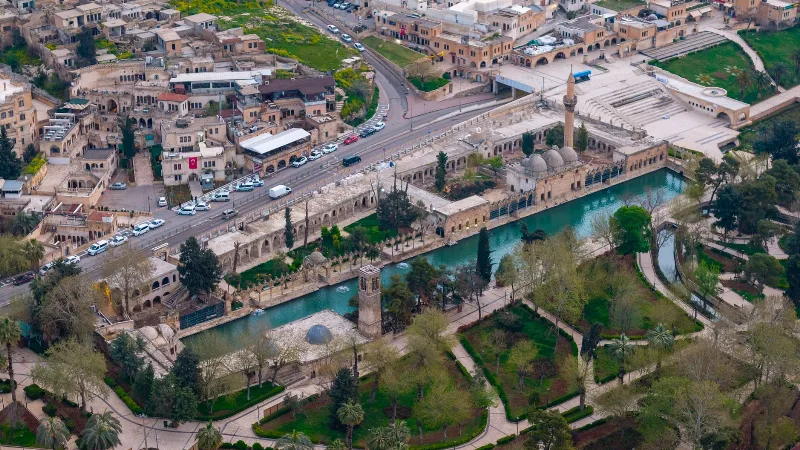
Şanlıurfa
Şanlıurfa, commonly called Urfa, is a large city in southeastern Türkiye and the capital of its province. It is known both as a place tied to the tradition of the Prophet Abraham and as the gateway to Göbekli Tepe, one of the oldest monumental sites ever found.
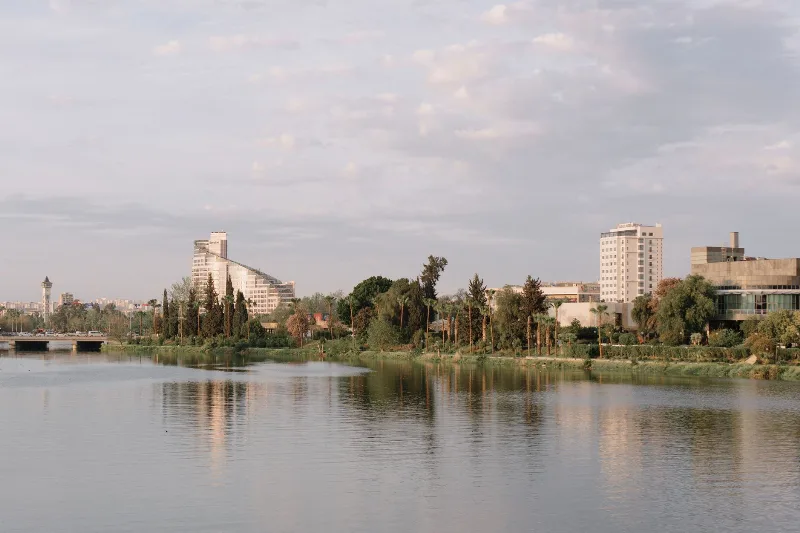
Adana
Adana is a major metropolitan city in southern Türkiye and the urban heart of the Çukurova plain, defined by the Seyhan River, a Roman-era stone bridge and a deeply rooted kebab and agricultural culture.
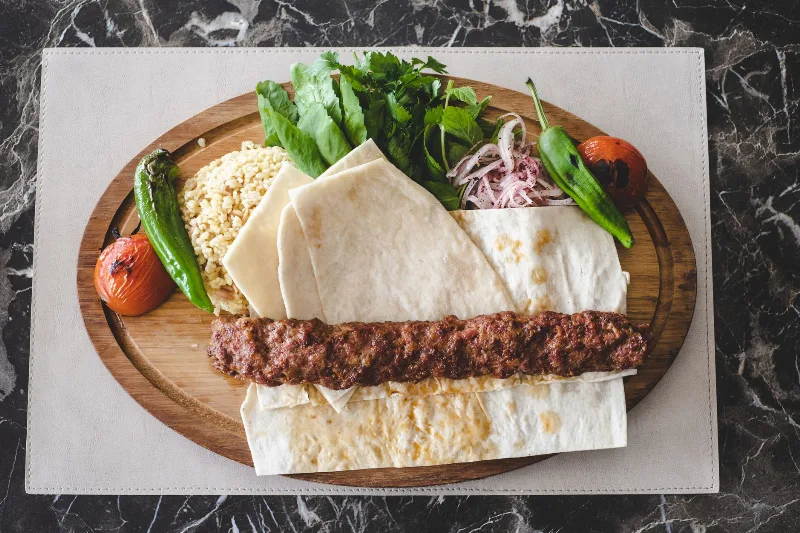
Adana Kebap: Spicy Hand-Minced Lamb Kebab from Adana
Adana kebap is a charcoal-grilled minced lamb kebab from the Çukurova plain, defined by hand-chopped meat, tail fat and generous chilli heat. This article explains its ingredients, preparation, flavour and how it differs from Urfa kebap.
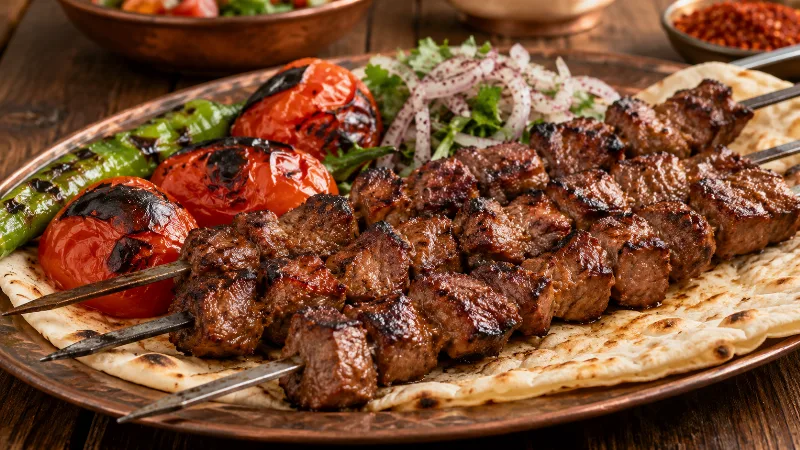
Şiş Kebap
Şiş kebap is built from cubes of marinated meat threaded onto a skewer and grilled over charcoal. It is one of the simplest forms of Turkish kebab, defined by the cut of meat, the marinade and the skewer itself.
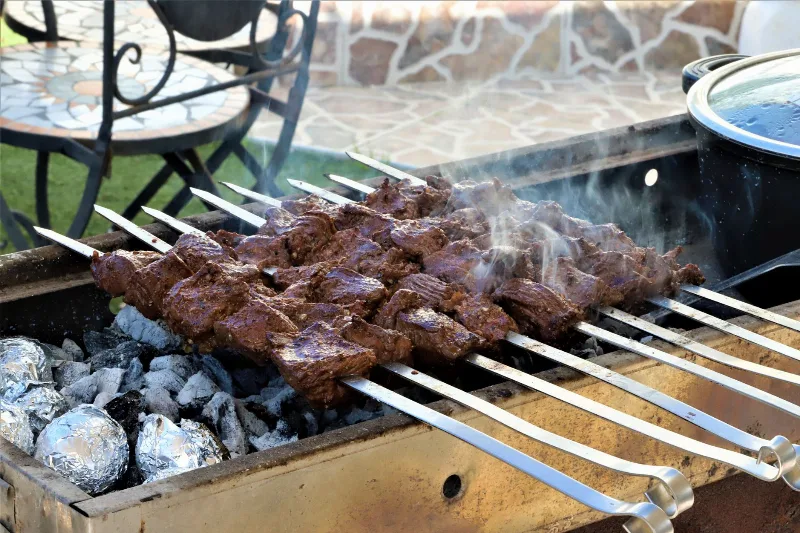
Urfa Kebabı
Urfa Kebabı is a charcoal-grilled minced lamb kebab from Şanlıurfa, seasoned without hot pepper and pressed onto long flat skewers. Its mild, juicy character places it alongside — and directly against — the spicier Adana kebabı.
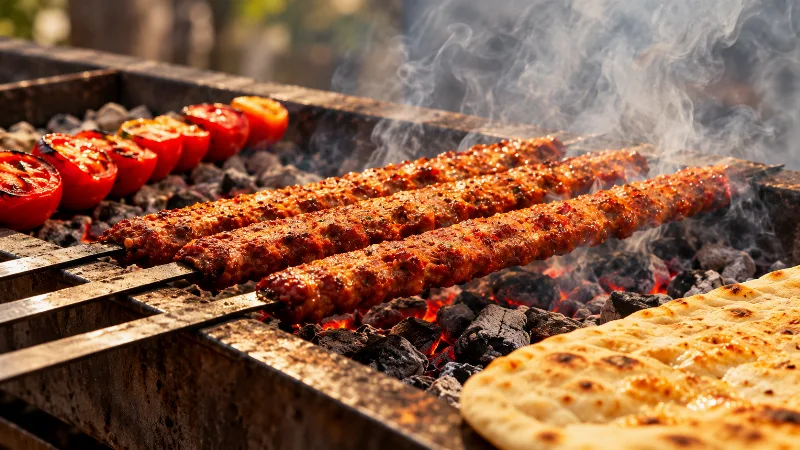
Adana Kebabı
Adana kebabı is a spicy minced-lamb kebab from the southern Turkish city of Adana, moulded onto wide flat skewers and grilled over charcoal. Its heat, its hand-chopped meat and its distinctive flat skewer set it apart from other Turkish kebabs.