
Ezogelin Çorbası
A thick Turkish lentil soup of red lentils, bulgur and rice, flavoured with dried mint and tomato paste and named after the folk figure Ezo Gelin.
Ezogelin Çorbası is a thick, warming soup built on red lentils and finished with fine bulgur and rice, seasoned with dried mint, tomato paste and butter. It is one of the most common soups in Türkiye and is closely associated with Gaziantep and the wider southeastern Anatolian cooking tradition, even though it is now prepared in homes and simple eateries throughout the country. Its name comes from Ezo Gelin, “Ezo the bride,” a figure from local folk memory.
What the Dish Is
At its core, Ezogelin is a lentil soup, but one that differs from the smooth, plain lentil soups of Turkish home cooking. The lentils are simmered until they break down, while bulgur and rice are added to give the soup body and a slightly grainy texture. A base of onion softened in butter or oil, together with tomato paste and often a little pepper paste, provides a deep, slightly sweet and savoury undertone. Dried mint, added near the end or sprinkled on top with melted butter, gives the soup its recognisable aroma.
The result is a fairly thick, opaque soup with a reddish tone from the tomato paste and a speckled appearance where the grains of bulgur and rice remain visible.
The Name and the Figure Behind It
The dish is named after Ezo Gelin, a woman remembered in the folklore of the Gaziantep region. In the most commonly told version, Ezo was a young bride who was married into a household far from her own family and who is remembered for her longing for home; in some accounts the soup was a dish she cooked or one associated with her name. The story is told in songs and folk sayings as well as in connection with the soup, and several versions exist. Because the tale passed down orally rather than through documented records, the details should be treated as legend rather than settled history, and no single version can be presented as the only correct one.
Regional Identity
Ezogelin is most strongly tied to Gaziantep and the surrounding area of southeastern Türkiye, where the name and the association with Ezo Gelin are best known. The soup fits naturally into that region's cooking, which makes generous use of red lentils, bulgur, tomato and pepper paste, and dried mint. Over time it spread well beyond the southeast and became a staple of home kitchens, school canteens, hospital cafeterias and small restaurants nationwide, which is why many people today think of it as simply a Turkish lentil soup rather than a regional speciality. Even so, its origin story and its flavour profile remain rooted in the southeast.
Main Ingredients
The defining ingredients are red lentils, fine bulgur and rice. Red lentils dissolve into a soft purée and give the soup its colour and its earthy, mild taste. Bulgur and rice both thicken the soup, but they behave differently: rice softens and blends in, while bulgur keeps a little more chew, which is part of what separates Ezogelin from a plain lentil soup. Onion, butter or oil, tomato paste, and sometimes red pepper paste form the base. Dried mint is essential to the character of the dish, and dried mint or fresh mint, melted butter and occasionally a pinch of red pepper flakes often appear as a finishing garnish. Stock or water, salt, and sometimes a little flour or a small amount of rice water are used to adjust consistency. Different households vary these proportions considerably.
How It Is Traditionally Prepared
Preparation usually begins by gently cooking chopped onion in butter or oil until it softens and turns lightly golden. Tomato paste, and often pepper paste, is stirred in and cooked briefly so that the raw taste disappears and the base darkens. Red lentils, rinsed beforehand, are added with water or stock and left to simmer until they fall apart completely. At that stage bulgur and rice go in, and the soup continues to cook until the grains are tender and the whole pot has thickened. Dried mint is introduced toward the end, or saved for a garnish. The soup is then stirred, sometimes pressed or blended for a smoother consistency, though many cooks prefer to leave the grains intact. A final drizzle of melted butter, frequently with mint and a little pepper, is poured over the surface before serving.
It is worth stressing that the dish is understood rather than measured in most Turkish kitchens; quantities are judged by eye and adjusted as the pot cooks, so exact proportions differ from family to family.
Texture, Flavour and Appearance
The soup should be thick enough to coat a spoon but still fluid, somewhere between a purée and a broth. Its colour is a warm, muted orange-red, and the surface is often glistening with a little butter and scattered with green flecks of mint. The flavour is mild and comforting rather than spicy: the sweetness of the tomato paste, the earthy lentils, the herbal note of mint and the richness of butter all sit together without any one element dominating. The small grains give a soft, slightly uneven mouthfeel that distinguishes it from a fully blended lentil soup.
How It Is Served and When It Is Eaten
Ezogelin is almost always served hot, in a bowl, as a first course or starter before a main meal, and it is common at the iftar table during Ramadan. It is also eaten as a light meal on its own, often with bread. A squeeze of lemon is frequently offered alongside, and a simple garnish of dried mint and melted butter is the usual finish. Because it is inexpensive, filling and easy to prepare in large quantities, it appears regularly in everyday home cooking as well as in workplace and student canteens.
Variations
There is no single fixed recipe. Some cooks use only bulgur and omit rice, while others rely mainly on rice; some blend the soup until smooth and others leave it textured. The amount of tomato paste, the presence of pepper paste, and the type of fat all change the result. In some versions a little flour is used to thicken the soup, and in others the natural starch of the lentils and grains is enough. These differences reflect household preference rather than a strict regional rule.
How It Differs from Other Lentil Soups
The most obvious comparison is with plain mercimek çorbası, the everyday Turkish red lentil soup. That soup is typically smooth and simple, based on lentils, onion, carrot or potato, and stock, often blended to a velvety consistency. Ezogelin is heavier and more textured because of the bulgur and rice, and it carries a more prominent note of mint and tomato paste. Where plain lentil soup is a neutral everyday staple, Ezogelin is recognisable by its grainy body and its herbal, slightly richer flavour, and by the folk story attached to its name.
Cultural Significance
Beyond its role as an everyday food, Ezogelin carries a small piece of regional storytelling. The link to Ezo Gelin ties the dish to ideas of homesickness, marriage and belonging that run through the folk culture of the Gaziantep area, and the name itself keeps that association alive each time the soup is made. For many people it is simply a familiar, inexpensive and satisfying soup, but the name connects it to a longer tradition of southeastern Anatolian cooking and to the memory of a figure from local lore.
Related content

Gaziantep
Gaziantep is a major city in southeastern Türkiye and the administrative centre of its province, widely recognised as the country's gastronomic capital and known for its citadel, bazaars and the Zeugma Mosaic Museum.
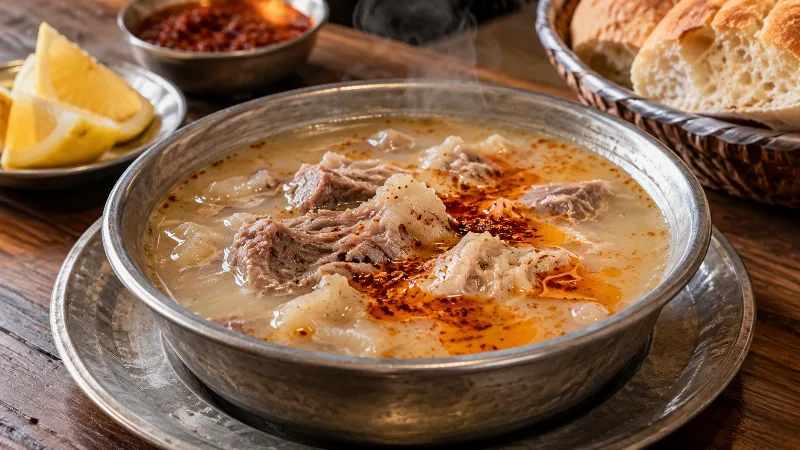
Kelle Paça Çorbası
Kelle Paça Çorbası is a traditional Turkish soup made from sheep's head and feet, known for its thick, gelatinous texture and restorative qualities. It is especially popular in Eastern and Southeastern Anatolia and is commonly eaten for breakfast or as a late-night meal.
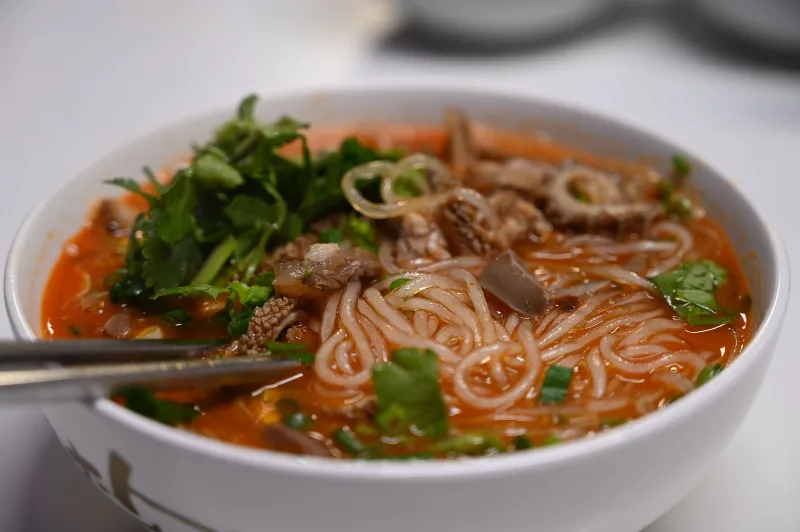
İşkembe Çorbası
İşkembe Çorbası is a traditional Turkish tripe soup flavored with garlic, vinegar, and red pepper. Often consumed late at night as a hangover cure, it is a staple of Turkish street food culture.
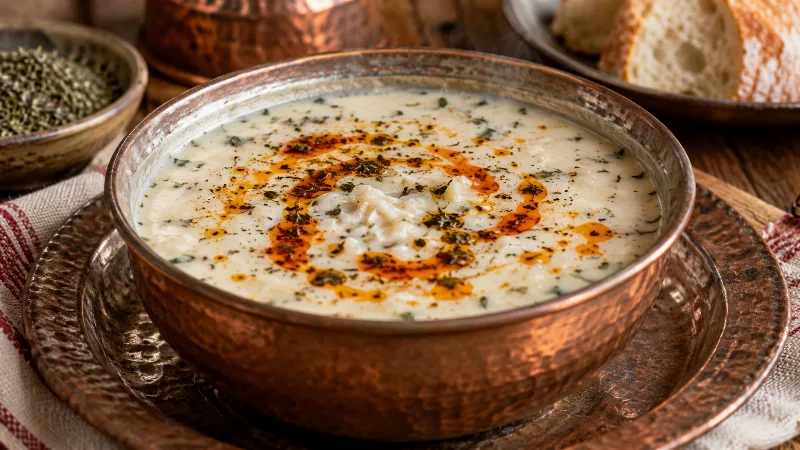
Yayla Çorbası
Yayla Çorbası is a Turkish soup built on yogurt and rice, thickened gently with egg and flour and finished with a sizzle of butter poured over dried mint. It is eaten warm or at room temperature and appears on tables from home kitchens to everyday restaurants across the country.
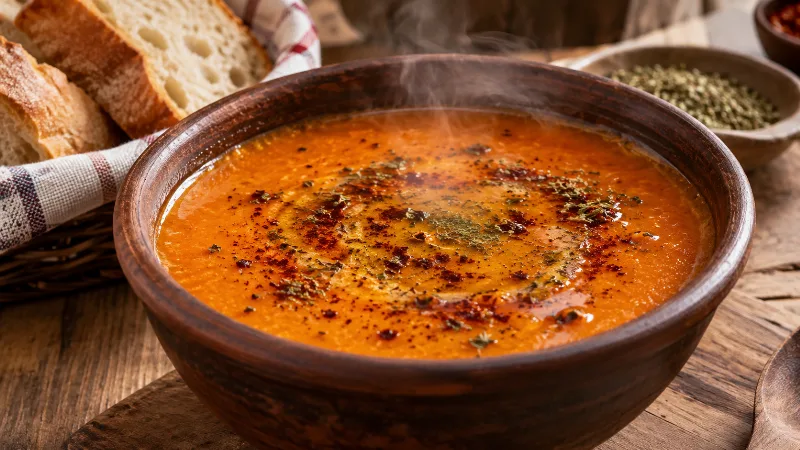
Tarhana Çorbası
Tarhana Çorbası is a traditional Anatolian soup made from a sun-dried, fermented mixture of wheat, yogurt and vegetables, cooked into a warm, tangy broth.
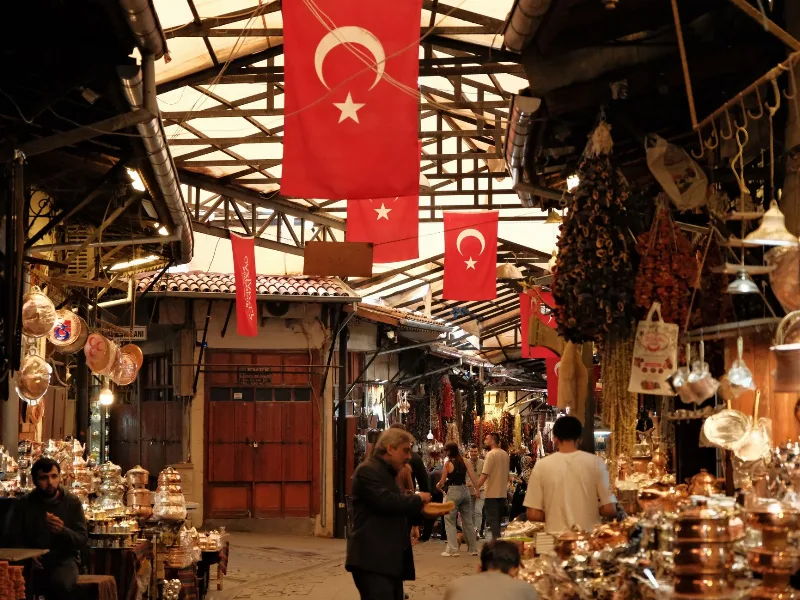
Savoring the Flavors of Gaziantep's Cuisine
Discover the rich culinary traditions of Gaziantep, a city known for its diverse and flavorful dishes that showcase the gastronomic richness of Türkiye.