
Sigara Böreği
Sigara böreği is a thin Turkish pastry rolled into slim cylinders around a cheese, meat or potato filling and fried until golden. Its name comes from its cigarette-like shape, and it is a familiar sight on breakfast tables, tea-time plates and meze spreads across the country.
Sigara böreği is a Turkish pastry made by rolling very thin sheets of dough around a filling into narrow cylinders, which are then fried until crisp and golden. The name translates as “cigarette pastry,” describing the shape rather than anything in the recipe. The classic filling is white cheese — a salty, crumbly beyaz peynir — mashed with parsley, although minced meat, potato and spinach versions are also common. It belongs to the broad börek family of layered, rolled and stuffed pastries found throughout Anatolia and the wider region, and unlike dishes tied to one province, it is made and eaten all over Türkiye.
What Defines a Sigara Böreği
Two things separate sigara böreği from other böreks: the dough and the shape. The wrapper is yufka, the paper-thin dough that is also used for Börek, gözleme and various layered pastries. Fresh yufka is sold in rounds in nearly every neighbourhood, and many households also make their own. Because the sheets are so thin, they crisp quickly and absorb relatively little oil compared with thicker doughs.
The shape is what gives the pastry its name. A round yufka is cut into wedge-shaped pieces, a spoonful of filling is placed at the wide end, the sides are folded inward, and the whole thing is rolled tightly toward the point. The result is a slim, uniform cylinder roughly the length and thickness of a finger — or, as the name suggests, a cigarette. The open edge is sealed with a little egg white or a simple flour-and-water paste so the filling stays inside during frying.
The Börek Family and the Question of the Name
Börek is a large category rather than a single recipe. Su böreği is boiled and layered, kol böreği is a thick roll baked whole and sliced, gül böreği is coiled into a rose shape, and sarma böreği covers rolled pastries that are wider and sturdier than sigara böreği. The thin fried rolls sit at the slender end of this family.
Terminology is not perfectly uniform. In some parts of Türkiye, very thin rolls of this kind are called kalem böreği — “pencil pastry” — and the two names can overlap or be used interchangeably depending on the household and the region. There is no single authority that fixes the boundary between them, and families often use whichever word they grew up with. What is consistent is the technique: thin yufka, a modest amount of filling, a tight roll and a hot pan of oil.
Fillings: Cheese First, Then Everything Else
Cheese is the default. Beyaz peynir is the usual choice, sometimes blended with lor (a fresh curd cheese) to soften the saltiness, and in some kitchens with kaşar for a milder, stretchier result. Chopped parsley is the standard companion, with dill, black pepper or a little egg appearing in some versions. The mixture should be dry enough not to tear the yufka, which is why the cheese is usually drained or mashed rather than left crumbly and wet.
Minced meat versions — kıymalı — use beef or lamb browned with onion and seasoned plainly, sometimes with a little pepper paste. Potato filling, made from boiled potatoes mashed with onion and seasoning, is popular because it is inexpensive and holds its shape well. Spinach with cheese is another familiar combination. Pastries are normally named after their filling, so a tray may hold peynirli, kıymalı and patatesli rolls side by side.
How They Are Traditionally Made
Making sigara böreği is an assembly job rather than a complex one, and it is often done in batches, with several people rolling at the same table. The yufka is kept covered while working, because the thin sheets dry out and crack within minutes of exposure to air. Each wedge is filled, folded and rolled by hand, and the finished rolls are lined up on a tray.
Because the work is repetitive, large quantities are usually prepared at once. Uncooked rolls freeze well and can go straight into hot oil later, which is one reason the pastry appears so often at short-notice gatherings. Commercially made yufka has made the process considerably faster than the older routine of rolling dough at home, though home-made yufka is still preferred by cooks who want a more delicate, slightly chewy wrapper.
Frying, Baking and the Texture Question
Frying is the defining cooking method. The rolls go into generously hot oil and turn pale gold within a short time, blistering slightly where the yufka layers separate. Well-made sigara böreği should be crisp enough to snap when bitten, with a soft, moist interior where the filling sits. If the oil is too cool the pastry turns greasy and pale; too hot and the outside darkens before the filling warms through.
A baked version also exists. The rolls are brushed with butter or oil and cooked in an oven until crisp and lightly browned. Baked sigara böreği is noticeably drier and paler than the fried kind, and it is often chosen when a large tray is being prepared for guests or when the cook wants to avoid the smell of frying oil. Neither method is considered more correct than the other; they simply produce different textures.
How It Is Served
Sigara böreği is eaten warm, rarely hot from the pan and almost never cold. It appears on breakfast tables alongside tea, olives, tomatoes and eggs, and it is a fixture of çay saati — the afternoon tea hour — when something savoury is expected with the glass of tea. On meze tables it is served as one of several small plates, and during Ramadan it frequently joins the iftar spread, since börek of all kinds is traditional at that meal.
Accompaniments are simple: tea, ayran, or a plain green salad. In some settings the rolls are served with a light yogurt or tomato sauce, though the crisp-fried version is more often left plain so the pastry stays crunchy. Because they can be eaten with the fingers, they suit informal gatherings, buffets and crowded tea tables better than a knife-and-fork pastry would.
Variations and Similar Pastries
Variation in Türkiye runs along household and regional lines rather than a single recognised split. Cheese blends differ from kitchen to kitchen, some cooks add a great deal of parsley and others almost none, and the tightness of the roll changes how much filling each pastry holds. In some regions the rolls are made very slim; elsewhere they are closer in size to a small sarma böreği. There is no authoritative “authentic” version, and claims that one filling or one size is the original should be treated with caution.
Outside Türkiye, the closest visual parallel is the spring roll, and the two are often compared because of their shared shape. The resemblance is superficial: spring roll wrappers are made from a different dough, the fillings follow East Asian traditions, and the rolling method differs. Within Turkish cooking, the nearest relatives are sarma böreği, which is broader and often baked, and the pencil-thin kalem böreği.
Where It Belongs
Sigara böreği has no founding city and no regional claim of origin. Its history is bound up with the wider börek tradition of Anatolia and the Ottoman kitchen sphere, where thin rolled and layered pastries have been made for centuries, but the precise moment when the slim fried roll acquired its cigarette name is not reliably documented. What can be said with confidence is that it became a standard item of Turkish home cooking and pastry-shop display, valued for being quick to assemble, easy to freeze and reliably popular.
Its identity, then, is functional as much as regional: a pastry designed for tea tables, guest visits and crowded breakfasts, made from ingredients most kitchens already have, and shaped so that it can be eaten with one hand while the other holds a glass of tea.
Related content
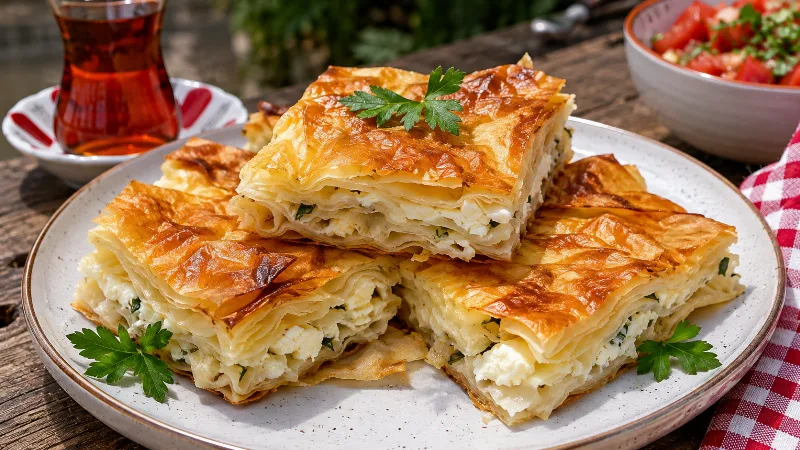
Su Böreği
Su Böreği is a layered Turkish savory pastry made by briefly boiling thin yufka sheets, then baking them with cheese and parsley. Its soft interior and golden top distinguish it within the wider börek family.

Rize and the Tea Plantations
Rize, on Türkiye's eastern Black Sea coast, is a green province of terraced tea gardens, misty hills and mountain valleys shaped by rain and local tradition.
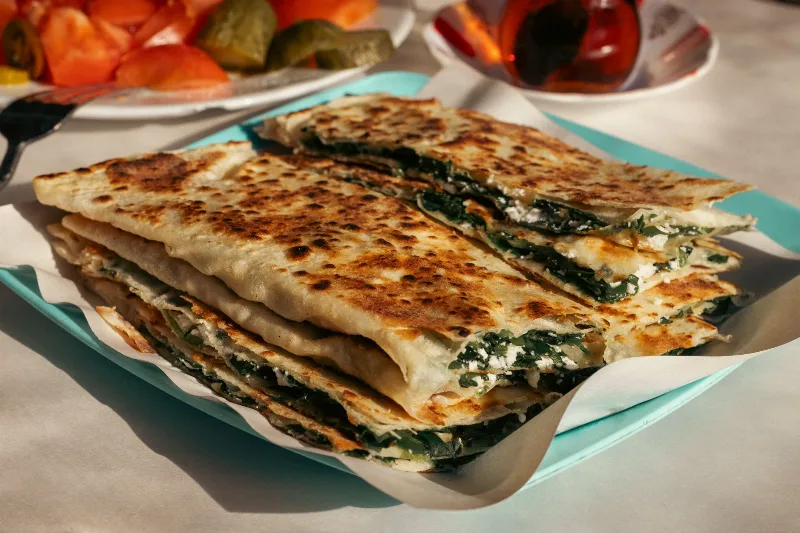
Gözleme
Gözleme is a thin, hand-rolled Anatolian flatbread folded around savory fillings such as cheese, spinach, or minced meat and cooked on a sac griddle. The article covers its regional variations, cooking method, texture, and traditional serving style.
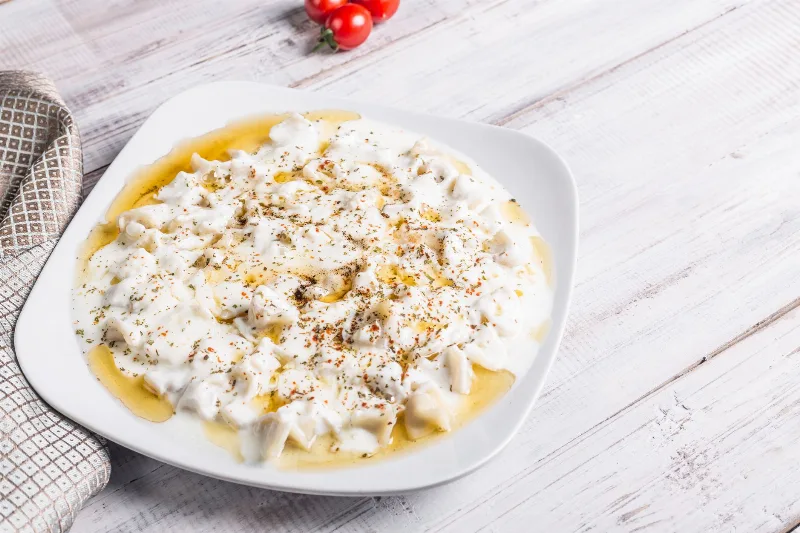
Mantı
Mantı are small boiled Turkish dumplings filled with minced meat and onion, traditionally served with garlic yogurt and melted butter. The dish is most closely associated with Kayseri, where the dumplings are folded exceptionally small.

Trabzon
Trabzon is a rain-washed port city on Türkiye's eastern Black Sea coast, framed by the cliffside Sumela Monastery and slopes of tea. Byzantine and Ottoman layers sit close to highland valleys just inland.
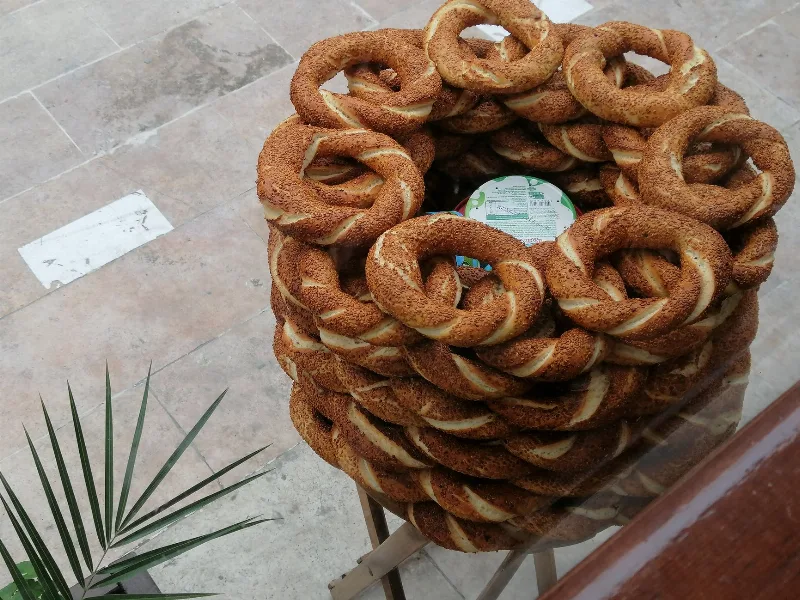
Simit
Simit is a ring-shaped Turkish bread covered in sesame seeds, strongly associated with Istanbul and sold as everyday street food. It is eaten fresh, most often with tea, and has a crisp crust around a chewy crumb.