
Hamsilos Bay and Coastal Forests in Sinop
A sheltered inlet on Türkiye's northern Black Sea coast, Hamsilos Bay combines calm, fjord-like water with dense broadleaf woodland and a string of quiet beaches nearby.
Hamsilos Bay lies a short drive west of Sinop on Türkiye's northern Black Sea coast, where a narrow gap in the shoreline opens into a curving, woodland-fringed inlet. Sheltered on almost every side by steep, tree-covered slopes, it is often described as the country's only natural fjord — strictly speaking a ria, a river valley that was drowned when the sea rose after the last ice age. The result is an unusual stretch of coastline: calm, almost lake-like water only a few hundred metres from the open sea, and a shore that feels enclosed rather than exposed.
A Sheltered Inlet on Türkiye's Northern Coast
Hamsilos sits roughly ten to fifteen kilometres west of Sinop's city centre, reached by a minor coast road that passes through Akliman before turning towards the bay. From the water the entrance is easy to miss: a narrow channel leads between low headlands, and only once inside does the full extent of the inlet become clear. Wooded hills rise steeply from the shoreline, blocking the prevailing winds and much of the swell for which the Black Sea is known. That natural protection has long made the bay useful as well as attractive, offering a safe anchorage for small fishing boats and, more recently, for visiting craft.
The water inside the inlet is noticeably still, and its colour shifts with the light, from grey-green under cloud to a clear turquoise when the sun is high. Because the surrounding catchment is forested and lightly settled, there is little runoff to cloud the bay, and the pebbly shore at the head of the inlet shelves gently into deeper water.
How the Bay Took Its Shape
The inlet is a classic example of a ria. During the last glacial period, when global sea levels were far lower than today, a small river cut a valley through the coastal hills. As the climate warmed and the sea advanced, the lower course of that valley was flooded, leaving deep water close to the shore and the branching, elongated outline that has earned Hamsilos its fjord nickname. The slopes themselves were never scoured by ice, so the soil and vegetation on them have a much longer, uninterrupted history than the flooded valley floor.
Small streams still feed the head of the bay, and the surrounding ridges are cut by shallow ravines that carry rainwater down to the sea. The combination of sheltered water, freshwater input and wooded banks creates a transition zone between land and sea that supports a wide range of species.
Woodland that Reaches the Waterline
The coastal forests behind Hamsilos belong to the humid belt that runs along the Black Sea. Beech, hornbeam, oak and sweet chestnut dominate the upper slopes, their canopies closing overhead in summer and turning copper and gold in autumn. Closer to the water, evergreen shrubs such as laurel and rhododendron-type bushes form a dense understorey, while hazelnut groves and small cultivated clearings appear further inland, where the land softens into the valleys around Sinop.
In spring the woodland floor fills with cyclamen, hellebore and wood anemone, and birdsong carries across the water from the ridge. Woodpeckers, warblers and tits are common in the canopy, while birds of prey can often be seen circling above the higher ground. The forests also protect the bay from erosion, holding the soil in place on slopes that would otherwise slip quickly during heavy rain.
The Nature Park and Its Footpaths
Hamsilos and its immediate surroundings are protected as a nature park, a designation that has kept the inlet free of large-scale building. A short footpath follows the western bank and climbs to a viewpoint where the curve of the bay and the open sea beyond can be seen at the same time. Another path drops down to a small sandy cove near the mouth of the inlet, a quiet spot that contrasts with the more exposed beaches along this coast.
Visitors typically come for walking, swimming in summer and simply sitting on the shore, and the area remains uncrowded even in the warmer months. There are no settlements inside the park, so the sounds are mostly water, wind and birds.
Akliman and Sarıkum Nearby
The same stretch of coast holds two further features of interest. Akliman is a broad sandy beach facing north, backed by low dunes and scrub, and it marks the point where the wooded interior gives way briefly to a more open shoreline. A little further west, the Sarıkum lagoon lies behind a narrow barrier of dunes, separated from the sea by sand and reed beds. This shallow, brackish water body is a resting place for waterfowl and waders on migration along the Black Sea, and its surrounding dunes and woodland shelter a distinct community of plants.
Together with the rocky headland of İnceburun, the northernmost point of Anatolia, these sites make the western approach to Sinop one of the most varied coastal landscapes in the region.
Seasons, Fishing and Local Produce
Each season brings a different character to Hamsilos. Spring is green and changeable, with wildflowers on the slopes and fast-running streams. Summer brings calm water, long daylight and the scent of pine and dry grass along the paths. Autumn is perhaps the most striking time, when the deciduous forest changes colour and the sea remains mild. Winter is stormy and quiet, with grey skies, heavy surf outside the inlet and the small boats pulled up above the waterline.
Fishing remains part of local life in Sinop, and the winter anchovy season, known locally as hamsi, is central to the town's food culture. Hazelnuts, grown on the slopes inland, are harvested in late summer, and small markets in the villages behind the coast sell seasonal fruit and vegetables. The bay's shelter has made it a working harbour for generations rather than only a scenic one.
Travelling Along the Sinop Coast
The coast road from Sinop towards Hamsilos, Akliman and Sarıkum is short and mostly level, making it easy to combine the inlet with the nearby beaches and the historic centre of Sinop, whose walls and harbour look out over the same sea. A day spent here moves naturally from forest to shore: a walk above the bay in the morning, a swim or a paddle in the afternoon, and a view of the sun setting over the water as the inlet grows still.
Related content
Sinop
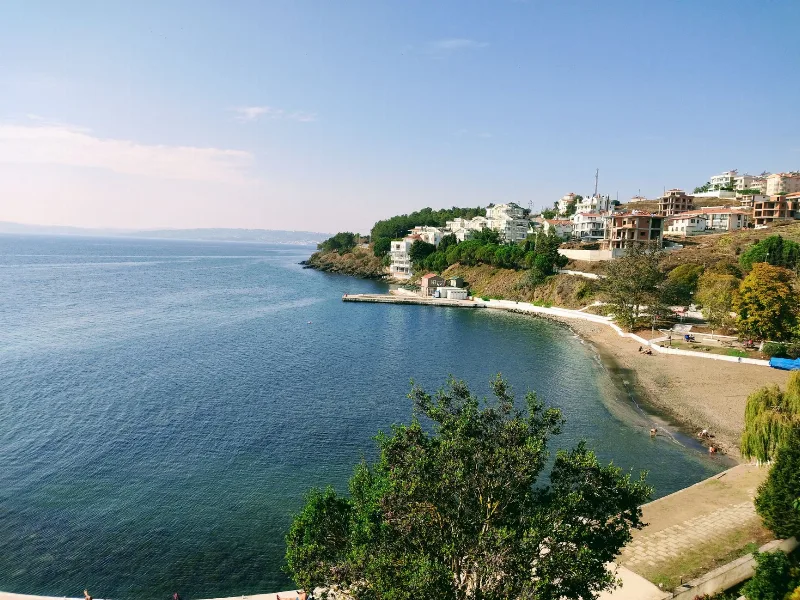
A port city on Türkiye's Black Sea coast, Sinop sits on a northward-pointing peninsula with one of the sea's safest natural harbours and a historic walled core. Its fortress, Seljuk-era monuments and surrounding bays anchor a province that reaches from the shoreline deep into the interior.
Nature
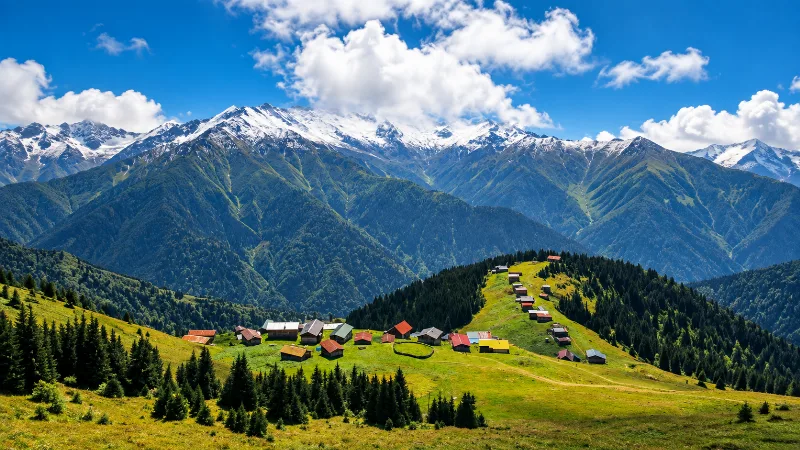
Lakes, forests, rivers, canyons, mountains, wetlands and national parks across Türkiye.
1-Day Sinop Route: Old Town, Castle and Hamsilos Bay
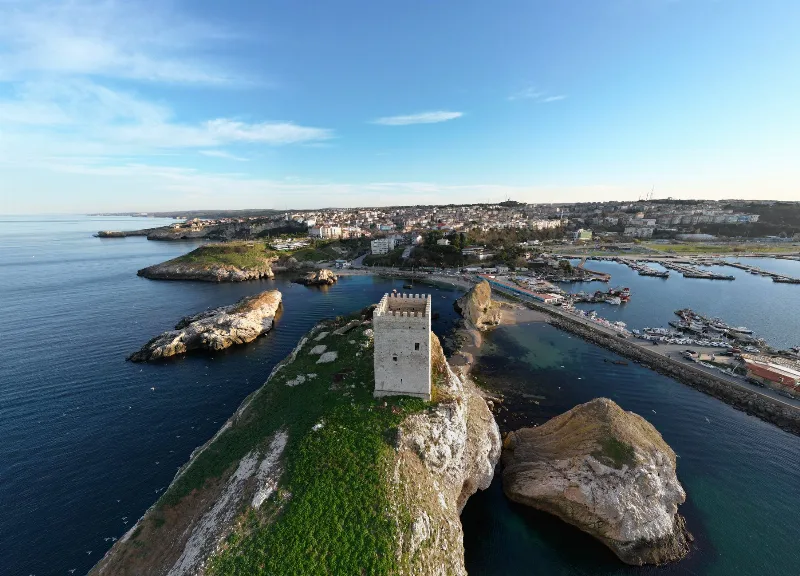
A single-day route through Sinop, from the old harbour and castle walls to the archaeological museum, the historic prison and the wooded bays along the coast west of the city.
5-Day Black Sea Coast Route
A five-day linear journey along Türkiye's central and eastern Black Sea coast, from Sinop to Trabzon, with an inland detour to Amasya and stops in Ordu and Giresun along the way.
Black Sea Region
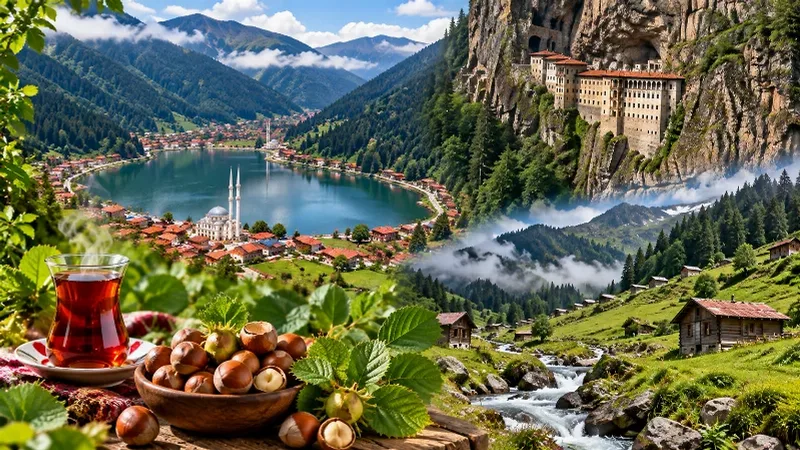
The Black Sea Region of Türkiye is known for its lush green mountains, misty highlands, dense forests and traditional villages. Stretching along the country's northern coast, the region combines spectacular natural scenery with historic towns, tea-growing landscapes and distinctive local traditions.
Samsun
Samsun is a large Black Sea port city in northern Türkiye and the historic starting point of the Turkish War of Independence in 1919. It is a major metropolitan centre set between wide river deltas, coastal plains and the mountains of the Black Sea hinterland.

Hamsili Pilav
Hamsili Pilav is a baked rice pilaf from Türkiye's Black Sea coast, in which fresh anchovies are layered with seasoned rice and cooked together in a pan. It is one of the region's most distinctive ways of using hamsi, the small anchovies that define Black Sea cooking.
Kabak Bay
Kabak Bay is a serene spot on Türkiye's southwestern coast, featuring a pebble beach surrounded by pine forests and known for its hiking trails.