
Letoon
Letoon is the ancient Lycian sanctuary of Leto near Xanthos in Muğla Province, home to three temples and the trilingual inscription that helped decipher the Lycian language.
Letoon is an ancient sanctuary and religious center of Lycia, located near the village of Kumluova in the Seydikemer district of Muğla Province, south-western Türkiye. It stands roughly four kilometres south of the ruined Lycian capital of Xanthos, on the edge of the flat valley of the Eşen River, the ancient Xanthos. The site was dedicated above all to Leto, the mother of Apollo and Artemis, and functioned as one of the principal sacred places of the Lycian League. Its archaeological importance rests on the remains of three temples, a theatre, porticoes and later Byzantine structures, and especially on the discovery of an inscription that proved decisive in the decipherment of the Lycian language.
Location and Setting
Letoon lies in the broad, alluvial plain of the Eşen River, close to where the river approaches the coastal lowlands between Fethiye and Patara. The sanctuary occupies slightly raised ground above the old floodplain, and parts of the surrounding area remain damp and reedy today. That relationship with water is not incidental. Ancient sources place the origin of the cult here at a spring by the river, and the marshiness of the environment is woven directly into the site's foundation myth. Administratively the ruins belong to Seydikemer, a district of Muğla Province, and they are normally reached by road from the Xanthos side or from the coast.
The Sanctity of Leto and the Lycian League
Lycia was a distinctive region of south-western Anatolia whose inhabitants spoke their own language and wrote it in their own alphabet. By the classical and Hellenistic periods the Lycian cities had formed a federal league, and Letoon served as its federal sanctuary, a place where the member cities gathered for religious and political purposes. Devotion centered on Leto, a goddess of Greek origin who came to be closely associated with the Lycian landscape, together with her twin children Apollo and Artemis. Votive material found at the site shows that religious activity here reaches back well before the monumental buildings, indicating that Letoon was a place of worship long before it was a built sanctuary.
The Three Temples
The defining feature of Letoon is a group of three temples standing close together, each connected with one member of the divine family. The largest is the Temple of Leto, a peripteral building whose columns once ran around a central chamber; it is generally placed in the Hellenistic period and appears to have been left in an unfinished or partly modified state. Beside it stand two smaller temples, the Temple of Apollo and the Temple of Artemis. The Temple of Apollo is an in-antis structure, meaning its columns were confined to the front rather than carried around the whole building, and it preserves a floor decorated with mosaic work. The Temple of Artemis is the smallest of the three. Although the temples are now reduced largely to foundations, column bases and fallen blocks, their placement and proportions still convey how the sacred group was organized.
The Letoon Trilingual Inscription
The single most important find at Letoon is a stone stele inscribed with the same text in three languages: Greek, Lycian and Aramaic. Discovered in 1973 close to the Temple of Apollo, it records an official decree. Because scholars could already read Greek and Aramaic, the parallel Lycian version provided a secure key to the Lycian language, which had until then been only partly understood. The stele is commonly known as the Letoon trilingual, and its recovery transformed the study of Lycian texts. The monument itself is now held in the museum at Fethiye rather than at the site.
Letoon Through the Centuries
The sanctuary developed gradually rather than being built at a single moment. Its earliest use belongs to the first half of the first millennium BC, well before the monumental temples were raised. During the Hellenistic period, when the Lycian League was at its height and Lycia came under growing Greek cultural influence, Letoon acquired its temple group and much of its monumental character. In the Roman period the sanctuary was enlarged with a theatre, porticoes and other infrastructure, reflecting its continuing importance within the province. In late antiquity and the Byzantine period the character of the site changed again: a Christian basilica was built here, showing that the sacred location was reoccupied for a different religion after pagan worship ceased. The settlement was eventually abandoned, and the ruins were gradually covered by soil and vegetation.
The Legend of Leto and the Shepherds
Ancient tradition, preserved most famously in Ovid's account of the myth, tells that Leto, pregnant and pursued by the jealous Hera, came to the river Xanthos and tried to drink. Local shepherds, the story goes, stirred up the mud to prevent her, and in her anger she cursed them, turning them into frogs. This narrative is a myth and should be read as such, but it explains why the spring and the marshy ground beside the river became the setting of the cult and why the sanctuary was fixed at this particular spot.
What Visitors Can See Today
Modern visitors encounter a site that is partly overgrown and often quiet, without the crowds of larger centres. The three temple platforms are the central attraction, with surviving column bases, thresholds and sections of walling that allow the ground plan of each building to be followed. In the Temple of Apollo, the mosaic floor remains a highlight. Elsewhere at Letoon the remains of a Hellenistic theatre survive, along with porticoes that once framed the sacred area, a fountain structure, and the foundations of the later Byzantine basilica. The damp setting, including patches of reeds and standing water, is itself part of the experience, since it preserves something of the original atmosphere of a riverside sanctuary.
UNESCO World Heritage Status
Letoon was inscribed on the UNESCO World Heritage List in 1988, together with nearby Xanthos, as the joint property known as Xanthos-Letoon. The listing recognizes the exceptional importance of the two sites for understanding Lycian civilization, its political organization and its religious life, and for the inscriptions found there.
Practical Context for Visiting
Because the terrain is low-lying and in places wet, the ground can be muddy after rain, and the area is known for insects in the warmer months, so sturdy footwear and some protection are useful. Shade is limited, and the exposed ruins can be very hot at midday in summer, which makes spring and autumn the more comfortable periods for a visit. The walking is generally over uneven earth and stone rather than formal paths, so a reasonable level of mobility helps. Access is by road, and Letoon is most easily combined with a visit to the region around Xanthos and the coastal plain.
Nearby Historic and Natural Features
Letoon is closely tied to Xanthos, its sister site and the former Lycian capital, which lies a short distance to the north and forms the other half of the same World Heritage listing. Beyond these two, the wider area holds a dense concentration of Lycian and later remains, including the Roman and Byzantine port city of Patara to the south along the coast, and the modern centres of Fethiye and Kaş, which serve as bases for exploring the region. Inland, the dramatic Saklıkent gorge and the surrounding forested valleys add a different dimension to the same landscape that once supported the Lycian cities and their sanctuaries.
Routes
All routes →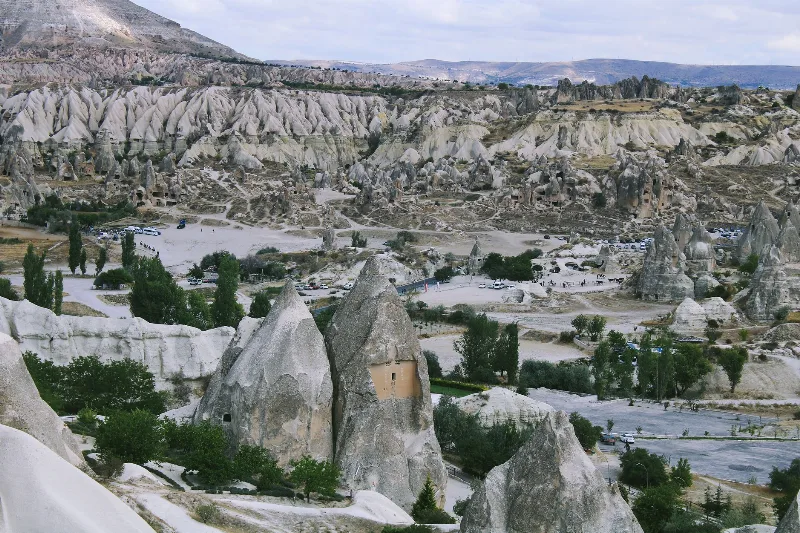
4-Day Cappadocia and Konya Route
A four-day linear journey from the rock valleys of Cappadocia to the Seljuk city of Konya, linking cave churches, underground cities and the Ihlara Valley with the Mevlana Museum on the central Anatolian plateau.
Explore →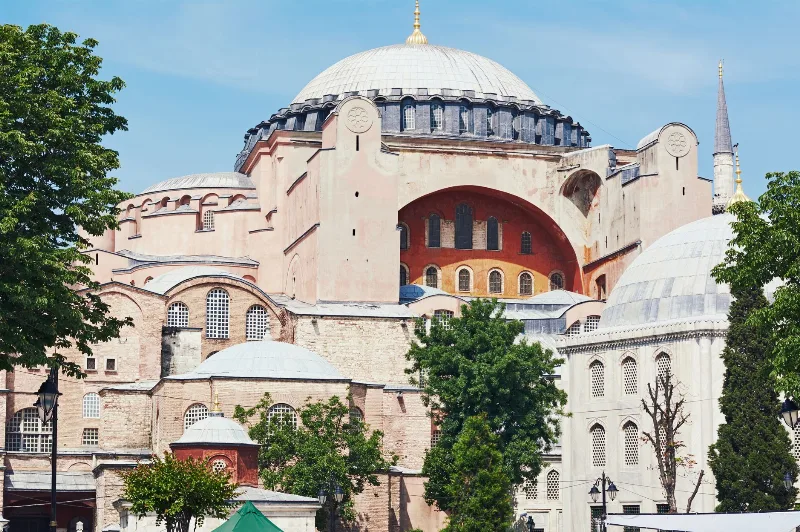
1-Day Istanbul Historic Peninsula Route
Explore Istanbul's Historic Peninsula in one day on foot, visiting Hagia Sophia, the Blue Mosque, Topkapı Palace, and the Grand Bazaar. This compact walking route covers the highlights of Sultanahmet with a logical, easy-to-follow order.
Explore →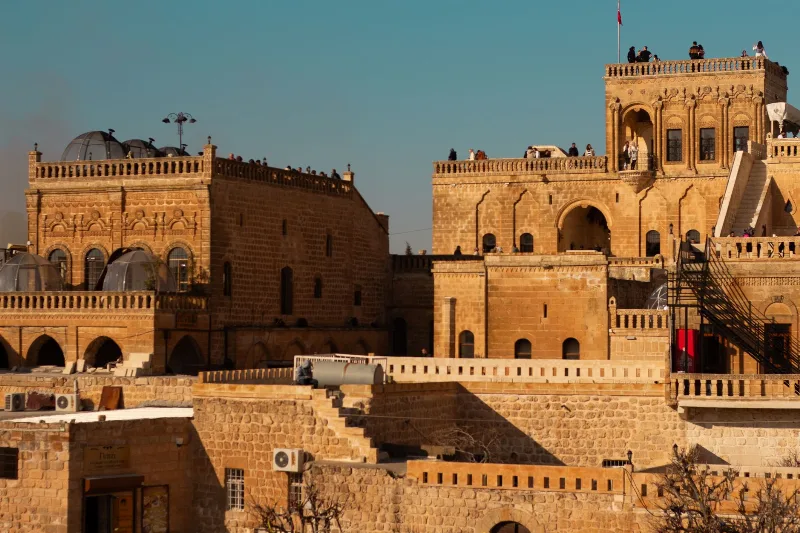
3-Day Mardin and Midyat Route
Explore the stone architecture of Mardin's old city and the historic monasteries of Midyat on this 3-day route through southeast Türkiye. The itinerary starts in Mardin, travels east to Midyat, and visits Deyrulzafaran and Mor Gabriel monasteries.
Explore →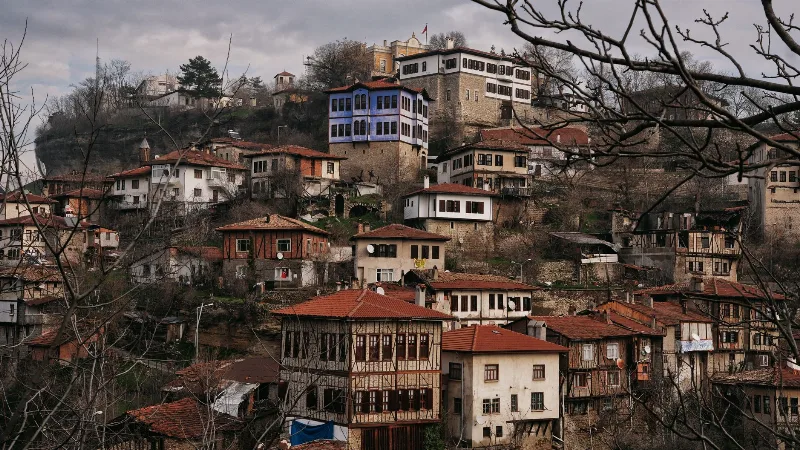
2-Day Safranbolu and Amasra Route
A two-day driving route that starts among the timber-framed houses of Safranbolu, crosses the uplands of Kastamonu and the Küre Mountains, and finishes at the small Black Sea harbour of Amasra.
Explore →Related content
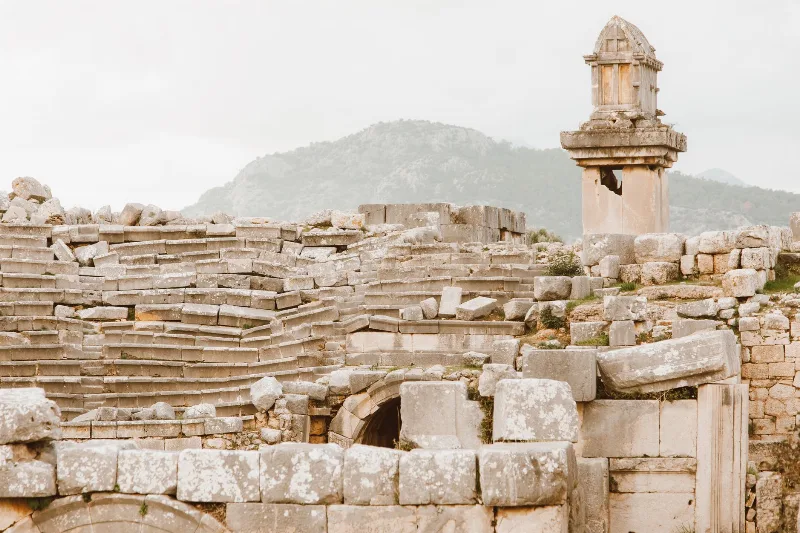
Xanthos
Xanthos was a leading city of Lycia and the seat of the Lycian League, on the frontier between the Antalya and Muğla provinces of Türkiye. Its surviving theatre, agora and tomb monuments, together with the nearby sanctuary of Letoon, form a UNESCO World Heritage Site.
Xanthos
Xanthos is an ancient Lycian city in Antalya Province and a UNESCO World Heritage Site, known for its Lycian tombs, Roman theatre and role as a leading city of Lycia.
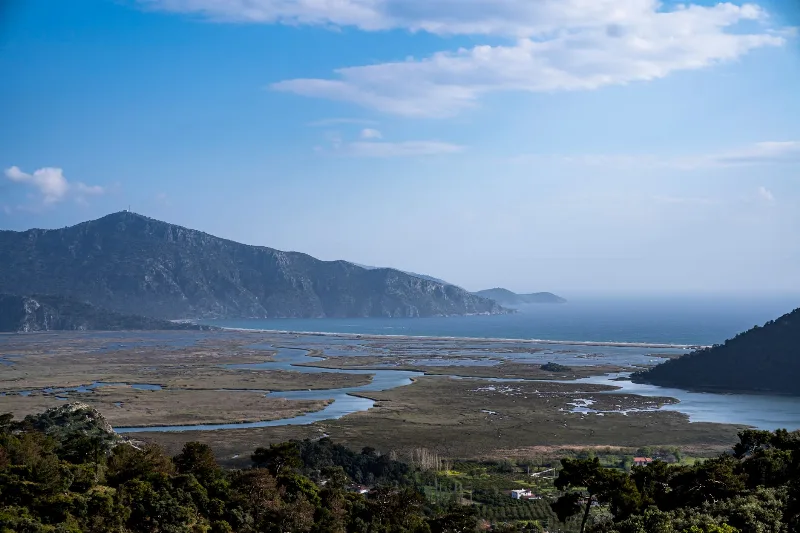
Muğla
Muğla is a captivating province in southwestern Türkiye, renowned for its stunning Aegean coastline and rich cultural heritage.
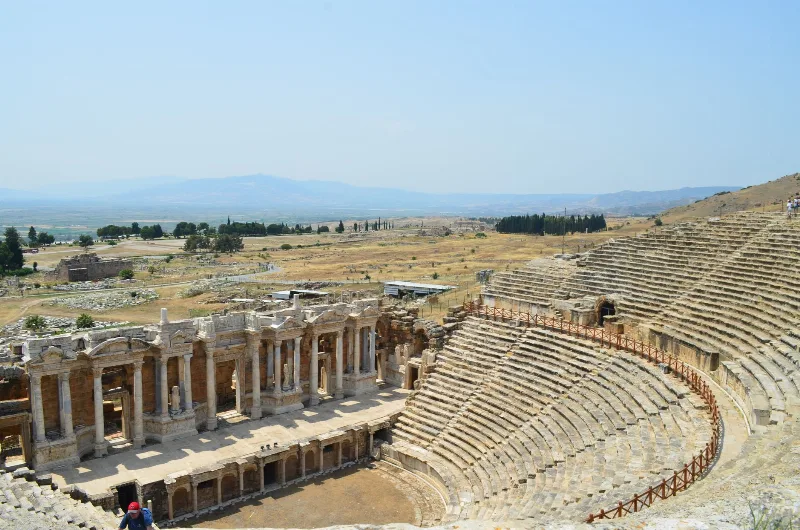
Letoon
Letoon is a Lycian sanctuary near Xanthos in Muğla Province, dedicated to Leto, Artemis and Apollo. Its three temples, theatre and trilingual inscription make it one of southwestern Turkey’s most significant archaeological sites.
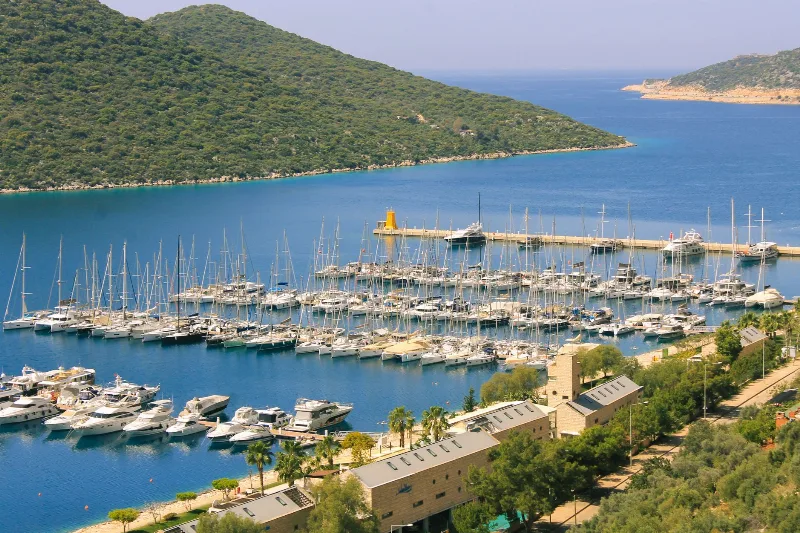
5-Day Fethiye to Kaş Lycian Coast Route
A five-day linear route along the Lycian coast from Fethiye to Kaş, linking Ölüdeniz, Kabak, the Xanthos valley, Patara and Kalkan by road and on foot.
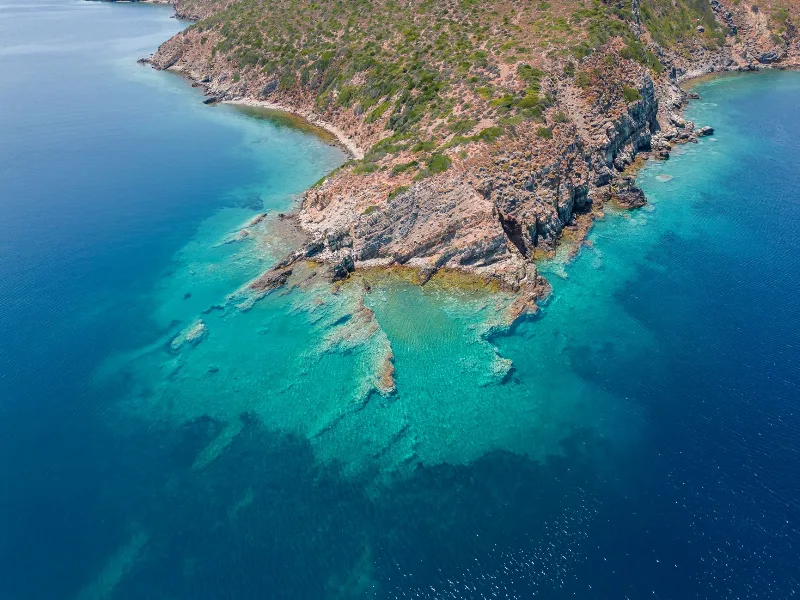
Sailing the Turquoise Coast
The Turquoise Coast follows the southwestern shoreline of Türkiye, where sheltered bays, pine hills and clear water meet. This page explores how sailing and boat trips reveal its landscapes, islands and ancient harbours.