
4-Day Cappadocia and Konya Route
A four-day linear journey from the rock valleys of Cappadocia to the Seljuk city of Konya, linking cave churches, underground cities and the Ihlara Valley with the Mevlana Museum on the central Anatolian plateau.
This four-day route starts in Göreme, in the middle of the Cappadocia region, and ends in Konya, the historic Seljuk city of the central Anatolian plateau. It is a linear journey rather than a loop: the road moves south and then west across open highland, from the soft volcanic tuff valleys of Cappadocia to the broad, dry steppe around Konya. The two halves of the trip feel very different. Cappadocia is defined by eroded rock formations, rock-cut churches and settlements carved into the stone; Konya is a city of monumental Seljuk architecture and of the spiritual tradition gathered around the Mevlana Museum. Four days is a realistic amount of time to cover the essential stops of both without constant rushing, and the route works best for travellers with their own vehicle or a private driver, since connections between the smaller stops are thin.
Day 1: Göreme and the Heart of Cappadocia
The day begins in Göreme itself, which is the most practical base for the opening stage. Start with the Göreme Open Air Museum, a compact monastic complex of rock-cut churches whose interiors carry painted frescoes from the Byzantine period. From there the route turns toward Uçhisar, where a fortified rock outcrop rises above the surrounding valleys and gives a wide view over the whole tuff landscape. This is the moment to understand the geography of the region: soft stone, deep valleys and cone-shaped formations that were hollowed out over centuries for homes, churches and storage.
Continue north through the valley floors. The Devrent and Paşabağ areas show some of the most distinctive rock shapes in Cappadocia, and the road between them is short and easy to follow. The day finishes in Avanos, a small town on the Kızılırmak, the longest river of the region. Avanos has a long pottery tradition that draws directly on the local clay, and it is a good place to see a working craft town rather than only an archaeological landscape. Overnight in Göreme, Uçhisar or Ürgüp keeps the next day's drive short.
Day 2: Underground Cities and the Ihlara Valley
Leave Göreme heading south. The first stop is one of the underground settlements of the region, at Derinkuyu or Kaymaklı. These multi-level cities were cut into the soft rock and served as sheltered, defensible places to live; walking through their tunnels and chambers gives a sense of how far the local building tradition extended below ground. The two sites lie close together on the same road, so visiting both in one morning is straightforward.
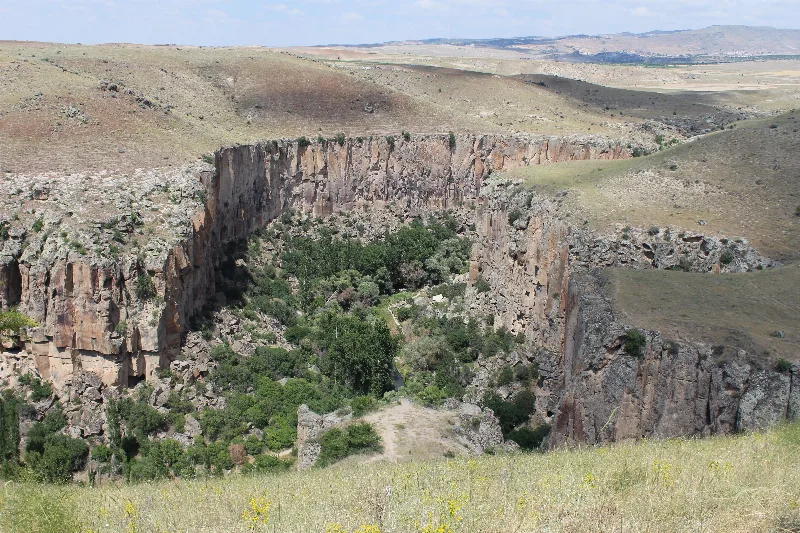
From here the route continues south and slightly east toward the Ihlara Valley, a deep gorge cut by the Melendiz River through the volcanic plain. The valley is a walking destination rather than a drive-through one: a trail follows the river past rock-cut churches and small settlements, and the village of Belisırma sits inside the gorge. Further south, near Güzelyurt, the Selime Cathedral complex rises from the rock on a much larger scale, with a monastery-like cluster of carved rooms and a facade visible from a distance. This day is best treated as a combination of driving and walking, with the valley section done on foot. Overnight locally in the Ihlara or Güzelyurt area, which places you well for the following stage.
Day 3: From Ihlara to Konya Along the Seljuk Road
The third day begins in the Ihlara area and turns west. The road runs up to Aksaray and then follows the historic corridor across the plateau toward Konya, a direction that has connected these two regions since Seljuk times. The obvious stop on this stretch is the Sultanhanı caravanserai, one of the large fortified roadside inns built to shelter travellers and trade on the old Anatolian routes. Its massive stone gateway, courtyard and covered hall are among the clearest surviving expressions of Seljuk engineering on the plateau, and it fits naturally into the day because it sits directly on the road you are already travelling.
Arrive in Konya by afternoon and use the remaining hours on the old city centre. Alaeddin Hill, with its mosque and Seljuk palace remains, marks the historic core. Nearby stand the Karatay Medrese, known for its tile decoration, and the İnce Minare Medrese, whose carved stone portal is one of the city's most recognisable details. The Konya Archaeological Museum adds context on the earlier civilisations of the plain. This half-day is a useful introduction before the main Mevlana visit the following morning.
Day 4: Konya, the Mevlana Museum and the Seljuk City
The final day belongs to Konya. Begin at the Mevlana Museum, the former dervish lodge that holds the tomb of Mevlana Celaleddin Rumi and preserves the setting of the Mevlevi tradition. The green-tiled dome is the landmark, and inside the complex the ritual hall, dervish cells and collection of manuscripts explain why this place draws visitors from far beyond Türkiye. Give it unhurried time; it is the emotional centre of the route and the reason many travellers make the journey south in the first place.
From the museum, the surrounding district is easy to explore on foot, with the bazaar streets and Seljuk and Ottoman religious buildings clustered close together. If time allows, two short extensions round out the day. West of the city, the old village of Sille has rock-cut churches and a hillside setting that shows a very different, quieter side of the region. South-east of Konya, the Neolithic mound of Çatalhöyük is one of the most important early settlement sites in the world and makes a logical final stop for travellers interested in prehistory. The route ends in Konya, so the city is also a sensible place to finish the journey or to continue onward by rail or road.
When to Travel This Route and What to Expect
Spring and autumn are the most comfortable seasons for this route. Cappadocia sits on a high plateau and can be cold and snowy in winter, while the Konya plain becomes very hot and dry in high summer; the shoulder months avoid both extremes and make the walking sections in the Ihlara Valley far more pleasant. The landscape changes noticeably along the way, from the sculpted tuff valleys of Cappadocia to the flat, open farmland and steppe around Konya, and the driving is steady rather than technical, though distances between stops are real and should be respected.
Because the route runs in one direction and the most rewarding stops are spread out, it suits travellers who are happy to drive and to break the day with walks. Village stops such as Avanos, Belisırma, Güzelyurt and Sille reward a slower pace, and the regional character of the plateau, from its pottery and textiles to its bakery and dairy traditions, is part of what gives the journey its shape. Treated as a sequence rather than a checklist, these four days connect two of central Türkiye's most distinctive worlds by a single, coherent line across the Anatolian highland.
Remarkable Places
See all places →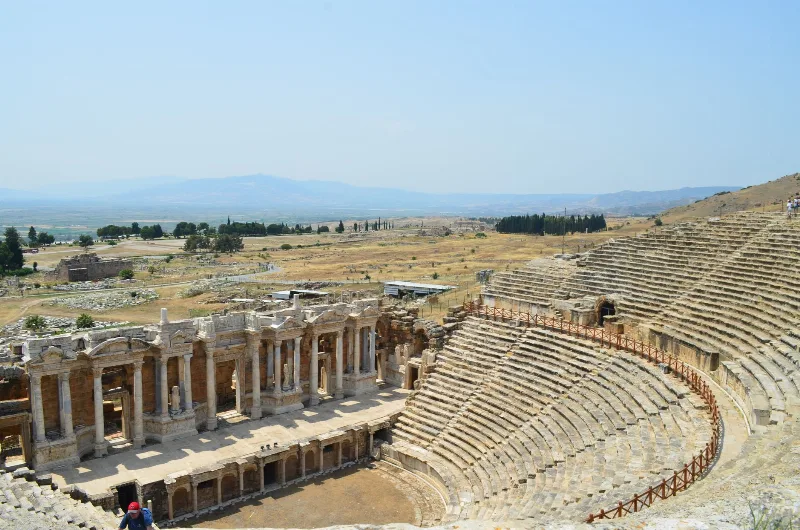
Letoon
Letoon is a Lycian sanctuary near Xanthos in Muğla Province, dedicated to Leto, Artemis and Apollo. Its three temples, theatre and trilingual inscription make it one of southwestern Turkey’s most significant archaeological sites.
Explore →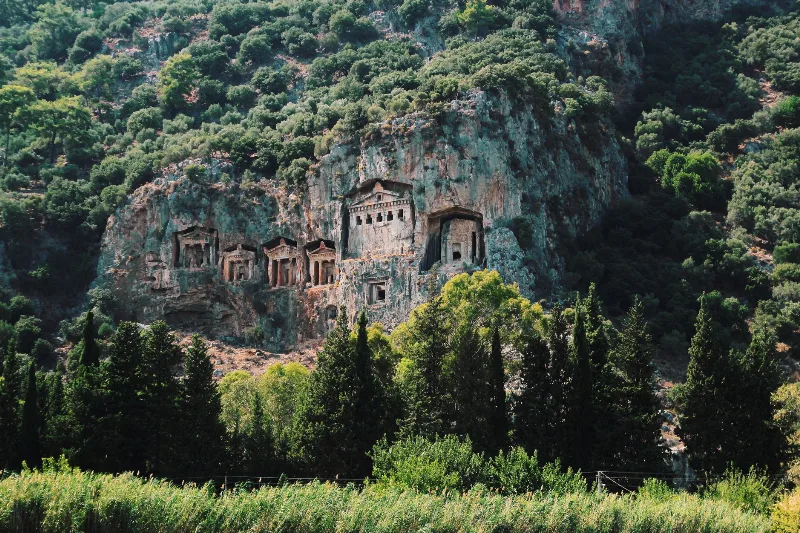
Kaunos
Kaunos is an ancient Carian city on the Dalyan River in Muğla Province, known for its temple-style rock-cut tombs and the extensive ruins of a harbour that silted up centuries ago.
Explore →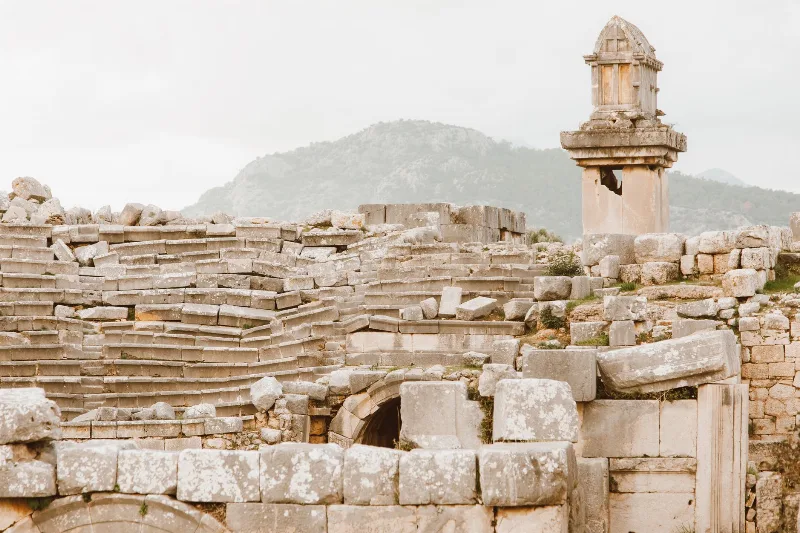
Xanthos
Xanthos is an ancient Lycian city in Antalya Province and a UNESCO World Heritage Site, known for its Lycian tombs, Roman theatre and role as a leading city of Lycia.
Explore →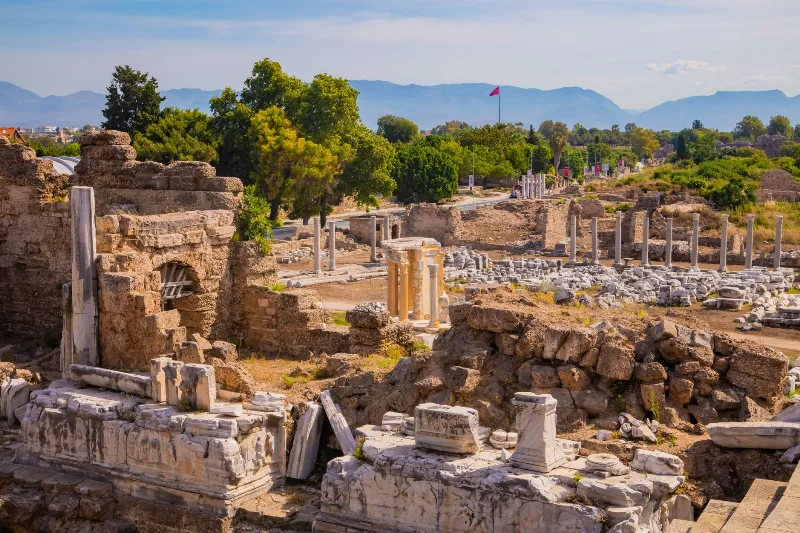
Phaselis
Phaselis is a Rhodian-founded port city on the eastern Lycian coast, where paved streets, agoras, baths and a small theatre stand among pines between three sheltered bays.
Explore →Related content
Cappadocia
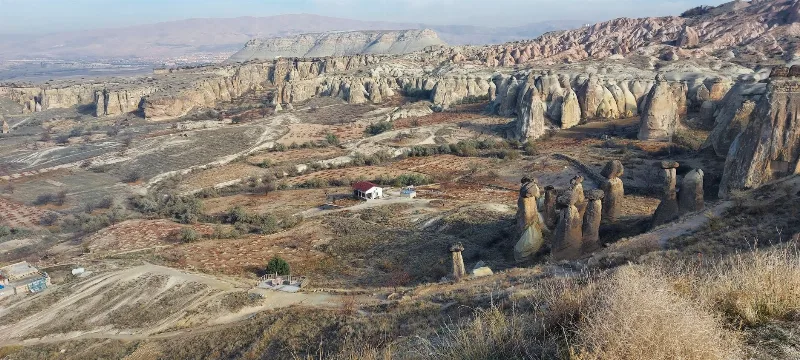
Cappadocia is a region of Central Anatolia in Turkey defined by eroded volcanic tuff, rock-cut Byzantine churches and multi-level underground cities. This guide explains how the landscape formed, what the main valleys and sites actually contain, and what to know before visiting.
Konya
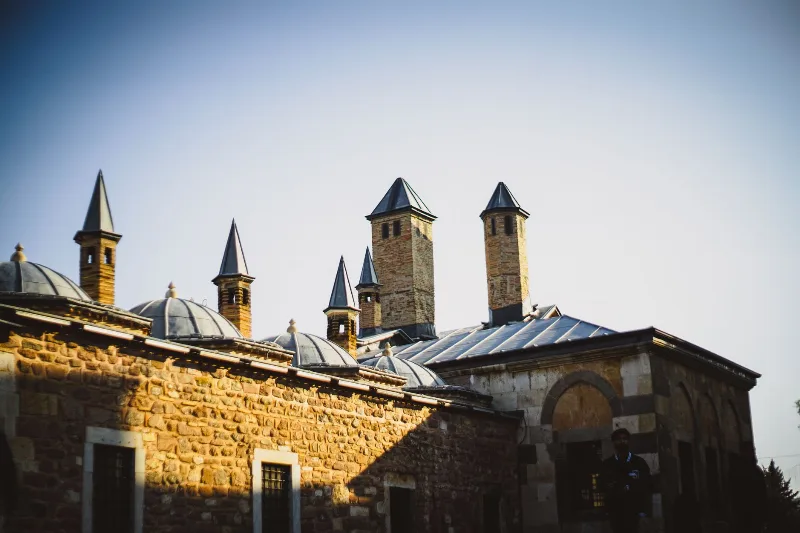
Konya is a city known for its spiritual essence and cultural heritage, home to the Mevlana Museum and the whirling dervishes.
Ihlara Valley
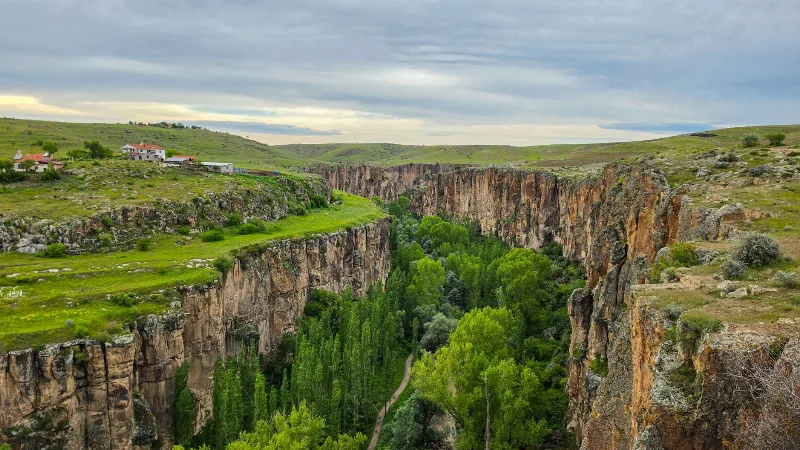
Ihlara Valley is a 14-kilometre canyon in Aksaray Province cut by the Melendiz River, lined with Byzantine rock-cut churches and frescoes. This guide covers its geology, the churches inside it, the walking route and the best time to visit.
4-Day Cappadocia to Konya Route
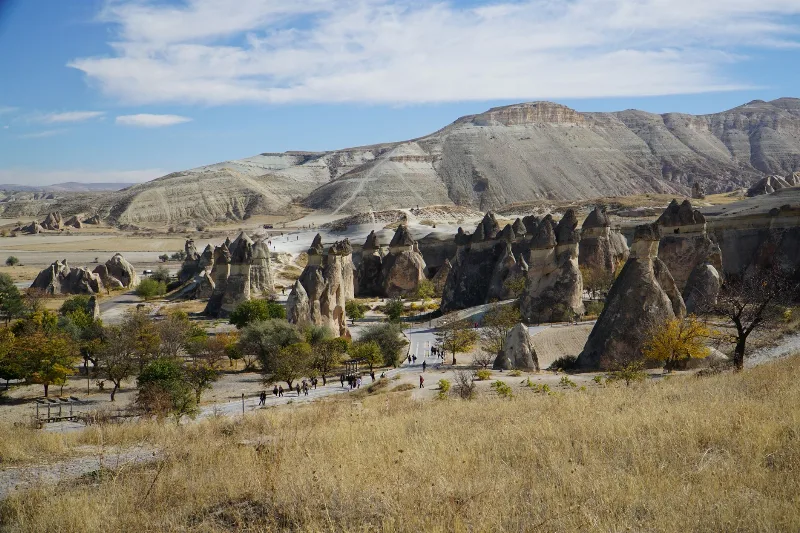
A four-day southbound route from Cappadocia's rock-cut valleys to Konya, linking the underground cities of Derinkuyu and Kaymaklı, the Ihlara canyon, Selime Monastery and the Mevlana Museum. It is a linear, self-drive journey across the volcanic plateau of Central Anatolia into the Konya plain.
Central Anatolia Region
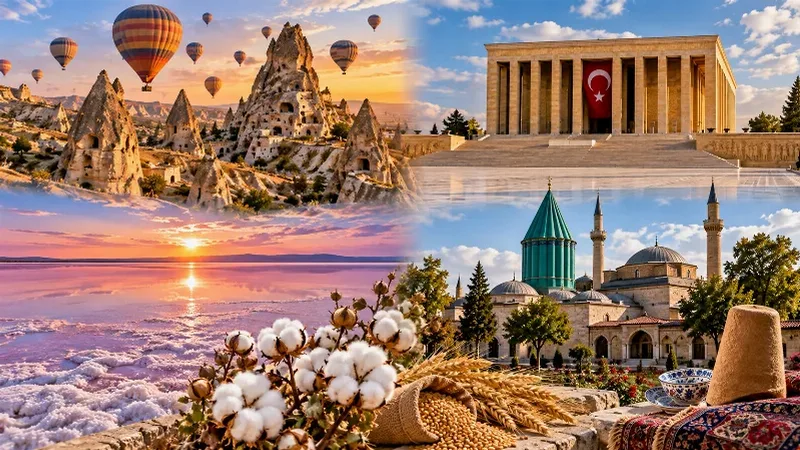
Central Anatolia is the historic heartland of Türkiye, known for its wide plains, extraordinary rock formations, ancient civilizations and traditional towns. From the fairy chimneys of Cappadocia to the cultural landmarks of Ankara and Konya, the region reveals the rich history and natural beauty of inner Anatolia.
Aksaray
Explore Aksaray, Central Anatolia: history, standout sights, landscapes, local food and practical travel advice for an unforgettable journey in Türkiye.