
Lake Van
Lake Van is Turkey's largest lake and the world's largest soda lake, located in Eastern Anatolia. It is known for Akdamar Island and its 10th-century Armenian Church of the Holy Cross.
Lake Van, known in Turkish as Van Gölü, is the largest lake in Turkey and the largest soda lake in the world by volume. It lies in the Eastern Anatolia region, primarily within the province of Van, with its western shores touching Bitlis province. The lake sits at an elevation of about 1,640 metres above sea level and covers an area of roughly 3,700 square kilometres. Its waters are highly alkaline and saline, making them unsuitable for drinking or irrigation, but they support a unique ecosystem.
Geography and Physical Setting
Lake Van occupies a tectonic depression in the highlands of Eastern Anatolia. The lake is surrounded by mountains, including the volcanic peaks of Mount Süphan to the north and Mount Nemrut to the west. The basin is endorheic, meaning it has no outlet to the sea; water leaves only through evaporation. This closed drainage system has allowed dissolved minerals to concentrate over time, resulting in the lake's distinctive chemistry.
The lake's maximum depth is about 451 metres, and its volume is roughly 600 cubic kilometres, making it the largest lake in Turkey by both area and volume. The shoreline is irregular, with several bays and peninsulas. The lake level has fluctuated significantly over geological time and in recent decades due to climate and human water use.
Geological Origins and Water Chemistry
Lake Van lies in a tectonically active region where the Arabian and Eurasian plates converge. The basin formed as a result of faulting and volcanic activity. The lake is bordered by young volcanic rocks, and nearby Mount Nemrut is a caldera that contains a crater lake. The water of Lake Van is strongly alkaline, with a pH typically between 9.7 and 9.8, and it has a high concentration of sodium carbonate and other salts. This chemistry is unusual among large lakes and gives the water a slippery feel and a faint odour. The alkalinity also preserves organic material, which is why the lake's sediments are valuable for paleoclimate research.
Ecology and Endemic Species
The extreme water chemistry of Lake Van limits biodiversity. Only one species of fish is known to live in the lake: the pearl mullet (Alburnus tarichi), also called the Van fish. It is endemic to the lake and its tributaries. Each spring, pearl mullet migrate in large numbers from the alkaline lake into freshwater streams to spawn. This migration is a notable natural event, and fishing is restricted during this period to protect the population. The lake also hosts microbialite formations—living stromatolites—that are among the largest known in the world. These structures are built by microbial communities and provide clues about early life on Earth. Birdlife around the lake includes species such as the white-headed duck and the Armenian gull.
Akdamar Island and the Church of the Holy Cross
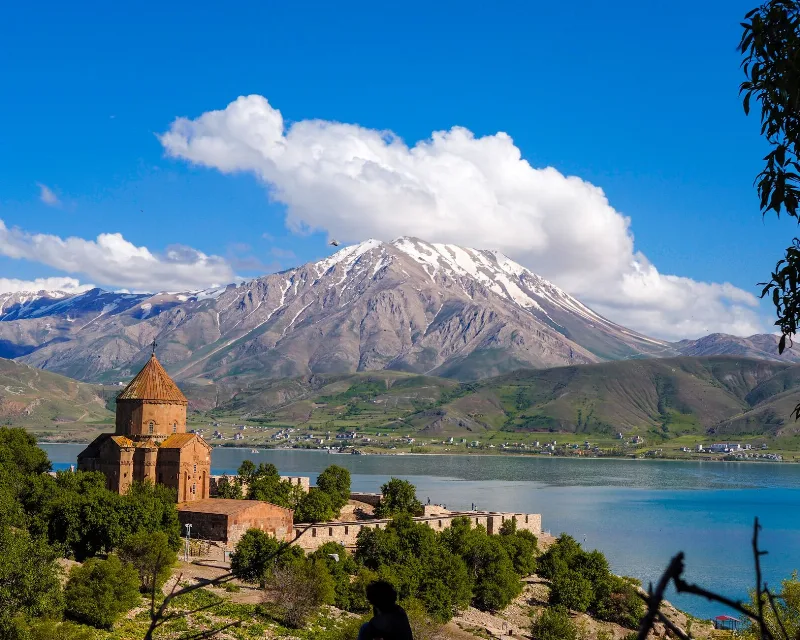
Akdamar Island (Akdamar Adası) is the largest island in Lake Van, located a few kilometres from the shore near the town of Gevaş. The island is best known for the Church of the Holy Cross (Surb Xaç), an Armenian cathedral built between 915 and 921 AD. The church was commissioned by King Gagik I Artsruni of the Bagratid dynasty and designed by the architect Manuel. It is considered a masterpiece of Armenian architecture, particularly for its exterior stone reliefs depicting biblical scenes, animals, and geometric patterns. The church functioned as a monastery for centuries and was restored in the early 2000s. Today it is a museum and a symbol of the region's multicultural past. Visitors reach the island by boat from Gevaş; the trip takes about 20 minutes. Other islands in the lake include Çarpanak (Ktuts), Adır (Lim), and Kuş Islands, each with historical ruins.
Historical and Cultural Significance
Lake Van has been inhabited for thousands of years. The Urartian kingdom, which flourished in the region from the 9th to the 6th century BC, left fortresses and inscriptions, including those at Van Castle (Van Kalesi) on the eastern shore. The lake was also part of the Armenian kingdom and later came under Byzantine, Seljuk, and Ottoman rule. The name "Van" is derived from the Urartian word "Biaina". The lake has been a vital water source and transportation route. In the early 20th century, the region experienced significant upheaval, and the Armenian population was largely displaced. The Church of the Holy Cross on Akdamar Island is a reminder of the Armenian cultural heritage that once thrived around the lake. Local folklore also includes tales of a lake monster, though no scientific evidence supports its existence.
What to See and Do Around the Lake
Beyond Akdamar Island, the Lake Van basin offers several points of interest. On the eastern shore, Van city has a museum, the ancient Van Castle, and the old city of Van. The castle offers panoramic views of the lake and the surrounding plain. South of Van, the Hoşap Castle (Hoşap Kalesi) is a well-preserved Ottoman-era fortress in Gürpınar district. To the west, the town of Ahlat in Bitlis province is known for its historic cemetery with monumental Seljuk tombstones. The Muradiye Waterfalls, located north of the lake near the town of Muradiye, are a popular natural site. The Nemrut Caldera, also in Bitlis province, contains a crater lake and offers hiking opportunities. The lake itself can be explored by road; a circuit around the lake is possible, though some sections are remote. Swimming is not recommended due to the high alkalinity, but the shoreline is suitable for picnics and walks.
Access and Practical Visiting Information
The main gateway to Lake Van is the city of Van, which has an airport (Van Ferit Melen Airport) with flights from Istanbul, Ankara, and other major Turkish cities. The city is also connected by bus to many regions. A railway line runs to Tatvan on the western shore, where a train ferry historically carried railcars across the lake to Van; this service is part of the Trans-Asia railway route. However, the ferry operates irregularly, so it is best to check current schedules. To visit Akdamar Island, drive or take a minibus from Van to Gevaş (about 40 kilometres), where boats depart. The island is open to visitors daily, but boat services may be limited outside the peak season. There is an entrance fee for the church. Most services and amenities are concentrated in Van city and larger towns.
Climate and Best Time to Visit
Lake Van experiences a continental climate, with cold, snowy winters and warm, dry summers. The lake moderates temperatures slightly, but winter temperatures can drop well below freezing. The lake surface may freeze in shallow bays, though the central lake rarely freezes completely. Summer temperatures reach 25-30°C, making it the most comfortable season for visiting. Spring (May-June) and autumn (September-October) are also pleasant, with fewer crowds. However, weather can change quickly in the mountains, so layered clothing is advisable. The best period for boat trips to Akdamar Island is from late spring to early autumn, when the water is calm and services are regular.
Nearby Destinations and Related Places
The Lake Van region is close to several other notable destinations. To the north, Mount Süphan is a dormant volcano and a popular trekking destination. Further north, the town of Doğubayazıt and the Ishak Pasha Palace are within reach, though a long drive. To the west, the city of Bitlis has its own historic castle and the nearby Nemrut Caldera. To the south, the town of Gevaş and the surrounding countryside offer hiking and views. The region is also near the Iranian border, and the city of Van has a distinct cultural mix. For those interested in Urartian history, the sites of Çavuştepe and Toprakkale are worth a detour. All these places can be combined with a visit to Lake Van, but distances are significant, and public transport may be limited.
Related content
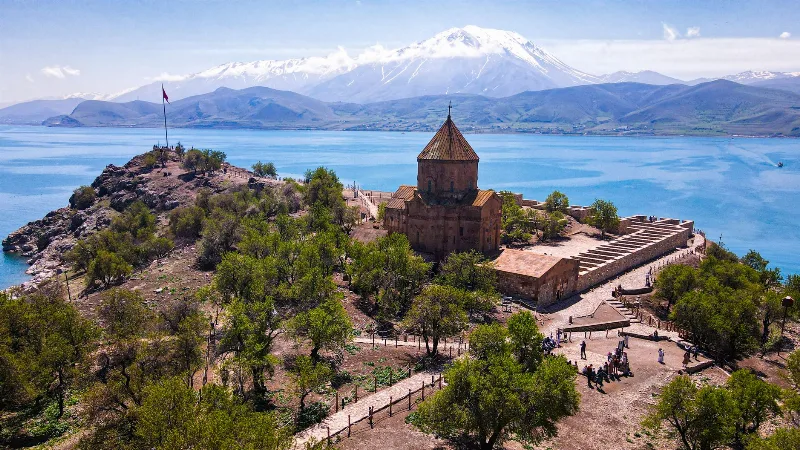
Akdamar Island
Akdamar Island is the largest island in Lake Van, eastern Turkey, and holds the 10th-century Armenian Cathedral of the Holy Cross, whose outer walls are covered in carved biblical reliefs. It is reached by boat from a pier near Gevaş and is usually visited as a day trip from Van.
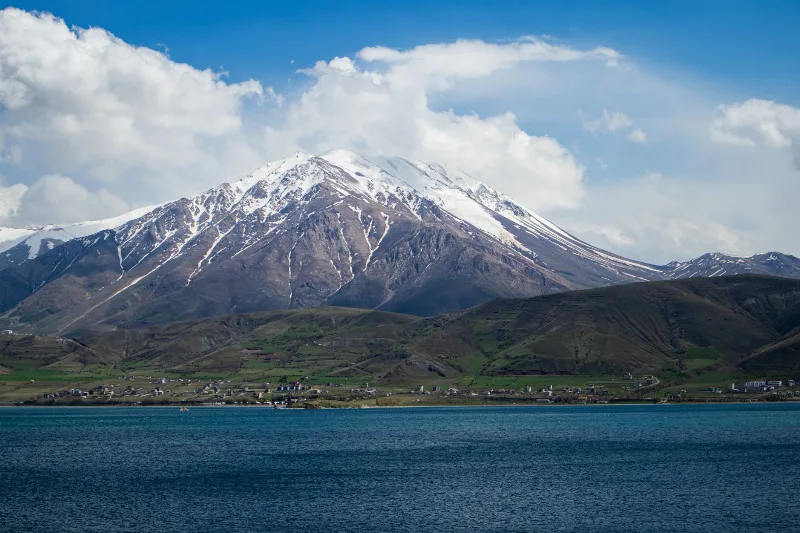
Mount Süphan
Mount Süphan (Süphan Dağı) is a dormant stratovolcano in Bitlis Province, eastern Türkiye, and the second-highest peak in the country at 4,058 metres, rising above the northern shore of Lake Van.
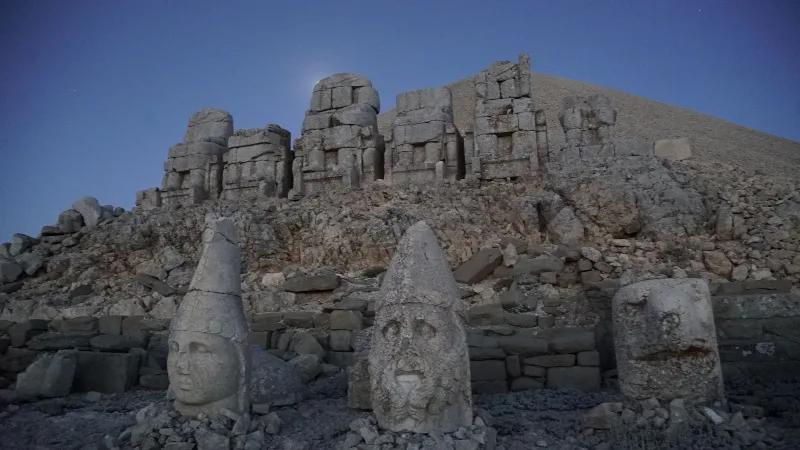
Mount Nemrut
Mount Nemrut in Adıyaman Province is the summit hierothesion of King Antiochus I of Commagene, where colossal statues of gods and a royal ruler stand on terraces above an artificial stone tumulus. The site is a UNESCO World Heritage property whose Greek inscriptions and reliefs record a Hellenistic kingdom of the first century BC.
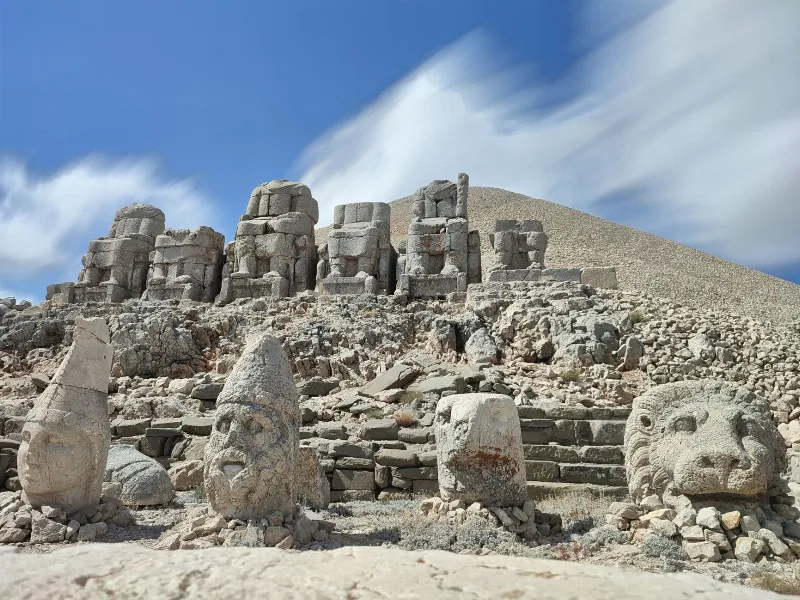
Mount Nemrut
Mount Nemrut is a dormant volcano in Bitlis Province, eastern Türkiye, featuring a large caldera with crater lakes. It lies west of Lake Van near Tatvan.
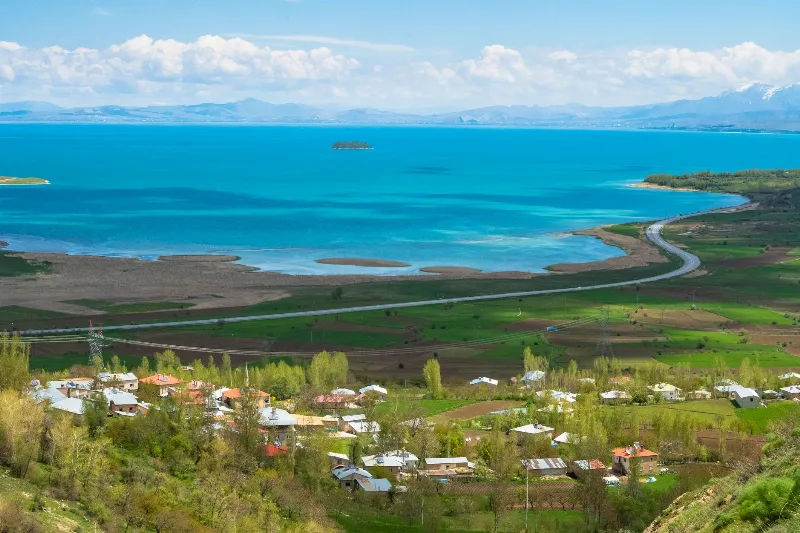
Lake Van and Surrounding Nature
Discover the tranquil beauty of Lake Van, Türkiye's largest lake, and its picturesque surroundings in eastern Türkiye.
Lakes and Natural Beauty in Türkiye
A journey through the lakes of Türkiye, from the wide soda waters of Lake Van to forest pools in Bolu, salt flats on the Central Anatolian plateau and reed beds full of birds.