
Lakes and Natural Beauty in Türkiye
A journey through the lakes of Türkiye, from the wide soda waters of Lake Van to forest pools in Bolu, salt flats on the Central Anatolian plateau and reed beds full of birds.
Türkiye is known for its coasts and mountains, yet much of its quietest scenery lies inland, around water. From the high plateau of Eastern Anatolia to the wooded valleys of the Black Sea and the limestone basins of the Taurus Mountains, lakes shape the look of the land and the pace of daily life. Some are vast and salty, some are fringed with reeds and birds, and others rest inside old volcanic craters. Together they offer some of the most restful natural landscapes in the country.
Water in a Varied Geography
The country's relief explains the number and variety of its lakes. Tectonic movements opened deep basins, volcanoes left craters and lava dams, and rivers blocked by landslides formed natural reservoirs. Climate adds another layer: heavy rain and snow in the Black Sea mountains keep forest lakes full, while the dry Central Anatolian plateau produces shallow, salty basins where summer evaporation leaves white crusts. A journey of a few hundred kilometres can move from freshwater reed beds to mineral shores and cold highland water.
Lake Van and the Eastern Highlands
Lake Van is the largest lake in Türkiye, a wide soda lake held between volcanic peaks near the city of Van. Its water is mineral-rich, and the surrounding hills are pale and open. Akdamar Island rises close to the southern shore, home to the Church of the Holy Cross, a stone building from the tenth century decorated with carved reliefs. Further west, near Bitlis, the crater of Nemrut holds a small circular lake inside a volcanic caldera, and Mount Süphan stands above the northern side of the Van basin.
The Lakes Region of the Taurus
South-west of the Central Anatolian plateau, the Taurus Mountains enclose a chain of basins known as the Lakes Region. Lake Beyşehir is the largest freshwater lake in Türkiye, its irregular shoreline broken by small islands and backed by pine-covered slopes. Lake Eğirdir lies in a neighbouring basin among orchards and rocky hills. Closer to the Aegean, Lake Bafa occupies what was once a gulf of the sea; the ruins of Miletus, Priene and Herakleia lie nearby, and carved rock faces look over the water.
Wetlands and Birdlife
Several lakes are important for wildlife. Lake Manyas, also called Kuş Gölü, sits in a broad plain south of the Sea of Marmara and is protected as a national park for its breeding birds, including pelicans, herons and cormorants. Lake Uluabat, west of Bursa, is ringed with reed beds and shallow channels. In spring and autumn these wetlands become stopping points for birds moving between Europe and Africa, and the flat water reflects wide skies at dawn.
Salt, Minerals and Pale Shores
Lake Tuz spreads across the dry Central Anatolian plateau as one of the saltiest bodies of water in the region. In summer much of it evaporates into a white, cracked surface, and the shallow edges attract flamingos. In Burdur province, Lake Salda is known for its clear water and pale mineral shoreline, surrounded by hills of dark pine. Near Karapınar in Konya, Lake Meke is a small crater lake with a central cone, sitting in a wide steppe plain.
Forest Lakes and Highland Water
In the north, the forests of Bolu hold Lake Abant and the chain of small pools known as Yedigöller, or Seven Lakes, where beech and oak woods turn gold in autumn. Further east in Trabzon, Lake Uzungöl lies in a green valley often wrapped in mist. In the far north-east, Lake Çıldır near Ardahan freezes over in winter and is surrounded by open grassland. These highland lakes are quiet places of cool air, woodland paths and long views.
Taken together, the lakes of Türkiye reveal a side of the country that rewards slower travel: mineral shores in the east, bird-filled reeds in the west, forest water in the north and calm basins among the Taurus Mountains.
Related content
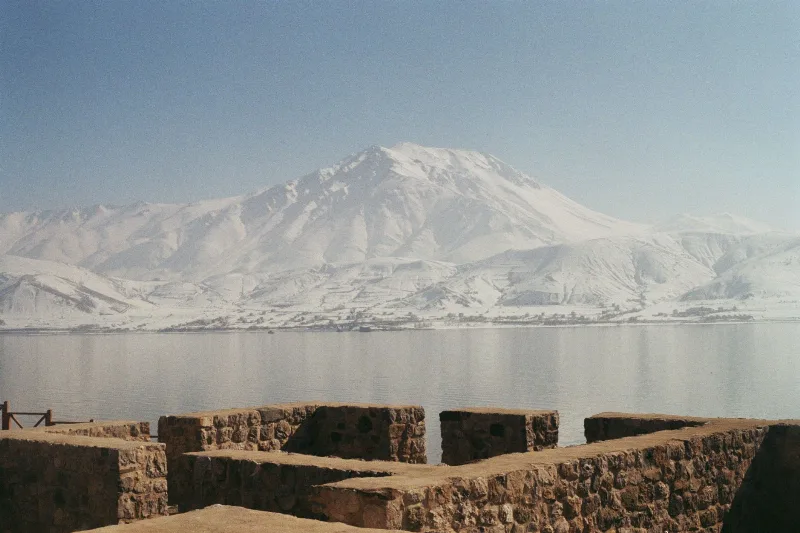
Lake Van
Lake Van is Turkey's largest lake, a vast alkaline soda lake with no outlet, set in the volcanic highlands of Eastern Anatolia at around 1,640 metres. Its unusual chemistry, depth and islands give it a character unlike any other lake in the country.
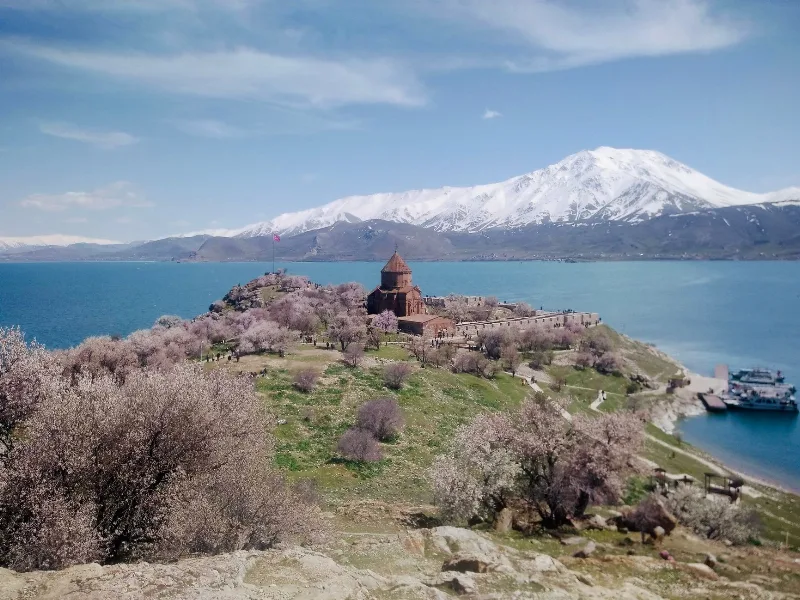
Lake Van
Lake Van is Turkey's largest lake and the world's largest soda lake, located in Eastern Anatolia. It is known for Akdamar Island and its 10th-century Armenian Church of the Holy Cross.
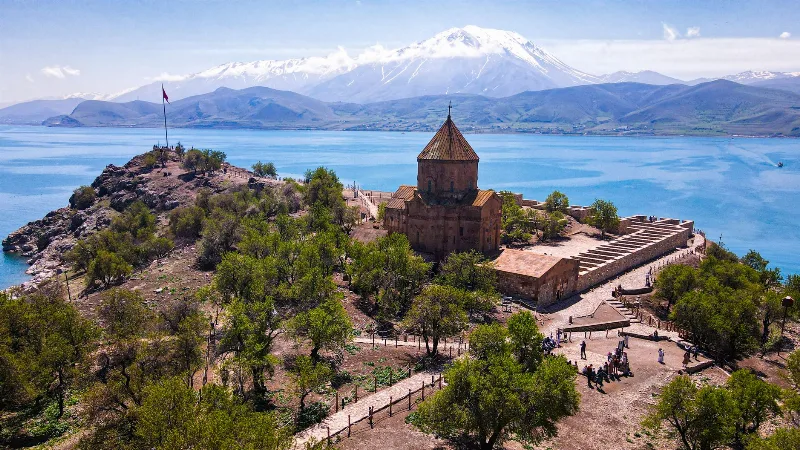
Akdamar Island
Akdamar Island is the largest island in Lake Van, eastern Turkey, and holds the 10th-century Armenian Cathedral of the Holy Cross, whose outer walls are covered in carved biblical reliefs. It is reached by boat from a pier near Gevaş and is usually visited as a day trip from Van.
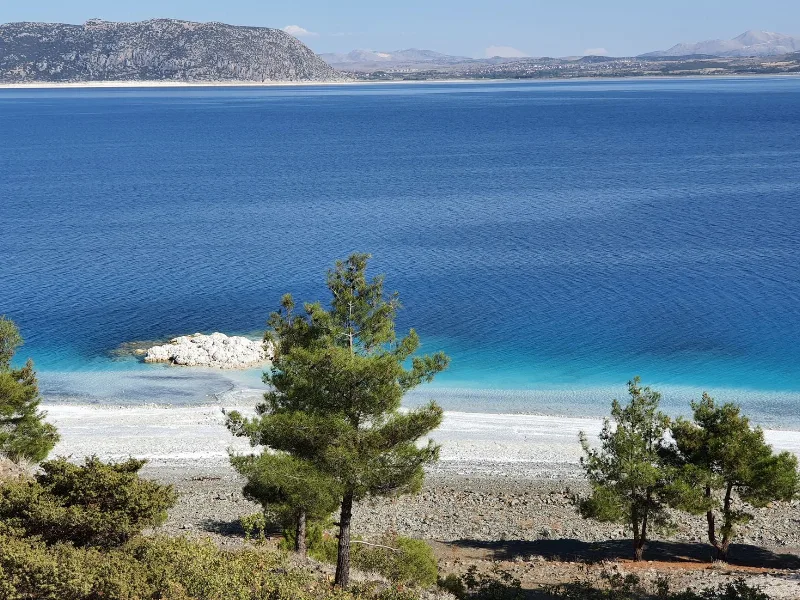
The Serene Lakes of Türkiye
Türkiye’s lakes range from vast soda lakes to salt flats and freshwater basins, each offering calm landscapes and rich wildlife. This page introduces notable lakes across different regions and their seasonal character.
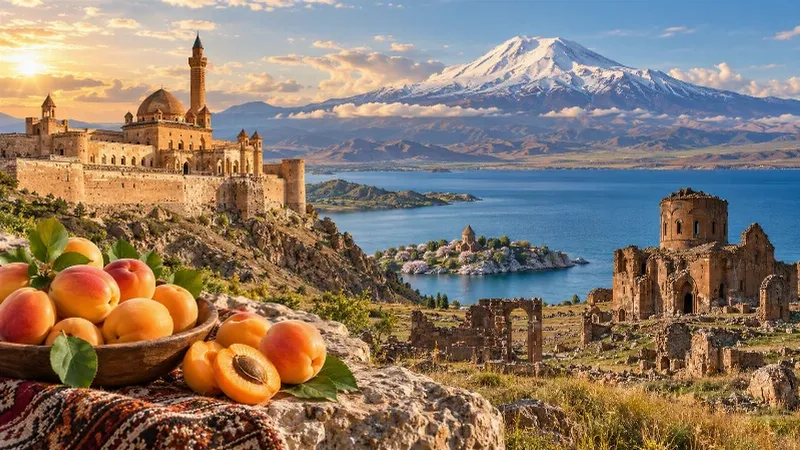
Eastern Anatolia Region
Eastern Anatolia is a region of majestic mountains, vast highlands, beautiful lakes and ancient cultural heritage. Home to Mount Ararat, Lake Van and historic settlements, it offers some of Türkiye's most dramatic natural landscapes alongside distinctive architecture, local traditions and regional cuisine.
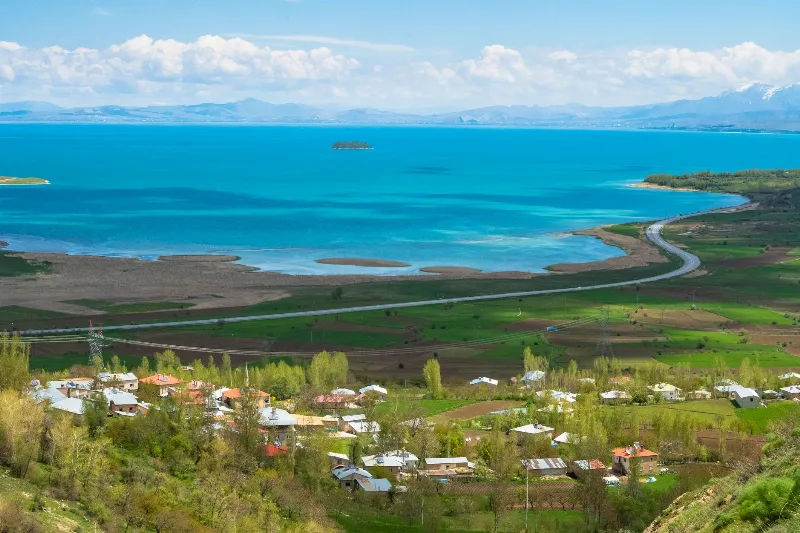
Lake Van and Surrounding Nature
Discover the tranquil beauty of Lake Van, Türkiye's largest lake, and its picturesque surroundings in eastern Türkiye.
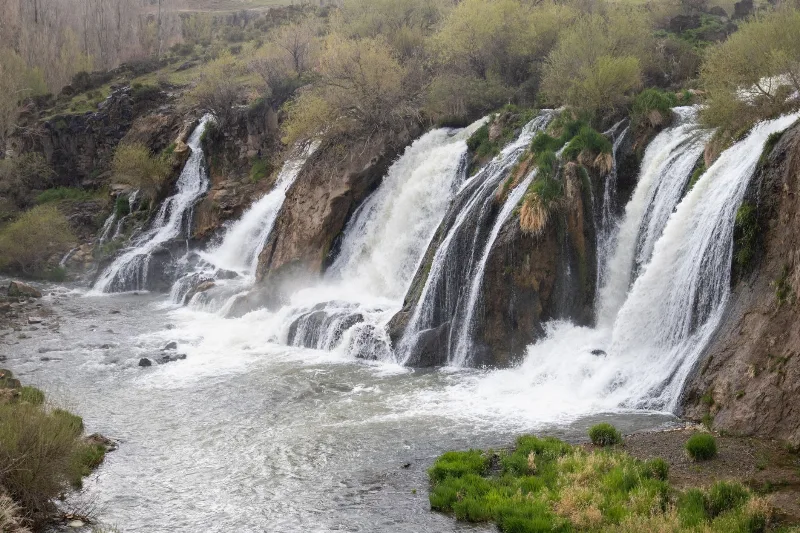
Van's Spring Festival
Spring in Van brings Nevruz and Hıdırellez celebrations, blooming landscapes around Lake Van, and fresh local foods. Discover how eastern Türkiye welcomes the season with culture, nature, and community traditions.
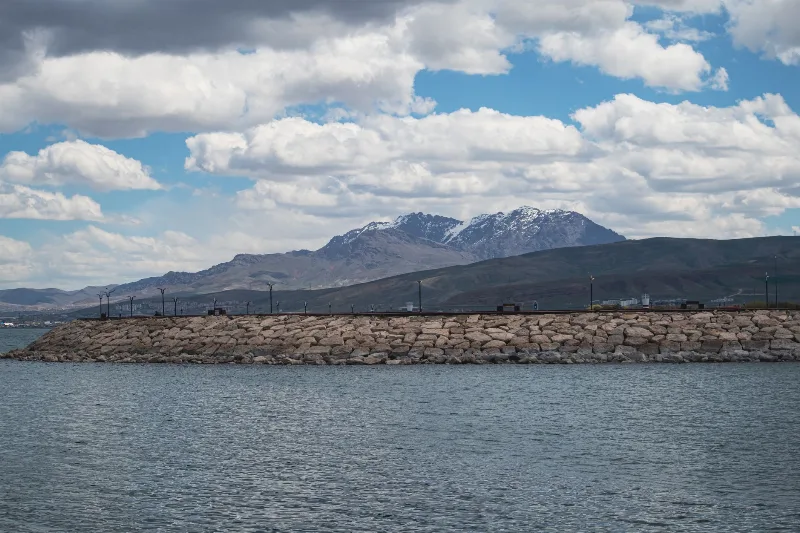
The Ancient Fortresses of the Van Lake Region
The high shores of Lake Van in eastern Türkiye are lined with fortresses built by the Urartians and later rulers, each one placed to guard water, trade routes and fertile plains.