
1-Day Gaziantep Route
A compact one-day route through central Gaziantep, moving from the Zeugma Mosaic Museum to the castle hill, the historic hans and bazaars, and a baklava finish in the old centre.
A one-day Gaziantep itinerary stays entirely inside the city's central districts. The route begins at the Zeugma Mosaic Museum on the edge of the old town, continues to the castle hill and the historic quarters beneath it, works through the bazaar and han district, and finishes with baklava and a meal in the same part of the centre. Almost all of it is covered on foot, with a single short transfer by taxi or local transport between the museum and the castle area. The day brings together the three things that make Gaziantep distinctive: Roman mosaics rescued from the Euphrates, a compact fortress-and-market core, and one of the country's most respected regional kitchens.
Because the whole route sits within one city, it works as a loop rather than a one-way journey: you begin and end in roughly the same quarter, so the order can be reversed if you would rather visit the bazaars in the morning and the museum in the cooler hours of the afternoon. Gaziantep stands on the western edge of the Southeastern Anatolia plateau, where summers are long and dry and winters are colder than the latitude suggests. Spring and autumn are the most comfortable seasons for a day that is mostly spent outdoors; in high summer the middle hours are best given to interiors and shaded courtyards.
Day 1: Zeugma Mosaic Museum, Castle Hill and the Bazaar Quarter
Morning: the Zeugma Mosaic Museum
Start at the Zeugma Mosaic Museum, the anchor of the day and the reason many travellers come to the city at all. The collection holds mosaics recovered from Zeugma, the Roman city on the Euphrates that now lies partly beneath the waters of the Birecik reservoir. Floor panels, portrait medallions and the well-known figure of the Gypsy Girl are displayed in a purpose-built space that is easy to walk through in a couple of hours without feeling rushed. Arriving near opening time gives you the galleries at their quietest and leaves the rest of the day free.
The museum sits away from the castle and bazaar cluster, which is exactly why it belongs at the start: from here you travel back toward the historic centre and spend the rest of the day there, rather than doubling back later. Take a taxi or local transport for this short hop across town and save the walking for the old streets.
Midday: castle hill and the old quarters
The old town of Gaziantep is built around a low hill crowned by the castle, and the streets below it are the natural second stage of the route. The fortress has stood over the city for centuries and is one of its defining landmarks; it was seriously damaged in the February 2023 earthquakes, so access has varied since then and is worth confirming locally before you build your day around it. Even when the interior is closed, the climb and the surrounding streets give the best orientation of the city.
From the hill, the neighbourhoods below unfold in narrow lanes of pale stone houses, a mosque converted from an older church, and small squares. This is the section of the route where you slow down and simply walk: the pattern of courtyards and high walls belongs to a hot-climate city and makes more sense on foot than from a vehicle. Keep the bazaar area as your general direction of travel rather than a fixed line.
Afternoon: hans, bazaars and the kitchen museum
The bazaar and han district continues directly from the old quarters, which is why it follows so naturally after the castle. Several historic caravanserais stand in this part of the city, their courtyards now used for workshops and small businesses, and the surrounding streets are organised by trade, with copper-beating in one lane and produce in another. Gaziantep pistachios are the region's signature crop, and the nuts appear everywhere from market stalls to the sweet shops you will visit later.
Somewhere in this stretch it is worth stepping into the city's kitchen museum, set in a traditional stone house, which explains how Gaziantep cooking is built from local ingredients and techniques. It is a compact stop that adds context to the evening meal without turning the day into a food tour. From here the route needs no further transfer: the bazaar streets lead back toward the centre, where the day ends.
Evening: baklava and the finish
Finish where the city is at its most itself, among the sweet shops and simple eating houses of the centre. Gaziantep baklava, layered with local pistachio, is the obvious closing note, and katmer, a thin pastry folded around pistachio and cream, is the other classic. A fuller dinner of lahmacun, kebabs or a bowl of one of the city's distinctive soups rounds off a day that has moved from Roman mosaics to Ottoman caravanserais to the modern table without ever leaving the centre. Because the route is a loop, the evening ends within easy reach of the morning's starting point or your accommodation.
Route notes and practical points
This is an urban route, not a driving itinerary. Expect a moderate amount of walking on uneven stone streets, with one short motorised transfer between the museum and the castle area; taxis and local buses cover that gap, while parking in the old centre is limited. Footwear with grip helps on the bazaar lanes.
Allow a full day. Trying to squeeze an out-of-town site into the same day would break the logic of the route, because the nearest major excursions, such as the half-submerged town of Halfeti and the fortress of Rumkale along the Euphrates, sit well outside the city and deserve a day of their own. If you have a second day in Gaziantep, add one of those as a separate trip rather than compressing this one.
Remarkable Places
See all places →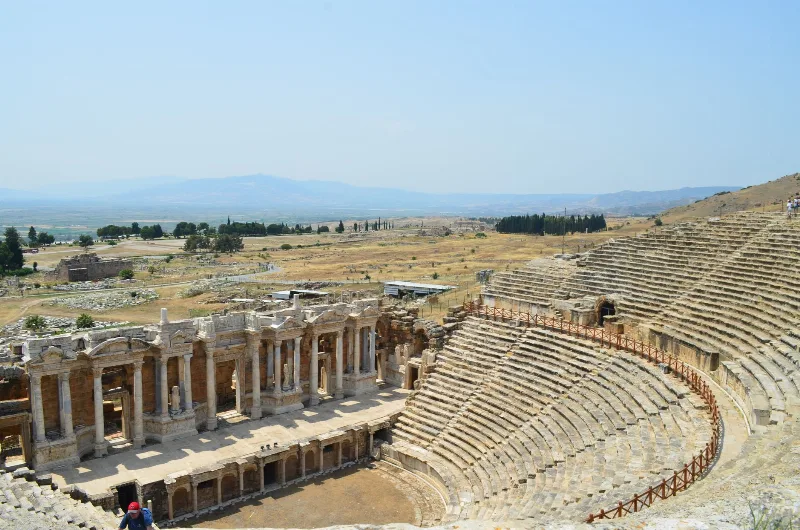
Letoon
Letoon is a Lycian sanctuary near Xanthos in Muğla Province, dedicated to Leto, Artemis and Apollo. Its three temples, theatre and trilingual inscription make it one of southwestern Turkey’s most significant archaeological sites.
Explore →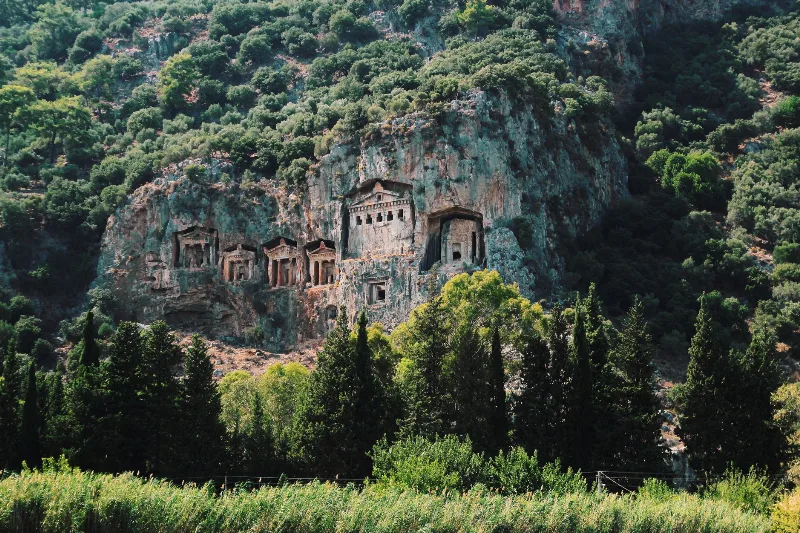
Kaunos
Kaunos is an ancient Carian city on the Dalyan River in Muğla Province, known for its temple-style rock-cut tombs and the extensive ruins of a harbour that silted up centuries ago.
Explore →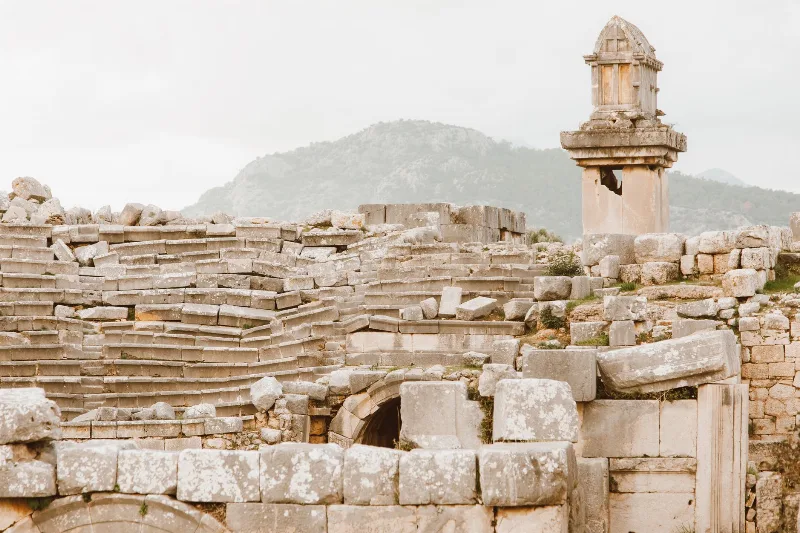
Xanthos
Xanthos is an ancient Lycian city in Antalya Province and a UNESCO World Heritage Site, known for its Lycian tombs, Roman theatre and role as a leading city of Lycia.
Explore →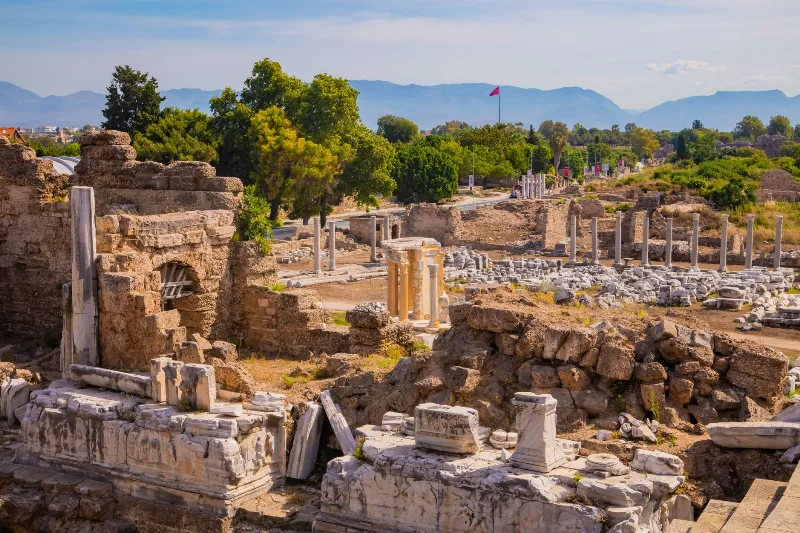
Phaselis
Phaselis is a Rhodian-founded port city on the eastern Lycian coast, where paved streets, agoras, baths and a small theatre stand among pines between three sheltered bays.
Explore →Related content
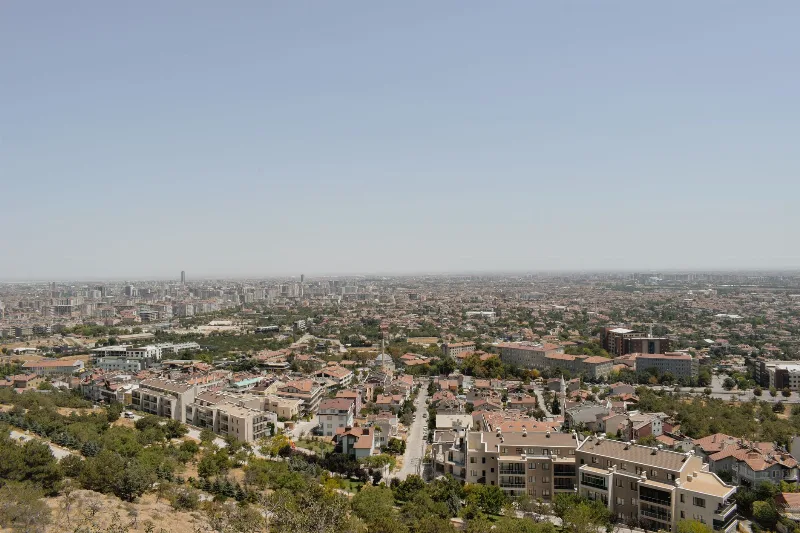
Gaziantep
Gaziantep is a major city in southeastern Türkiye and the administrative centre of its province, widely recognised as the country's gastronomic capital and known for its citadel, bazaars and the Zeugma Mosaic Museum.
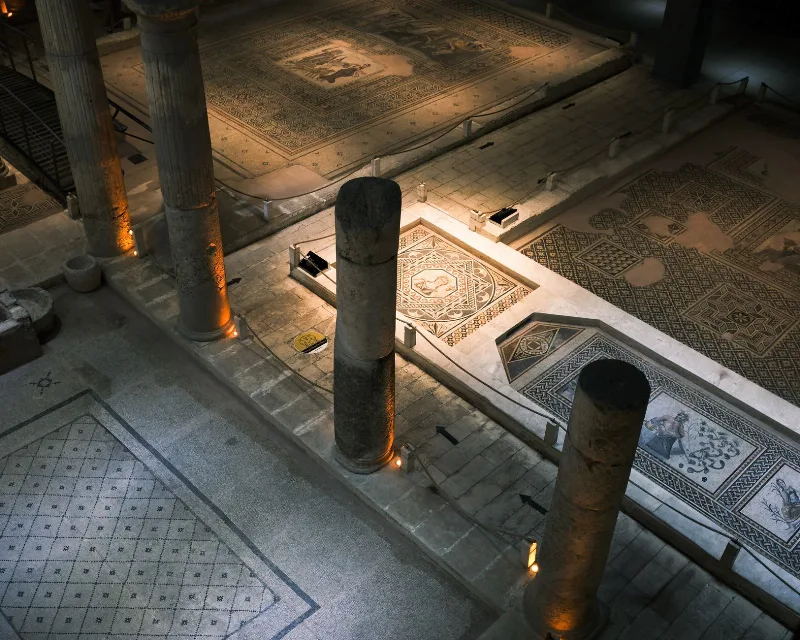
Zeugma
Zeugma was a twin Roman city on the Euphrates in Gaziantep Province, famous for the mosaics recovered from its riverside villas. Here is what the site is, what survives, and what to know before visiting.
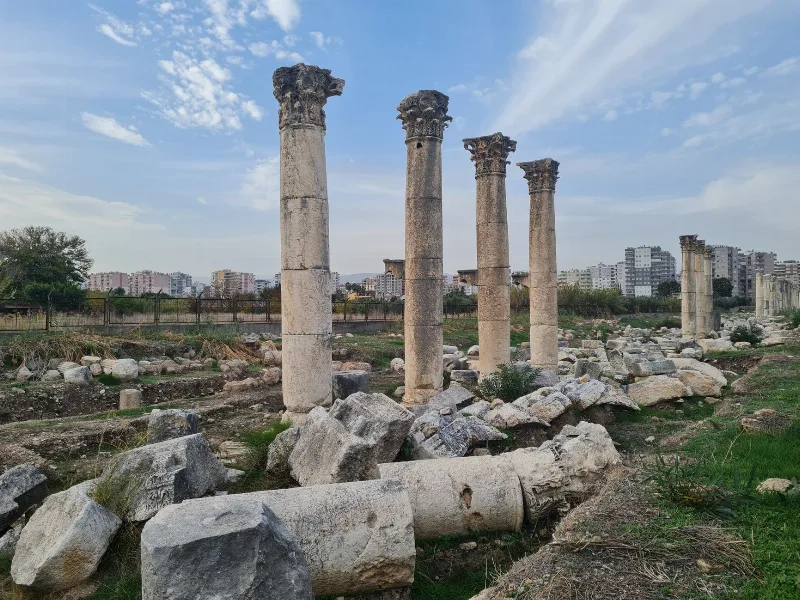
Zeugma
Zeugma was a Hellenistic and Roman city on the Euphrates in Gaziantep Province, important for its river crossing and Roman garrison. Its excavated houses produced celebrated mosaics, many now shown in the Zeugma Mosaic Museum in Gaziantep.
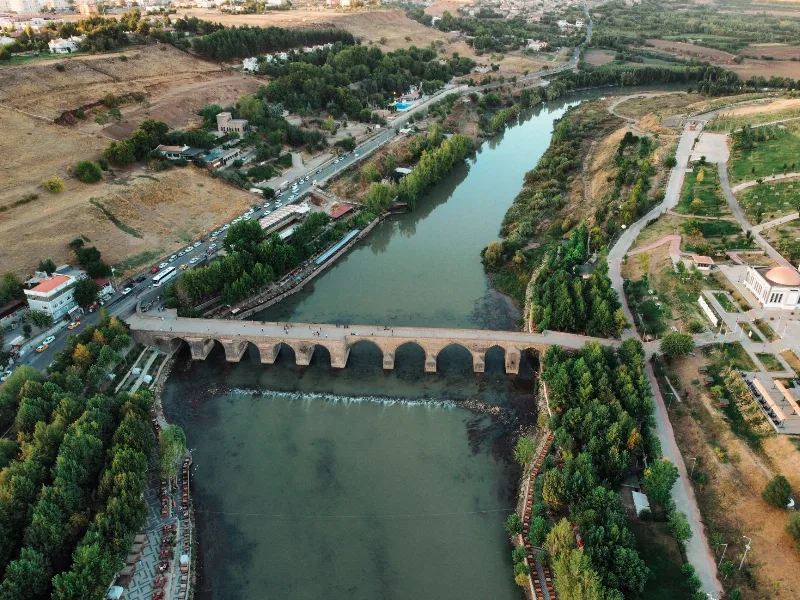
5-Day Tigris and Euphrates Route
A five-day, east-to-west journey across Southeastern Anatolia from Diyarbakır to Gaziantep, following the Tigris and Euphrates through Mardin, Şanlıurfa, Göbeklitepe and Harran.
4-Day Southeastern Anatolia Route: Gaziantep to Mardin via Şanlıurfa
A four-day linear route across Southeastern Anatolia, linking the historic cities of Gaziantep, Şanlıurfa and Mardin by road, with the Neolithic site of Göbeklitepe and the ancient settlement of Harran fitted into the middle of the journey.
Southeastern Anatolia Region
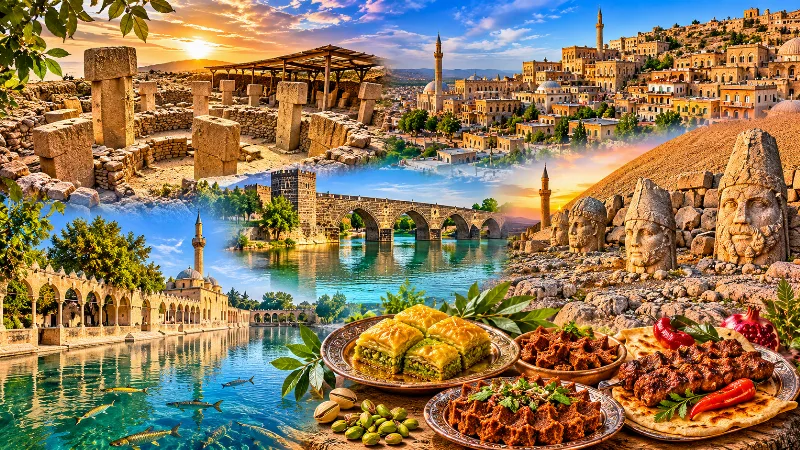
Southeastern Anatolia is known for its ancient cities, extraordinary archaeological heritage, traditional stone architecture and rich culinary culture. From the historic streets of Mardin to the monumental landscapes of Şanlıurfa and the Euphrates River, the region reflects thousands of years of civilization.