
The Ancient City of Sagalassos in the Taurus Mountains
STORIES FROM TÜRKİYE
Sagalassos stands on a series of sloping terraces in the western Taurus Mountains, roughly 1,500 metres above sea level and about 30 kilometres from the city of Burdur. The ruins look down over the Ağlasun valley, where walnut trees, orchards and small farms cover the lower slopes. The city was founded by the Pisidians, a mountain people of ancient Anatolia, and it later grew into one of the wealthier settlements of Roman Asia Minor.
A Pisidian City in the Mountains
Pisidia was the name used in antiquity for the rugged uplands north of the Taurus range, a region of steep valleys and fortified hill towns. The Pisidians spoke their own language and governed themselves through local dynasties and councils, and they were known for resisting outside rule.
Sagalassos enters the historical record in 333 BC, when the army of Alexander the Great took the city during its march through Anatolia. In the centuries that followed, the settlement absorbed Greek cultural influences and then passed under Roman control, gradually adopting Roman law, architecture and civic habits.
Roman Sagalassos drew its wealth from the land around it. Its territory produced grain, olives and olive oil, and the income supported a growing population. Public buildings, water systems and statues were financed by wealthy citizens who hoped to be remembered in inscriptions.
Monuments of the Roman City
The most striking structure on the upper terrace is the Antonine Nymphaeum, a monumental fountain house built in the middle of the second century AD. Water was carried to it from springs higher in the mountains, and the basin was framed by columns, marble facing and statues of the imperial family. Colossal figures of emperors such as Hadrian, Antoninus Pius and Marcus Aurelius were found here and are now displayed in the Burdur Museum.
Nearby stands the Neon Library, a small but elegant building dedicated by a citizen named Flavius Severianus Neon. Its mosaic floor survives, along with wall niches that once held scrolls, and an inscription records the donor's gift to the city. The library is one of the clearest reminders that Sagalassos was a place of reading, learning and civic pride.
The theatre is cut into the hillside above the city and could seat several thousand spectators. Lower down, the site holds an odeon for music and meetings, Roman baths, two agoras and a Heroön decorated with reliefs of dancing girls. Streets, stairways and drainage channels show how carefully the planners worked with the steep terrain.
Decline and Rediscovery
Earthquakes, epidemics and shifting trade routes weakened the city in late antiquity. Some buildings were abandoned, while others were divided into workshops and simple dwellings. By about the seventh century AD Sagalassos was largely empty, and its monuments slowly disappeared under soil, scrub and fallen stone.
Travellers crossing the Taurus in the eighteenth and nineteenth centuries noticed the ruins, and their descriptions attracted the attention of scholars. Large-scale excavations began in 1990, and an international team of archaeologists has since uncovered streets, squares and public buildings, partly restoring the fountain house and the library. The ancient city is included on Türkiye's tentative list for UNESCO World Heritage status.
The Taurus Landscape
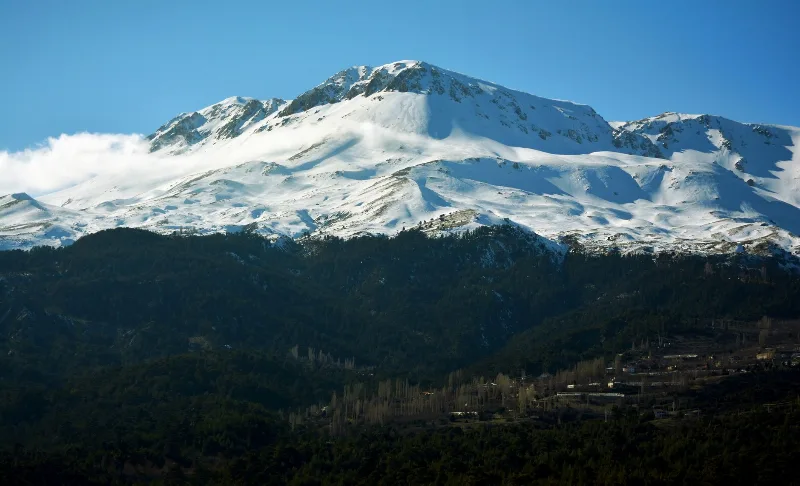
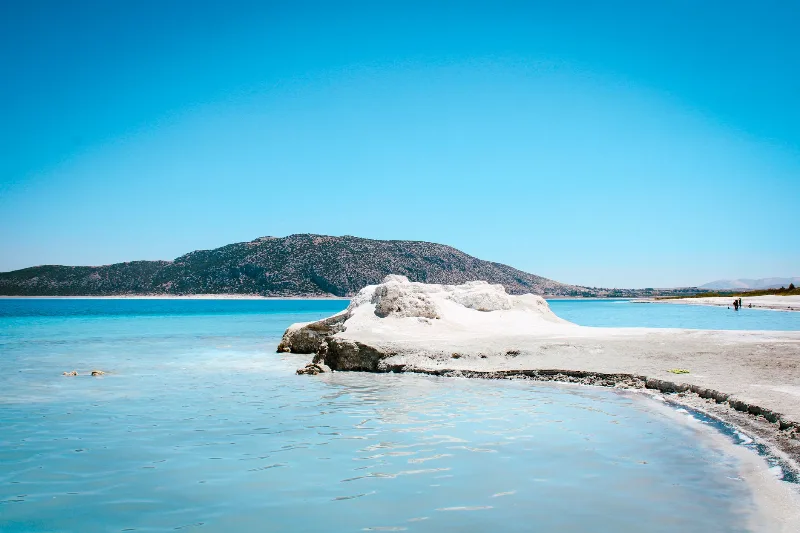
The western Taurus is a landscape of limestone ridges, deep gorges and high plateaus. Around Sagalassos grow cedar, juniper, oak and almond trees, and in spring the slopes are covered with wildflowers. The region is also a land of lakes: Burdur Lake lies to the northwest, the white shores of Salda Lake are within reach, and İnsuyu Cave opens into the bedrock nearby.
Farming shapes daily life in the valleys below the ruins. The wider Burdur and Isparta area is known for roses, lavender, apples, cherries and walnuts, and Ağlasun walnuts are a local speciality. The cooking of the highlands is simple and generous, built on olive oil, yoghurt, herbs and grilled meats such as the regional dish known as Burdur şiş.
A Walk Through the Ruins
Visitors move through Sagalassos along stone paths that link the terraces one after another. From the upper agora the view opens across the valley toward distant peaks, and on clear days the surrounding countryside seems to stretch endlessly. The site is large, and walking the main route usually takes a couple of hours.
The mood of the ruins changes with the seasons. Spring brings green slopes and birdsong, summer is bright and hot, and in winter snow sometimes covers the stones and the surrounding ridges. Whatever the time of year, the mountain setting gives these ruins much of their character: a city of marble and stone standing quietly in the highlands of southwestern Türkiye.
Historic places
Explore history →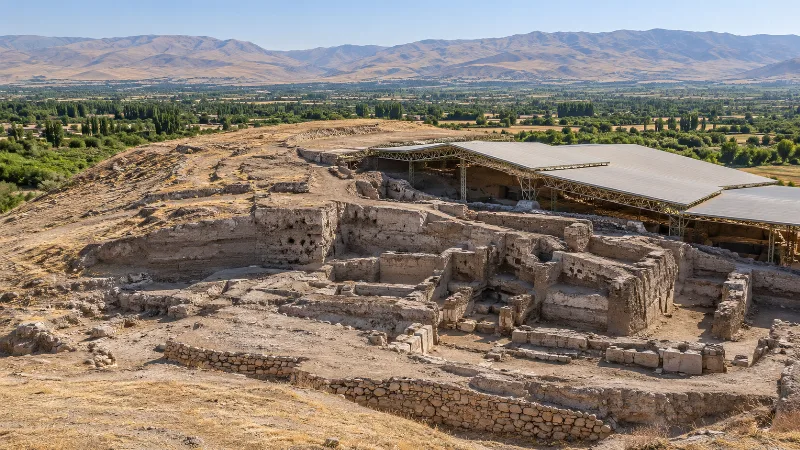
Arslantepe
Arslantepe is a deep archaeological mound on the Malatya plain in eastern Türkiye, where a Late Chalcolithic palace documents the rise of a centralised state and later Neo-Hittite rulers carved lions for its gates. It became a UNESCO World Heritage Site in 2021.
Explore →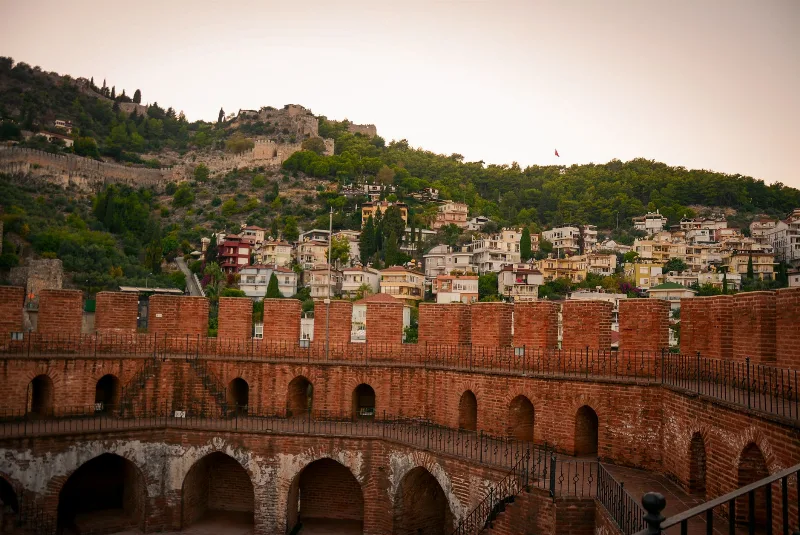
Alanya Castle
Alanya Castle is a medieval fortress on a rocky Mediterranean promontory in Antalya Province, Türkiye, whose surviving defences were largely built under the Seljuk Sultanate of Rum in the 13th century. Its walls, inner citadel, Red Tower and vaulted shipyard form one of the most complete Seljuk military and maritime complexes in Anatolia.
Explore →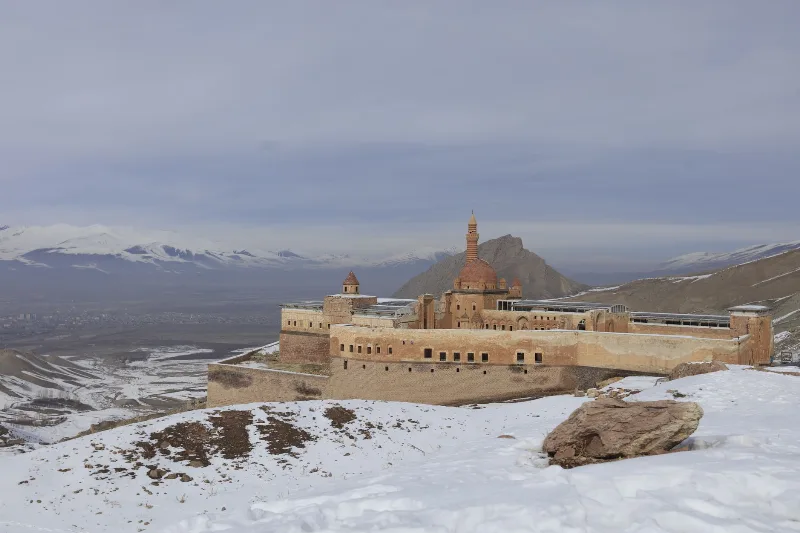
Ishak Pasha Palace
Ishak Pasha Palace is a late Ottoman palace complex in Doğubayazıt, Ağrı Province, eastern Turkey. Built between the late 17th and late 18th centuries, it is known for its stone architecture, which combines Ottoman, Seljuk, and Persian elements.
Explore →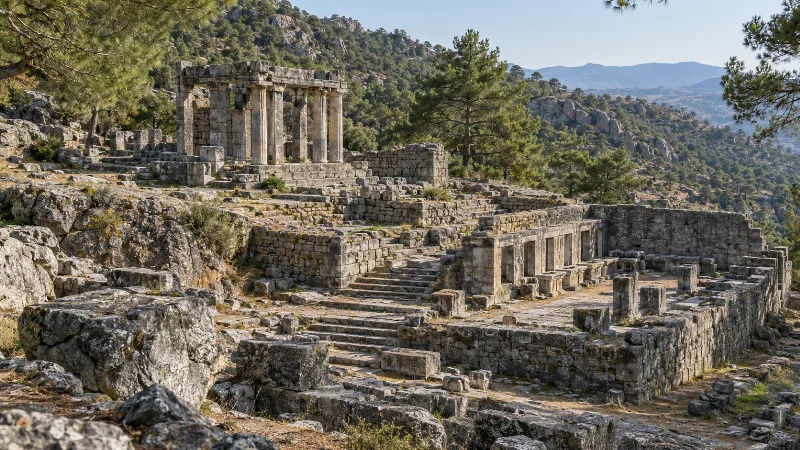
Labranda: The Ancient Carian Sanctuary of Zeus Labraundos
Labranda is an ancient Carian sanctuary of Zeus Labraundos in the hills north-east of Milas, Muğla Province, whose temples, banqueting halls and processional way were largely built in the 4th century BC under the Hekatomnid dynasty.
Explore →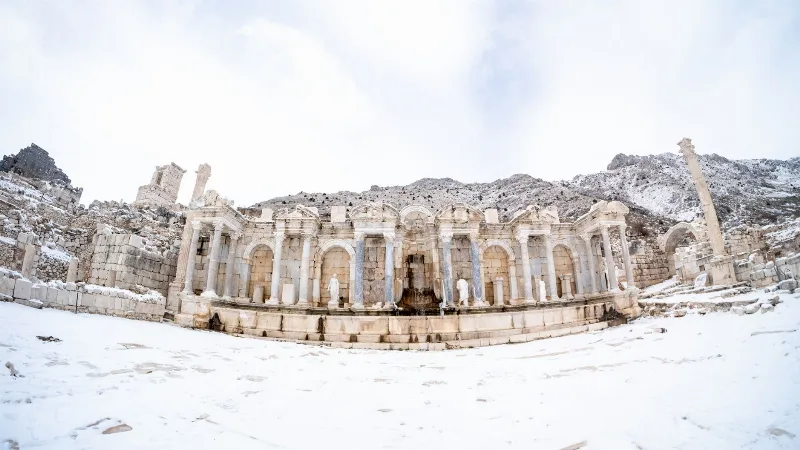
Sagalassos
Sagalassos was a major Pisidian city in the Taurus Mountains of Burdur Province, Türkiye. Its Roman theatre, bath complex and monumental fountain house make it one of the more fully understood ancient cities in the region.
Explore →Related content
Sagalassos
Sagalassos was a major Pisidian city in the Taurus Mountains of Burdur Province, Türkiye. Its Roman theatre, bath complex and monumental fountain house make it one of the more fully understood ancient cities in the region.
Sagalassos
Sagalassos is a ruined Pisidian city in Burdur Province, Türkiye, set high in the Taurus Mountains and best known for its monumental fountain, library and remarkably intact Roman civic buildings.
Burdur
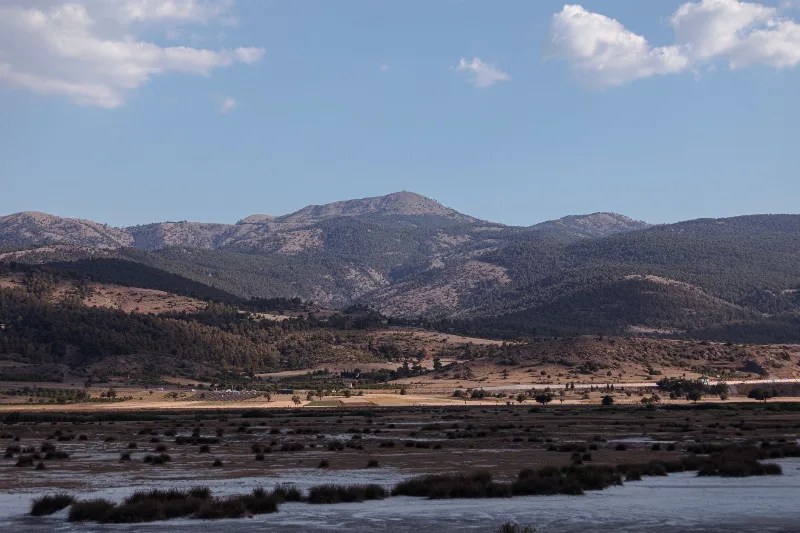
Burdur is a provincial capital in southwestern Türkiye, set in the inland Lakes District beside a large saline lake and known for the Roman ruins of Sagalassos and one of Anatolia's oldest Neolithic settlements.
Sagalassos Ancient City and Mountain Views in Burdur
Sagalassos is a hilltop ancient city in Burdur where Roman streets, theatres and fountains look out across the Taurus Mountains. Its ruins reveal a wealthy Pisidian settlement that traded pottery around the eastern Mediterranean.
Exploring the Rugged Beauty of the Taurus Mountains
The Taurus Mountains in southern Türkiye offer rugged landscapes, diverse hiking trails, and rich cultural heritage. From ancient ruins to alpine meadows, this range invites exploration across all seasons.
Lake Salda
Lake Salda is a striking lake in Burdur Province, southwestern Türkiye, known for its turquoise water, bright white hydromagnesite beaches and rare microbial stromatolites that draw both nature visitors and planetary scientists.