
Arslantepe
Arslantepe is a deep archaeological mound on the Malatya plain in eastern Türkiye, where a Late Chalcolithic palace documents the rise of a centralised state and later Neo-Hittite rulers carved lions for its gates. It became a UNESCO World Heritage Site in 2021.
Arslantepe is a large archaeological mound — a tell — on the northeastern edge of the Malatya plain in eastern Türkiye, roughly six kilometres from the centre of modern Malatya in the Orduzu area of Battalgazi district. Its stratified deposits span several millennia, from the Late Chalcolithic period of the fourth millennium BCE through the Early Bronze Age, the Hittite era, an Iron Age Neo-Hittite kingdom, and later Roman and Byzantine occupation. The site matters for two quite different reasons: it preserves one of the earliest and best-documented examples of a centralised palace economy anywhere in the ancient Near East, and it later served as a royal seat of the Neo-Hittite kingdom of Melid. UNESCO inscribed the mound on the World Heritage List in 2021.
Where the Mound Stands
Arslantepe rises about thirty metres above the fields around it and measures roughly four to five hectares at its base. The Malatya plain in which it sits is a fertile basin drained by the Tohma and Sultansuyu rivers, both of which feed the Euphrates further east. That agricultural potential is not incidental: the wealth that built the palace complex of the fourth millennium BCE came from grain and livestock produced on this plain, and control of that surplus appears to be the reason the site developed an administrative apparatus long before writing was used locally.
The Turkish name means "Lion Hill", a reference to the carved lions that once flanked a gate on the upper part of the mound. A tell of this kind is not a natural hill but the accumulated debris of repeated rebuilding on the same spot, and at Arslantepe the layers are exceptionally deep and well preserved.
An Occupation Sequence of Five Millennia
Excavation has revealed a long stratigraphic series. The earliest levels reached so far belong to the Late Chalcolithic period of the fourth millennium BCE. Above them lie Early Bronze Age deposits, including the level in which a richly furnished tomb was found. Second-millennium BCE levels show that the site was still occupied during the Hittite period, and after the collapse of the Hittite state around 1200 BCE the mound became the centre of a Neo-Hittite successor kingdom. Late occupation of a different character, dating to the Roman and Byzantine periods, shows that the rise continued to be used long after its political importance had ended.
This continuity is what makes the site archaeologically valuable. Rather than a single-period settlement, Arslantepe offers a continuous record of how a settlement in the Upper Euphrates region changed from a farming community into a bureaucratic centre, then into a fortified royal town, and finally into an ordinary provincial place.
The Late Chalcolithic Palace
The most celebrated discovery at Arslantepe is a large architectural complex built around 3400–3000 BCE, generally described as a palace. It was constructed of mudbrick on stone foundations and was laid out around a courtyard, with a temple room, long corridors, and rows of storerooms. The temple space contained a raised platform, a hearth and niches set into the walls. The storerooms held large numbers of jars and other containers, an arrangement that points to the collection and redistribution of agricultural produce on a considerable scale.
The building's layout separates public and restricted zones in a way that suggests institutional authority rather than a single household. Archaeologists working at the site have argued that this complex represents an early form of the state: a central institution able to mobilise labour, store surplus and control access to it, all before the invention of a local script.
Parts of the mudbrick walls stand to a height of several metres, which is unusual for architecture of this date, and the excavated palace area is protected from direct rain and sun so that the earthen walls can survive.
Sealings, Seals and the Administration of Surplus
Thousands of lumps of clay bearing seal impressions — known as cretulae — were recovered from the palace and its storerooms. These were once attached to doors, containers and bundles of goods; when the seal was pressed into the clay, it identified the person or office responsible for what was inside. Both stamp seals and cylinder seals appear among the impressions, and the cylinder types show contact with the world of Mesopotamia to the south.
The quantity and variety of these sealings are the strongest evidence for a bureaucracy at Arslantepe. Some impressions repeat the same motif many times, implying officials acting on behalf of an institution; others are individual and were presumably personal marks. The mass-produced wheel-made bowls found in enormous quantities at the site are usually interpreted in the same context — standardised vessels for distributing rations or food at communal gatherings.
Weapons from the Palace Corridor
A group of nine metal weapons was found together in a corridor of the palace complex. They include sword-like blades and spearheads cast from copper alloys, some with decorative inlay. Because they come from a context dated to around 3300 BCE, they are frequently described as among the earliest swords known anywhere, and they show that metalworking at Arslantepe had reached a high level of technical competence well before the Bronze Age proper.
The Early Bronze Age Tomb
Above the ruins of the palace, archaeologists uncovered a stone-lined burial chamber of the Early Bronze Age, dated to roughly 3000 BCE. A single adult male had been laid in the chamber with a substantial assemblage of metal vessels, weapons and pottery. The skeletons of four other individuals were found in association with the burial; they are widely interpreted as attendants buried with the principal figure, though this reading, like all interpretations of such deposits, remains an argument rather than a certainty.
The tomb is significant because it appears to mark a shift. The palace of the Late Chalcolithic period represents an institutional, bureaucratic kind of power; the burial points instead to an elite whose status was expressed through personal wealth in metal and, possibly, through control over other people. Together the two discoveries make Arslantepe a key site for studying how political authority changed at the end of the fourth millennium BCE.
Arslantepe and the Kingdom of Melid
After the Hittite state collapsed, Arslantepe became one of the fortified centres of the Neo-Hittite world in the Iron Age. It is generally identified with the royal seat of the kingdom called Melid in Luwian and Kammanu in Assyrian sources, one of several successor states that continued Hittite artistic and scribal traditions in southeastern Anatolia and northern Syria. Assyrian campaigns against the region are recorded in royal inscriptions, and the kingdom was finally subdued by Sargon II in the late eighth century BCE.
Excavation on the upper mound in the 1930s, by a French team, brought this phase to light and removed much of its sculpture. Later work by an Italian mission, which has continued since 1961, concentrated on the deeper prehistoric levels and on the site's environmental and economic history.
Lions, Orthostats and Carved Reliefs
The Neo-Hittite citadel was approached through monumental gateways lined with basalt orthostats — upright stone slabs carved in relief. Two large portal lions gave the site its Turkish name; a relief showing a ruler pouring a libation is among the other carved pieces recovered. These sculptures are characteristic of Neo-Hittite architectural decoration, in which doorways were framed by guardian figures and narrative panels.
The original carvings are no longer on the mound. After the early excavations they were dispersed to museum collections, notably the Museum of Anatolian Civilizations in Ankara and the Archaeological Museums in Istanbul, where they can be studied alongside material from other Neo-Hittite centres. Finds from the prehistoric levels are held in Malatya.
What Is Visible at the Site Today
A visit to Arslantepe is a walk through a working archaeological site rather than a reconstructed ancient town. The most impressive feature is the Late Chalcolithic palace, where the standing mudbrick walls, doorways and corridor plan can be read on the ground. The size of the rooms and the thickness of the walls convey the scale of the original building more effectively than any plan drawing.
The upper part of the mound preserves traces of the Iron Age fortification and gateway area, though the loss of its sculpture means the Neo-Hittite phase is now understood mainly through the excavated plans and the museum pieces. A path leads up the slope of the tell, and the top gives a wide view over the Malatya plain — a reminder of how exposed and how strategically placed such a settlement was.
UNESCO World Heritage Status
Arslantepe was inscribed on the UNESCO World Heritage List in 2021, in recognition of its exceptionally long sequence of occupation and of the evidence it provides for the emergence of state organisation in the ancient Near East. The listing covers the mound itself, not the surrounding plain.
Visiting the Malatya Area
Malatya is served by air and rail and is connected by road to the wider region of eastern Anatolia. The mound lies a short drive from the city, in the Orduzu direction; the final approach involves a walk up a steep earthen slope with uneven surfaces, so sturdy footwear is useful. The plain is extremely hot and dry in mid-summer, while winters can be cold and, at this altitude, snowy; spring and autumn are the most comfortable periods for walking around an open site with little shade.
The excavated remains are largely unprotected earth and stone, and the climb to the summit is short but steep. Visitors should expect a site that is primarily of archaeological interest, where understanding comes from the standing structures themselves rather than from reconstruction or display.
Related Places in the Same Landscape
Battalgazi, the old town of Malatya a few kilometres to the north, preserves the medieval Seljuk Great Mosque and fragments of the Byzantine and later settlement of Melitene, making it a natural companion to a visit to the mound. Malatya city itself holds archaeological collections from the region, and the wider area includes other tells and Hittite-period sites along the Euphrates corridor. Together these places show how the Malatya plain functioned for thousands of years as a corridor between central Anatolia, Mesopotamia and the Levant — a role that explains almost everything found on the Lion Hill.
Routes
All routes →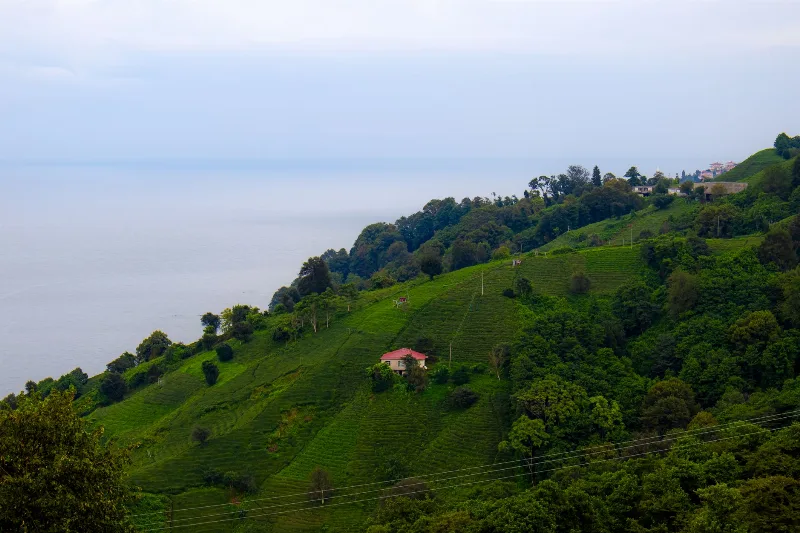
2-Day Rize and Ayder Route
A two-day linear route from Rize city through the coastal tea gardens and the Fırtına Valley to the Ayder Plateau in the Kaçkar Mountains.
Explore →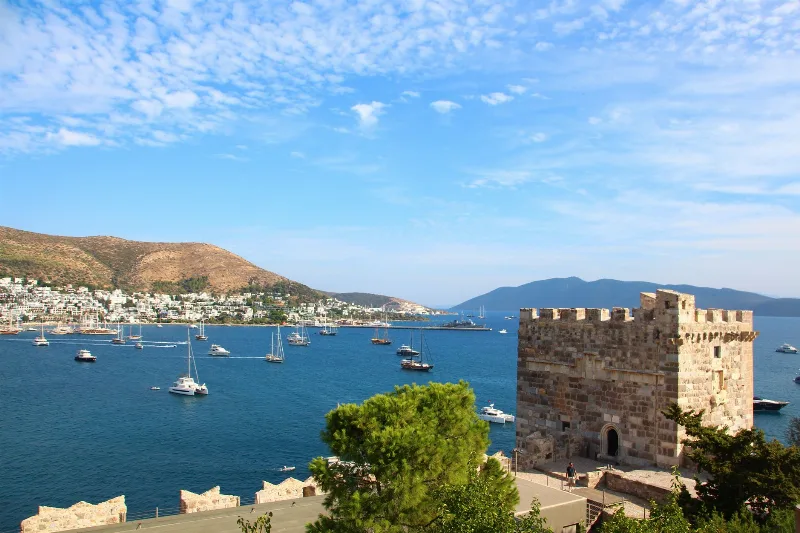
5-Day Bodrum Peninsula Route
A five-day circular drive around the Bodrum Peninsula that links the historic core of Bodrum with the southern shore village of Gümüşlük, the western town of Turgutreis and the northern villages of Yalıkavak, Göltürkbükü and Torba.
Explore →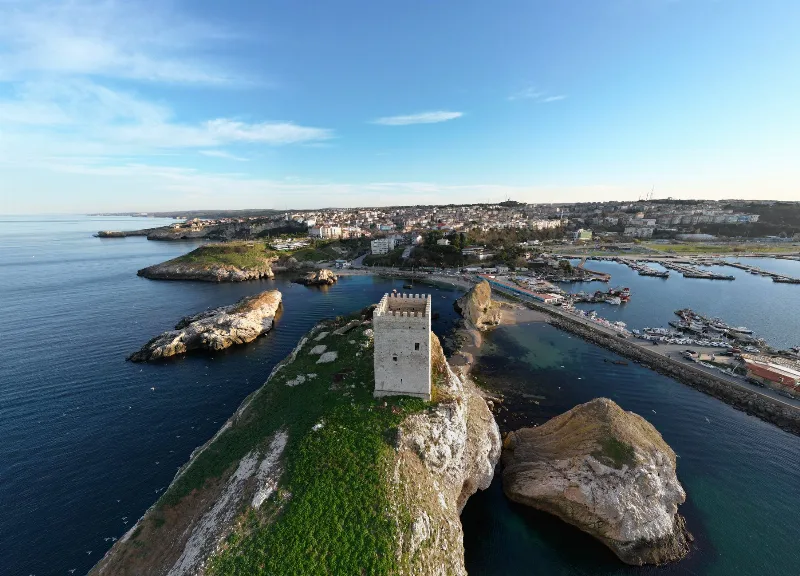
1-Day Sinop Route: Old Town, Castle and Hamsilos Bay
A single-day route through Sinop, from the old harbour and castle walls to the archaeological museum, the historic prison and the wooded bays along the coast west of the city.
Explore →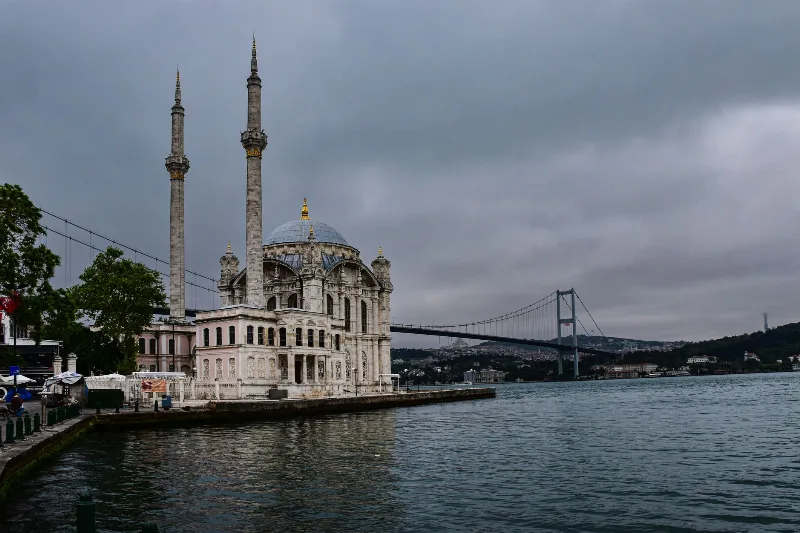
2-Day Istanbul Bosphorus Route
A two-day Bosphorus route that starts on Istanbul's European shore at Ortaköy and Bebek, includes a ferry cruise up the strait, then crosses to the Asian side for Kadıköy and Üsküdar.
Explore →Related content
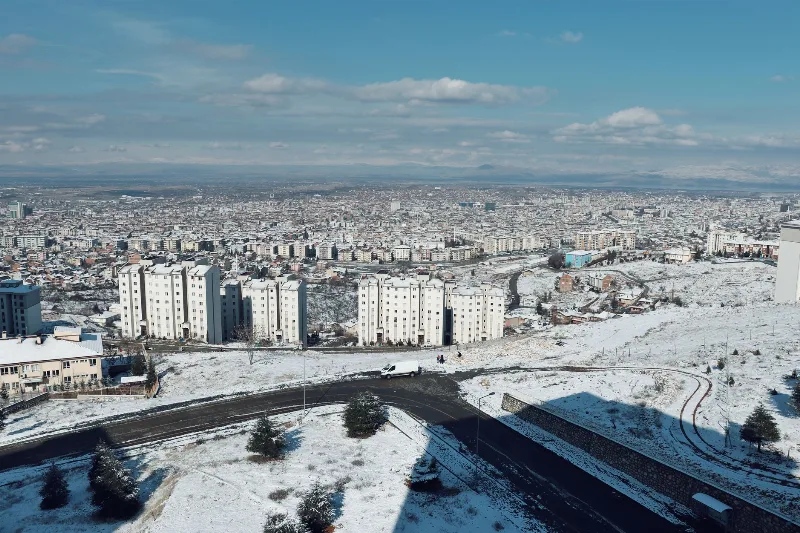
Malatya
Malatya is a metropolitan city in eastern Türkiye and the heart of the country's apricot industry. Its layered history reaches back to the Chalcolithic settlement at Arslantepe, a UNESCO World Heritage Site beside the modern urban centre.
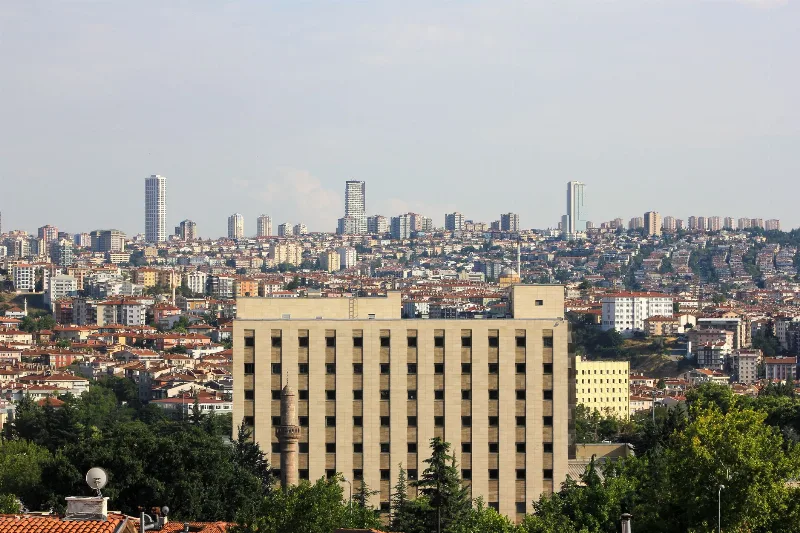
Ankara
Ankara is the capital of Türkiye and the country's second-largest city, set on the high plateau of Central Anatolia and defined by its republican institutions, its long pre-Ottoman history and the mausoleum of Mustafa Kemal Atatürk.
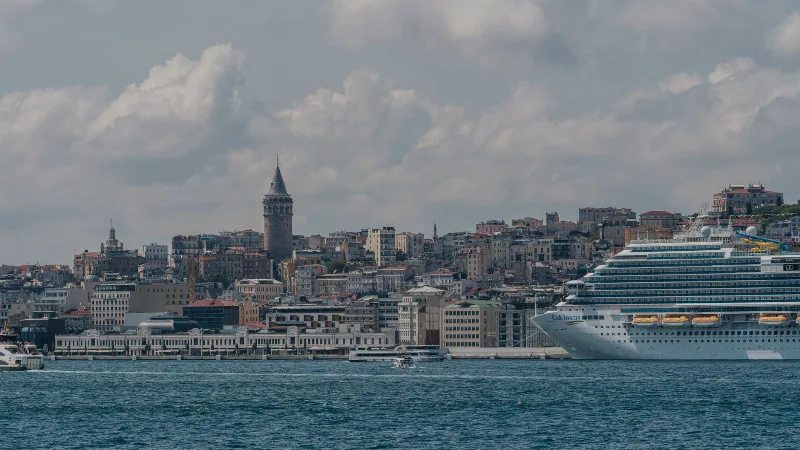
Istanbul
Istanbul is Türkiye's largest city and the country's only metropolis that spans two continents, divided by the Bosphorus strait into a European and an Asian half. Its long run as an imperial capital left a historic core of palaces, mosques and bazaars that still shapes the city's identity.

Spring in Turkey
From flowering valleys and green highlands to mild coastal towns, spring changes the landscape across different regions of Turkey.
Cities in Türkiye
Discover Türkiye's vibrant cities, each offering unique traditions and sights, making them captivating travel destinations.
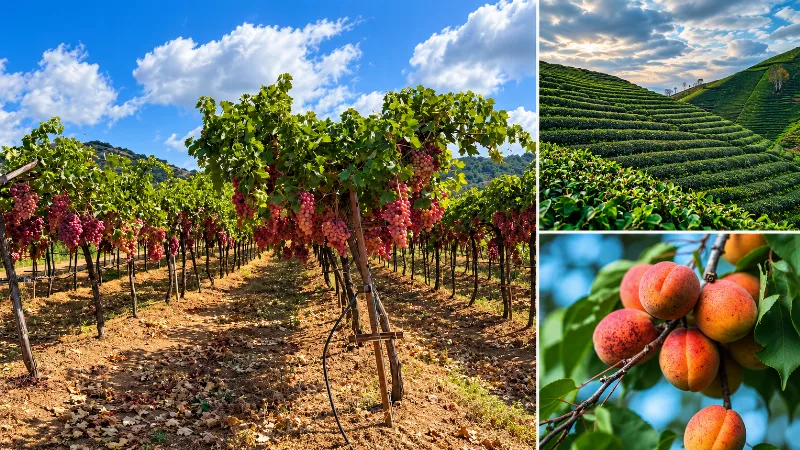
Malatya Apricots
Malatya apricots are the apricots grown in the upper Euphrates basin of eastern Türkiye, where cold winters and hot, dry summers shape the fruit that is mostly dried and traded far beyond the province.